
Turtle Characteristics
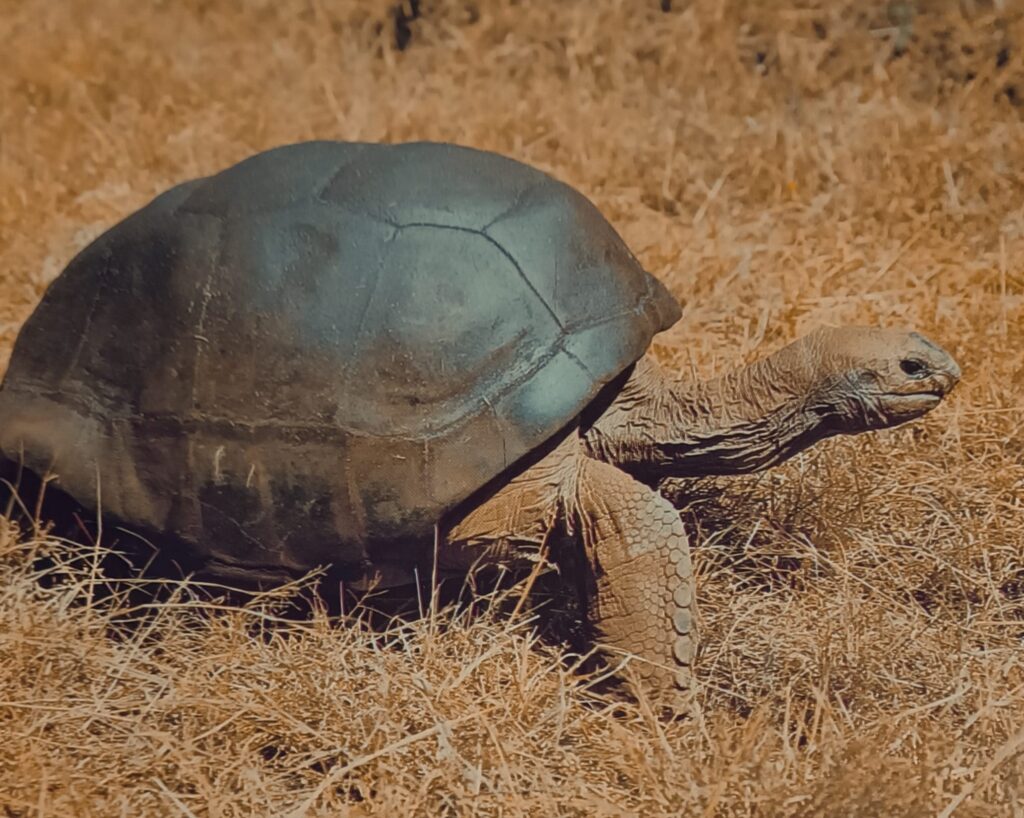
In the following article, we will show the main characteristicsof the turtlesTurtles, also known as chelonians, are distinguished not only from other reptiles but from all animals by the following:
The Shell
Turtles, also called chelonians, stand out not only from other reptiles but from all animals due to their very hard bony shell, inside which most of their species can retract their neck and limbs.
The head and the soft parts of the latter are covered with scales similar to those of snakes. The shell consists of the carapace and the plastron, with the former being more or less concave, having a rounded, oval, or heart-shaped outline, and the plastron or ventral part convex, oval, and more or less flat. Both are connected by a cartilaginous mass, which in some species remains soft and in others ossifies.
The shell has two large openings: one at the front, through which the forelimbs and head emerge, and another at the back, where the tail and hind limbs exit.

The Head
The head, very robust, differs from that of other reptiles by having jaws covered with horny plates that form a true cutting beak, as all species lack teeth.
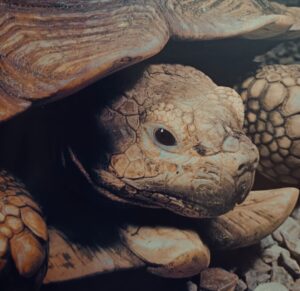
The eyes are small, round, with also round pupils, resembling those of birds. They have two eyelids; the iris is dark in terrestrial forms and brighter in marsh and aquatic ones. The nostrils are two small holes at the tip of the snout. The ear is sometimes covered by the epidermis. The tongue is wide, globular, soft, warty, and cannot be protruded from the mouth. The neck is well defined and moves easily. The limbs, with five fingers, are adapted for walking or are paddle-shaped for swimming. The tail is short and sometimes ends in a horny tip. Between its base and the plastron is the cloaca, rounded or longitudinal, which contains the single copulatory organ, similar to that of crocodiles.
Coloration
The coloration is generally dark, brownish, although some species, like the marsh Galápagos turtles, display bright yellow stripes or spots.
The Senses
Another characteristic of turtles is their well-developed sense of sight, and they apparently see better at a distance.
They have good hearing, and the eardrum is thinner in aquatic species than in terrestrial ones.
They lack a voice, although during mating season they emit a faint whimper.
The sense of smell and taste are equally well developed, as is touch, which is more sensitive in soft areas.
Their intelligence, though limited, is greater than one might expect considering the small size of their brain, as they are well aware of what can harm them and which foods suit them best, and it is not difficult to train them to take food from their caretaker's hand.
Size
The size differences among various species are quite significant. The largest specimens (sometimes up to two meters) are found among marine species.
The great vitality of turtles impresses anyone who has the chance to observe it, as they endure severe injuries and prolonged fasting with little difficulty. They tolerate heat and drought well, but have difficulty with cold. They can live a long time without breathing and go through extended periods without eating.
Thanks to their strong muscular system, turtles possess considerable strength.
Where Do Turtles Live?
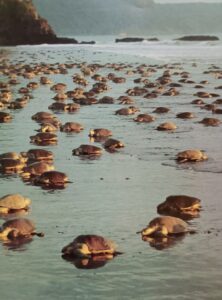
Turtles inhabit the sea, rivers, swamps, humid forests, and sunny places. Marine species spend their lives in the water, either hunting or floating drowsily, except during nesting season when they come ashore to lay their eggs. Terrestrial species do not dislike water and often enjoy submerging themselves, and some freshwater turtles live in water or on land indifferently, although they prefer to stay in the liquid environment. Another characteristic of turtles is their winter dormancy, which depends on their habitat. It begins with the arrival of the cold autumn days and ends with the first signs of spring, when reproduction begins.
When laying eggs, it becomes clear that turtles are not as rudimentarily intelligent as some assume, since the female digs several holes in the sand or soil, where she deposits the eggs and then covers them with a layer of earth or sand.
Turtles are born well-formed but with a somewhat soft shell, which does not acquire its typical hardness until several years later. The newborns are largely destroyed by birds of prey and large fish, and even when fully grown, they still have many predators besides humans.
Feeding
Finally, another characteristic of turtles is their diet. Some species are herbivorous, others carnivorous, and marine species have a mixed diet. Generally, terrestrial forms are herbivores; marsh species are carnivores, mainly feeding on mollusks, fish, and worms; and marine turtles either favor algae and other plants or hunt jellyfish, crustaceans, fish, and other living creatures, which they eat eagerly.
In other posts, we will show specific types of turtles or information about our pets, the aquatic turtles.
 Nena
Nena 


Related content