
Chinese Softshell Turtle
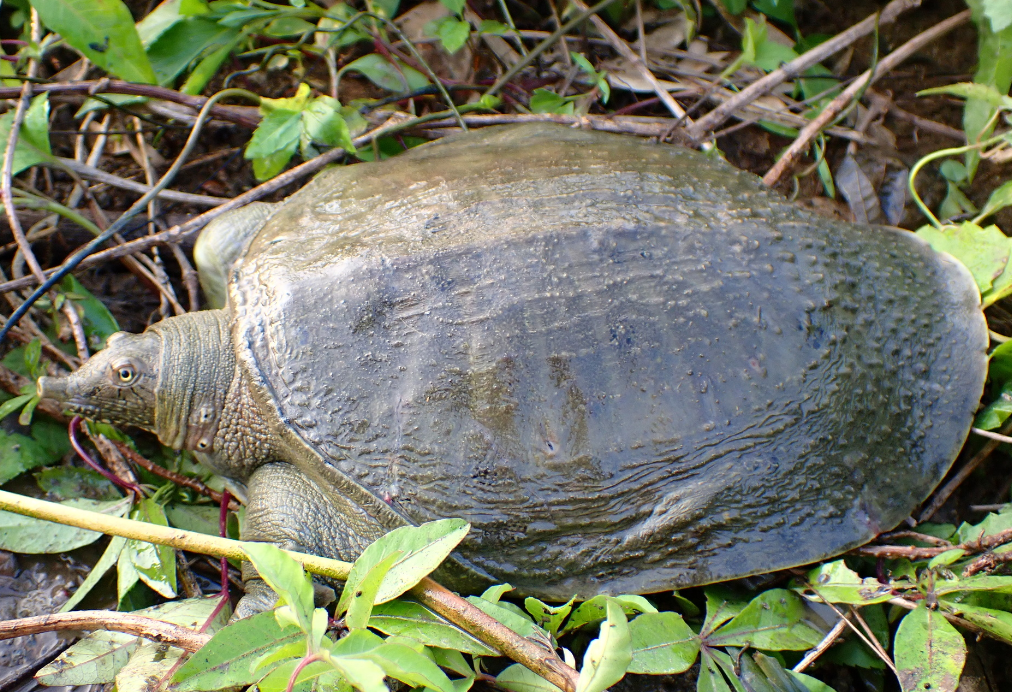
The Chinese softshell turtle (Chinese softshell turtle), also known as Chinese softshell turtle, is a species of aquatic turtle that is popular among exotic pet enthusiasts. The Pelodiscus sinensis turtle belongs to the family Trionychidae, which is known for including several species of softshell turtles. In this article, we will explore more about this fascinating turtle, including its distribution, reproduction, most notable characteristics, habits and behavior, and current conservation status. This species shares its continent with the Chinese turtle.
Distribution
The distribution of the turtle Chinese softshell turtle It extends across central and eastern China, except for the regions of Xinjiang, Qinghai, Ningxia, and Tibet. It can also be found on the islands of Hainan and Taiwan, as well as in northern Vietnam. It has been introduced to Thailand, Japan specifically the Bonin Islands, and Hawaii.
Characteristics
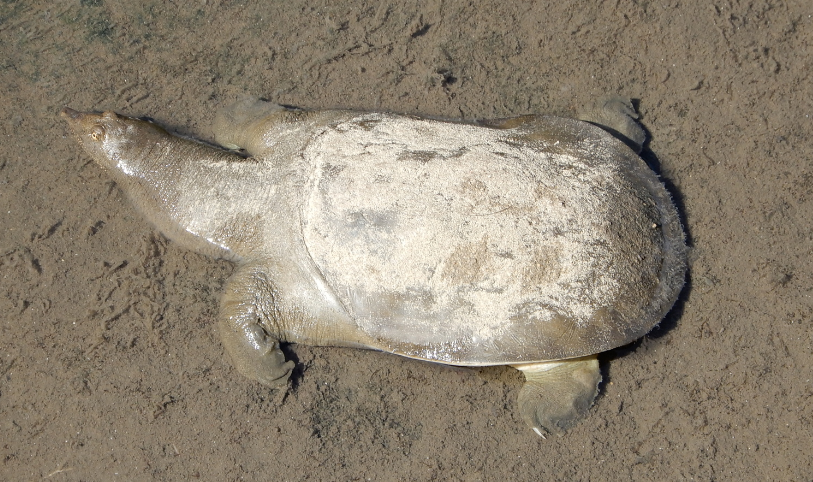
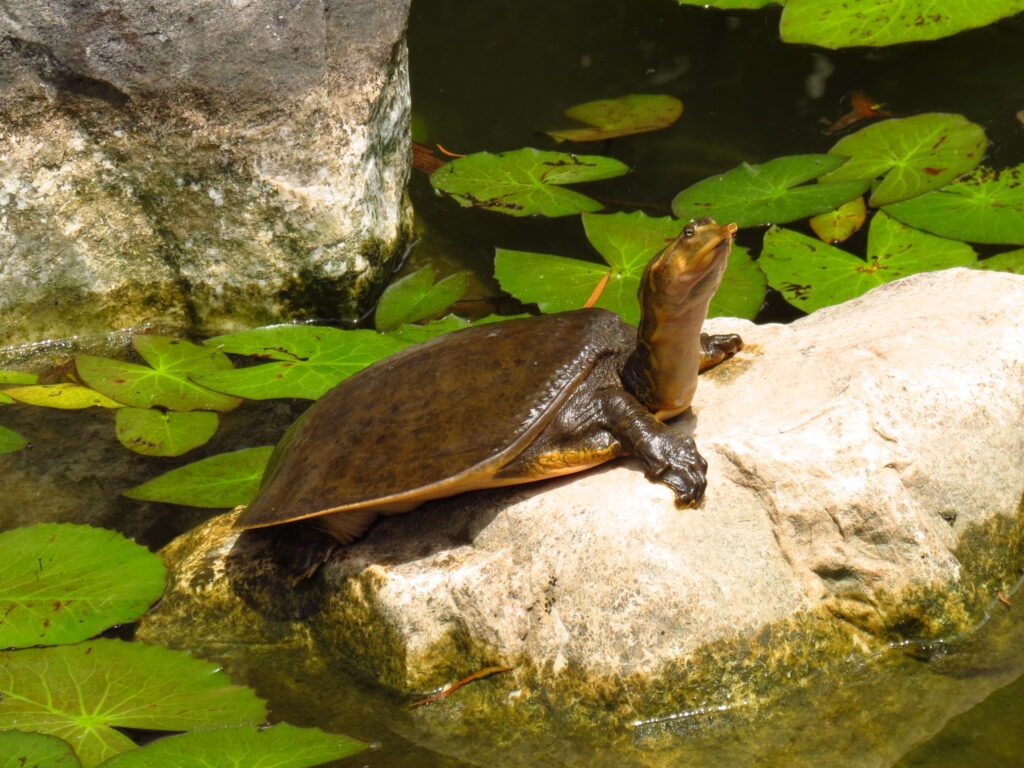
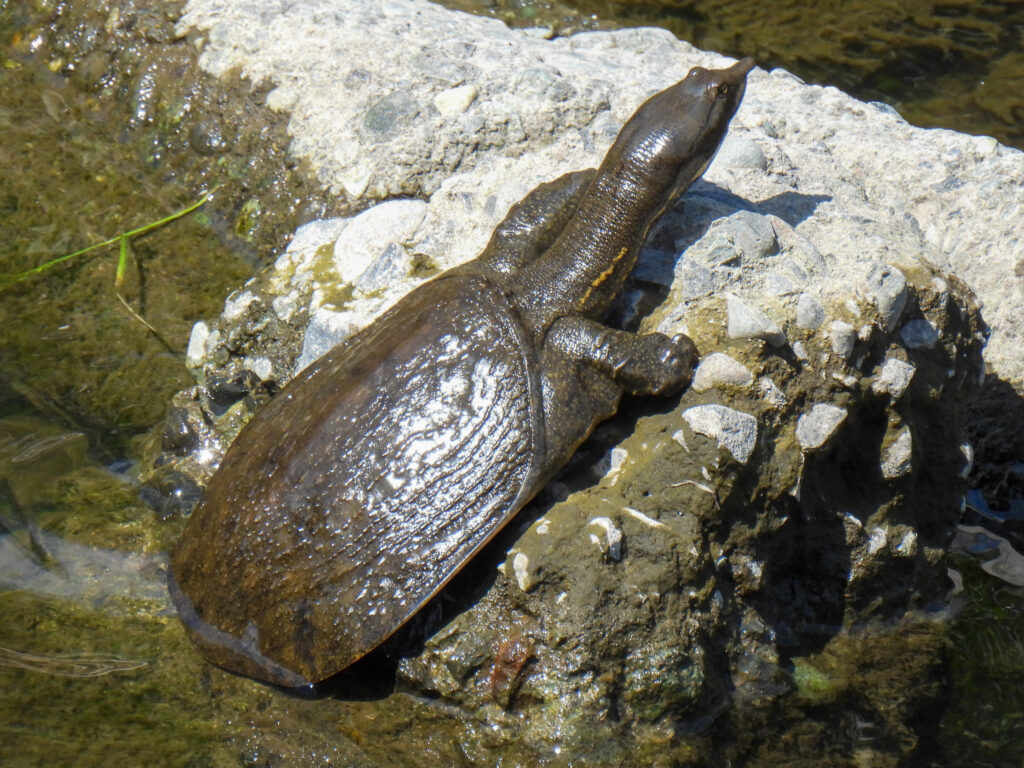
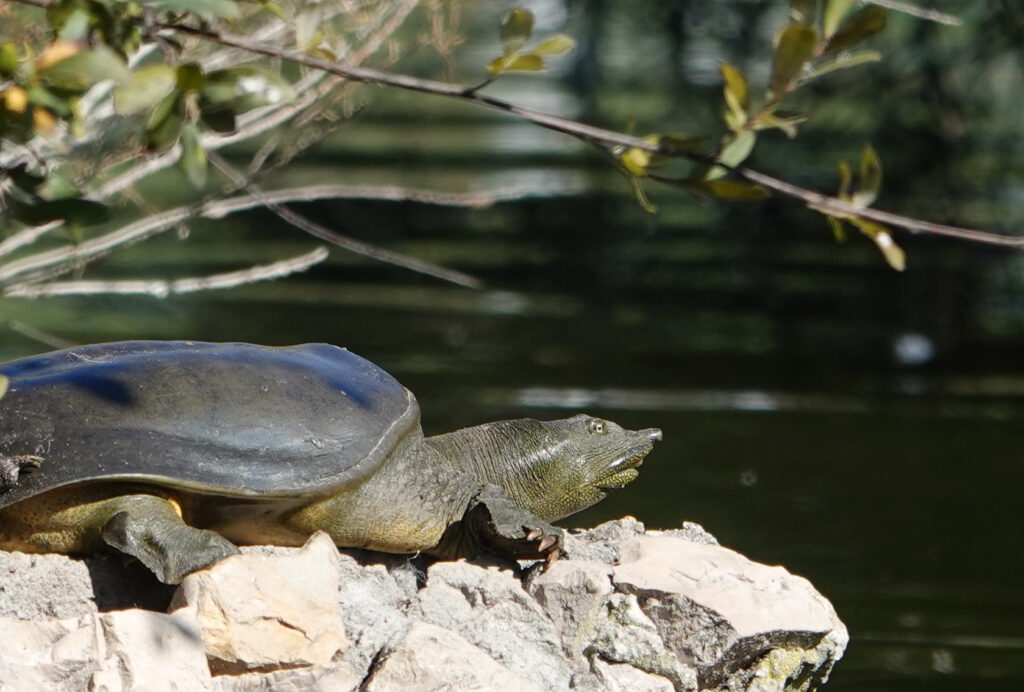
This turtle has an oval and flat shell with a slightly raised edge over the neck and legs. Some individuals have small tubercles in this area.
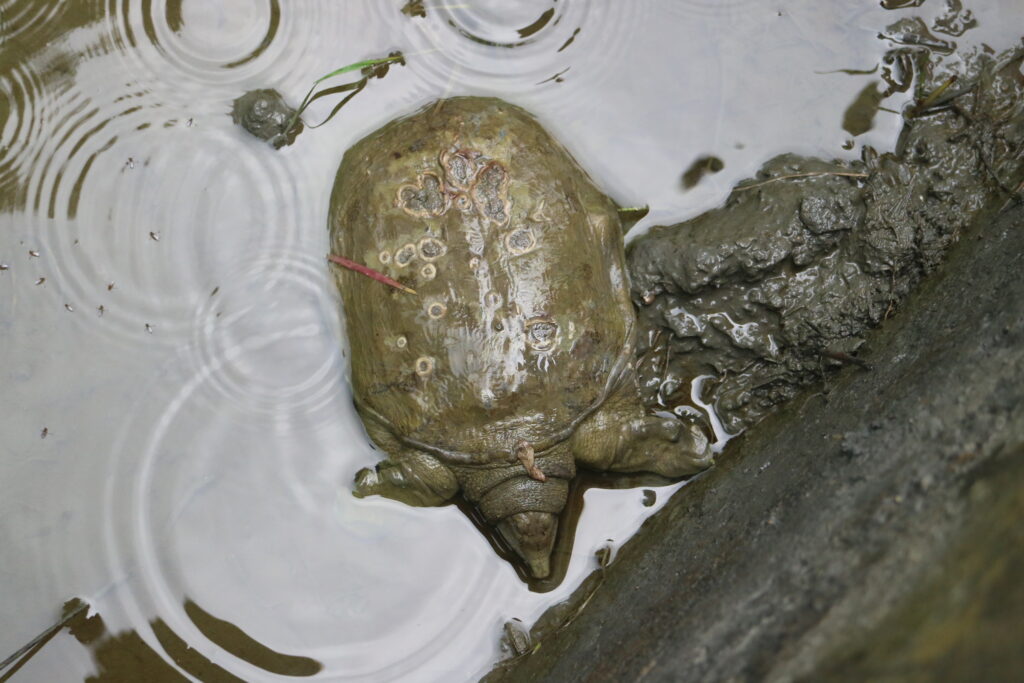
Its soverall color is grayish brown, dark or even yellowish. Its skin appears thin and the bony parts are underdeveloped. The plastron is white or yellowish and has seven visible scutes.
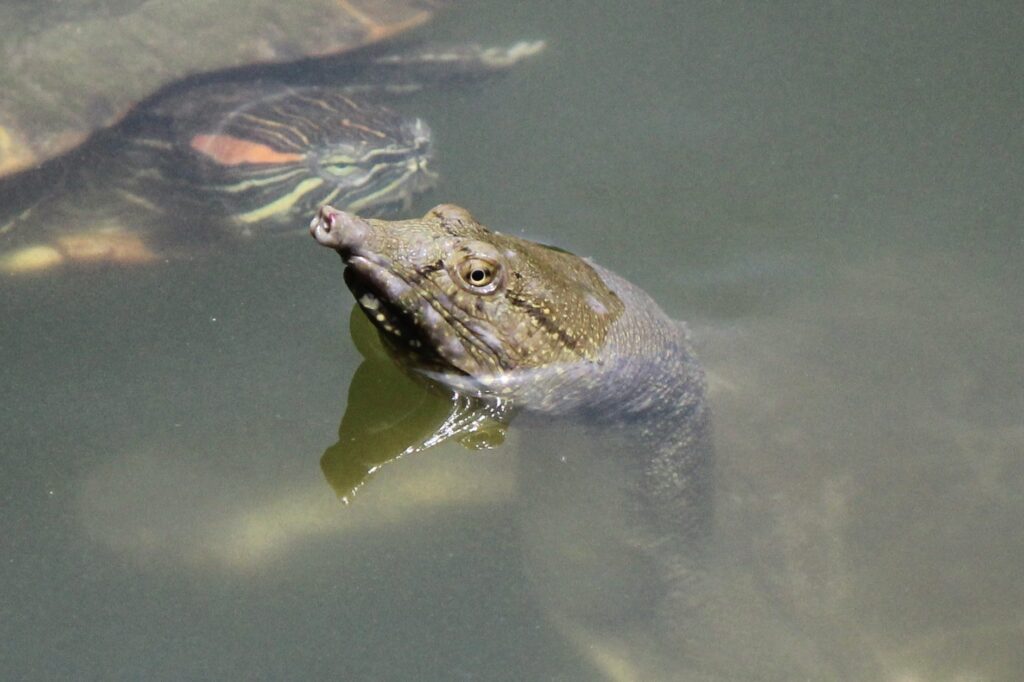
The head is medium-sized, with a short nose (upturned in shape) conical at the base and tubular at the tip. The head and legs are brown or olive, with some dark lines decorating the head. The throat and underside of the legs are light, with a vermiculated pattern under the neck. The lips are thick and fleshy, with sharp jaws. Males are smaller than females, and the latter usually have a more domed shell.
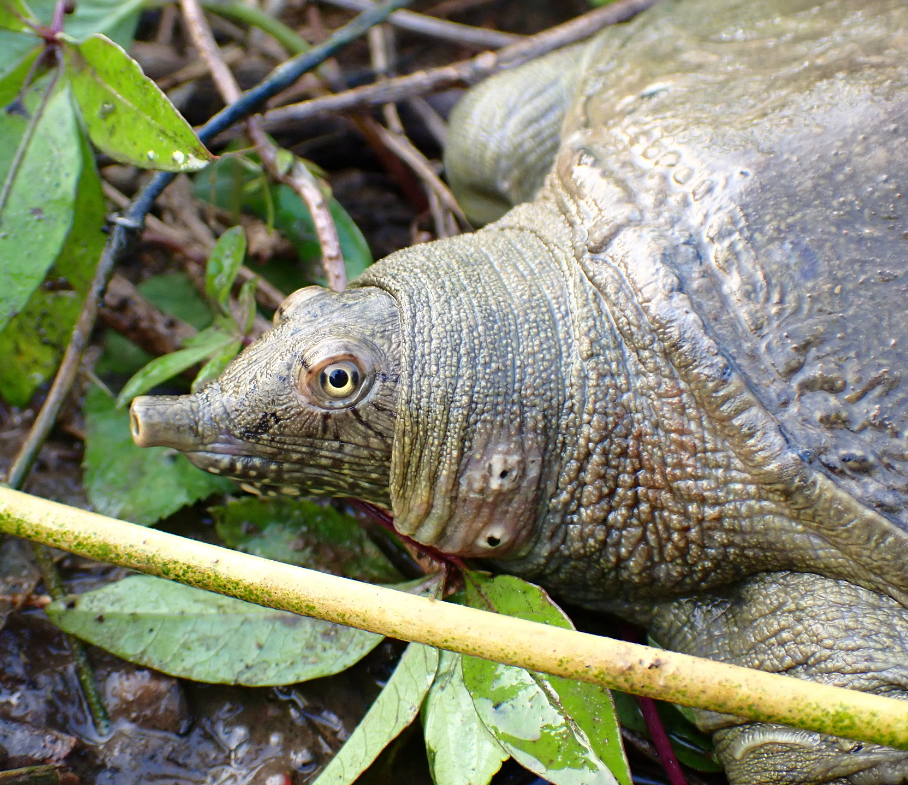
Newborns have an almost round olive-colored carapace, with black ocelli surrounded by light yellow and several longitudinal lines of small tubercles. The pplastron can be white, yellow, orange, or even red, with large black spots that quickly disappear, and white spots surrounded by dark on the sides of the head and neck. A dark line extends between the orbits, while another descends from the front corner of the eye to the upper jaw.
Subspecies
So far no subspecies has been designated of the turtle Chinese softshell turtle. Although some authors highlight the morphological differences between the populations in southern China and those on the islands, as well as a distinct form of carapace marked with black ocelli (round spots) in Vietnam.
Habits
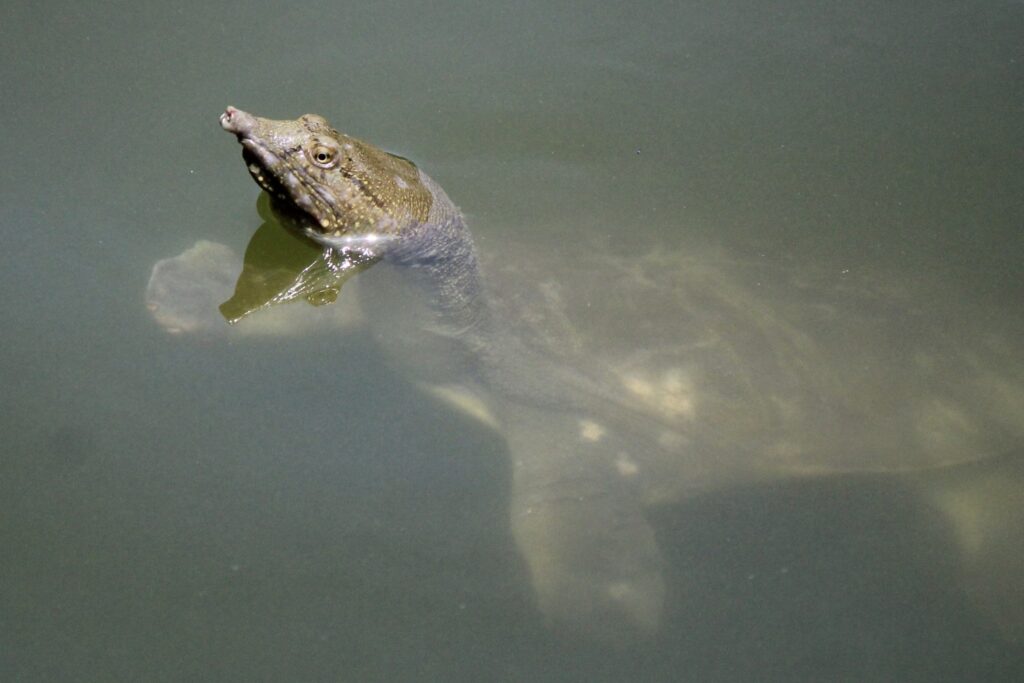
This turtle has the ability to occupy various aquatic habitatssuch as slow-flowing rivers, canals, rice paddies, ponds, and swamps. It is often seen basking on the banks but can also spend a lot of time buried in mud or silt. Some populations are more aggressive than others, like the one in the Red River, Vietnam.
The turtle can excrete a foul-smelling liquid through two small pores on the front edge of the carapace, although it apparently uses this ability very rarely.
How Big Is the Chinese Softshell Turtle?
The Chinese softshell turtle is a small-sized species that rarely exceeds 35 cm in length including its head. In the southern region, its size seems even smaller, with a maximum size of 25 cm.
What Does the Chinese Softshell Turtle Eat?
The turtle is carnivorous and feeds on a wide variety of prey, such as fish, crustaceans, bivalve mollusks, insects, worms, and larvae. Although it can also consume seeds, leaves, and other plants. It is a very active turtle, a good swimmer, and has a strong temperament, which leads it to bite when handled.
Reproduction
Depending on the species, turtles can hibernate when the water temperature drops below 15°C. The age at which they reach sexual maturity varies by region. In Vietnam, turtles reach sexual maturity at 3 years, while in China they do so at 4 years and in Japan takes up to 5 or 6 years to reach it. In breeding farms, turtles can reproduce after the first year, once they reach a weight of approximately 1 kg.
Males are constantly in heat, and the mating ritual is brief. The male firmly holds the female, and they mate for a few minutes, biting aggressively. These behaviors have mainly been observed in captive populations.
Turtles can lay multiple eggs and can do so almost year-round, most frequently between March and November. The nests made by the Chinese softshell turtle, which usually have an average depth of 15 cm, contain 10 to 35 spherical eggs white in color with a diameter of about 2.5 cm. The incubation period lasts from 40 to 80 days, depending on the latitude.
Although hatching has been recorded after 28 days, which would be the minimum incubation time. Sex determination does not seem to depend on temperature. The hatchlings can grow very quickly, likely to escape predators. In farms, juveniles aged 5 to 8 years can gain up to 1 kg in weight after just one year of fattening.
Conservation Status
The species is highly valued for its meat throughout the Asian region, which has led to the breeding of millions of individuals on farms in China, Thailand, and Vietnam. In China, farmers raise them in small ponds similarly to how they raise chickens and rabbits. In fact, in China, they are commonly sold and consumed as poultry. Even supermarket chains, which can operate 30 stores in China, sell live turtles that are cut according to consumer preferences. Although some athletes believe that the blood of this species gives them strength, there is no scientific evidence to support this claim.
Unfortunately, in the wild, these turtles are in a vulnerable state and their habitats are transformed or altered. In some parts of China, they only exist in farms, as in Vietnam. The natural status of the species must be assessed to understand the threats it faces. It is a vulnerable species.
This turtle species can be purchased in exotic pet stores in Spain.
Chinese Softshell Turtle Photos
We show you the image gallery of the Pelodiscus sinensis:
Other Water Turtle Species
There are various species of freshwater turtles in the world, each with unique characteristics. For example, the snapping turtle, native to North America, is known for its powerful bite. The raccoon turtle, native to South America, has a flattened shell and an omnivorous diet. The red-eared slider, native to the southern United States and northern Mexico, is popular as a pet.
European pond turtle
Hieroglyphic turtle
Red-bellied turtle
Spotted turtle
Long-necked Turtle
Malaclemys terrapin


Leave a Reply