
Chinese turtle
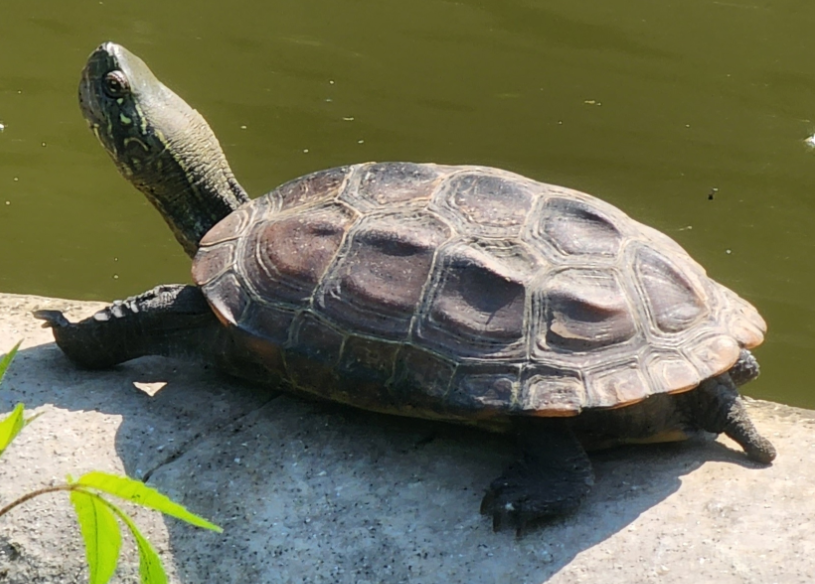
Known as Chinese turtle (Mauremys reevesii), Reeves' turtle o three-keeled Chinese pond turtle, is a species of semi-aquatic turtle native to China, Korea, and Japan. This species is very popular as a pet popular due to its small size, attractive appearance, and calm behavior. In another article, we also provide a profile with information about another species from the Asian continent, the softshell Chinese turtle.
Distribution
The Chinese turtle or Reeves' turtle is a semi-aquatic turtle species that is found in various parts of Asia, including China, Japan, Korea, Taiwan, and Hong Kong. In China, this species lives south of the Huang Ho River (famous Yellow River) and extends to the city of Shanghai.
In Japan, it can be seen on the islands of Honshu and Kyushu, while in Korea, it is found in the southern part of the peninsula. In Taiwan, this species inhabits most of the island's rivers and lakes, and in Hong Kong, it lives in some urban ponds and rivers.
The population of Mauremys reevesii has declined in recent decades due to the loss of its natural habitat, pollution, and excessive collection for the pet trade. For this reason, the population must take measures to protect and conserve this species in all areas where it is found.
Characteristics
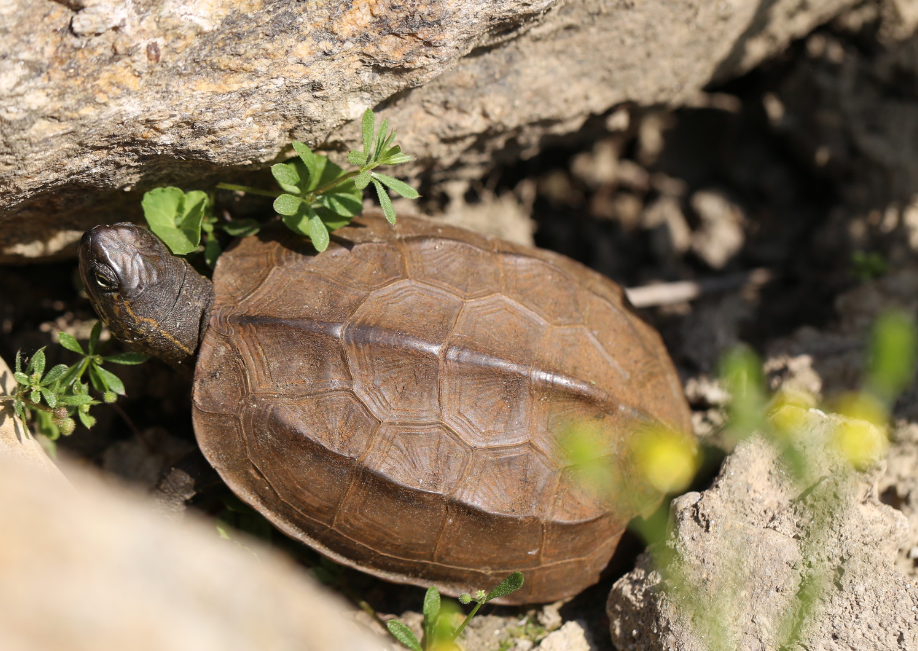
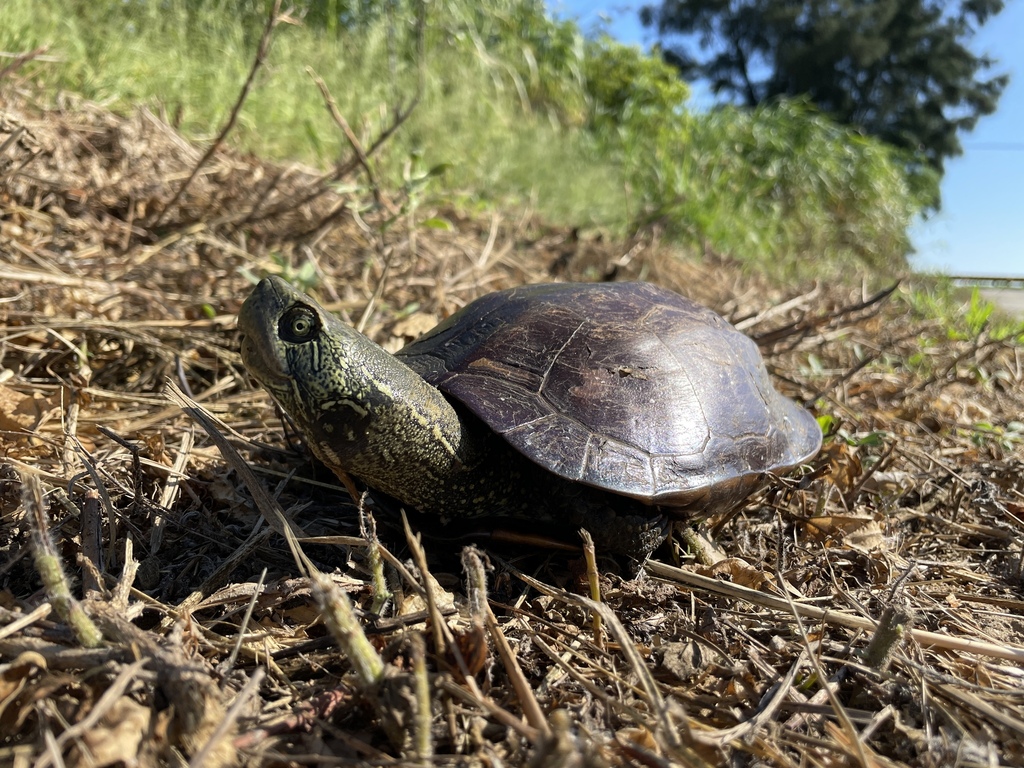
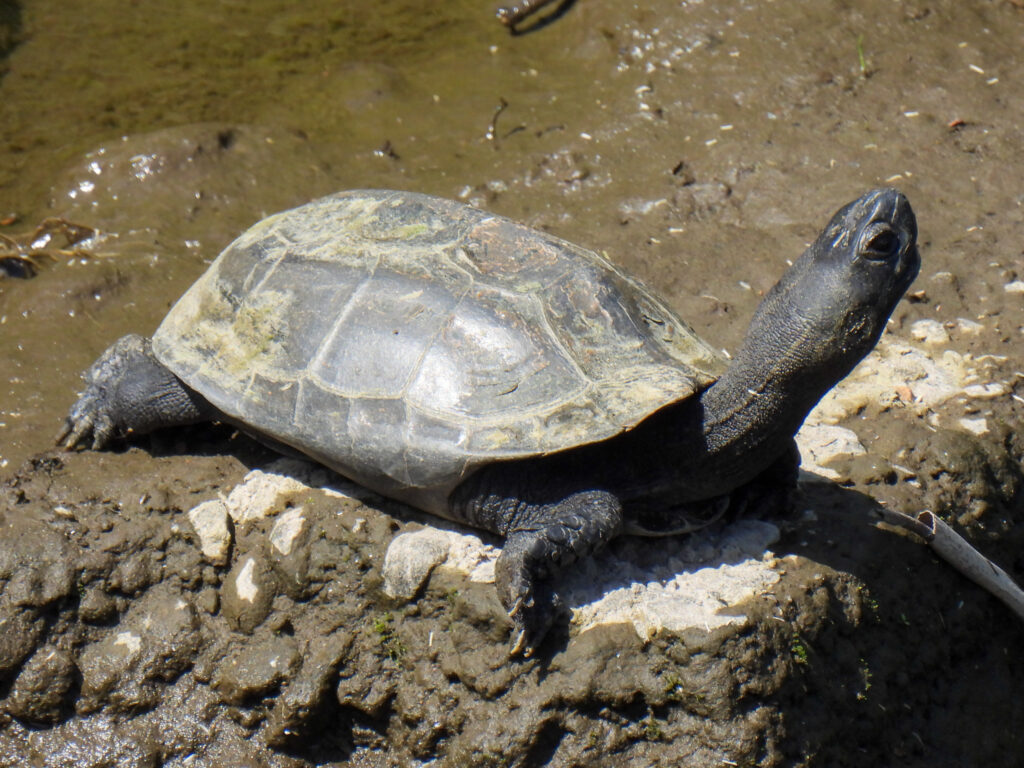
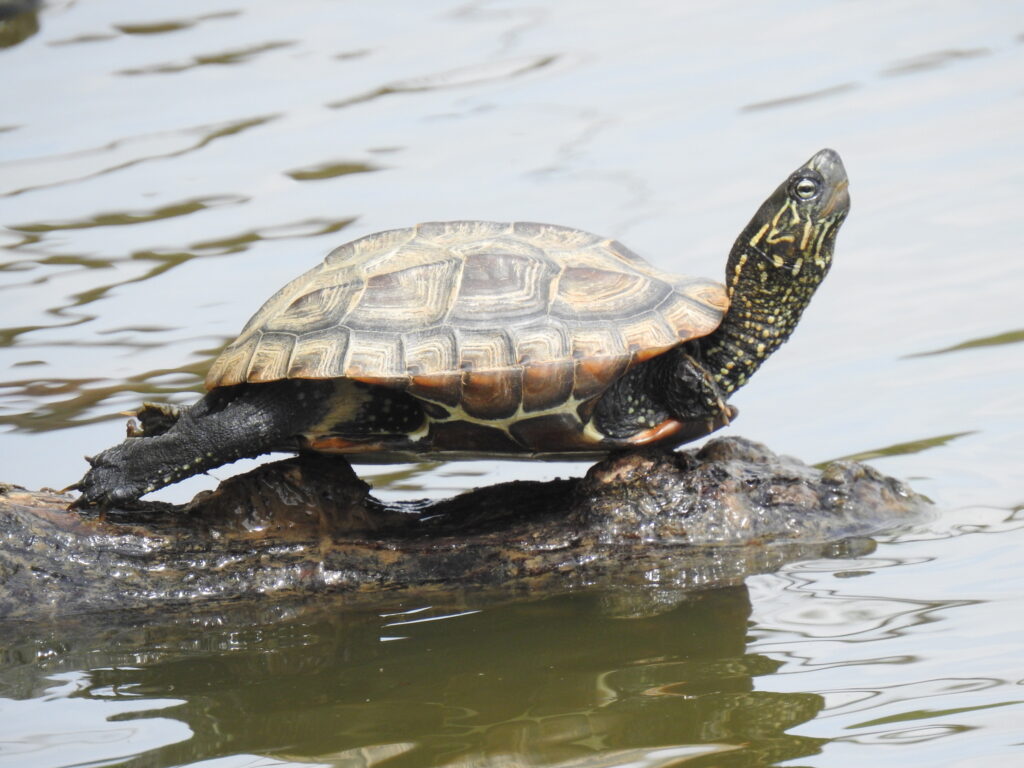
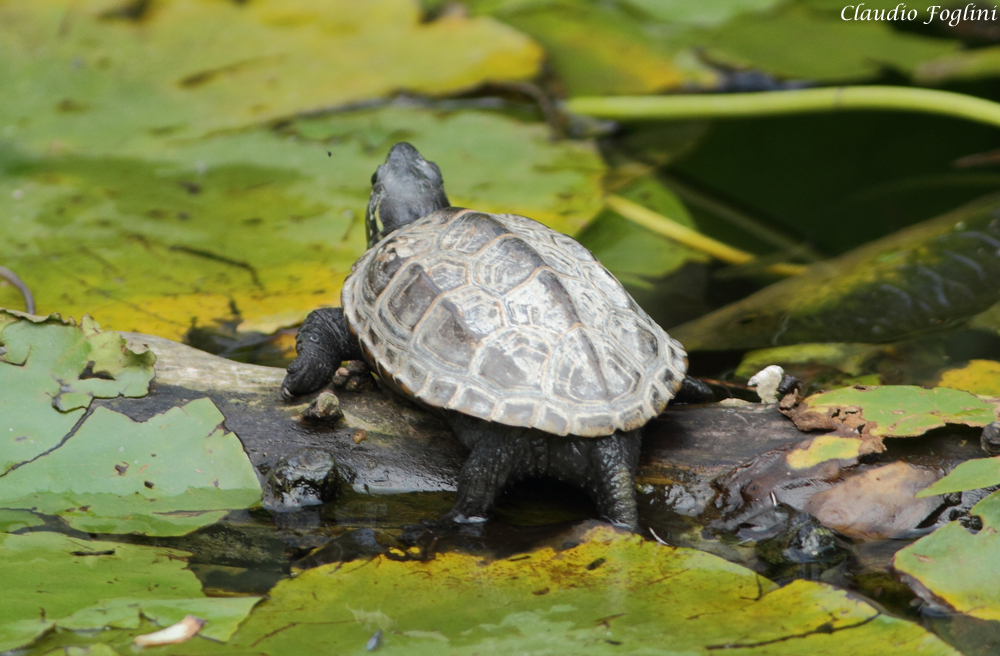
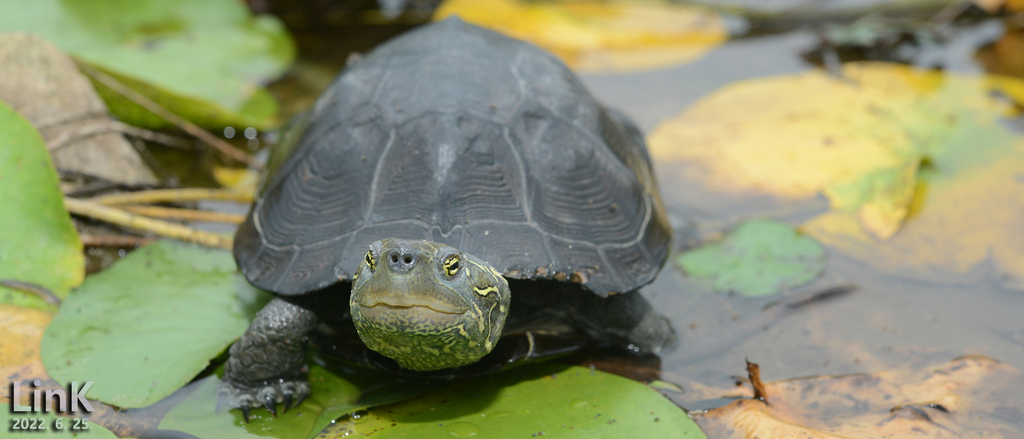
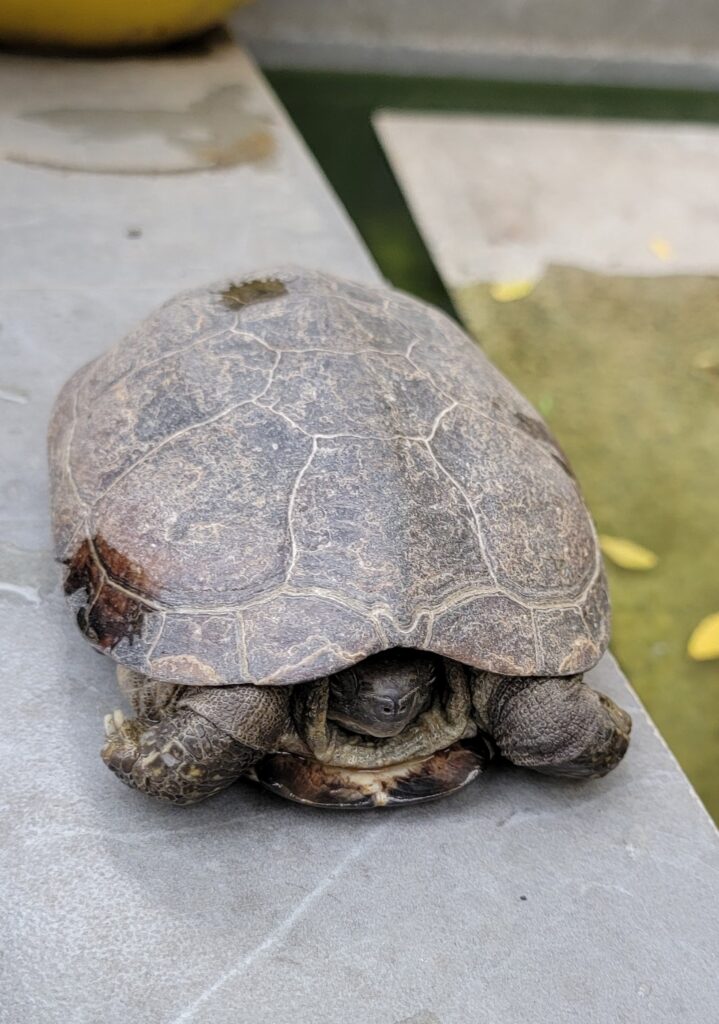
The Chinese turtle (Mauremys reevesii) is a semi-aquatic turtle species with a very oval shell. Its back is not serrated but has a central notch on the supracaudal. It has three keels well-developed, and the two costal keels are located on the front third of the shell. The shell color is uniform, usually light to dark brown, with darker keels.
The turtle plastron has an anal notch and is yellow in color, as does the bridge, and each scale is decorated with a large dark brown spot.
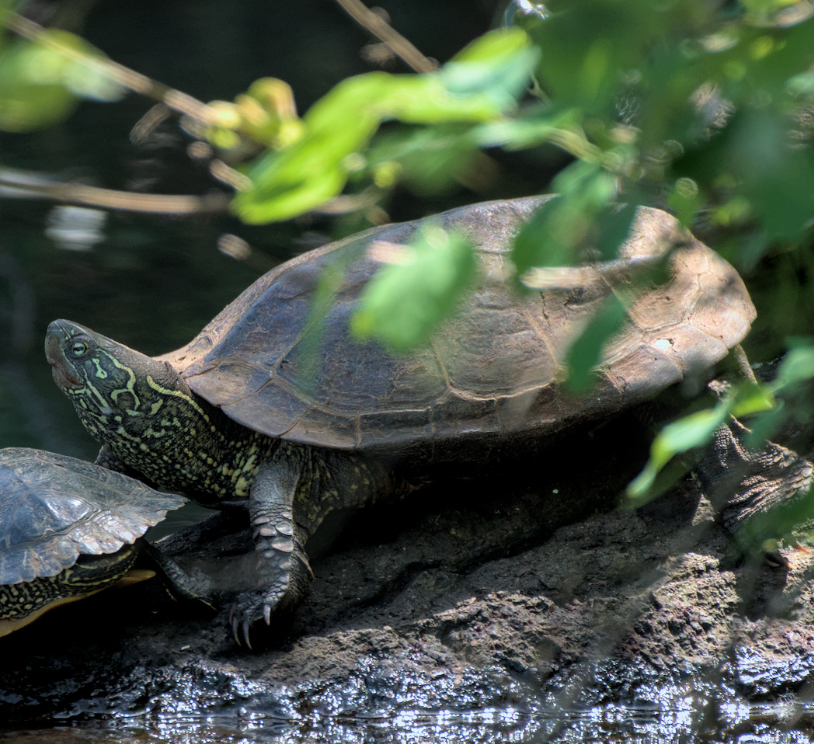
The head of the Mauremys reevesii is tapered in shape and has a rather prominent nose, but it is not large. The upper jaw has a small central notch. The head is dark brown to black, with several curved and straight yellow bands on both sides. The tympanum is surrounded by a yellow stripe, often incomplete. The neck is sometimes black or grayish-brown and is marked along its length by fine yellow lines.
The skin and limbs are entirely olive or brown in color.
How big is the Chinese turtle?
This turtle rarely exceeds 24 cm. Males are much smaller than females and have a huge, very thick tail, often no longer than 12 cm and completely dark black in color.
Habits
It is a semi-aquatic turtle that inhabits small, slow, and shallow watercourses, such as marshes, irrigation canals, and slow-flowing rivers with muddy bottoms. It prefers calm waters and can sometimes be found in larger rivers. For much of the day, they like to bask in the sun to regulate their body temperature.
How long does the Chinese turtle live?
It is a type of Reeves' turtle that can live between 20 and 25 years in the wild, and up to 30 years in captivity if properly cared for in terms of diet, temperature, lighting, and space. For this, we recommend you visit the general care guidelines required by water turtles.
What does the Chinese turtle eat?
This turtle is omnivorous and feeds on a variety of foods, such as invertebrates, larvae, organic waste, algae, and aquatic plants. The Chinese turtle also has a fairly flexible diet at times and can adapt to a wide range of available foods in its environment.
In captivity, with this species of turtle, we can follow the general article on food for aquatic turtles which shows the recommended foods for aquatic turtles, from commercial to natural foods.
Chinese turtle care
The Reeves' turtle adapts well to captivity and can withstand winters in temperate climates.
If the turtle is going to be kept pond outdoors, provide a ramp so they can bask in the sun. A small patch of land should be provided for laying eggs and for spending time among vegetation. This turtle is a good climber, so the enclosure must be securely closed if you want to prevent escapes.
For young turtles, a aquarium of at least 40 liters can be used and a UVB lamp and a heater. For adult turtles, a large aquarium with at least 60 cm depth should be provided, with rocks or logs for basking, UVB lights, filter and submerged and floating plants.
Reproduction
The courtship and mating of this species take place in spring, when males chase females in the water and circle around them. During courtship, males try to attract females with their movements and by tapping them with their front legs. After mating occurs, the female lays 4 to 9 white, elongated eggs on the water's edge. Egg-laying takes place between June and July, and there can be three clutches per month. Egg incubation lasts about 90 days.
Conservation status
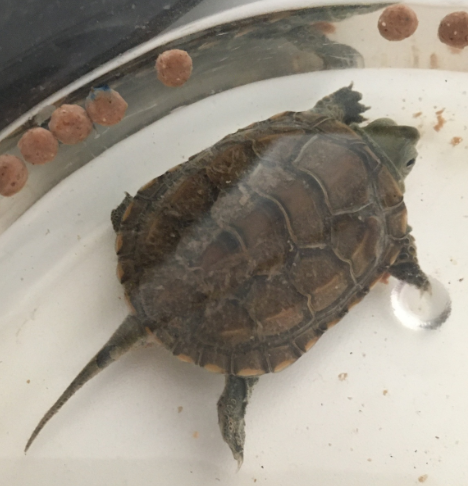
The species is endangered due to many people releasing other invasive exotic turtle species such as Florida turtles, excessive hunting for medicinal use in China, capture for the pet trade, and destruction of natural habitat. Fortunately, this species Chinese water turtle breeds successfully in captivity, which offers some hope for its conservation.
The IUCN has classified this species as endangered species.
Photos of the Chinese Turtle
We now present a image gallery of the turtle Mauremys reevesii:
Other types of water turtles
European pond turtle
Hieroglyphic turtle
Red-bellied turtle
Spotted turtle
Long-necked turtle
Malaclemys terrapin
Accessories for water turtles
You can check the following articles where we analyze in depth the different water turtle accessories that suit your needs.


Leave a Reply