
Turtle Diseases
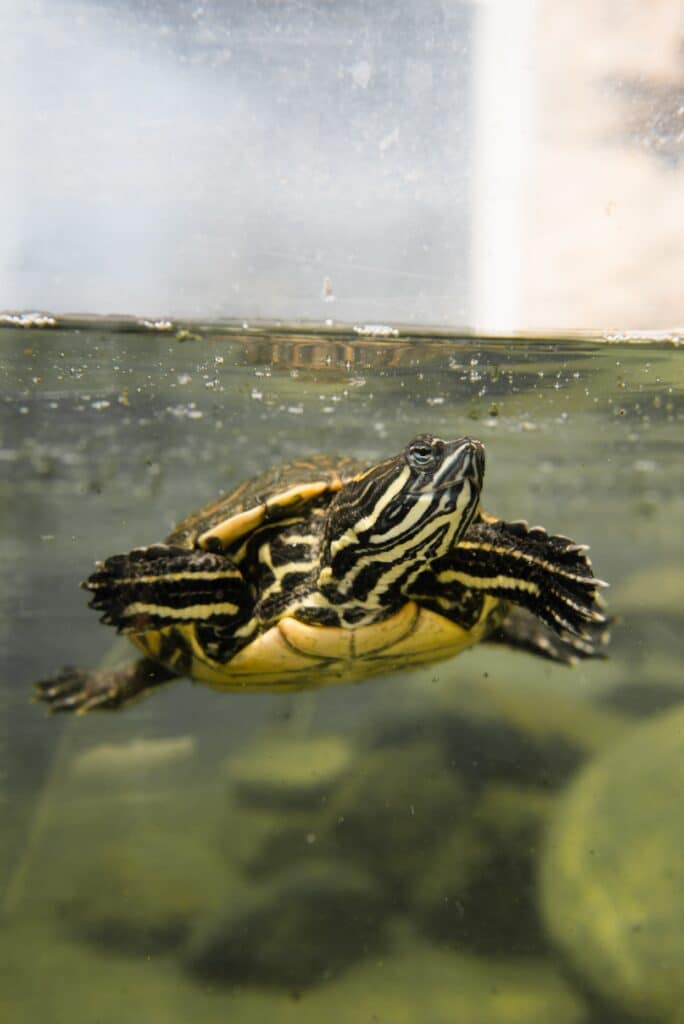
Diseases in aquatic turtles or other types can cause different effects in turtles. Turtles can suffer from various types of diseasestypes, with the most common being respiratory problems, eye and skin infections, shell spots, as well as metabolic and gastrointestinal diseases.
Proper knowledge about these health conditions can make a big difference in their care. We will discuss common diseases in aquatic turtles and how to prevent them, aiming to optimize their health and well-being.
Respiratory Issues
The main cause of respiratory infections in turtles is exposure to sudden temperature changes, which can happen due to improper water temperature settings or drafts. Turtles are cold-blooded reptiles and need to warm themselves with the ambient temperature to maintain their body heat. This means their environment must be controlled, or they can get sick.
Turtles can suffer from respiratory diseases showing symptoms such as open-mouth breathing, nasal discharge, loss of appetite, and weakness. Pneumonia is one of the diseases that claims the lives of many turtles.
To treat respiratory problems it is recommended increase the water temperature from the aquarium or terrarium ambient temperature, around 26º C.
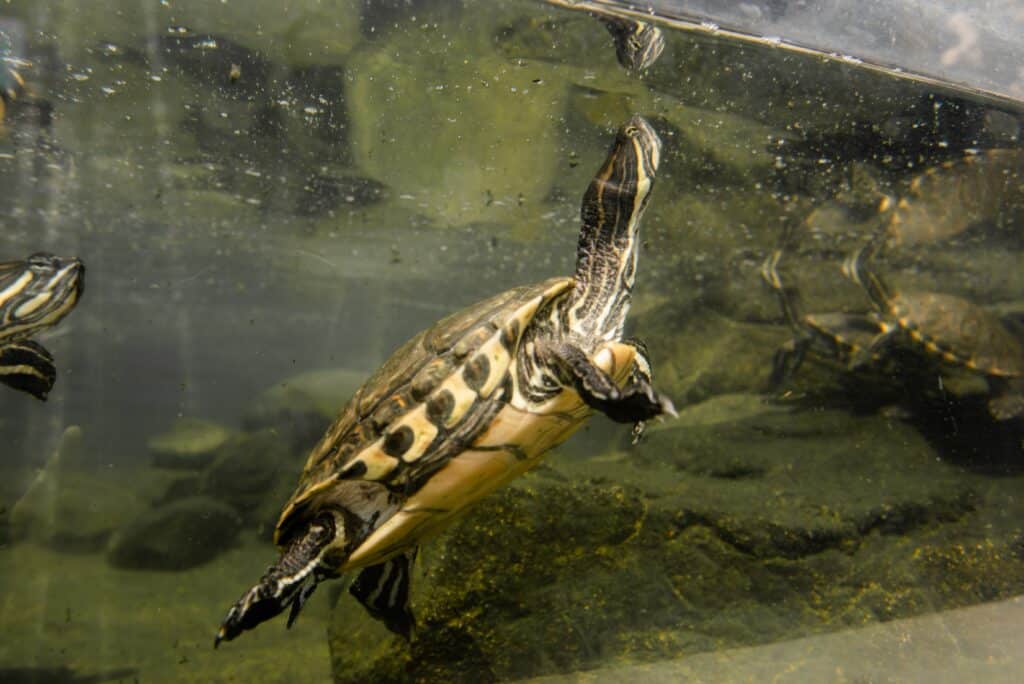
Leaving a respiratory infection untreated can lead to serious complications such as pneumonia, so it is important to take preventive measures and act promptly at any sign of illness in turtles.
Eye Infections
The eye infections are common in turtles and can be easily identified if swollen eyes, eye discharge, closed eyes along with lack of appetite are observed.
The vitamin A deficiency or dirty water is often the cause. Vitamin A deficiency in turtles is called Hypovitaminosis A.
The initial treatment is eye cleaning with saline solution twice a day.
Shell Spots
The shell spots of turtles can be caused by fungi or bacteria. It is more common in aquatic turtles because stagnant water allows harmful bacteria to thrive and transmit to the turtles. Therefore, it is always recommended to have a good filter and perform periodic water changes in aquaterrariums.
It should be noted that it is necessary to differentiate the shell spots due to the shedding of scutes as turtles grow. These marks fade over time. Birthmarks on the shell can also appear on baby turtles and may last for a long period. Neither is harmful to the turtles.
Pyramiding
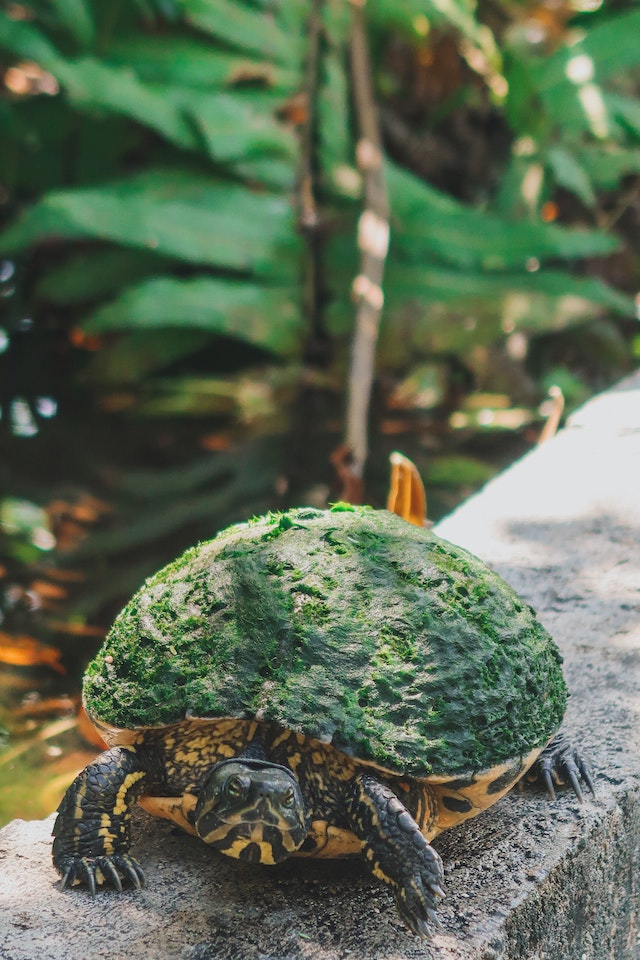
The pyramiding in turtles is a condition that occurs when the turtle's shell becomes pyramid-shaped due to an improper diet or poor hydration. This issue mainly affects land tortoises. It is more common in young turtles than adults and is linked to a high-protein, low-fiber diet as well as dehydration.
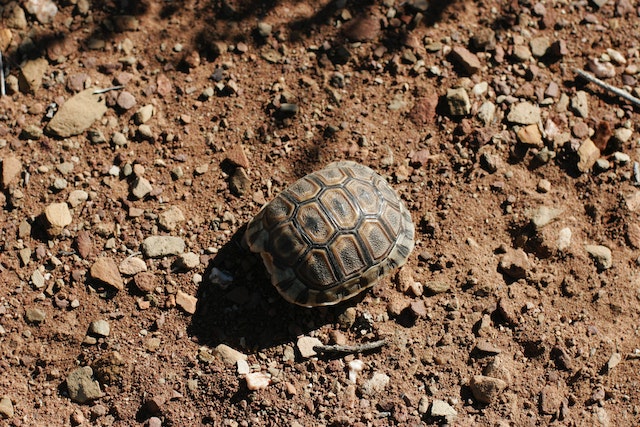
They pyramiding symptoms include shell deformity, slow growth, loss of appetite, and weakness. Treatment involves adjusting the turtle's diet and providing a suitable environment to improve hydration and physical activity.
Digestive Problems
The aquatic turtles may suffer from constipation, diarrhea, and other digestive issues due to an improper or low-fiber diet. Symptoms may include loss of appetite, bloating, lethargy, and changes in stool.
The constipation, usually caused by dehydration or a low-fiber diet, can present as lack of stool, bloating, and loss of appetite. The diarrhea can result from an inadequate diet, infections, or stress, characterized by watery stools, loss of appetite, and lethargy. The impaction occurs when a ingested object obstructs digestive system blockage, causing lethargy, loss of appetite, and absence of stool. To prevent these problems, it is essential to provide a clean environment, a balanced diet, and seek veterinary care if a digestive issue is suspected.
They are quite common in aquatic turtles and can result from various factors, ranging from an inadequate diet to an unhealthy living environment.
Dystocia in Turtles
Dystocia in turtles is the retention of eggs in turtles, occurs when a female is unable to lay her eggs naturally. This can be caused by various reasons such as stress, malnutrition, lack of a suitable nesting environment, or physical problems.
When a female turtle retains her eggs, it may show symptoms like restlessness, loss of appetite o difficulty walking.
Shell Fractures
The turtle shell fractures are serious injuries that require seeing a veterinarian as soon as possible. A turtle's shell is made up of bones and keratin, and if it breaks, it can damage internal organs and endanger the animal's life. It usually results from attacks by other animals or the shell hitting the ground.
Do turtles transmit salmonella?
Turtles can produce and carry the Salmonella bacteria in their intestines without showing any signs of illness. Salmonella is a common bacteria in turtles and other reptile species, including iguanas and snakes. That is why it is one of the diseases transmitted by aquatic turtles.
It should be noted that contact with Salmonella can cause illness in humans, especially in people with weakened immune systems, such as young children, the elderly, and those with chronic diseases. It is recommended that people handling turtles or reptiles take precautions to avoid exposure to Salmonella, such as washing their hands with soap and water after handling turtles or their habitats, and avoiding kissing turtles or putting them in the mouth. Discover the article where we discuss how the turtle and salmonella.
What to do if my turtle is sick?
If you think your turtle is sickis sick, you should take steps to improve the turtle's condition with proper care and seek help from a veterinarian specialized in reptiles. Here are some recommendations you can follow:
- Watch for symptoms: Pay attention to any behavior change, appetite, mobility, physical appearance, or elimination patterns of your turtle. Signs of illness may include loss of appetite, lethargy, weight loss, difficulty breathing, abnormal secretions, changes in skin or shell, among others.
- Isolate the turtle: If you have more than one turtle, it is advisable to isolate the sick one to prevent contagion from others. Place the turtle in a terrarium or enclosure suitable for its size.
- Create a suitable environment: Make sure the turtle has a clean environment with temperature and humidity appropriate for its species.
- Do not administer medications: Avoid giving medications without veterinary guidance. Turtles can react differently to drugs, and some can be harmful if not administered properly.
- Find veterinary care: The best option is to seek a veterinarian specialized in reptiles or exotic animals. The veterinarian will perform a physical exam, take samples if necessary, and provide an accurate diagnosis.
Detailed information about turtle diseases
Discover the different articles we have written to expand specific information on each of the possible turtle diseases they may suffer from.
Salmonellosis in turtles
Pyramiding in turtles
Eye infections in turtles
Respiratory Problems in Turtles
Shell with White Spots
This article aims to provide information about possible turtle diseases, therefore, in infoturtle.com we do not have the authority to prescribe veterinary treatments or make diagnoses. If your pet shows any condition or discomfort, it is recommended to take it to an exotic animal veterinarian for proper evaluation and treatment.


