
Small turtles
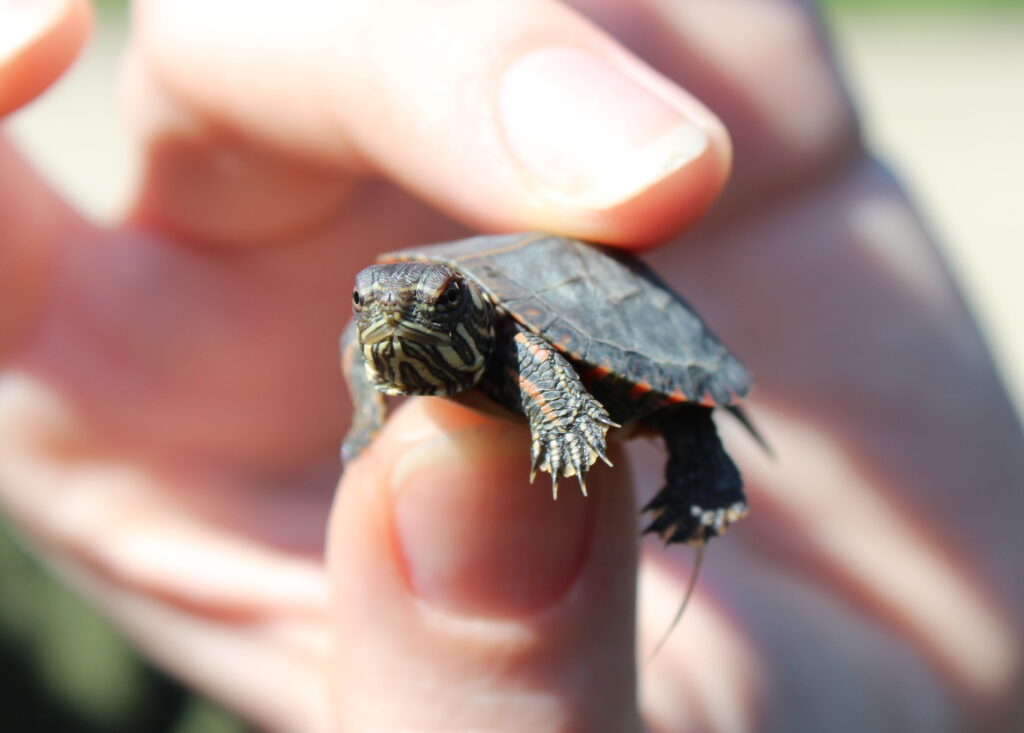
The world has a wide variety of species of different sizes. The small turtles are ideal for those looking for a unique pet that is easy to care for in small spaces. In this article, we will present the best small-sized turtles and provide a detailed guide to choose the perfect one for you.
Turtles are reptiles and come in a wide variety of species, each with specific characteristics and needs. During their juvenile stage, they make pets that can be easily handled and cared for. As they grow, their needs evolve and it is important to know how to provide them with a suitable and healthy environment, which many people cannot provide, so a correct choice must be made when buying an animal, in this case a turtle.
It is essential to provide them with a terrarium o aquaterrarium that is large enough to house them and ensure their dietary requirements are met. Like any other pet, the domestic turtles require proper attention and care to thrive.
Some small turtle species, such as the Russian tortoise, painted turtle, false map turtle, the Russian tortoise and the box turtle, among others. Each of them has distinct characteristics, although in general they all require similar care.
Reasons to keep small turtles as pets
Small turtles are excellent pets for several reasons. They are easy to care for, have a size suitable for small spaces, and have a calm personality that makes them ideal for homes with limited space.
Characteristics of small turtles
Size
Most small turtles reach a maximum size of between 15 and 30 centimeters, which makes them ideal for living in small spaces.
Habitat
Depending on the type of small turtle they can live on land or in water. Their natural habitat should be replicated in their living space as closely as possible so they have a better quality of life.
Lifespan
With proper care, small turtles can live between 20 and 50 years, depending on the species.
Behavior
Small turtles are calm, solitary animals. They do not usually interact much with their owners, but can be observed in their natural environment.
Small aquatic turtles
Below we show some species of small aquatic turtles:
Painted Turtle
Characteristics
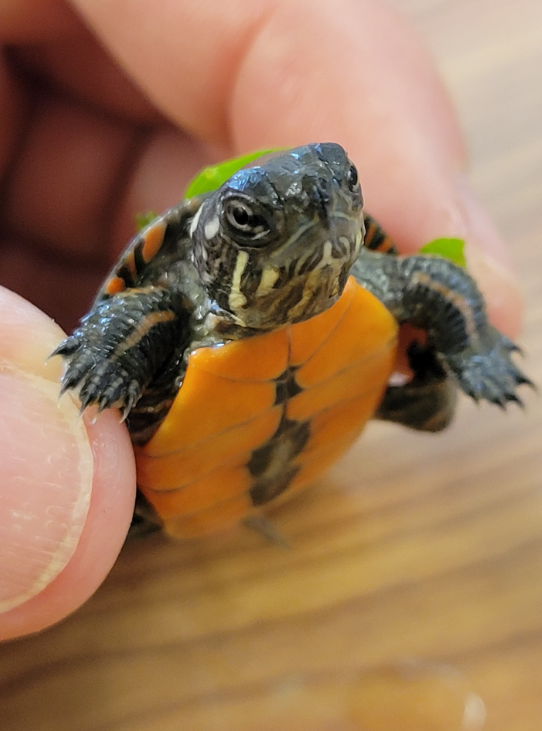
The painted turtle (Chrysemys picta) is a species of aquatic turtle native to North America. These turtles have a size average 12 to 30 centimeters length depending on their sex, with females being larger and a brightly colored shell with red, yellow, and green markings. They are very active and excellent swimmers, making them an interesting sight to observe in an aquarium or pond.
Habitat
The natural habitat of painted turtles includes lakes, rivers, ponds, and marshes with calm waters and aquatic vegetation. In captivity, these turtles require an aquarium or pond with enough space to swim, resting and basking areas, and good water quality to maintain their health.
Diet
Painted turtles are omnivorous and their diet in captivity should include a combination of animal and plant proteins. They can feed on fish, aquatic insects, shrimp, worms, as well as aquatic plants and leafy greens.
False Map Turtle
Characteristics
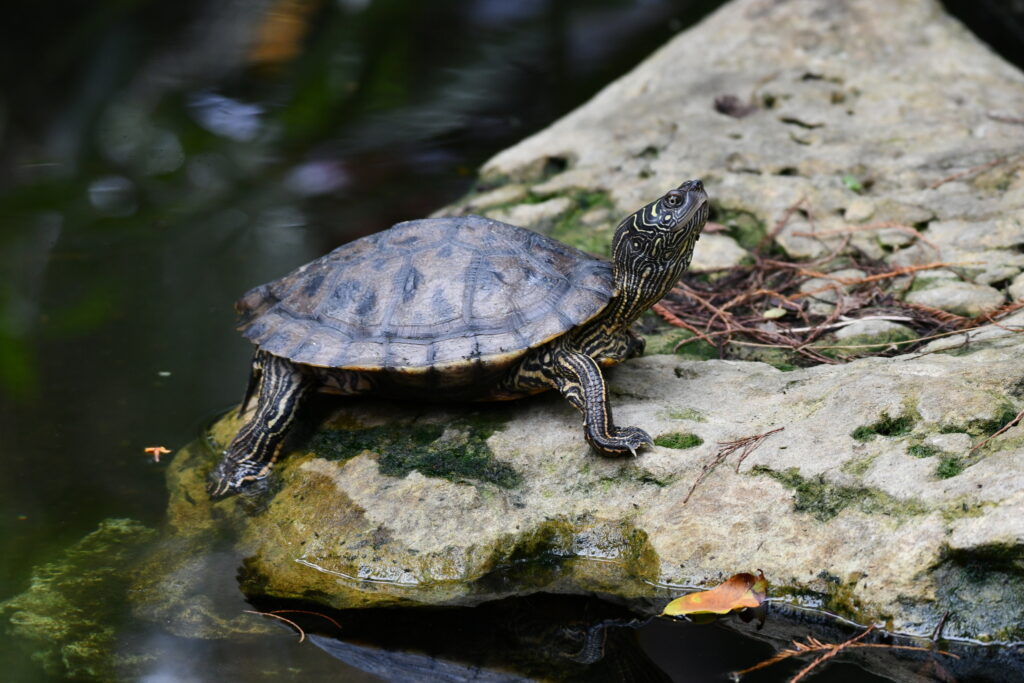
The false map turtle (Graptemys pseudogeographica) is a species of aquatic turtle native to North America. They are characterized by their small size, which ranges from 12 to 27 centimeters in length, and by their brown shell with yellow lines and markings that resemble a map. They are active, excellent swimmers, and can be an interesting addition to an aquarium or pond.
Habitat
The natural habitat of false map turtles includes rivers, lakes, ponds, and marshes with slow currents and abundant aquatic vegetation. In captivity, they need an aquatic space with enough room to swim, resting and basking areas, and good water quality to maintain their health.
Diet
False map turtles are omnivorous and their diet in captivity should consist of a combination of animal and plant proteins. They can feed on fish, aquatic insects, shrimp, worms, as well as aquatic plants and leafy greens.
Chinese Turtle
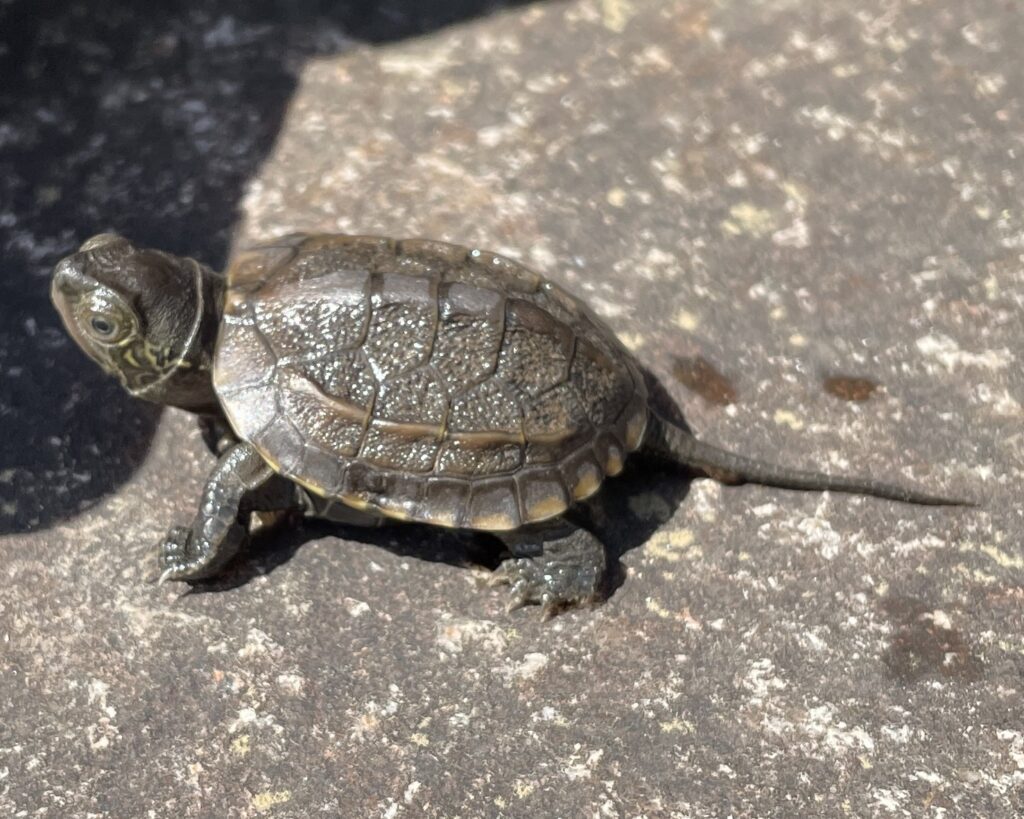
The Chinese pond turtle (Mauremys reevesii) is an Asian species known for its small size and calm behavior. The Reeves' turtle measures between 10 and 24 centimeters and lives approximately 20 years. Being an aquatic species, it requires a suitable environment with both terrestrial and aquatic areas.
Diet
The Chinese turtle is omnivorous, which means it consumes both plant and animal foods. Its diet in the wild includes insects, crustaceans, small fish, algae and aquatic plants. In captivity, they can be provided a balanced diet that includes dark leafy greens, such as kale and spinach, as well as proteins in the form of crickets, shrimp and mealworms.
Cumberland Turtle
Characteristics
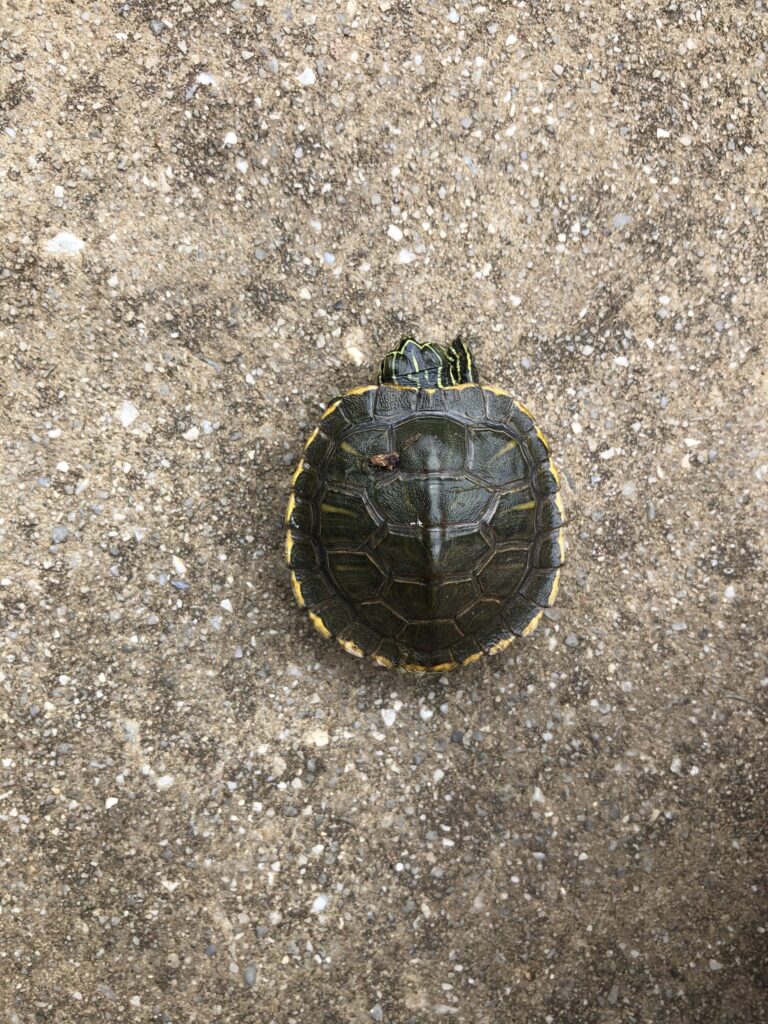
The Cumberland turtle is found mainly in the southeastern United States. It has an oval, flattened shell that measures 12 to 21 centimeters long. The shell is olive green to dark brown in color and features a pattern of yellow or orange lines.
Diet
The Cumberland turtle is omnivorous and its diet varies depending on its age and the habitat in which it lives. Juveniles tend to be more carnivorous, feeding mainly on aquatic invertebrates such as insects, crustaceans and mollusks.
Small land turtles
Below we show some species of small land tortoises:
Russian Tortoise
Characteristics
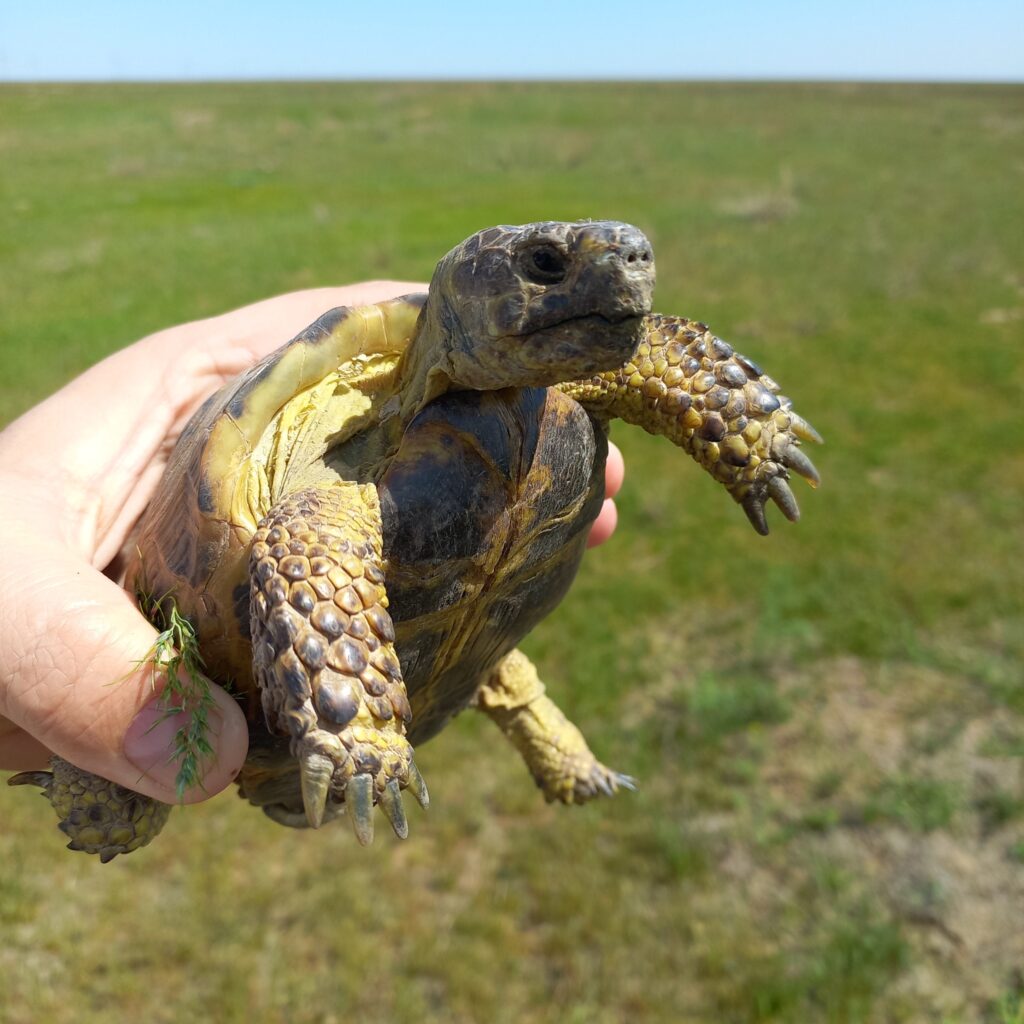
The Russian tortoise (Testudo horsfieldii) is native to Central Asia and is a small species of land tortoise. These tortoises reach a size average of 15 to 20 centimeters in length and its shell is light brown with black spots. The Russian tortoise is known for its hardiness and longevity, living up to 50 years in captivity.
Habitat
The natural habitat of the Russian tortoise includes arid and semi-arid areas, such as deserts, steppes and scrublands. In captivity, these tortoises require a large space with suitable substrate for digging, areas of sun and shade, and a shelter where they can hide.
Diet
Russian tortoises are herbivorous and their diet in captivity should be high in fiber, including a variety of leafy greens, flowers and herbs. It is important to avoid foods high in protein and fats, as they can cause health problems in these tortoises.
Tips for caring for small turtles
- Feed your turtle a varied, balanced diet.
- Maintain proper temperature and humidity in the terrarium.
- Regularly clean the terrarium and the water area.
- Provide an enriched environment with hiding spots and climbing areas.
- Visit the veterinarian for regular check-ups to keep your turtle healthy.
Small turtles for sale
Regulation in the sale of small turtles varies by country and local laws. In the United States, for example, the sale of small turtles with a shell less than 10 cm (approximately 4 inches) has been prohibited since 1975. The law was implemented by the Centers for Disease Control and Prevention (CDC) to reduce the risk of salmonellosis transmission, as small turtles are more likely to be carriers of this bacterium.
In other countries, laws may vary, but it is common to have regulations to protect turtles and people from risks associated with the sale and ownership of these animals. These regulations can include restrictions on the sale of wild turtles, licensing requirements for breeders and sellers, and control measures for the import and export of turtles.
Turtle Sales in Spain
In Spain, the sale of turtles as pets is subject to specific laws and regulations to protect both the animals and native species. Key regulations include CITES, which governs trade in protected species, and Royal Decree 630/2013, which controls invasive exotic species in Spain. Autonomous communities may have their own regulations. Before acquiring a turtle in Spain, it is essential to research and comply with all applicable laws and to choose responsible breeders and sellers.
Invasive Exotic Turtles: Current European and Spanish Regulations
Current European and Spanish legislation strictly prohibits the acquisition, purchase, and sale of invasive exotic species, including the Trachemys scripta and its subspecies such as the Red-eared Slider, yellow-eared slider and the Painted Turtle (Chrysemys picta). These regulations aim to protect local ecosystems and prevent possible negative impacts on biodiversity, highlighting the importance of conserving and preserving native species. For more information consult the MITECO.
The commitment of keeping turtles as pets
Before deciding to keep a turtle as a pet, it is essential to be aware of the responsibility involved. If we cannot provide appropriate housing and necessary care, it is better not to adopt a turtle. Abandoning any animal, whether a dog or a turtle, is inhumane and wrong.
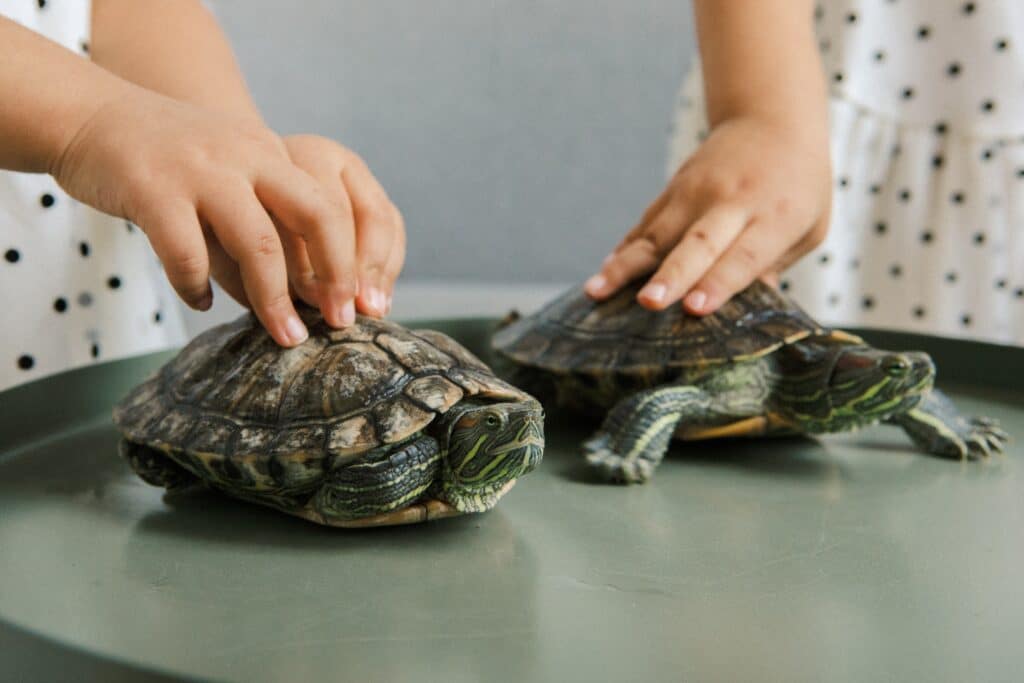
Turtles that have been raised in captivity since they were young lack the skills to survive in natural environments. In addition, releasing them into a habitat different from their own can disrupt the ecological balance by becoming an invasive species.
When acquiring a baby turtle due to space restrictions, it is vital to be cautious with the pet store. It is not uncommon for them to offer a charming small turtle that, over time, grows too large. Also, it is important to know its origin. Some businesses take advantage of this situation by capturing wild turtles, putting them at risk of disappearing
The small turtles such as the Russian tortoise, painted turtle, red-eared slider y false map turtle are popular options for those who want an exotic, manageable pet. Each of these species has unique characteristics, habitats, and dietary needs that should be considered before adopting them as pets. With proper care and handling, these turtles can become fascinating, long-lived companions for their owners.


