
Argentine Turtle
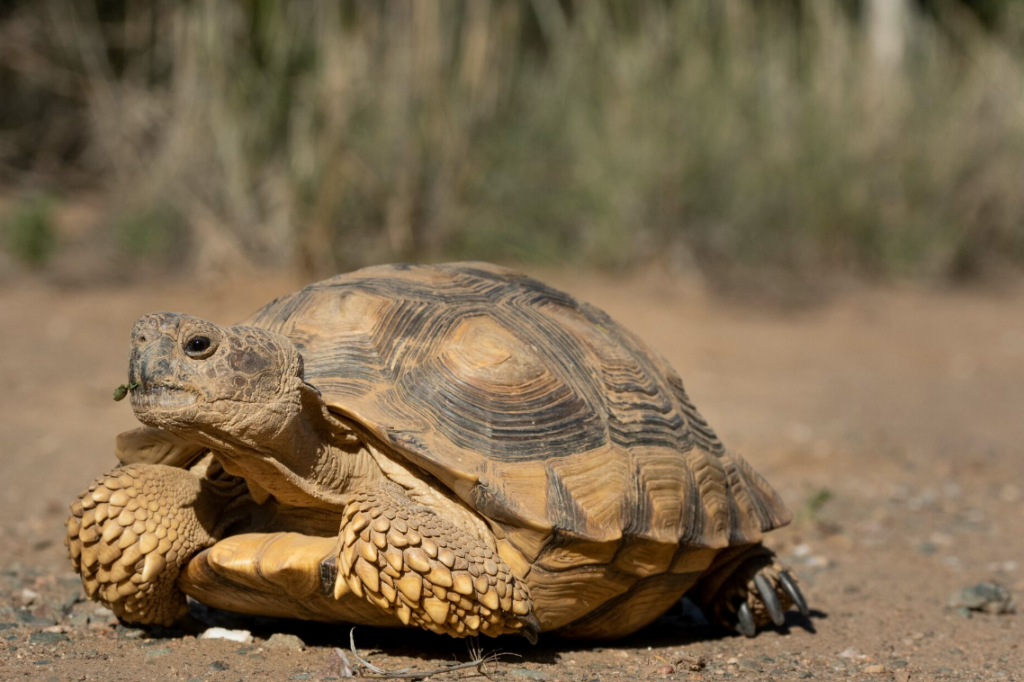
The Argentine tortoise (Chelonoidis chilensis), also known as Argentine land tortoise, Argentine sulcata tortoise o Patagonian tortoise , is a species of land tortoise that lives in Argentina and parts of Bolivia and Paraguay.
Distribution
The Argentine tortoise (Chelonoidis chilensis) is mainly found in Argentina, although it can also be seen in Bolivia and Paraguay, south of the areas where the species Chelonoidis denticulata y Chelonoidis carbonariaare distributed. This tortoise inhabits the drier Chaco phytogeographic provinces and the Monte region, and can occasionally be found further south.
Characteristics
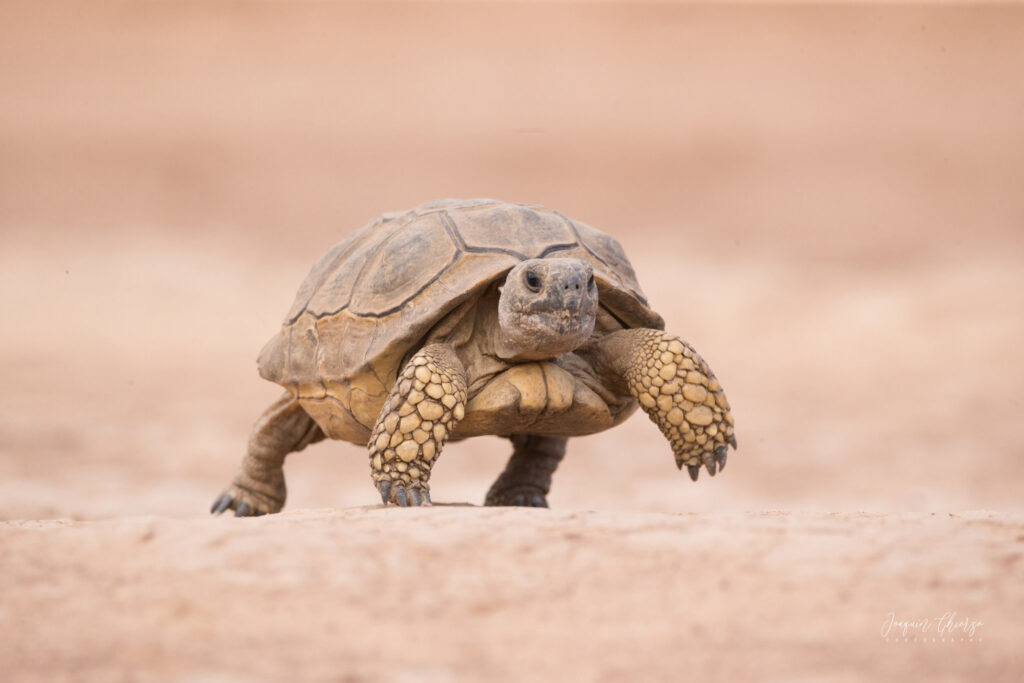
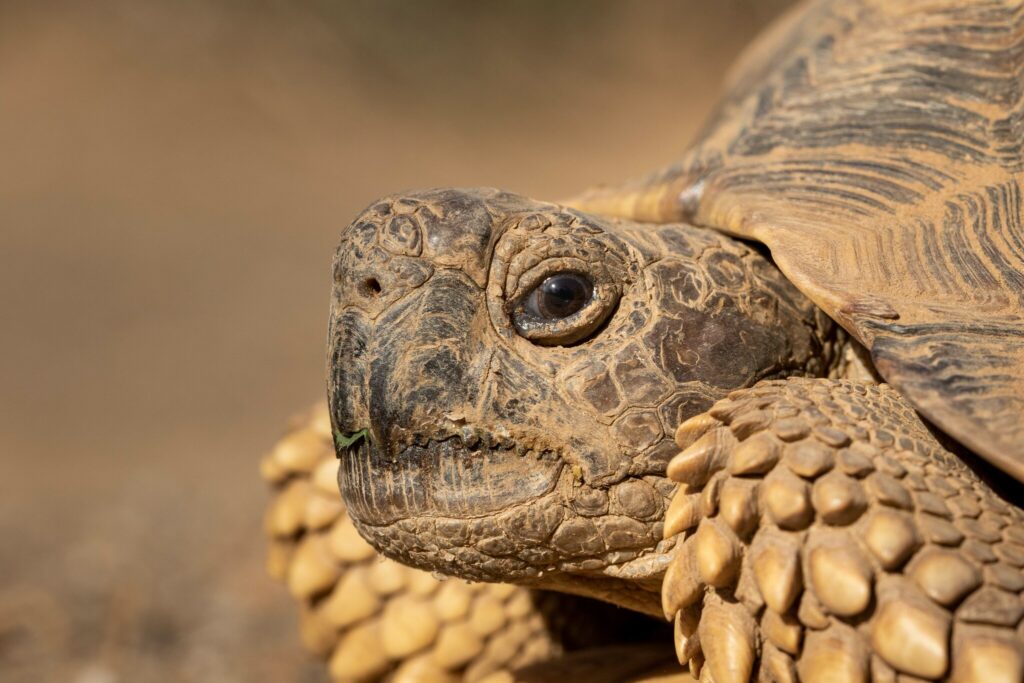
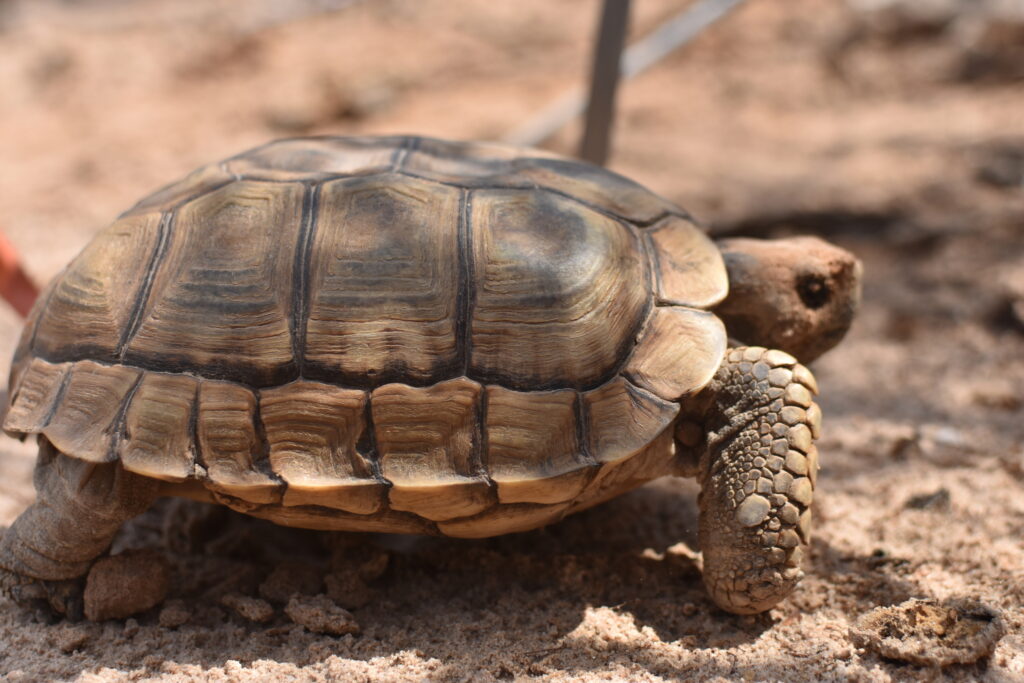
The Argentine tortoise has a morphology quite similar to that of Centrochelys sulcata, an African species. Like the latter, the Argentine tortoise lives in dry, arid environments with sparse vegetation. Its overall shape is oval and flat, with thick plates that have very pronounced growth rings, a uniform yellow color, and grayish skin. Its square head also makes it resemble Centrochelys sulcata.
The identification of the Argentine tortoise (Chelonoidis chilensis), is very simple. In males, its shell is almost black, while in females it is light brown. Its head, legs, and tail have a grayish tone.
The plastron of the Argentine tortoise has a yellowish coloration with brown sutures, which becomes uniformly yellow to brown as it ages. In males, the concavity under the plastron is small and sexual dimorphism is moderate.
The front legs are long and have pointed scales that are easily identifiable. The hind legs resemble those of an elephant.
Its eyes are small and dark compared to its body size.
How to tell females from males
Females tend to be lighter in color and larger in adult size than males. There are other traits that help distinguish between a specimen male or female Chelonoidis chilensis, such as:
- The female's tail is shorter than the male's.
- The male's plastron is concave, while the female's is flat.
- The angle of the anal scutes is larger in males than in females.
Subspecies
Regarding the subspecies of the Argentine tortoise, some experts suggest there are three, but not everyone agrees.
These described subspecies are the Chelonoidis chilensis chilensis, Chelonoidis chilensis donosobarrosi which lives in the south of La Pampa province up to Rawson in Argentina, and is characterized by being larger and darker than the other subspecies. The third species Chelonoidis chilensis petersi that isfound in the Chaco region of Paraguay and Argentina, and is currently considered by some as a distinct species.
Habits
The Argentine land tortoise is found in areas with sparse herbaceous cover, where cacti and thorny shrubs are abundant.
This species often inhabits salt flats, riverbeds in the semi-desert plain, and sometimes rocky slopes of ancient volcanic mounds. To protect itself from the sun, it uses natural holes and cavities.
During the rainy season, it is mainly active during the early hours of the night, while in summer, it comes out early in the morning and late in the afternoon. Its annual cycle begins with activity between November and December, followed by reproduction.
Then, at the end of March, it retreats to its winter shelters. It mainly feeds on legumes, cactus pads, fallen fruits, flowers, and grass spikes, and appears to be exclusively herbivorous.
How big is the Argentine turtle?
These turtles can grow up to up to 28 cm long, with females being larger than males.
How long does an Argentine land turtle live?
The lifespan of this species is shorter compared to other land turtles, with an expected life of around 40 years.
Argentine turtle care
Below we show the care for the Argentine land turtle depending on where it is housed.
Indoor care
Terrarium features
To keep land turtles indoors, the most common method is using an indoor terrarium. For a baby turtle, the indoor habitat should be at least 60 x 90 cm, while for an adult turtle, the indoor habitat should be at least 120 x 120 cm and should increase as the turtle grows. Holes can be made in the bottom of the terrarium to place food, water, and eventually nests with easy access for the turtles.
It is essential to provide access to water in the habitat so the turtle can hydrate. The area should be large enough for the turtle to fully soak itself but not so deep that it could drown. A small tray is suitable for this purpose. As substrate, dry grass can be used in the dry portion of the habitat. Turtles are very sensitive to excess moisture, and dry grass protects them from it. Additionally, a food source should be provided, remembering to remove the grass once it becomes damp or starts to decompose.
No products found.
Turtle lamp
In one corner of the habitat, a "spot" lamp should be placed to provide the turtle with a place to regulate its body temperature when it needs to warm up. The lamp should be positioned to provide a regulation point of around 35 degrees Celsius. The habitat should also be equipped with a source of UVB light, necessary for the synthesis of vitamin D3 (for the calcium metabolism). If preferred, a mercury vapor bulb can be used, as it meets both requirements (heat and UVB). Currently, we recommend for UVB rays:
No products found.
Although the Argentine tortoises can survive in cold temperatures, cold combined with humid conditions can result in respiratory distress. This species should be kept in an area with a dry spot where they can take refuge when needed. Another important element the habitat must have is a box in a corner away from the hot spot (where the heat lamp is) so it can retreat to a cooler, darker place.
Outdoor care
Keeping tortoises outdoors in safe, predator-proof places offers many advantages over indoor habitats and should be considered when the temperature allows. Because these tortoises are skilled diggers, the habitat must be fenced, extending below ground level. In areas with high rainfall probability, care must be taken to ensure the habitat does not become too wet to avoid pyramiding, which makes the diet even more important.
A diet high in fiber, low in protein, and rich in calcium It will ensure the proper functioning of the digestive tract. Excessive use of supermarket vegetables should be avoided. In their natural habitat, these turtles are exclusively herbivorous and feed on legumes, stems, cactus fruits, grasses, and some flowers.
What does the Argentine land tortoise eat?
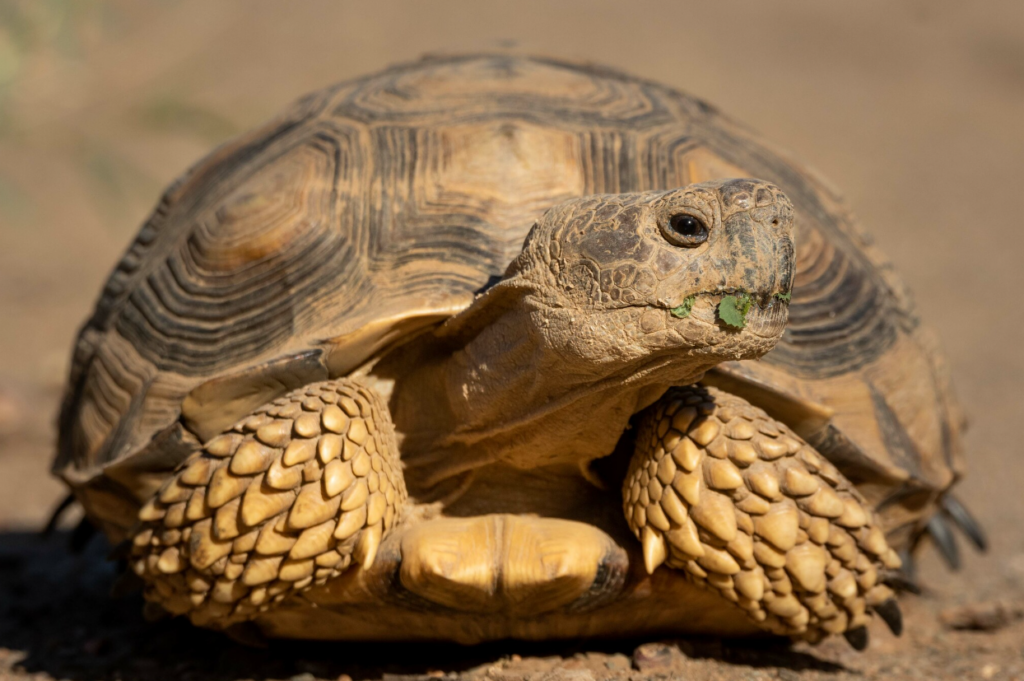
The ideal diet for the Argentine land turtle is exclusively herbivorous, based on its natural feeding habits. In its natural habitat, this turtle consumes legumes, stems, and cactus fruits, grasses, and some flowers to obtain all the necessary nutrients. To avoid health problems in captivity, a diet high in fiber, low in protein, and rich in calcium is recommended, which will ensure proper digestive tract function and adequate growth. We must keep in mind that these turtles tend to pyramiding and to develop bone imperfections in captivity.
Dietary supplements for Argentine tortoise
To complement its diet, leafy vegetables such as dandelion, endive, grape leaves, herb mixes, and grasses can be provided. The use of additional powdered calcium supplements (calcium carbonate) that can be sprinkled on the food is recommended. The use of Calcium and vitamin D3 is suggested if the animal is kept indoors, and only Calcium without vitamin D3 if it is kept outdoors. It is also possible to provide cuttlefish bones to maintain calcium levels and proper beak growth. The use of vitamin and mineral complexes is highly recommended for the healthy development of the Argentine tortoises.
No products found.
List of plants for Argentine land tortoise
Here is a list of recommended plants to feed your Argentine tortoise:
- Buchloe dactyloides
- Dactylis glomerata
- Andropogon gerardii
- Andropogon scoparius
- Agropyron smithii
- Festuca arizonica
- Festuca arundinacea
- Festuca rubra (recommended grasses for species from similar climate regions)
You can include in its diet:
- Dandelion (leaves and flowers)
- Sphaeralcea grossulariaefolia (leaves and flowers)
- Lamium amplexicaule (leaves and flowers)
- Alcea rosea (leaves and flowers)
- Roses (flowers only)
- Chinese rose (leaves and flowers)
- Morus species (leaves only)
- Grape (leaves only)
Other options are some green leafy vegetables, such as romaine lettuce, chicory, endive, pumpkin (in small amounts), zucchini (in small amounts), and cucumbers (in small amounts). We must ensure that its diet is rich in fiber, low in protein, and high in calcium for proper digestive tract function and adequate growth.
Reproduction
During the mating period, male Argentine tortoises compete in violent fights. Afterwards, courtship begins with quite loud grunts.
Egg laying occurs between January and February, with an average of 3 to 7 spherical eggs about 4 cm in diameter.
Hatching takes place after three months, following sporadic and rare rains, and sometimes even up to a year later.
The young measure approximately 3 cm and grow slowly.
Sexual maturity is quite early, with fertile copulations at 10 years of age.
Conservation status
In its natural habitat, the Argentine land tortoise it faces threats such as overgrazing and the expansion of urban and cultivated areas.
It was previously heavily collected for sale in pet stores in large cities, leading to a rapid decline in its populations. Currently, the Argentine land tortoise is listed in the Appendix II of CITES for its protection and conservation.
 Silvia


Related content