
Matamata turtle
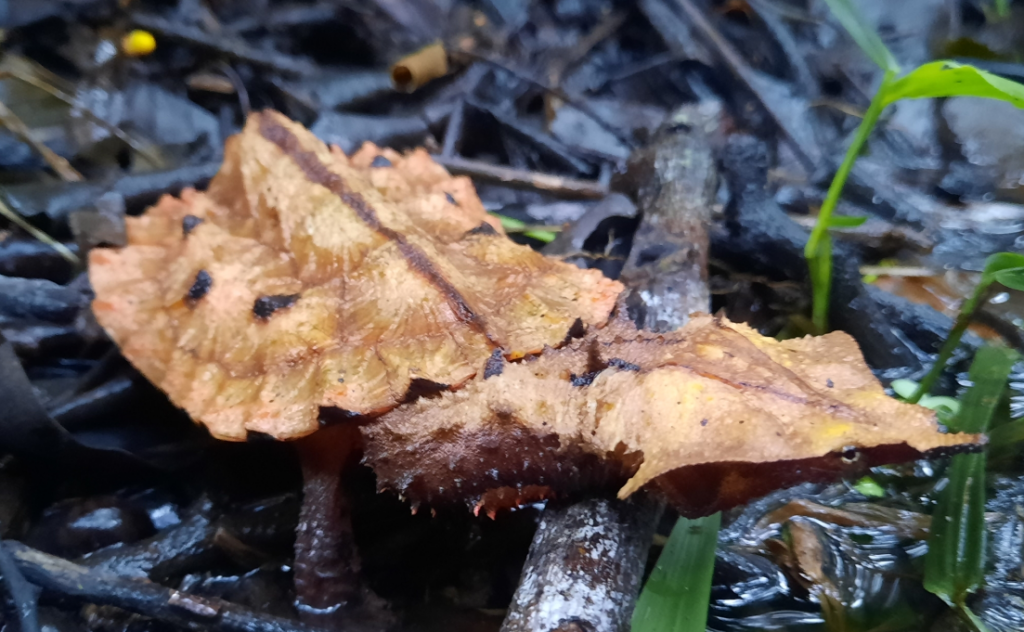
The matamata turtle (Matamata Turtle), is a species of aquatic turtle found in South America, from Venezuela to Argentina. It is one of the strangest and most distinctive turtles in the world, easily recognizable by its extremely long head and neck and its flat, dark shell with sharp ridges.
Distribution
The matamata turtle is a species exclusive to South America distributed throughout the entire Amazon basin, as well as in the Guianas, northern Bolivia, eastern Peru, Ecuador, eastern Colombia, and Venezuela.
Characteristics
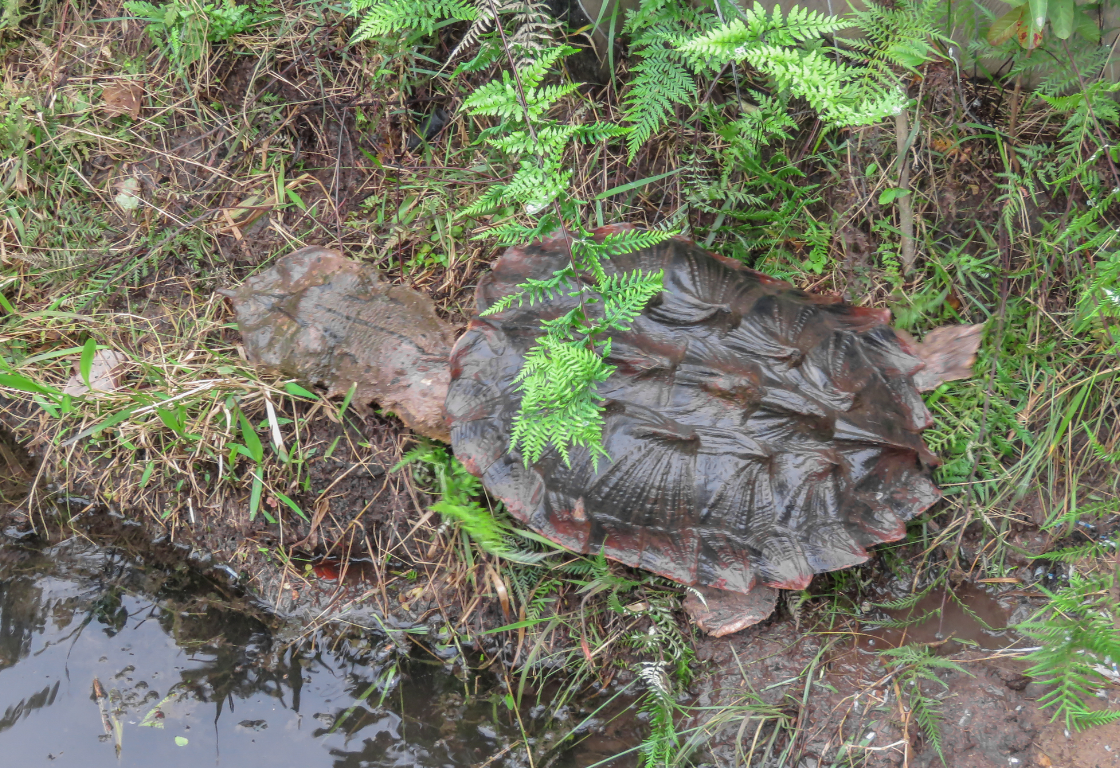
This species is easily distinguishable from any other due to its unique features. Its shell, with a reddish-brown toothed tone, along with the bumps on its neck, resemble a pile of dead leaves. Its camouflage is perfect, allowing it to blend into its natural environment of shallow, muddy waters filled with plant debris.
The carapace is flat, with ridges forming three keels in adult animals, and the scales are rough with noticeable growth lines.
Algae and aquatic plants often cling to its shell, making it even more camouflaged. The plastron is narrow, with short bridges and a large anal notch, without hinges (a protective system that prevents the turtle from drying out).
The head is unique among turtles, shaped like a flattened triangle, very wide behind the eyes, with a tubular snout. The head and neck are covered with numerous bumps and tubercles, giving it an organic appearance. The look of local aquatic plant leaves resembles the matamata turtle's head, which is how the turtle stalks its prey.
The baby matamata turtle It is more colorful than adults, with a light brown carapace, a black line along the central keel, and an orange spot on the outer edge of each marginal scute. The plastron, bridge, and underside of the marginals are pink with dark seams, while the head is brown with three darker bands and three pink or reddish bands along the neck.
How big is the matamata turtle?
The matamata turtle is a large species compared to other aquatic turtles. Adults can measure from 35 cm up to a maximum of 50 cm, with an average length of around 40 cm. Females are generally larger than males, although the differences are slight.
Regarding its weight, the matamata can reach a maximum of 15 kg. making it one of the heaviest turtles in South America. Although size varies depending on the region and environmental conditions, the largest specimens are found in the Amazon and nearby tropical areas. It reaches its adult size after several years.
How long does the matamata turtle live?
In captivity, the matamata turtle can live more than 30 years, although some have exceeded 40 years of age. This is because in a controlled environment, all the nutritional and health needs of the animal can be guaranteed.
In the wild, the matamata's lifespan is probably shorter due to environmental conditions such as climate variation and threats from natural predators. Humans also pose a threat to the species' survival, as it is often captured as a pet or for consumption. The fact that the matamata turtle has a slow growth rate and late sexual maturity (5-8 years) makes the species particularly vulnerable to human exploitation.
What is the habitat of the matamata turtle?
The matamata turtle is a species that mainly inhabits the swamp bottoms y slow rivers, where it moves stealthily to stalk its prey. This turtle prefers calm, shallow, muddy waters with abundant debris. Likewise, this species adapts better to warm waters, where it can regulate its body temperature more effectively.
It feels comfortable in habitats that provide excellent camouflage, allowing it to go unnoticed by its prey or other predators that could pose a threat.
Habits
When this turtle is at the bottom of rivers, it blends in with the substrate and remains motionless for hours with its mouth open. If prey appears, it quickly sucks it in with a strong suction movement caused by the pharynx and esophagus. This unique behavior in turtles has been documented by the University of Vienna using high-speed cameras. The matamata turtle can hold its breath for long hours thanks to its ability to absorb oxygen through the pharyngeal and cloacal mucous membranes.
Although it is inactive outside its hunting periods, it moves by walking on the bottom with its powerful legs. It rarely swims and is almost never seen out of the water, as it lives in warm waters and does not seek to bask on the shores.
What does the matamata turtle eat?
The matamata turtle is a species that primarily feeds on live fish in the wild. They can also accept some invertebrates as food. In captivity, they can get used to chopped fish, but it is recommended not to overfeed them very fatty fish. It is advised to feed them daily, or at least four to five times a week, especially when they are young and smaller. Once they are adults, feeding frequency can be reduced.
Matamata Turtle Care
- Feeding: The matamata turtle is a carnivorous species. In its natural environment, it mainly feeds on aquatic invertebrates and fish. It is essential to provide them with a proper diet consisting of food smaller than the diameter of their mouth, as they cannot chew.
- AcquisitionMatamata turtles can be purchased at specialty exotic pet stores, although their availability is limited, making them relatively expensive. Their unique appearance makes them interesting pets. Despite their size, they do not require a very large space due to their slow and sedentary nature, spending most of their time floating in the water.
- Behavior: These turtles tend to be shy and cannot be handled easily. It is not expected that they develop an emotional bond with their owners; in fact, excessive contact can stress them out.
- Water Quality: Maintaining water quality is essential to keep the matamata turtle healthy. These turtles are freshwater species, so it is crucial to keep the water clean and of good quality year-round. To promote their growth, it is recommended to use slightly acidic water with a high tannin content.
- Water Filtration: An appropriate filtration must be provided to keep the water quality optimal. This involves using efficient filtration systems suitable for the size of the turtle's aquarium.
Reproduction
During their breeding season, which is rare in the wild, the male aggressively extends his head toward the female while opening and closing his mouth and hyperextending his limbs. The matamata lays 12 to 18 eggs on sandy shores, which have a hard shell and are small in size (average 35 mm).
Several clutches of eggs can be observed during this period, with the peak most common between November and December. The incubation time of the eggs can vary significantly depending on the humidity of the nesting site and sun exposure, although it usually lasts around 80 days.
Conservation status
The matamata turtle is not valued by local ethnic groups due to its repulsive appearance and muddy taste. However, its uniqueness makes it sought after by collectors and illegally hunted. It is sold in pet stores in the West, but breeding in captivity is difficult and reproduction is rare. Studies are needed to assess its conservation status and population in its natural habitat.
The matamata turtle price in Spain around €150, it is a turtle species that can be kept at home but is hard to find.


Leave a Reply