
Types of Turtles
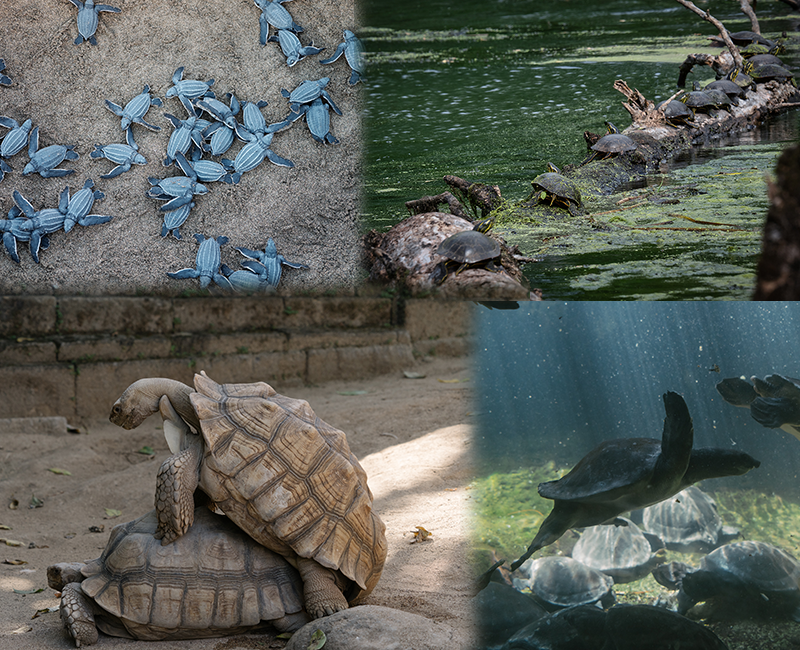
There are many types of turtles. ¿What kind of animal is a turtle? They are fascinating animals that belong to the class reptile and are characterized by having a shell that protects them from predators. There are around 356 species turtle species in the world, and in this article, we will talk about some of the turtle classes most well-known.
| Characteristic | Land Turtles | Freshwater Turtles | Sea Turtles |
|---|---|---|---|
| Habitat | Terrestrial, dry or humid areas | Rivers, lakes, ponds | Oceans and seas |
| Shell | Hard, heavy, and dome-shaped | Flatter and lighter | Streamlined and smoother |
| Limbs | Sturdy legs, like columns | Webbed legs with claws | Fins |
| Feeding | Mainly herbivores | Omnivores | Omnivores (algae, jellyfish...) |
Land Turtles
The types of land tortoises are creatures that spend most of their time on land, although some species can also get wet in the water to cool off. Below we see some types of land turtles:
Argentine turtle
Star Tortoise
Carbonaria Tortoise
Leopard Tortoise
Moorish Tortoise
Galápagos Tortoise
Mediterranean Tortoise
Russian Tortoise
Sulcata Tortoise
They types of land tortoises have a strong and sturdy shell that protects them from predators. This shell is made up of two parts like all tortoises: the plastron, which is the lower part of the shell, and the carapace, which is the upper part. Land tortoises have a small head and a long neck that allows them to reach and chew leaves and plants.
Regarding their diet, land tortoises are mainly herbivorous and feed on a variety of plants, herbs, leaves, and fruits. Some species may also include small animals, such as insects and worms, in their diet.
They types of land tortoises they tend to be solitary animals and prefer to live in dry areas, although they can also inhabit more humid regions. Examples of these tortoise breeds terrestrial ones include the moor tortoiseHerman's tortoise, the leopard tortoise, and the sulcata tortoise, among others.
It is important to highlight that many species of land tortoises are endangered due to habitat loss, poaching, and illegal animal trade. Therefore, protecting these creatures and their natural habitat is essential to ensure their survival in the future.
Giant Turtles
The giant turtles are a type of land tortoise characterized by their large size and weight, being considered the largest turtles in the world. These tortoises are native to the Galápagos Islands and the Aldabra Islands, and they have been the subject of study and conservation due to their uniqueness and ecological value.
Giant turtles have a very long lifespan, living over 100 years. They can weigh up to 400 kilograms and reach a length of more than 1.5 meters. Their shell is flatter than that of other turtles and varies in shape and size depending on the species and habitat where they live.
These turtles are herbivores and feed on leaves, fruits, and cacti found in their natural environment. Due to their large size and weight, giant turtles have few natural predators and are considered a valuable food resource for humans. This has led some species to the brink of extinction due to indiscriminate hunting.
The giant turtles play an important role in the conservation of the islands where they live, as they are vital in seed dispersal and habitat creation. They are a tourist attraction on the islands where they live, such as the Galápagos.
Although giant tortoises have been around for endangered, conservation efforts have allowed the population of some species to recover from these tortoise extinctions. Still, protecting these tortoises remains essential to ensure their long-term survival.
Sea Turtles
The sea turtles are a type of turtle that live in the ocean and are known for their large, smooth shells that protect them from predators.
Flatback Turtle
Olive Ridley Turtle
Loggerhead Turtle
Hawksbill Turtle
Leatherback Turtle
Loggerhead Turtle
Green Turtle
These types of sea turtles are migratory animals and can travel thousands of kilometers between their feeding areas and nesting sites. Sea turtles are omnivores and feed on a variety of foods, including algae, jellyfish, crustaceans, crabs, mollusks, and fish.
Sea turtles are essential in the marine ecosystem, as they help maintain balance in the food chains. They also impact the local economy in many areas where sea turtles nest, attracting tourists interested in wildlife watching.
Because of all the above, many sea turtle species are found in endangered due to bycatch, ocean pollution, habitat loss, and poaching of eggs and meat. Nesting areas of sea turtles must be protected and ocean pollution reduced to ensure the survival of these fascinating creatures.
Freshwater Turtles
The aquatic turtles o semi-aquatic turtles are a type of water turtles that live in freshwater, such as rivers, lakes, and ponds. These turtles are divided into several species, each with unique characteristics and habits. They are excellent pet turtles to keep at home in a aquaterrarium.
European pond turtle
Hieroglyphic turtle
Red-bellied turtle
Spotted Turtle
Long-necked Turtle
Malaclemys terrapin
Ocadia sinensis
Peacock Turtle
Big-headed Turtle
Forest Turtle
Chinese Turtle
Chinese Softshell Turtle
The aquatic turtles They have a hard shell that provides protection against predators and allows them to float in the water. Their body is flat and rounded, with webbed feet that enable them to swim. Their neck is long and flexible, allowing them to extend their head to reach the water's surface and breathe.
Water turtles are animals omnivores and feed on a variety of foods, such as insects, fish, algae, and aquatic plants. They are capable of diving underwater for long periods of time, which allows them to search for food and avoid predators.
Water turtles can be popular pets due to their small size and easy care, we need to carefully research the species' needs before acquiring one. Some species require more space and care than others, and not all water turtles are suitable as pets.
They semi-aquatic turtle types they influence the freshwater ecosystem by helping to control insect and fish populations, and to maintain balance in food chains. For humans, they can provide food (especially in earlier times or Asian countries) and are attractive to nature watchers.
Some species of water turtles are endangered due to habitat degradation and loss of biodiversity in freshwater ecosystems. Conserving these habitats is essential to protect these turtles and many other aquatic species.
Below, a list of some of the most common freshwater turtles in the world: Red-eared slider (Trachemys scripta elegans), Box turtle (Terrapene carolina), Map turtle (Graptemys geographica), Snake-necked turtle (Chelodina longicollis), Alligator snapping turtle (Macrochelys temminckii), Long-necked turtle (Chelodina rugosa), River turtle (Emydura macquarii), Red-necked turtle (Chelodina rubriventris), Wood turtle (Glyptemys insculpta), Yellow-footed turtle (Emydidae), among others.
Frequently Asked Questions about Types of Turtles
It is estimated that there are more than 350 types of turtles.
The types of turtles are generally divided into sea turtles, aquatic turtles y land tortoises.
There are several types of turtles that can be kept as pets, some of the most common are the freshwater turtles and the terrestrial turtles. Among freshwater turtles, one of the most popular species as pets is the red-eared slider (Florida turtle), also known as Trachemys scripta eleganss. These turtles are very active and enjoy swimming, so providing them with a spacious area with clean water and the right temperature is important. Among land turtles, we can highlight the Russian tortoise as a domestic companion.
If you need to know the type of pet turtle you have, you can follow these tips:
Examine the shell: The turtle's shell is one of the most distinctive features and can provide clues about its species. Observe the shape, size, color, and texture of the shell. Some turtles have a rounded shell, while others have a flatter, wider shell. Some species have a distinctive pattern on their shell.
Look at the head and legs: The shape of the head and legs can also be useful for identifying your turtle's species. Some species have a large, wide head, while others have a smaller, narrower head. The legs can also be short and thick or longer and thinner.
Search online: If you're unsure about your turtle's species after observing its physical features, you can look for information online. There are many websites that provide details about different turtle species and how to identify them.
Remember that accurately identifying your turtle's species may require expert help. If you're interested in more detailed information about turtle classes, it is advisable to consult a veterinarian specialized in reptiles or a herpetologist.
Exotic Invasive Turtles: Current European and Spanish Regulations
Current European and Spanish legislation strictly prohibits the acquisition, purchase, and sale of invasive exotic species, including the Trachemys scripta and its subspecies such as the Red-eared Slider, Yellow-eared Turtle and the Painted Turtle (Chrysemys picta). These regulations aim to protect local ecosystems and prevent potential negative impacts on biodiversity, highlighting the importance of conserving and preserving native species. For more information, check the MITECO.
There are different turtle classes In the world, each with unique characteristics and specific adaptations to their habitat. Turtles are fascinating animals, and their natural habitat must be protected to ensure their survival in the future.


