
Freshwater Turtles
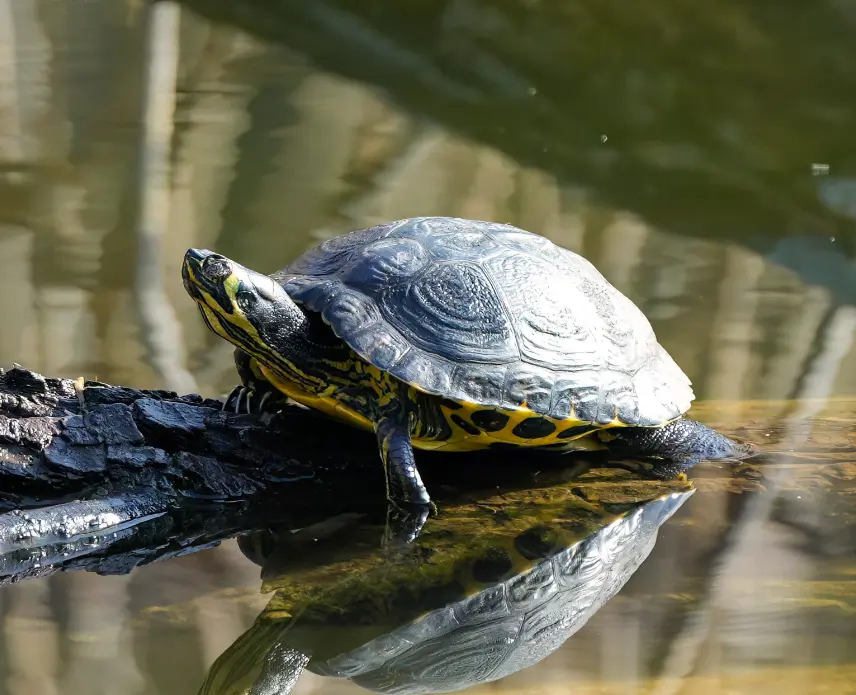
Are you a fan of turtles and thinking about having a freshwater turtle as a pet? Then you’re in the right place. In this article, you’ll learn everything you need to know about freshwater turtles, including their characteristics, care, and how to keep them happy and healthy in their habitat. Keep reading to become an expert on freshwater turtles!
Types of freshwater turtles
There are various species of freshwater turtles you can choose as pets. Some of the most popular include:
Red-eared slider
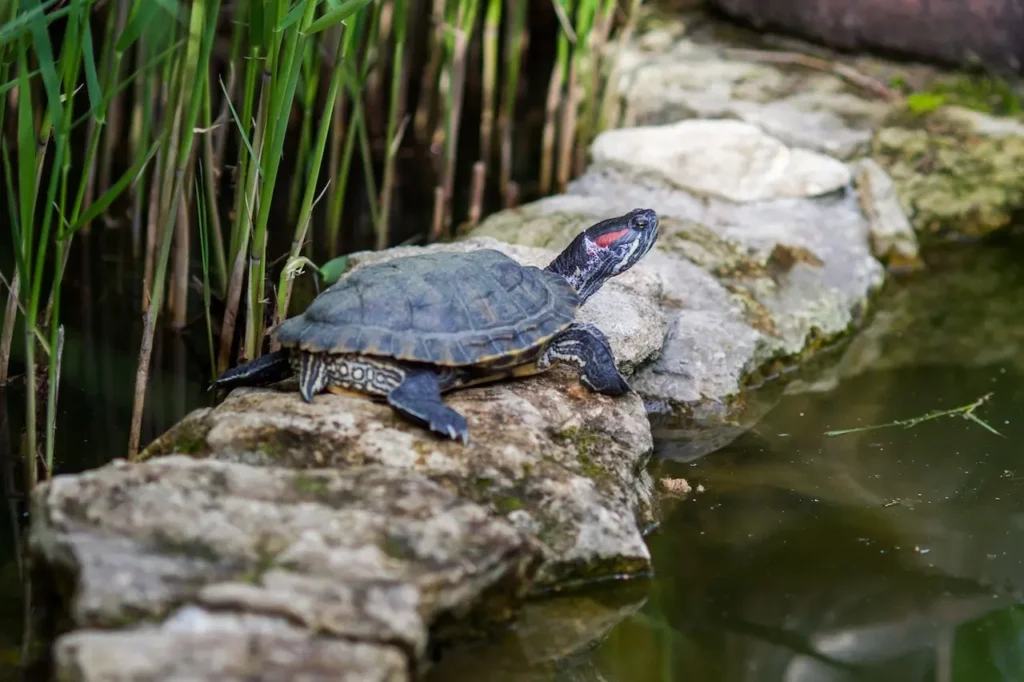
The turtle Trachemys scripta elegans, known as the red-eared slider or Florida turtle, is an aquatic reptile distinguished by its reddish stripe behind the eyes. Its oval shell, ranging from 12 to 28 centimeters, is usually larger in females than in males. Mainly aquatic, they enjoy basking on logs and rocks near the water.
They are omnivores, eating aquatic plants, insects, crustaceans, mollusks, and fish. The nest temperature determines the sex of the hatchlings during incubation. You can find more information about the red-eared slider in our profile.
False map turtle
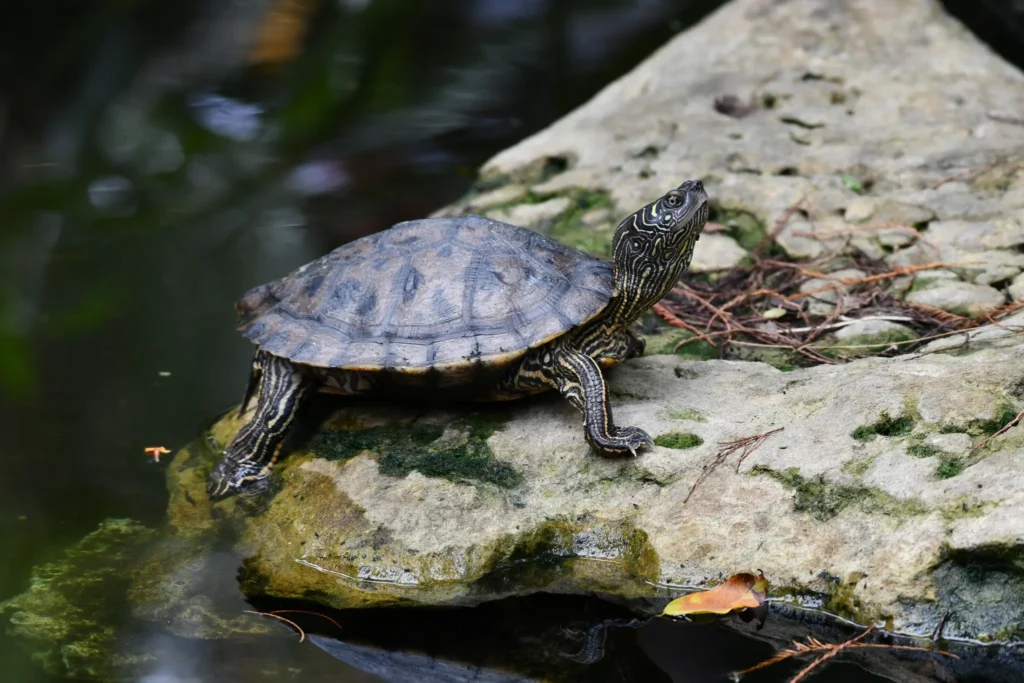
The Graptemys pseudogeographica, also known as the false map turtle, is a species of freshwater turtle belonging to the Emydidae family. It mainly inhabits rivers and lakes in North America, from the central United States to southeastern Canada. This medium-sized turtle reaches up to 27 centimeters in length for females and 15 centimeters for males. Its shell, with brown and olive tones, features a reticulated pattern that resembles a map, which gives it its common name.
The false map turtle is omnivorous, feeding on crustaceans, insects, fish, and aquatic plants. Its average lifespan is 20 to 30 years in its natural habitat. They are excellent swimmers and often bask on the water’s surface or on nearby logs and rocks. Preserving their habitat is essential to ensure the survival of this species. More information about the Mississippi map turtle.
Painted turtle
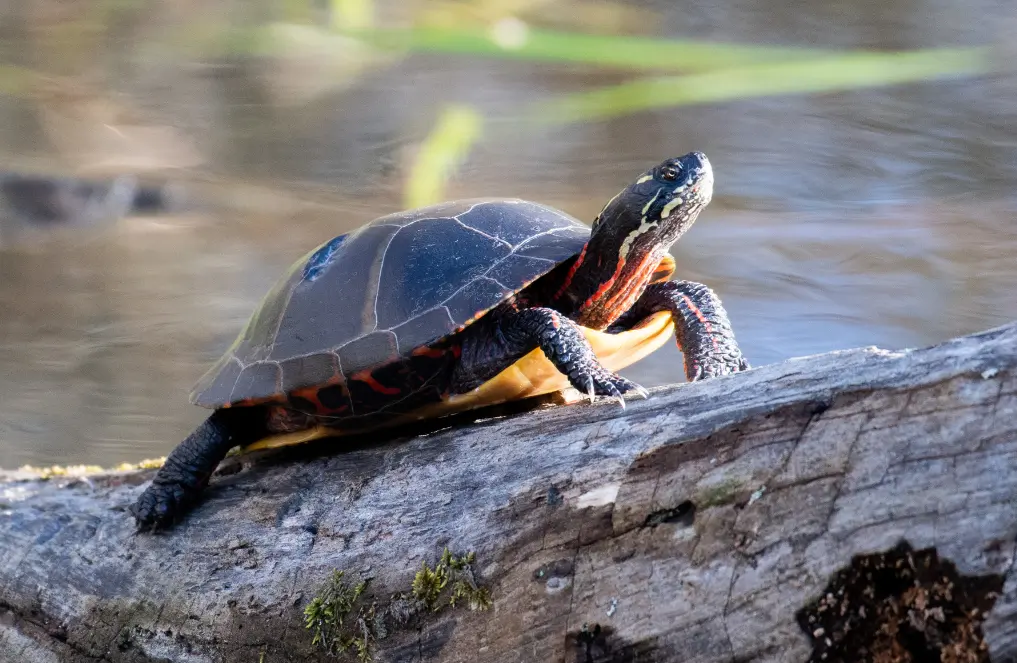
The turtle Chrysemys picta, known as the painted turtle, is a reptile species belonging to the Emydidae family. This species, native to North America, is characterized by its oval, smooth, and brightly colored shell, usually with dark green tones and red or yellow spots. Its length ranges from 12 to 25 cm, with females being larger than males. Chrysemys picta is a freshwater turtle that lives in freshwater areas such as ponds, lakes, and slow-moving rivers. Its diet is omnivorous, including aquatic plants, insects, and small crustaceans. They are oviparous reptiles and have a fairly docile temperament, making them popular as pets.
Cumberland slider
The turtle Trachemys scripta troostii, also known as the Cumberland slider, is a subspecies of freshwater turtle native to North America. This turtle is characterized by its dark green oval shell, with a pattern of yellow and red stripes on its skin and shell. The underside, or plastron, is a pale yellow color. Females are usually larger than males, reaching up to 30 cm in length, while males measure around 20 cm. This species inhabits slow-moving rivers, ponds, and lakes, feeding on a varied diet that includes aquatic plants, insects, crustaceans, and small fish. Their lifespan can exceed 20 years in captivity, and they are common as pets due to their hardiness and ease of care. Want to know more about it? Check out the Cumberland slider profile.
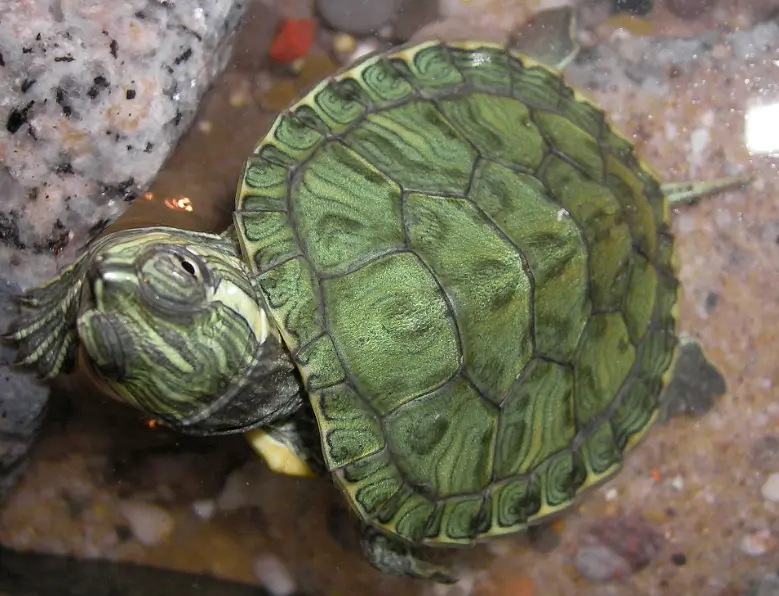
Research each species and choose the one that best suits your needs and preferences. At infotortuga we have profiles on many turtle species.
Best Aquarium Algae Control
Turtle Substrate
Best Turtle Brands
Automatic Turtle Feeder
Turtle Aquarium
Turtle Lamp
How to create a suitable habitat for freshwater turtles
To keep your freshwater turtles healthy and happy, it’s crucial to provide them with a suitable habitat that mimics their natural environment. Here are some tips to help you achieve this:
Aquarium
Choose an aquarium of adequate size for your turtle. The general rule is to provide 40 liters of water for every 10 centimeters of turtle length.
Filtration
The aquarium water should always be clean. Install a suitable filter to keep the water in optimal condition.
Temperature
Freshwater turtles need a water temperature between 22 and 26 degrees Celsius. Use an aquarium heater to keep the temperature constant.
Lighting
Provide direct sunlight or install a full-spectrum lamp that provides UVB and UVA rays to maintain your turtle’s health.
Dry area
Turtles need a dry area where they can dry off and bask. Place a floating platform or a flat rock in the aquarium.
Feeding freshwater turtles
What do freshwater turtles eat? Freshwater turtles are generally omnivorous, which means their diet consists of a combination of plant and animal foods. Some foods you can include in their diet are:
- Commercial turtle food
- Insects such as crickets, mealworms, and mosquito larvae
- Shrimp and krill
- Vegetables such as carrots, pumpkin, and kale
- Fruits such as apple, pear, and melon
Remember to feed your turtle in moderation to avoid health problems related to obesity.

- sera Raffy P es el alimento complementario, que se compone de granulado flotante, cuidadosamente elaborado, para reptiles carnívoros, como las tortugas acuáticas. La composición equilibrada y sabrosa, con ingredientes animales y vegetales, que también son necesarios, se caracteriza por sus proteínas fácilmente utilizables, hidratos de carbono de fácil digestión y su alto contenido de ácidos grasos Omega. Satisface, de manera segura, las necesidades básicas de los reptiles carnívoros. Favorece su desarrollo sano y la vitalidad.
Care and maintenance of freshwater turtles
In addition to providing a suitable habitat and a balanced diet, it’s essential to keep your freshwater turtle healthy by performing regular check-ups and cleaning the aquarium. Here are some additional tips for caring for and maintaining your freshwater turtle:
Aquarium cleaning
Perform partial water changes every two weeks, replacing about 25% of the aquarium water with fresh, treated water. Once a month, do a deeper cleaning, including cleaning the filter and removing accumulated waste.
Monitoring your turtle’s health
Pay attention to changes in your turtle’s behavior, appearance, and activity. If you notice signs of illness such as lethargy, loss of appetite, abnormal breathing, or changes in the skin and shell, consult a veterinarian specialized in reptiles.
Socialization and handling
Although freshwater turtles are not as social as other pets, it’s important to get familiar with them and handle them carefully. This will allow you to closely monitor their health and well-being. Always make sure to wash your hands before and after handling your turtle to prevent the spread of diseases.
Legal and environmental considerations
Before acquiring a freshwater turtle, find out about local laws and restrictions regarding keeping turtles as pets. Also, never release a freshwater turtle into the wild, as this can have negative consequences for local ecosystems and the turtle itself.
Invasive Exotic Turtles: Current European and Spanish Regulations
Current European and Spanish legislation strictly prohibits the acquisition, purchase, and sale of invasive exotic species, including Trachemys scripta and its subspecies such as the Red-eared Slider, Yellow-eared Slider, and the Painted Turtle (Chrysemys picta). These regulations aim to protect local ecosystems and prevent possible negative impacts on biodiversity, highlighting the importance of conserving and preserving native species.
Freshwater turtle species
Below we show a list of aquatic turtles:
European Pond Turtle
Hieroglyphic River Cooter
Red-Bellied Cooter
Spotted Turtle
South American Snake-Necked Turtle
Malaclemys terrapin
Ocadia sinensis
Meso-American Slider
Big-Headed Turtle
Wood Turtle
Chinese Pond Turtle
Chinese Softshell Turtle
Mediterranean Pond Turtle
Cumberland Slider
Mata Mata Turtle
Common Snapping Turtle
Yellow-Bellied Slider
Alligator Snapping Turtle