
Argentine Tortoise
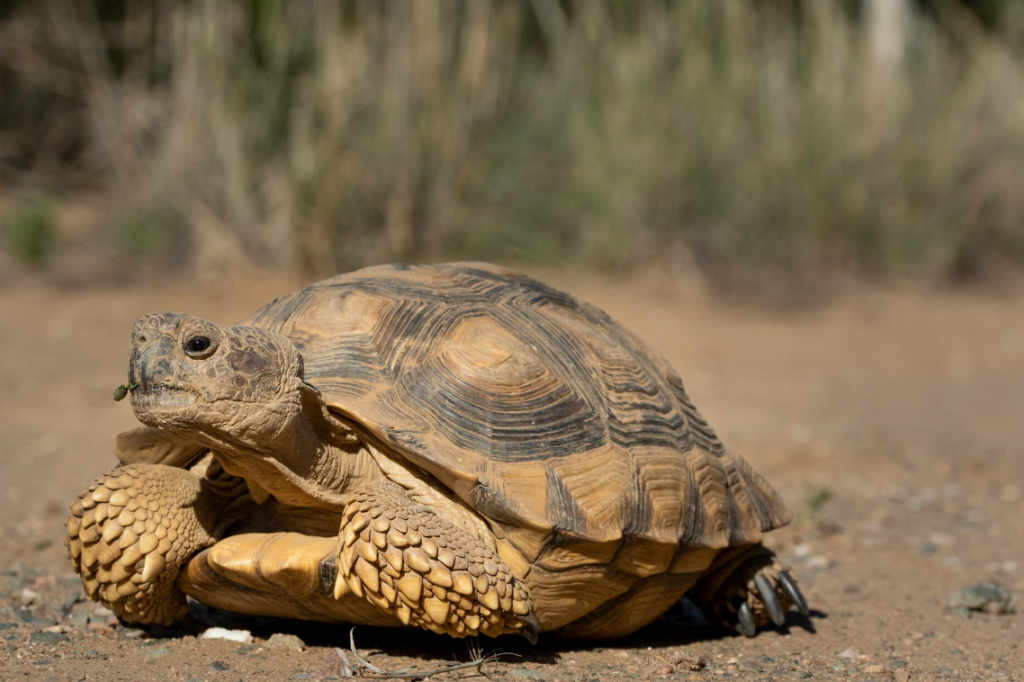
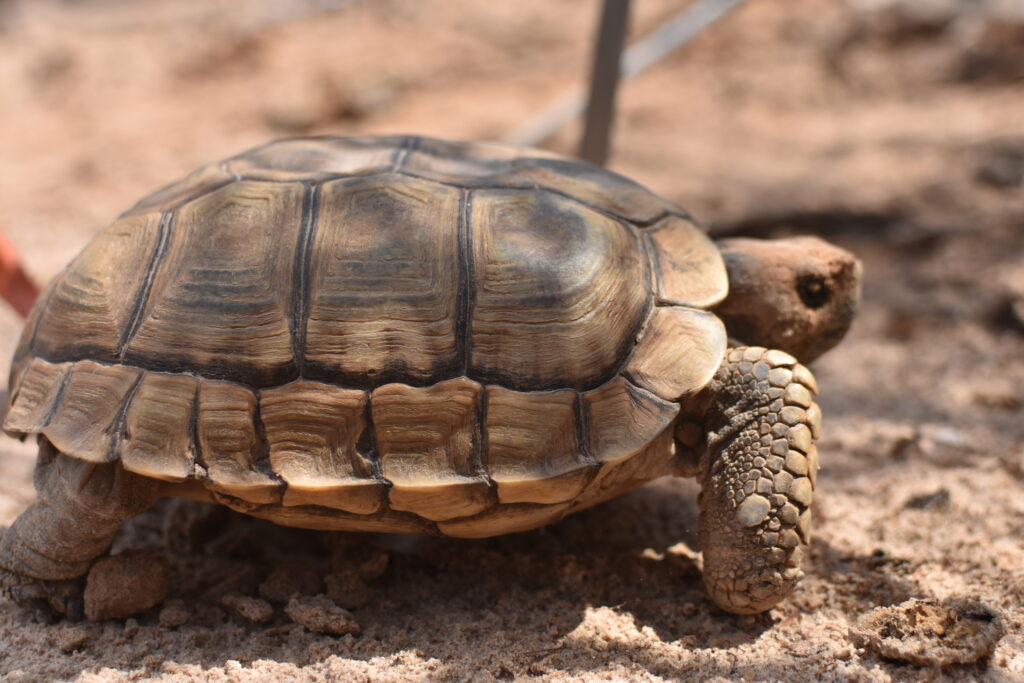
The Argentine tortoise (Chelonoidis chilensis), also known as the Argentine land tortoise, Argentine sulcata tortoise or Patagonian tortoise, is a species of land tortoise that inhabits Argentina and some parts of Bolivia and Paraguay.
Distribution
The Argentine tortoise (Chelonoidis chilensis) is found mainly in Argentina, although it can also be spotted in Bolivia and Paraguay, south of the areas where the species Chelonoidis denticulata and Chelonoidis carbonaria are distributed. This tortoise inhabits the more arid phytogeographic provinces of the Chaco and the Monte, and can occasionally be found further south.
Characteristics
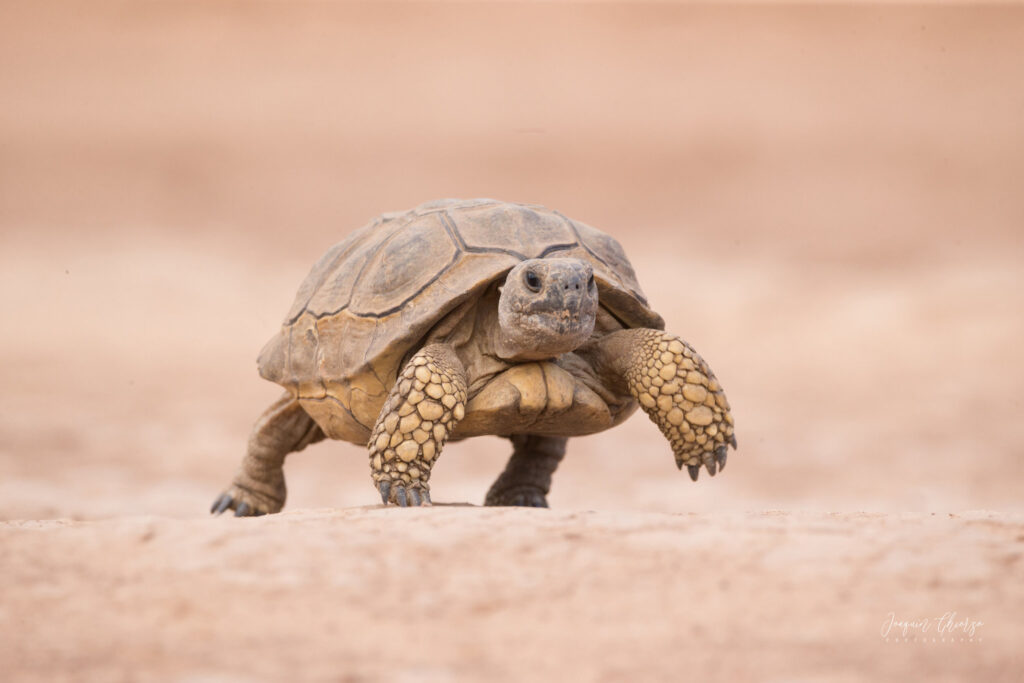
The Argentine land tortoise has a morphology quite similar to that of Centrochelys sulcata, an African species. Like the latter, the Argentine tortoise lives in dry and arid environments with sparse vegetation. Its general shape is oval and flat, with thick plates that have very pronounced growth rings with a uniform yellow color, and its skin is grayish. Its square head also makes it resemble Centrochelys sulcata.
The identification of the Argentine land tortoise (Chelonoidis chilensis) is very simple. In males, the shell is almost black, while in females it is light brown. Their head, legs, and tail have a grayish tone.
The plastron of the Argentine land tortoise has a yellowish coloration with brown sutures, which becomes uniformly yellow to brown as it ages. In males, the concavity under the plastron is reduced and sexual dimorphism is moderate.
The front legs are long and have pointed scales that are easily identifiable. The hind legs are shaped similarly to those of an elephant.
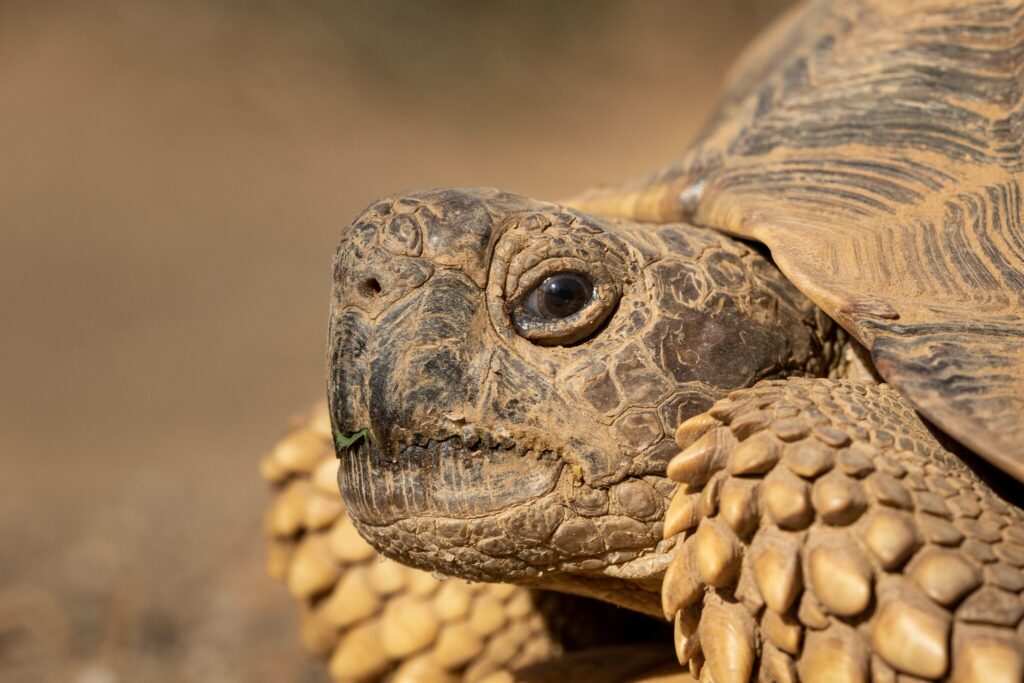
Their eyes are small and dark compared to their body size.
How to differentiate females from males
Females usually have a lighter color and are larger in adulthood than males. There are other traits that allow you to distinguish between a male or female chelonoidis chilensis specimen, such as:
- The female's tail is shorter than the male's.
- The male's plastron is concave, while the female's is flat.
- The angle of the anal plates is greater in males than in females.
Subspecies
Regarding the subspecies of the Argentine tortoise, some specialists propose the existence of three, but not all agree.
These described subspecies are Chelonoidis chilensis chilensis, Chelonoidis chilensis donosobarrosi, which inhabits the south of La Pampa province to Rawson in Argentina and is characterized by being larger and darker than the other subspecies. The third species, Chelonoidis chilensis petersi, is found in the Chaco of Paraguay and Argentina, and is currently considered by some as a distinct species.
Habits
The Argentine land tortoise is found in areas with a depleted herbaceous layer, where cacti and thorny shrubs abound.
This species often frequents saline basins, riverbeds in the semi-desert plain, and sometimes, rocky slopes of ancient volcanic mounds. To protect itself from the sun, it uses natural holes and cavities.
During the rainy season, it is mainly active during the first hours of the night, while in summer, it comes out early in the morning and late in the afternoon. Its annual cycle begins with activity between November and December, followed by reproduction.
Then, at the end of March, it retreats to its winter shelters. It feeds mainly on legumes, cactus pads, fallen fruits, flowers, and grass spikes, and appears to be exclusively herbivorous.
How big does the Argentine tortoise get?
These tortoises can reach up to 28 cm in length, with females being larger than males.
How long does an Argentine land tortoise live?
The longevity of this species is reduced compared to other land tortoises, with a life expectancy of around 40 years.
Argentine tortoise care
Below we show the care of the Argentine land tortoise depending on where it is housed.
Indoor care
Terrarium characteristics
To keep land tortoises indoors, the most common way is through an indoor terrarium. For a baby tortoise, the indoor habitat should be at least 60 x 90 cm, while for an adult tortoise, the indoor habitat should be at least 120 x 120 cm in size and should increase as the tortoise grows. In the bottom of the terrarium, holes can be made to place food, water, and eventually nests with easy access for the tortoises.
It is essential to provide access to water in the habitat, so the tortoise can hydrate. The area should be large enough for the tortoise to soak completely, but not so deep that it could drown. A small tray is suitable for this purpose. As substrate, dry grass can be used in the dry portion of the habitat. Tortoises are very sensitive to excess moisture, and dry grass protects them from it. In addition, they should be provided with a food source, remembering to remove the grass once it is wet or decomposing.

- Producto para mascotas
- Para reptiles y anfibios
- Mantillo de ciprés natural
- Genera microclima húmedo

Lamp for tortoises
In one corner of the habitat, a "spot" lamp should be placed to provide the tortoise with a place to regulate its body temperature when it needs to warm up. The lamp should be arranged to provide a basking spot of around 35 degrees Celsius. The habitat should also be equipped with a UVB light source, necessary for the synthesis of vitamin D3 (for calcium metabolism). If preferred, a mercury vapor bulb can be used, as it fulfills both requirements (heat and UVB). We currently recommend for UVB rays:

- Ideal para todo reptil habitante de desierto
- Alta producción de UVB
- Elevada conversión de D3
- Efectiva hasta 50 cm (20")
- Suministra los rayos UVB necesarios para el metabolismo óptimo del calcio
Although Argentine tortoises can survive in cold temperatures, cold combined with humid conditions can result in respiratory distress. This species should be kept in an area with a dry place where they can shelter when needed. Another important element that the habitat should contain is a box in a corner away from the hot spot (where the heat lamp is) so it can retreat to a cooler and darker spot.
Outdoor care
Keeping tortoises outdoors in safe, predator-proof places offers many advantages over indoor habitats and should be considered when the temperature allows. Because these tortoises are skilled diggers, the habitat must be fenced, extending below the surface of the ground. In areas with a high probability of rain, care should be taken that the habitat does not become too wet to avoid pyramiding, which makes diet even more important.
A diet high in fiber, low in protein, and rich in calcium will ensure proper functioning of the digestive tract. Excessive use of supermarket vegetables should be avoided. In their natural habitat, these tortoises are exclusively herbivorous and feed on legumes, cactus stems and fruits, grasses, and some flowers.
What does the Argentine land tortoise eat?
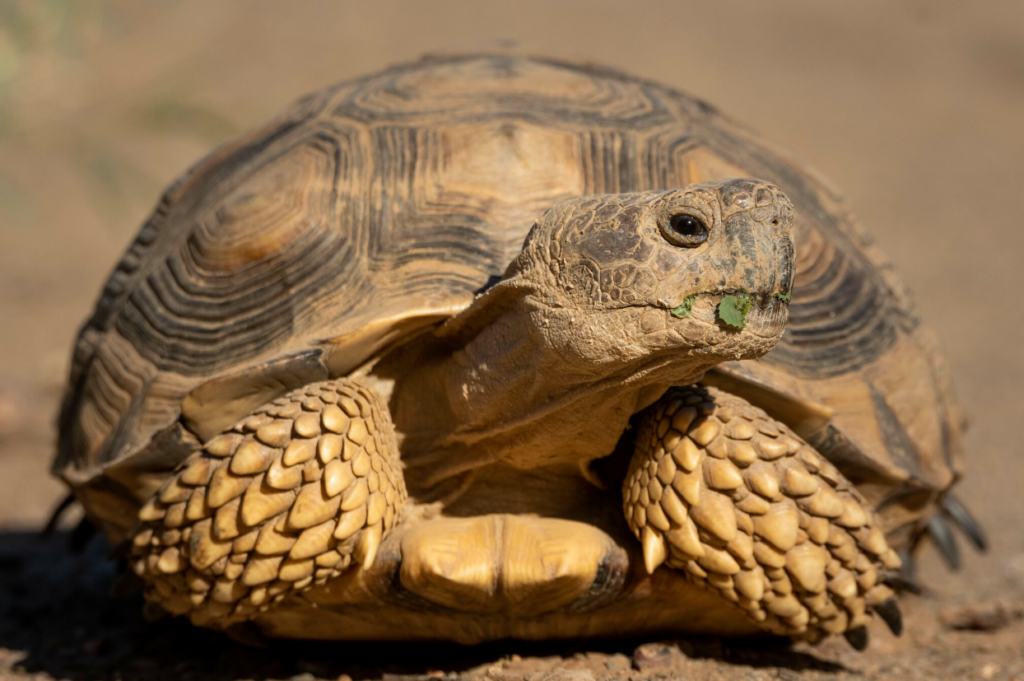
The ideal diet for the Argentine land tortoise is exclusively herbivorous, based on its natural feeding. In its natural habitat, this tortoise consumes legumes, cactus stems and fruits, grasses, and some flowers to obtain all the necessary nutrients. To avoid health problems in captivity, a diet high in fiber, low in protein, and rich in calcium is recommended, which will ensure proper functioning of the digestive tract and adequate growth. We must keep in mind that these tortoises tend to develop pyramiding and bone imperfections in captivity.
Dietary supplements for Argentine tortoise
To supplement their diet, leafy vegetables such as dandelion, endive, grape leaves, mixed herbs, and grasses can be provided. The use of additional powdered calcium supplements (calcium carbonate) that can be sprinkled over the food is recommended. The use of Calcium and vitamin D3 is suggested if the animal is kept indoors, and only Calcium without vitamin D3 if it is kept outdoors. Cuttlefish bone can also be provided to maintain calcium levels and for proper beak growth. The use of vitamin and mineral complexes is highly recommended for the healthy development of Argentine tortoises.

- Juguetes para pájaros: es muy adecuado para pájaros, y tiene el efecto de pulir y proteger el pico del pájaro. Puede hacer agujeros en los huesos de sepia y hacer juguetes de loro con otras cuentas y colgarlos en la jaula.
- El paquete incluye: Nuestro paquete incluye 6 piezas de huesos de sepia naturales, cada pieza mide aproximadamente 11-13 cm de largo. También hay 3 hebillas de metal para fijar la sepia en la jaula, lo cual es conveniente para que los pájaros muerdan.
- Adecuado: Nuestros huesos de sepia también son muy adecuados para otros animales pequeños, como tortugas y caracoles. Los huesos de sepia se pueden romper en pedazos y colocar en un tanque de vidrio para que las tortugas o los caracoles los muerdan.
- Nota: Nuestras espinas de sepia pueden dañarse durante el transporte; por favor, considérelo detenidamente antes de realizar el pedido. Los huesos de sepia rotos no afectarán el uso.
- Tamaño: el tamaño de nuestra sepia es de aproximadamente 11-13 cm. Después de pulir artificialmente los bordes de los huesos de sepia individuales, puede haber una desviación de 1 cm de tamaño. Presta atención al comprar.
List of plants for Argentine land tortoise
Here is a list of recommended plants to feed your Argentine land tortoise:
- Buchloe dactyloides
- Dactylis glomerata
- Andropogon gerardii
- Andropogon scoparious
- Agropyron smithii
- Festuca arizonica
- Festuca arundinacea
- Festuca rubra (recommended grasses for species from similar climate regions)
You can include in their diet:
- Dandelion (leaves and flowers)
- Sphaeralcea grossulariaefolia (leaves and flowers)
- Lamium amplexicaule (leaves and flowers)
- Alcea rosea (leaves and flowers)
- Roses (flowers only)
- Chinese rose (leaves and flowers)
- Morus species (leaves only)
- Grape (leaves only)
Other options are some green leafy vegetables, such as romaine lettuce, chicory, endive, pumpkin (in small amounts), zucchini (in small amounts), and cucumbers (in small amounts). We must ensure that their diet is rich in fiber, low in protein, and rich in calcium for proper digestive function and adequate growth.
Reproduction
During the mating period, male Argentine tortoises compete in violent fights. Afterwards, courtship begins with rather loud grunts.
Egg laying occurs between January and February, with an average of 3 to 7 spherical eggs about 4 cm in diameter.
Hatchings take place from three months onwards, after sporadic and rare rains, and sometimes even up to a year later.
The young measure approximately 3 cm and grow slowly.
Sexual maturity is quite early, with fertile copulations at 10 years of age.
Conservation status
In its natural habitat, the Argentine land tortoise faces threats such as overgrazing and the expansion of urban and cultivated areas.
It has previously been subject to heavy collection for sale in pet shops in large cities, which has led to a rapid decline in its populations. Currently, the Argentine land tortoise is listed in CITES Appendix II for its protection and conservation.
Contenido relacionado