
Leopard Tortoise
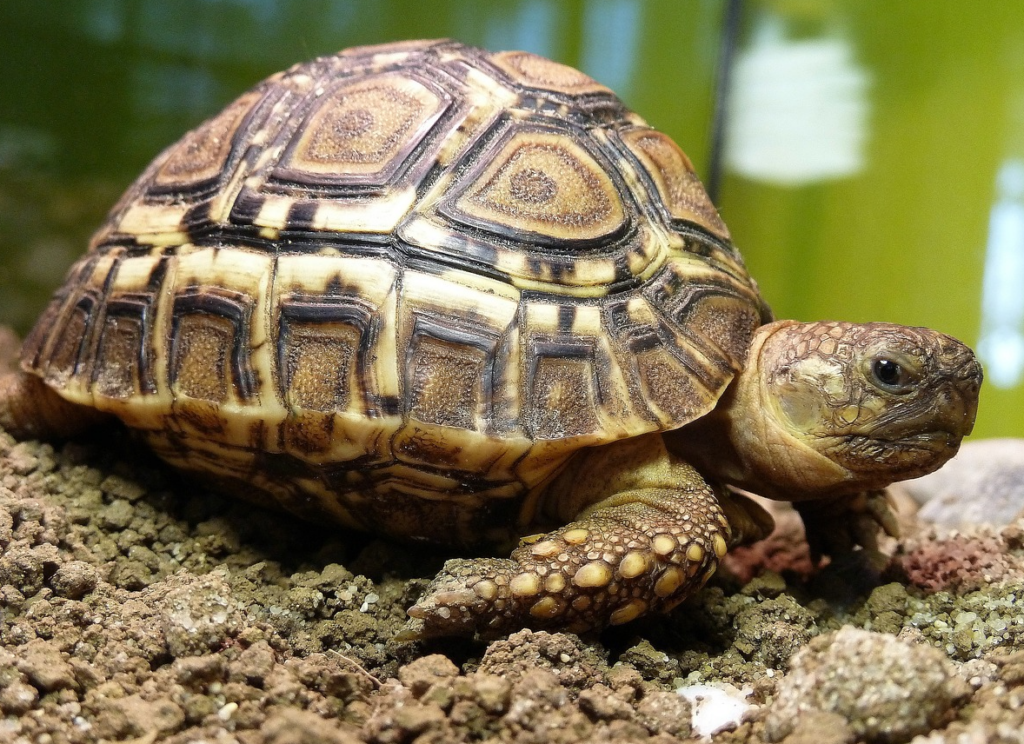
The leopard tortoise (Stigmochelys pardalis) is a species of land tortoise native to East Africa. Known for its impressive spotted shell, it is one of the most popular tortoises in the pet world and is valued for its attractive appearance and ease of care. In this post, we describe the most notable features, habitat, distribution, and reproduction of this wonderful tortoise that some turtle enthusiasts keep in captivity.
Distribution
Stigmochelys pardalis is a species of tortoise widely distributed in eastern and southern Africa, from southern Sudan, Ethiopia, and Somalia to South Africa, Namibia, and southern Angola. These tortoises inhabit environments ranging from savannas to grasslands, but are not found in wet areas. With such a wide distribution, the leopard tortoise has developed different subspecies adapted to various environments, resulting in great variability in appearance and size throughout its range.
Characteristics
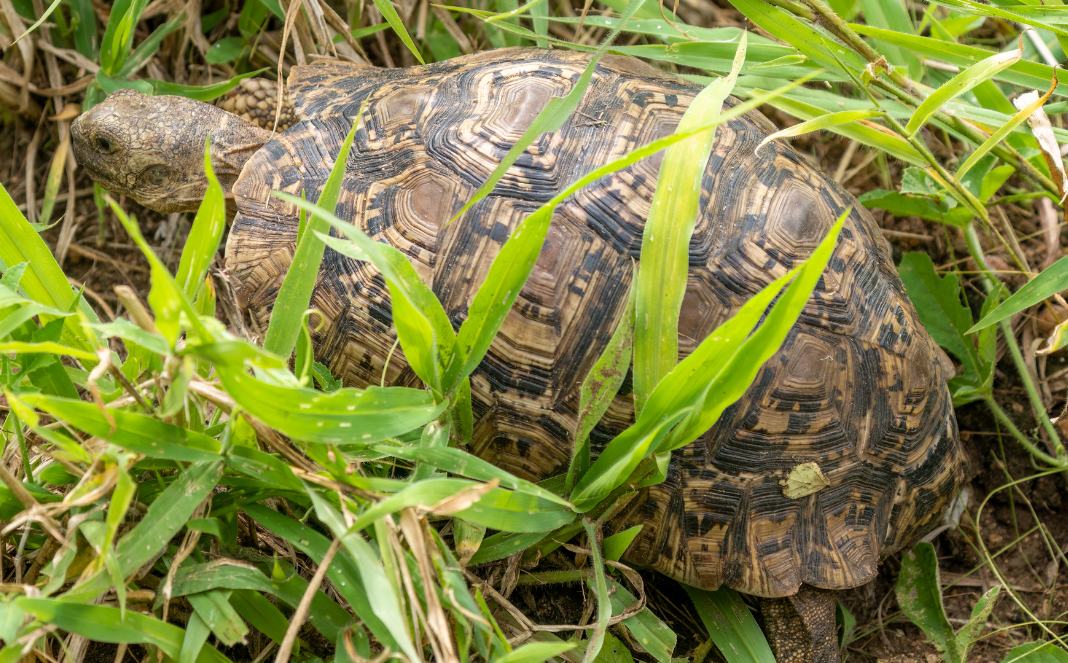
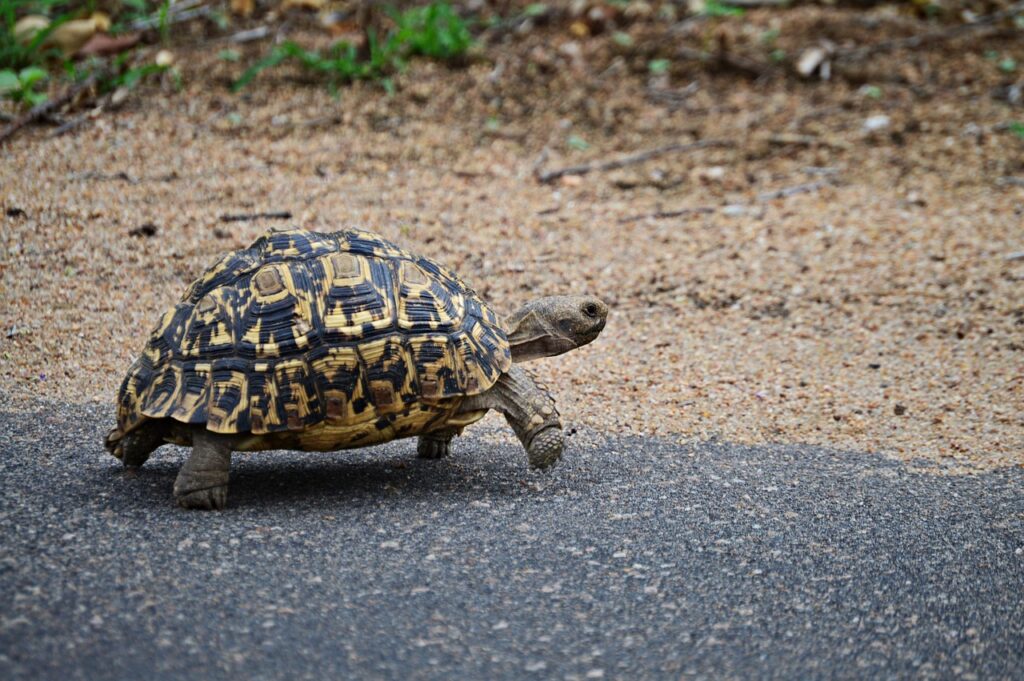
Below we show the characteristics of the leopard tortoise. It is known for its black-spotted pattern on a cream background, which has earned it its common name in different languages. The spots on its shell are irregular and vary in number depending on the region and population. As they age, their pattern sometimes fades, and some older individuals may be almost uniformly white or light brown. The leopard tortoise has conical spurs behind its thighs, and its limbs and head are a uniform yellow color. Unlike Centrochelys sulcata, its snout is not as square and it has two more isolated frontal scales. Juveniles of the species display a very pronounced leopard pattern, with unique markings on each individual, and sometimes reddish-brown marks can be seen at the sutures. The leopard tortoise has a very rounded carapace and sometimes shows a hint of a conical shape on the vertebral and costal scutes, but lacks a nuchal scute and has small eyes.
Habits
It is a highly adaptable species found in different environments across the African continent. This land tortoise has successfully adapted to the dry savannas and semi-deserts of Namibia, as well as to the mountainous areas in the eastern Cape Province and to green, grassy plains. It is a diurnal species, although on very hot days it prefers to hide under vegetation. During the cold season or at high altitudes, it shelters in existing tunnels, burrows dug by other animals, old termite mounds, or hiding places in rock piles. The leopard tortoise is also an excellent swimmer; individuals have been recorded crossing Lake Kariba with great ease.
They can travel up to 12 km over a period of a month and a half to return to their starting point.
Subspecies
Historically, two subspecies were identified: Geochelone pardalis pardalis (found in southern Namibia and the Cape Province) and Geochelone pardalis babcocki (found in the rest of the previously mentioned range), with differences in their shell design and dome. However, herpetology experts in South Africa, such as B. Branch, argue that the species shows such wide local variations that no identifiable subspecies can be distinguished. These variations may result from adaptations to different environments, such as altitude and resource availability.
How long does the leopard tortoise live?
Leopard tortoises can live up to 80 years and can grow to a considerable size, which requires adequate space to live. They also need a balanced diet and calcium supplements to maintain their health and live in good condition.
How big is the leopard tortoise?
The average size of this tortoise is usually 35 cm in adult specimens. Although the average weight of the leopard tortoise is around 20 kg, populations have been observed in Graaf-Reinet, in the Eastern Cape Province of South Africa, where individuals can weigh up to 50 kg and some large shells exceed 50 kg.
What does the leopard tortoise eat?
The diet of the leopard tortoise is mainly vegetarian, as it feeds on watermelons, succulents, herbaceous plants, and any type of wild vegetation, as well as mushrooms and different types of fruit. However, this species is also capable of surviving on the droppings of wild animals and bones from dead animals.
Reproduction
Reproduction begins with mating, which involves a classic ritual that includes ramming the female and grunting. Egg-laying takes place before the warm months, and females dig nests in rocky places after urinating. Each nest contains four to eight spherical eggs about 4 cm in diameter, and there can be up to six clutches per year. Incubation, which depends on rainfall, can last up to 380 days. The hatchlings weigh around 30 g, and their high mortality is due to predators such as bats, monitor lizards, and snakes. Interestingly, in Kruger Park, lionesses have been observed piercing the carapace of these tortoises with their claws to feed on them.
Leopard tortoise care
The leopard tortoise is a species that is easy to breed and raise in captivity, but it requires large amounts of food and space. In warm climates, they can live outdoors in spacious enclosures, while in cold climates they need indoor enclosures with heating and a constant source of light and warmth. They also need an adequate intake of calcium and exposure to UVB rays to prevent the onset of fibrous osteodystrophy. We must provide a water dish and a suitable environment in the terrarium to ensure good health and well-being.
Conservation status
Since exports of sulcata tortoises were restricted, the tortoise trade has shifted toward this species, which has abundant populations and is highly valued by collectors. Significant collections have been reported in Tanzania and Kenya, and Western pet stores are increasingly selling specimens. Although it is no longer common, it is still consumed by some ethnic groups. However, frequent fires in Africa destroy their habitats and cause the death of many animals. A skin disease affecting keratin growth has been observed in these tortoises. In South Africa, several reserves protect this species.
Accessories for land tortoises
Accessories for land tortoises can vary depending on the specific needs of each species, but here are some examples of essential items that could be included:
Other types of land tortoises
There are several species of land tortoises besides the leopard tortoise, including the Russian tortoise, box turtle, African spurred tortoise, Greek tortoise, giant Galapagos tortoise, Alpine tortoise, Hermann's tortoise, red-footed tortoise, and desert tortoise. All these species have unique characteristics and specific care and dietary requirements.