
Turtle Substrate
The substrate for turtles is the material that is placed at the bottom of the aquarium or terrarium for aquatic and terrestrial turtles. It is an important element in creating the right habitat for them. We must choose the appropriate substrate for the needs of your turtle species, as different species may require different types of substrate. It is also important to consider the type of aquarium or terrarium being used, as some substrates may be more suitable for aquariums and others for terrariums. When starting out in the world of turtles, one often wonders how to make an aquaterrarium or terrariums for turtles, and how to buy substrate, since it is a key point to consider.
When a turtle is born, the substrate becomes a fundamental element with which it is in constant contact. Therefore, it is crucial to carefully choose the right substrate for its habitat. Unfortunately, many people neglect this aspect and focus only on diet or lighting. Selecting the wrong substrate can result in catastrophic consequences for the turtle's health. Choosing the correct substrate is of vital importance.
Gravel or stone is a popular substrate option for aquatic turtle aquariums, as it is easy to clean and does not decompose over time. Sand is another popular option, but it should be coarse sand and not fine sand that could be inhaled by the turtle. Soil can also be used as a substrate for aquatic turtles that also need a dry area in their aquarium or terrarium. Moss or coconut fiber are popular options for providing a humid area for terrestrial turtles, as they retain moisture and are soft to walk on.
Turtle substrate comparison
We show a comparison of terrarium substrates and aquarium substrates.


Substrate for aquatic turtles
There are several types of substrates available for aquatic turtles, each with its own advantages and disadvantages. Some of the most common substrates include gravel, sand. It is important to choose a substrate that is safe for turtles and easy to clean and maintain. The substrate for aquatic turtles should be sized so that it cannot be ingested in the case of gravel or stones.
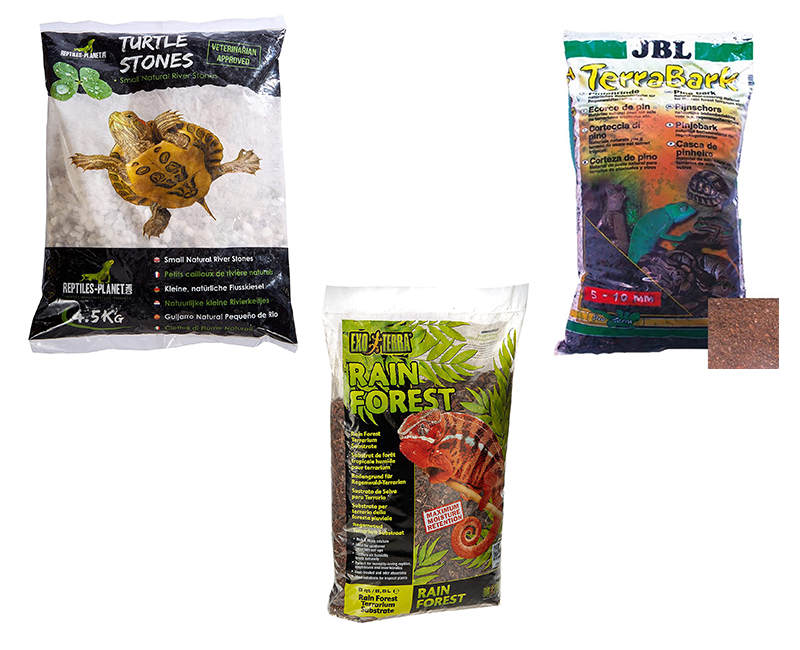
EXO TERRA Guijarros Turtle Pebbles
Exo Terra offers smooth river stones specially designed for turtles. These stones, rounded by the fast movement of water, prevent injuries in the home and to turtles that may seek shelter among them. In addition, the variations in colors and patterns of the stones create a natural-looking riverbed in the turtle's aquarium or terrarium.
Another advantage of Exo Terra turtle stones is their durability and ease of cleaning, making them reusable and economical in the long term. Furthermore, the large stones are especially suitable for aquatic turtles, providing a stable and comfortable surface for them to move and rest. In summary, Exo Terra turtle stones are an excellent choice for creating a comfortable and natural habitat for aquatic turtles.
- Guijarros redondos
- Crea una apariencia natural de lecho de río
- Fácil de limpiar
Features
Size: 1 cm x 2 cm
Quantity: 4.5 kg
Reptiles Planet Small River Stones
The turtle stones Reptiles-Planet Turtle Stones are made up of small river stones rounded over time in mountain streams. These smooth stones prevent turtles from injuring themselves while moving or searching for food in their habitat. The variations in colors and patterns of the stones create a natural and realistic riverbed in the turtle's aquarium or terrarium.
An additional advantage of Reptiles-Planet Turtle Stones is their easy cleaning and reusability. Simply soak the stones in a large bucket of water with a disinfectant for 15 minutes and then rinse them until the water runs clear. In this way, the stones can be cleaned and reused again and again, making them a durable and cost-effective investment in the turtle's habitat.
- Guijarros para acuario tortugas acuáticas
- Formas y tamaño adecuado para tortugas
- Crear un lecho de río natural
- Las tortugas no pueden lastimarse
- Fáciles de limpiar, limitan la suciedad de la bandeja

Substrate for terrestrial turtles
There are different types of substrates that retain different levels of moisture. For example, clay and forest substrates usually retain much more moisture than sandy substrates from desert areas. Drainage varies significantly depending on the type of substrate used. It is common to find arid or semi-arid turtle species with respiratory problems or damaged shells due to being kept on substrates that are too moist. Similarly, tropical species can become dehydrated if kept on excessively dry substrates. This is because the substrate has a great impact on turtles, as they are in direct contact with it and it surrounds them.
JBL TERRABARK - Terrarium Soil Substrate
To provide terrestrial turtles in a terrarium with a natural habitat, it is important to design the terrarium in a biotope style. The size of the terrarium is essential, as it must meet the specific needs of the animals, as well as provide suitable ground for plants, adequate ventilation, lighting, and heating.
The JBL TerraBark substrate, made from pine bark, is an excellent option for creating a natural environment in the terrarium. With its natural appearance, this substrate has antifungal and antimicrobial properties that help maintain a healthy environment for the animals. In addition, the pine bark used in JBL TerraBark substrate is pesticide-free and has moisture-regulating properties, which helps maintain a suitable and comfortable environment for the animals in the terrarium.
- Producto para tu mascota
- Sencillo de usar
- Material de calidad
EXO TERRA Rain Forest Bark Substrate - 8.8 L
To create a natural environment for terrestrial turtles and other reptiles, riverbed sand is an excellent option. Softshell turtles, in particular, prefer fine sand for digging and living. Other aquatic and terrestrial reptiles, such as frogs and salamanders, benefit from the softness of this substrate, as a rough surface like gravel can damage their skin.
The sand is very fine and can be easily expelled if ingested, unlike gravel or pebbles, which can cause indigestion. This product is sourced from an African river and is an ideal and safe substrate for terrariums.
- Mezcla de corteza y musgo
- Ideal para terrarios de selva
- Controla los niveles de humedad del aire de forma natural
- Perfecto para reptiles, anfibios e invertebrados amantes de la humedad
- Tratado térmicamente y absorbe olores
Coconut substrate
It is a popular option for turtle habitats due to its absorbent and natural properties. The mixture of peat with coconut fiber is a common combination used in substrate. Peat provides a nutrient-rich base that helps plants grow in the turtle's habitat.
Coconut fiber acts as an absorbent medium, preventing the buildup of harmful bacteria and keeping the environment dry and clean.
Coconut substrate is very easy to clean and replace.
- ACCESORIO DE ALTA FUNCIONALIDAD: TRIXIE Fibra de Coco para Reptiles, adaptado a las necesidades cotidianas del hogar o durante desplazamientos.
- ESTRUCTURA PRÁCTICA Y VERSÁTIL: Diseñado estratégicamente para ofrecer la máxima utilidad en el día a día.
- MATERIALES DURADEROS: Construcción robusta pensada para prolongar la vida útil del producto resistiendo el uso continuo.
- MÁXIMO CONFORT: Acabados suaves y seguros orientados a garantizar el bienestar constante de la mascota.
- GARANTÍA TRIXIE: Producto oficial TRIXIE comprometido con los más altos estándares de calidad y cuidado animal.
Problems with substrates for terrestrial turtles
Substrates are a crucial element in turtle care, as they can have fatal consequences if chosen incorrectly. In this regard, fiber-based substrates, made from coconut fibers or similar, are common but can become very dusty, dehydrating, and do not provide thermal advantages. They are often ideal for fungi and parasitic organisms or bacteria.
Alfalfa substrate
On the other hand, alfalfa substrates (rabbit pellets) can dehydrate turtles and are associated with fungal infections. They also have a high protein content if consumed, which can be harmful to most terrestrial species.
Pine or cedar substrate
As for pine or cedar chips, they are highly toxic when exposed to heat and can cause fatal impaction risks if ingested.
Bark chip substrate
Bark chips or moss can be used with care, as they can be ideal for the introduction of fleas and similar pests and can be fatal if ingested, although cypress chips can be successful for some tropical species.
Paper substrate
Pieces of paper do not provide any type of microclimate and are flammable, so they should be used with extreme caution.
Calcium carbonate sand
Calcium carbonate sand is also dehydrating and can cause eye irritation; it is often associated with many cases of intestinal impaction.
Homemade substrate for terrestrial turtles
The substrate that has worked best is soil (compost type) mixed with a variable amount of sand (depending on the species). This should have an adequate depth, at least 6 cm. Increase the proportion of sand for more arid species (about 30:70) and decrease it for species from more humid habitats (about 60:40), and add elements that retain moisture, such as moss.

- aumenta y mantiene la humedad en el terrario
- sin químicos añadidos
- biodegradable
Turtles should be fed in a sand-free area, for example, on a dish, to prevent them from ingesting sand. In addition, foods rich in fiber should be used to ensure proper digestive function in turtles.
It should be remembered that the substrate must be easy to clean and should not pose a risk to the turtle's health, such as accidental ingestion of dangerous or toxic materials. The turtle should be able to dig and move comfortably in the substrate, and the substrate should not be abrasive to its skin. Therefore, it is important to research and consult with a veterinarian specialized in turtles before choosing a substrate for your pet.
Contenido relacionado