
Red-Footed Tortoise
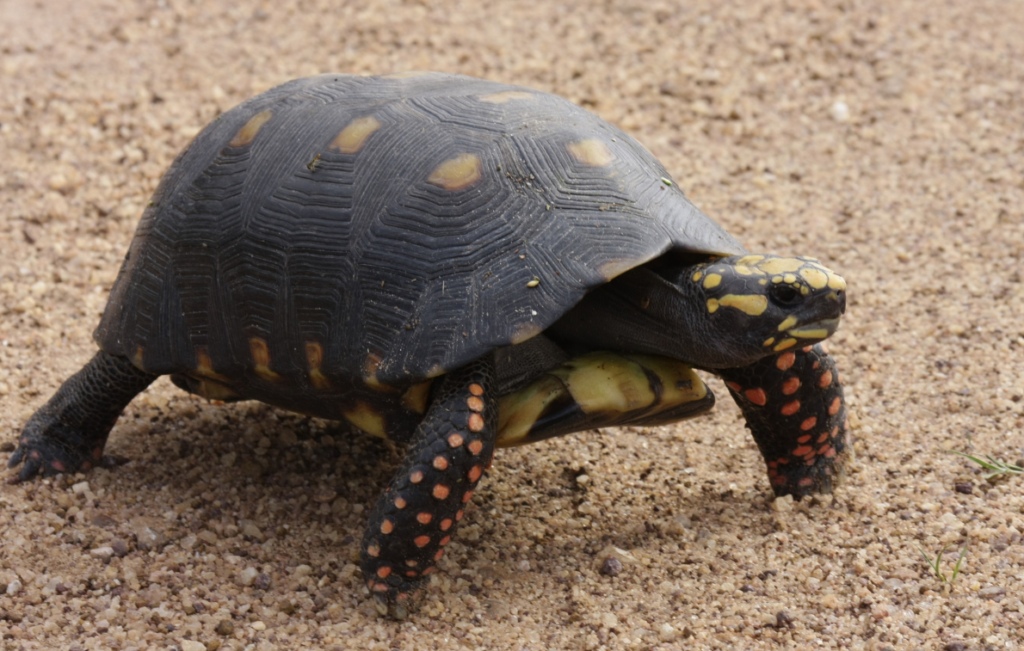
The red-footed tortoise (Chelonoidis carbonaria) is a species of land tortoise that inhabits South America, from Venezuela to Brazil. It is also known as the red-footed tortoise or morrocoy tortoise. This tortoise is a fascinating animal and has been the subject of study for many years due to its size, longevity, and role in ecosystems. The genus Chelonoidis is made up of six species, with the red-footed tortoise being the most recognized. Although no subspecies have been identified, there is great variability in size and coloration among the different populations living in various regions.
It is worth noting that until recently, the Chelonoidis carbonaria was classified in the genus Geochelone.
Distribution
It is a species of land tortoise found in the tropical forests of South America, mainly in countries such as Guyana, Venezuela, Brazil, Ecuador, and Paraguay. Populations can also be found on some Caribbean islands, although these populations have been introduced by humans.
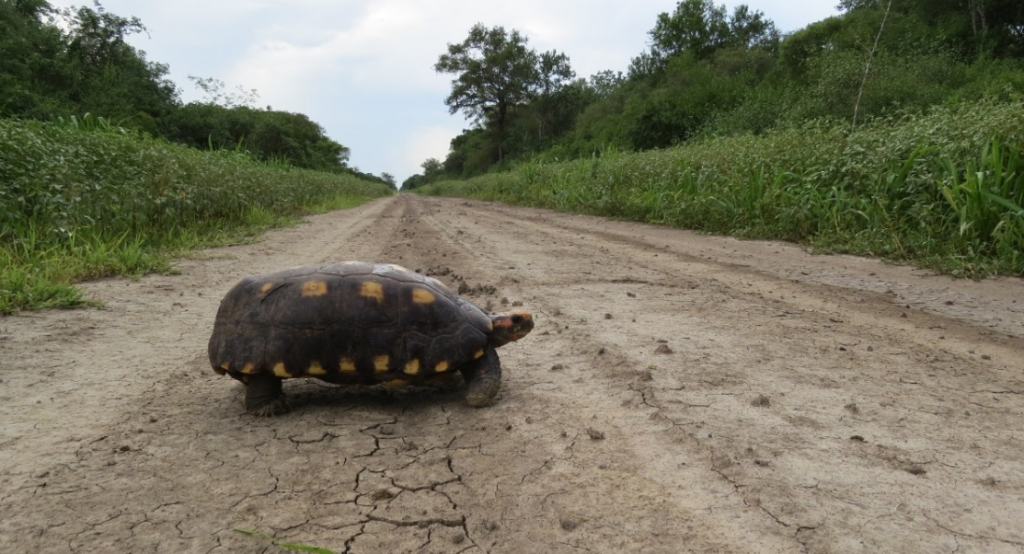
They usually inhabit humid forest areas and tropical jungles, but can also be found in drier areas and savannas. They climb trees to bask in the sun or to take refuge from predators.
Characteristics
It is a medium to large-sized land tortoise, oblong and cylindrical in shape, with a narrow and elongated carapace. It has long legs that allow it to easily cross muddy areas or small wetlands.
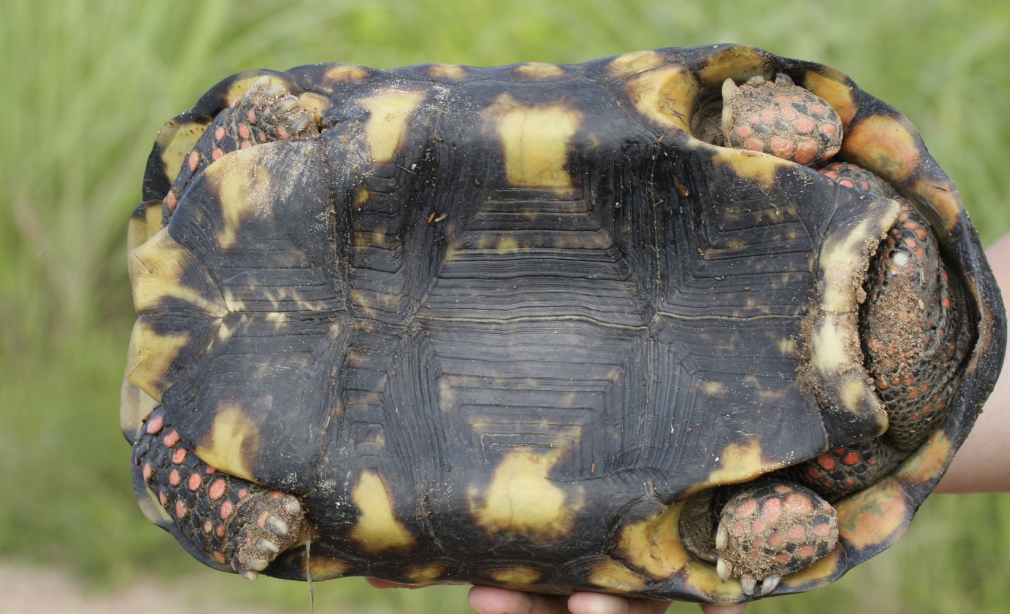
Its general color is dark with light, square spots on the areolas and bright spots on the front legs. Its head is large with a pointed snout and a darkish coloration speckled with bright yellow to orange scales.
It has very pronounced growth rings. The species has a more "waist-like" shape in the center and red spots on the front legs and sometimes on the head. Sexual dimorphism is pronounced.
Habits
The species inhabits drier and more open environments. It is usually more active in the morning and afternoon, and during the hottest months it hides under vegetation and can remain motionless without eating for days. When it moves, it travels long distances to find specific feeding spots, such as areas where fruits fall at certain times of the year.
How long does a red-footed tortoise live?
This species of tortoise can live for more than 60 years in captivity.
How big does the red-footed tortoise get?
The red-footed tortoise can reach a size of 50 cm, but it is most common for them to measure around 35 cm. There is great variation in size within the same species and between populations from different regions. Some populations in certain areas have been recorded as being much larger than the rest, reaching up to 70 cm in length. This variability in size may be influenced by environmental factors such as food availability and climate conditions, as well as genetic factors and adaptation to different habitats.
Red-footed tortoise care
If given proper care, this species of tortoise can be very hardy.
The terrarium must be spacious with heating and adequate humidity. The substrate should be of good quality; a mix of peat and coconut fiber is recommended, and plants, hiding places, and a water dish should be included. The environment should be humidified daily to maintain the recommended humidity of 80%. If the humidity is too low, tortoises may experience watery eyes.

It is ideal to keep the temperature between 23 and 28º C throughout the year, although a slight drop is allowed at night, but never below 21º C.
During the summer, they can be kept outdoors during the warmest weeks, as long as there is adequate shade and high relative humidity. Some keepers choose to keep these tortoises in temperature-controlled greenhouses, which produces excellent results.
What do red-footed tortoises eat?
This tortoise tends to be more herbivorous, although it also eats animal food. In the wild, it feeds mainly on plants, fallen fruits, and occasionally may eat feces and meat. In Guyana, it also consumes larvae, dead animals, termites, and large centipedes.
The diet you can provide in captivity should consist mainly of wild plants, vegetables, and fruits such as dandelion, wild mustard, lettuce, cabbages, fig, apple, pear, melon, watermelon, papaya, mango, and strawberries, and in smaller amounts protein that should include some meat, insects, and mollusks. For the protein part, they can be fed with specialized tortoise or cat food.
The diet should be varied and calcium should be added from time to time.
How many times a day should a red-footed tortoise eat?
The dietary needs of tortoises vary according to their age. When they are small, they need to eat once a day, as they require a large amount of food to grow and develop properly. As they grow, their metabolism slows down and their need for food decreases. When they are young, it is common for them to eat every two days, while as adults, they usually eat twice a week.
Reproduction
Mating in this species is very lively, with the male moving his head violently up and down and the female sometimes responding with similar movements. After smelling the cloaca and biting the legs, copulation occurs.
The female can lay up to four clutches per season, each with around ten elongated eggs weighing about 40 grams.
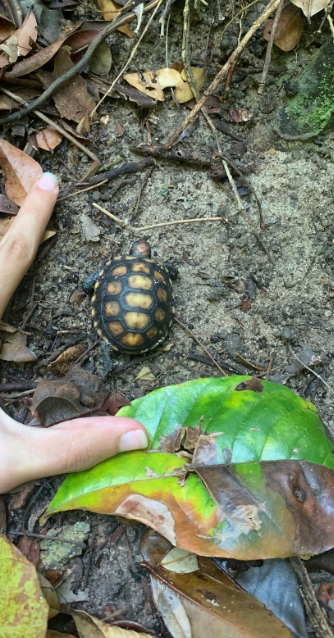
Building nests for laying eggs is not always easy due to the humid and detritus-rich environment. The eggs have an incubation period of three to six months, depending on the humidity and sunlight exposure of the site.
The hatchlings weigh about thirty grams at birth.
To incubate the eggs correctly, a constant temperature of 29º C and 80% humidity is required.
History
Historically, the red-footed tortoise has had a long relationship with humans, being frequently consumed by indigenous peoples and European settlers in the past. It was introduced to Europe in the 17th century and was found in small zoos and curiosity collections. Indigenous people consider it very tasty and cook it over coals. During Holy Week in Brazil, they are collected for consumption as they are considered "Lenten meat." To capture them, a common method was to fix small branches in front of their head and behind their tail with thin vines.
Conservation status
The red-footed tortoise is endangered and is protected by CITES. The main threat is excessive hunting and export for the pet trade. Habitat loss and agriculture are also threats. Conservation efforts are underway, such as the protection of nature reserves and national parks.
Contenido relacionado