
European Pond Turtle
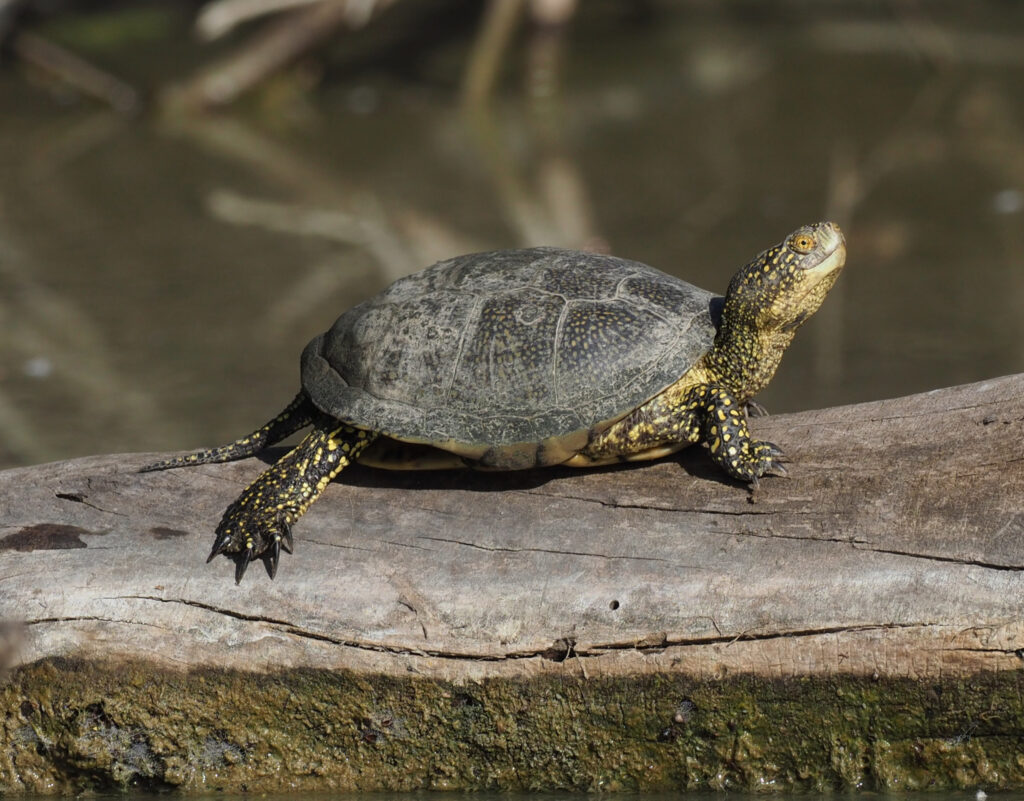
The European pond turtle (Emys orbicularis), also known as the European river turtle, is a species of aquatic turtle that inhabits rivers and streams in Europe. Let's talk about this European species and how it is being affected by human activity. The name Emys originates from an interesting observation made by Aristotle, who compared this species to a mouse.
Distribution
The distribution area of this species of Emys turtle is established in central and southern Europe, as well as Western Asia and the Mediterranean region of Africa. From northern Germany and Poland to Morocco, and eastward to Iran. It is also found in countries such as Lithuania, France, Portugal, Spain (including the Balearic Islands), Morocco, Tunisia, Italy (including Sardinia and Corsica), Bosnia-Herzegovina, Croatia, Slovenia, Macedonia, Montenegro, Serbia, Albania, Greece, Turkey, all countries north of the Black and Caspian Seas, and in northern Iran.
Characteristics
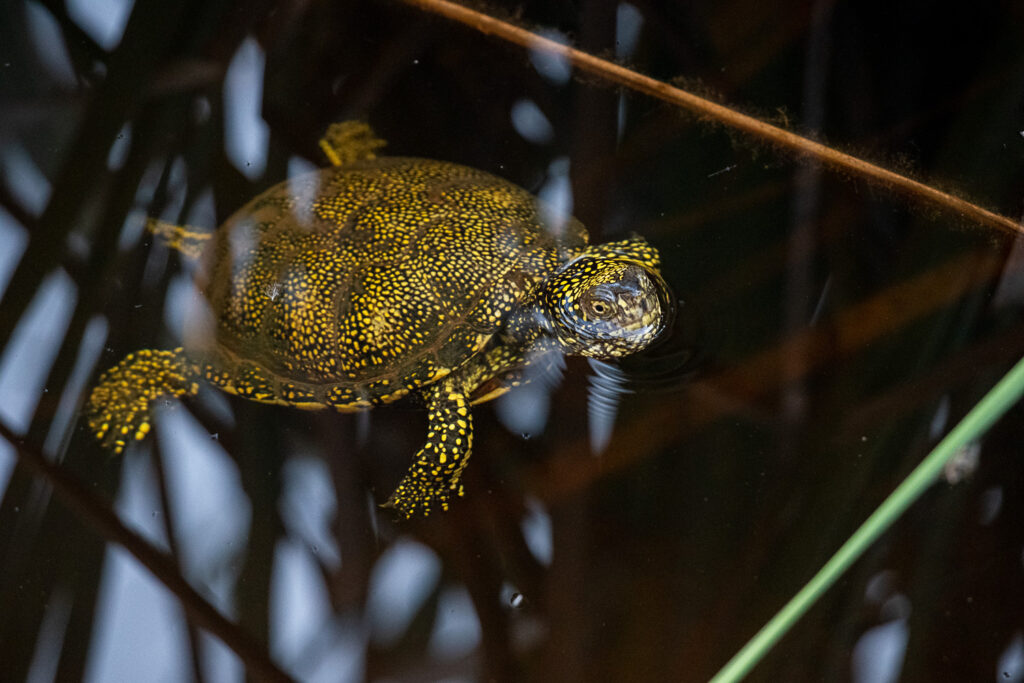
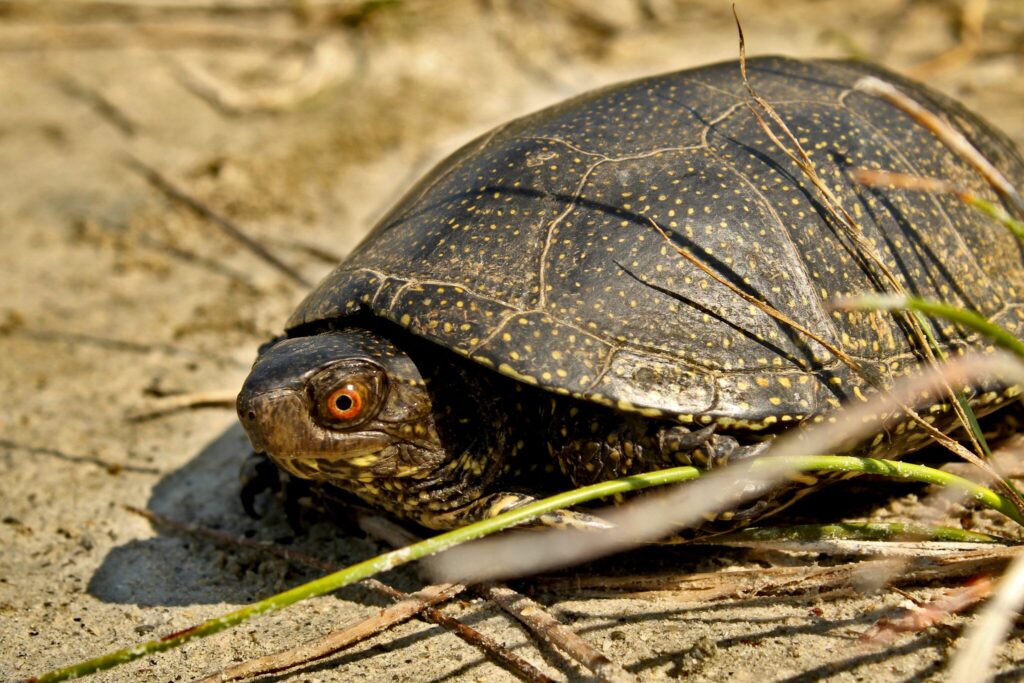
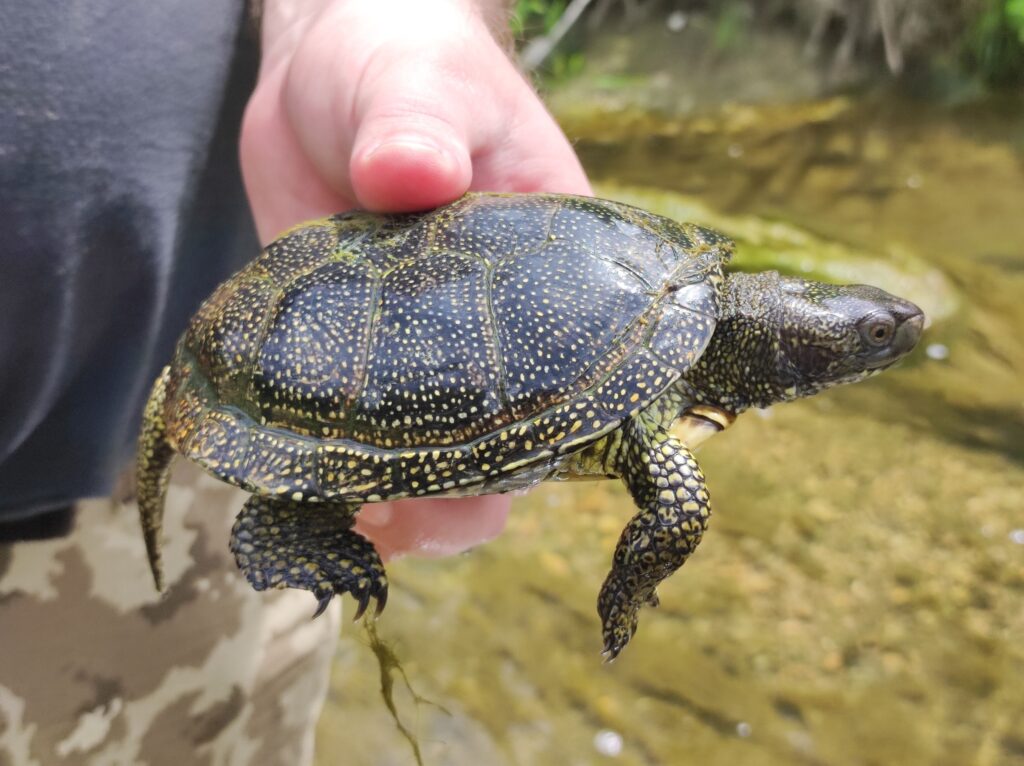
Its shell is flat, very rounded, and can be brown, bluish, or black, adorned with small yellow spots that are abundantly distributed over the skin and hard parts, sometimes with star-shaped patterns and radial designs.
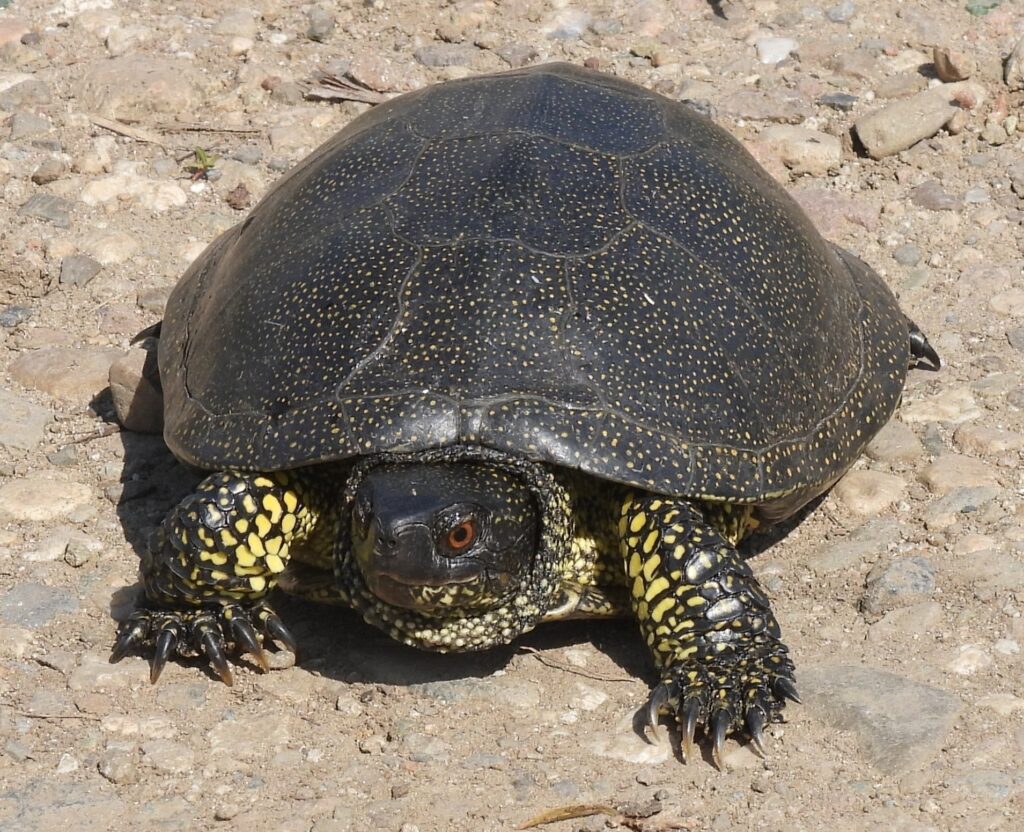
As turtles age, they may show a variety of shades in their skin, such as uniform brown, grayish, or greenish, but always with some yellow spots. Their eyes are also very yellow and bright. The plastron shows variations in its coloration, from uniform yellow to dark black with yellow spots or stripes, which depends on the environment and the turtle's origin. These reptiles have moderate mobility between the pectoral and abdominal plates, being greater in females.
Anatomy of the European pond turtle: head, limbs, and tail
The head of the turtles is medium-sized and elongated, with a triangular snout, a large mouth, and fairly large eyes located towards the front. The skin on the neck and limbs is very thin and has tiny scales. The hind legs have webbed toes, and the tail is usually long and thin, being a bit shorter in females. Males have a less pronounced concavity in the plastron than females.
Sexual dimorphism
Sexual dimorphism in turtles is mainly manifested in the color of the eyes, being red or orange in males and yellow in females.
Characteristics of juvenile turtles
In young turtles, the colors are more vivid and a slight keel and marginal scutes with moderately serrated edges can be observed. They usually have an olive tone with a yellow edge on the marginal scutes. The yellow spots on the skin begin to appear around two or three years of age. The tail of the hatchlings is very long and thin, often truncated because the animals bite and mutilate each other.
Variability
It is important to highlight the great variability in the appearance of turtles, which justifies the existence of numerous subspecies with diverse colorations. Adaptation to the environment and genetic characteristics influence the appearance of each individual, contributing to the richness and diversity of these reptile species.
How big is the European pond turtle?
The size of this turtle does not exceed 35 cm, but its dimensions vary considerably depending on the locality, with a tendency towards smaller sizes in the southwest and larger sizes in the northeast.
Subspecies
There is a great variety of European turtle subspecies. Thanks to the work of Uwe Fritz, which was based on genetics and morphology, a large number of them have been differentiated, although some are still subject to debate.
It should be noted that the variability in Emys orbicularis, the species to which these turtles belong, is such that it is difficult to reliably identify an animal if its origin is unknown. In general, turtles from the north and east are larger than those from the south and west, with sizes ranging from 35 cm to 14 cm in females.
Another characteristic that varies according to the subspecies is coloration. In the south, the plastrons are usually a light yellow tone, while in the north they are often darkly spotted. Towards the east, the colorations tend to be reddish-brown, while in the southwest greenish or beige tones dominate. The yellow spotting is more distinct in the west and southwest, while towards the east it is more diffuse.
Below, we present the currently recognized subspecies of the European turtle:
- Emys orbicularis capolongoi
- Emys orbicularis colchica
- Emys orbicularis eiselti
- Emys orbicularis fritzjuergenobstii
- Emys orbicularis galloitalica: Small-sized and present in the French Provence and Italy)
- Emys orbicularis hellenica: Present in Greece and part of southern Central Europe)
- Emys orbicularis hispanica: Present in the Iberian Peninsula
- Emys orbicularis iberica
- Emys orbicularis lanzai
- Emys orbicularis luteofusca: Present only in central Turkey
- Emys orbicularis mamorata
- Emys orbicularis occidentalis: From North Africa
- Emys orbicularis orbicularis: The nominal subspecies, one of the oldest named turtles by Linnaeus (1758), and undoubtedly the most widespread of the European pond turtle subspecies, is found mainly in northern Europe.
- Emys orbicularis orientalis
- Emys orbicularis persica: Occupies the far eastern part of the distribution
Each subspecies presents differences in size, coloration, and geographic distribution. Knowing these characteristics is essential to correctly identify European turtles and distinguish between the different subspecies.
Habits
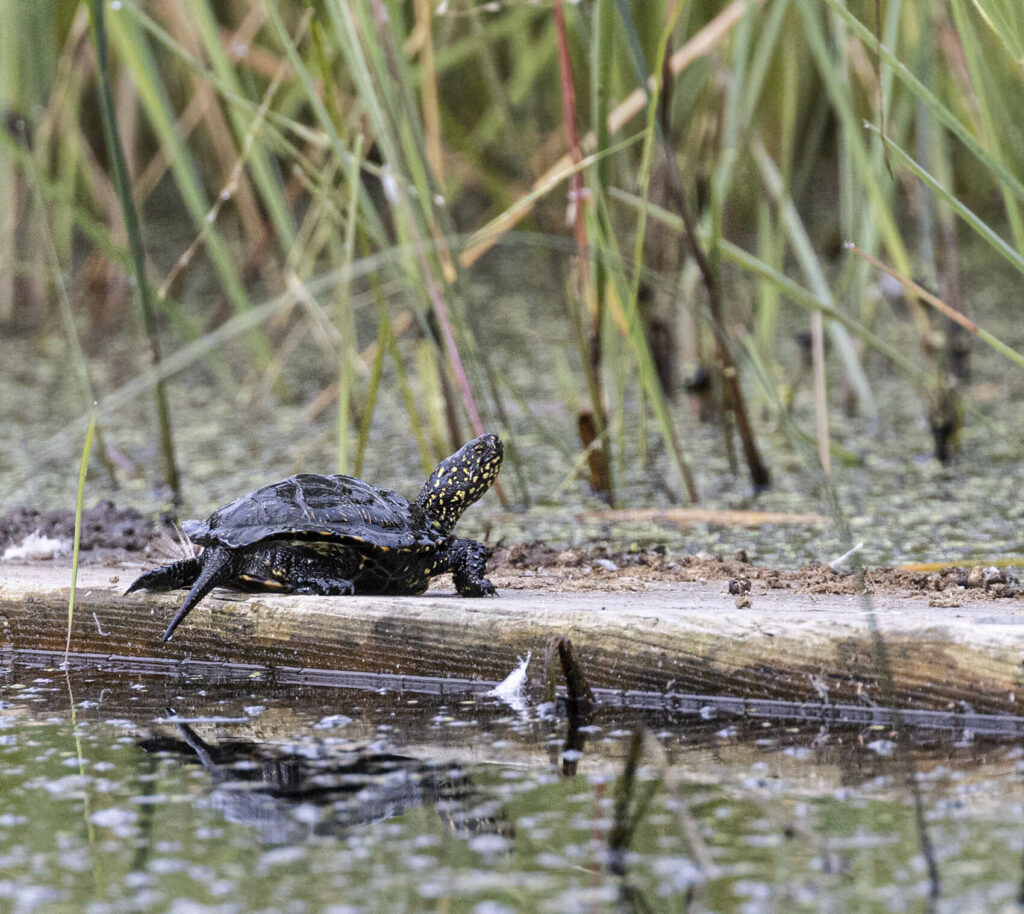
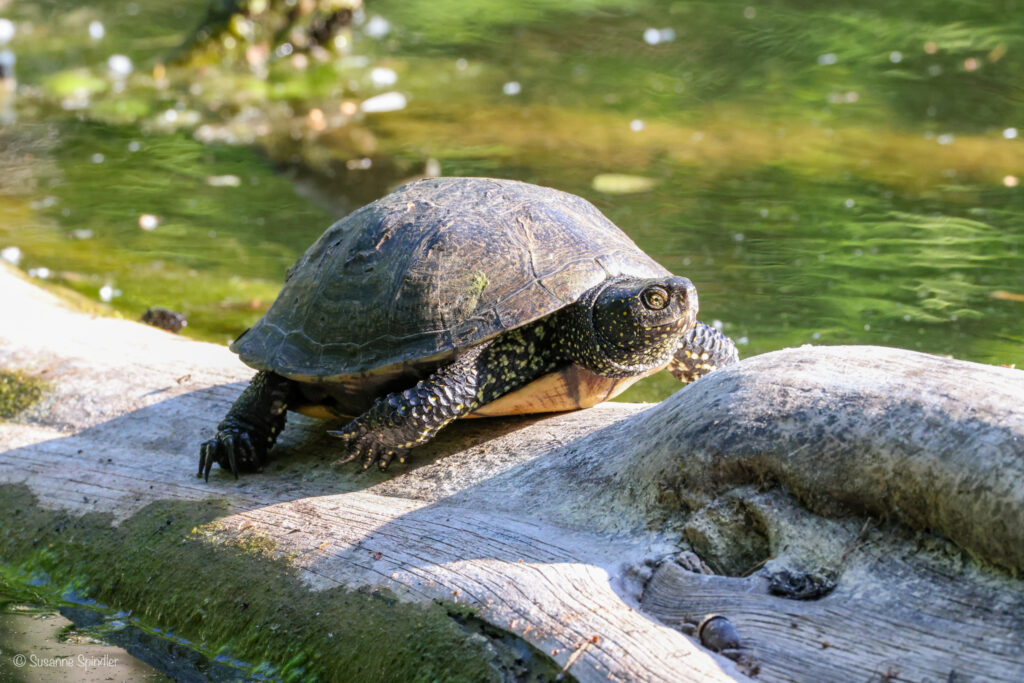
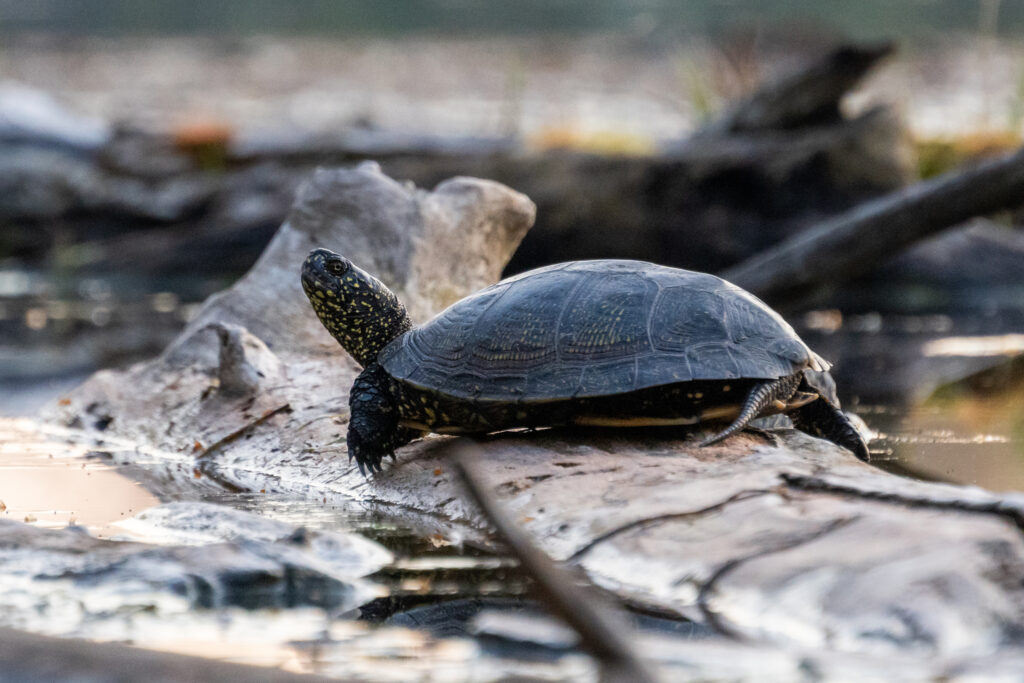
The European pond turtle (Emys orbicularis) prefers slow-flowing rivers, marshes with water flow, ponds, and canals full of debris. Although it is predominantly aquatic, during warm periods, it may spend part of the day thermoregulating on logs, rocks, or banks.
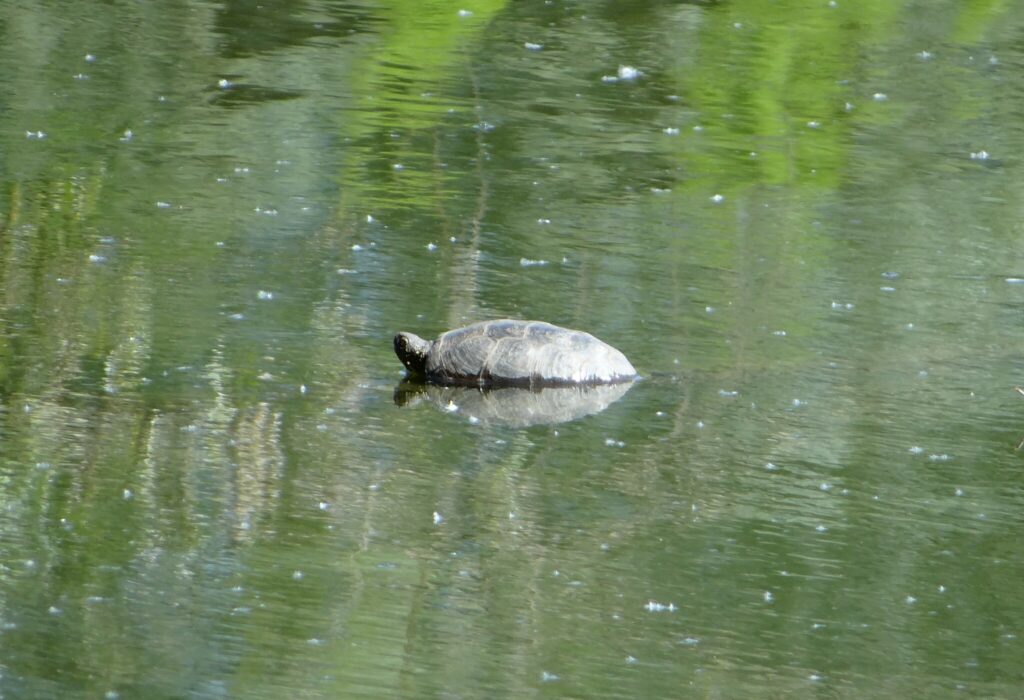
One of the most remarkable aspects of the European pond turtle is its ability to remain motionless for hours, as still as a log. However, as soon as it perceives any noise or vibration in the ground or air, it quickly dives and only cautiously pokes its head out minutes later.
This species is gregarious and lives in groups of about ten to twenty individuals. It hunts by ambush at the bottom of the water, catching small aquatic prey such as fry, tadpoles, and aquatic insects. During its juvenile stage, it is carnivorous, but as it grows, it becomes more omnivorous and consumes aquatic plants and algae to a lesser extent.
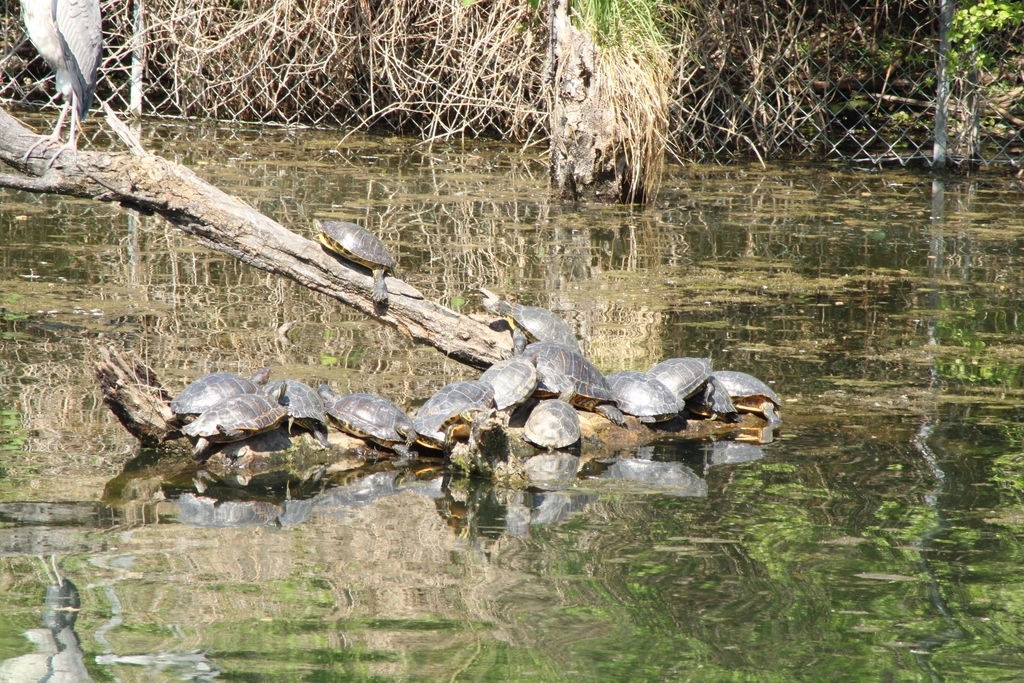
The European pond turtle hibernates during much of the winter months when the water temperature drops below 14 degrees Celsius. In these circumstances, it takes refuge in moist hiding places near the river or under piles of leaves, even in the mud and debris at the bottom of a river. During these periods, it surfaces at long intervals, sometimes several days or weeks, to breathe fresh air before hiding again at the bottom of the water.
Reproduction of the European pond turtle
The mating period of the European pond turtle occurs between May and June, although it may start a little earlier in more southern areas. During this time, the males' eyes take on a reddish hue. The male bites the female on her limbs and neck, circling her in a kind of dance, which resembles the behavior of land turtles more than that of New World Emydidae. Copulation always takes place underwater, and there may be two or three males trying to mate with the same female, which sometimes causes her to drown due to the weight of the males.
Egg laying occurs from early May (in the south) to early July (in the north). Sometimes, females lay their eggs quite far from the water (several hundred meters), which can cause accidents on roads. The clutch consists of 3 to 16 eggs, although most commonly there are 5 to 6, which are elliptical, white, and rigid.
The incubation of European pond turtle eggs varies depending on geographic location, but is generally short, lasting between 60 and 70 days.
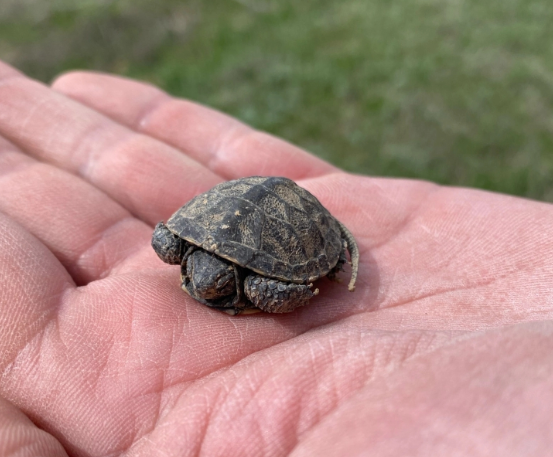
The hatchlings of the European pond turtle are among the smallest of the chelonians, with an average weight of 5 grams, although sometimes they do not exceed 2 grams. Studies have shown that there is a relationship between the sex of the hatchlings and the incubation temperature. During the first weeks of incubation, if the temperature remains below 26 degrees Celsius, only males will hatch, while if it exceeds 32 degrees Celsius, only females will hatch. However, in nature, the thermal variability between day and night ensures a balance in the sex ratio.
Protection and conservation of the European pond turtle
This species is fully protected throughout its entire geographic range, although in the middle of the last century it was still traded and consumed. However, its habitats are facing rapid degradation, as the European areas where it lives are highly urbanized. Wetlands are often drained or modified, and in almost all countries a decline in its population has been observed.
The European pond turtle along with the Mediterranean pond turtle (Mauremys leprosa) are affected by the introduction of American turtle species such as the trachemys scripta, which escape or are released, competing with them for resources and space due to their size and efficiency in finding food. During the last decade, specific conferences have been held on this species with the aim of better understanding it and, above all, contributing to its preservation.
There are more and more conservation programs focused on the European pond turtle, including the creation of reserves and protected areas. The governments of most of the countries involved are trying to prevent the species from becoming increasingly scarce. For years, several reinforcement or reintroduction programs have been implemented, with Switzerland being a pioneer in this field. Current results are encouraging, as seen in the example of Lake Bourget in France.
Thanks to the commitment of specialists, this turtle has become one of the most studied and protected species. The collaboration of experts, governments, and citizens has been fundamental to ensure the survival and well-being of the European turtle in an increasingly urbanized and constantly changing world.
Images of the European pond turtle
Below we show photos of the European pond turtle:

Contenido relacionado