
Olive Ridley Sea Turtle
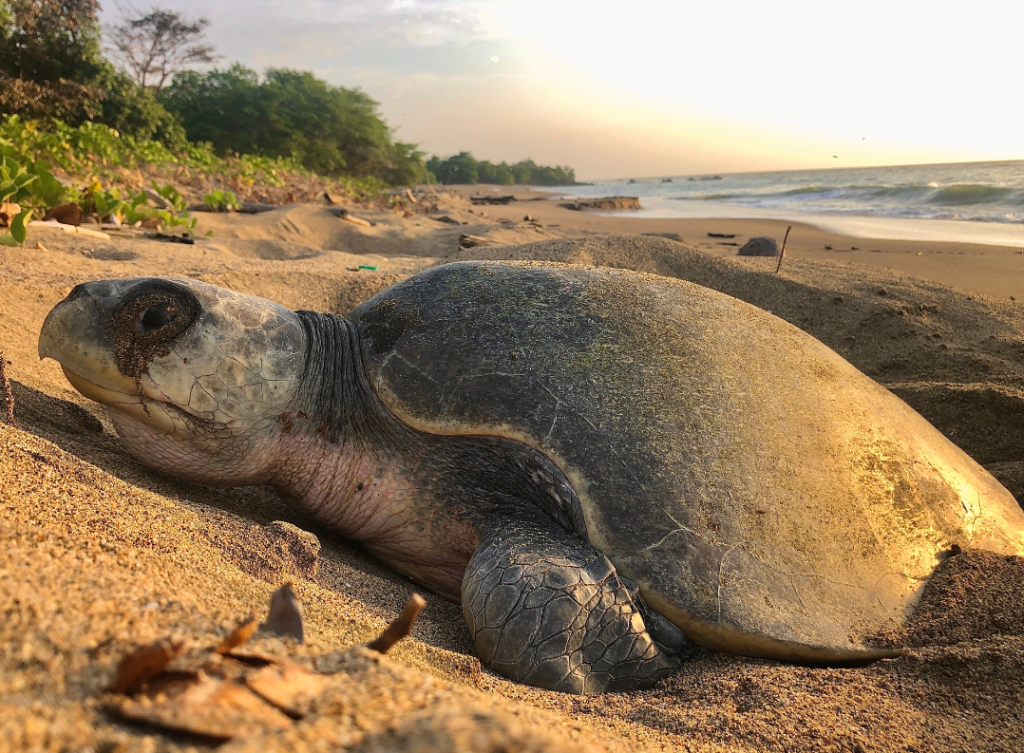
The olive ridley turtle (Lepidochelys olivacea) is a species of sea turtle that inhabits the Pacific, Atlantic, and Indian Oceans. It belongs to the family Cheloniidae and stands out as the smallest sea turtle. It is also known as the olive turtle. The olive ridley turtle is a fascinating species that faces numerous threats, both natural and human-induced. We will explore its distinctive features, habitats, and threats.
Where is the olive ridley turtle found?
The olive ridley turtle is distributed worldwide in the Atlantic, Pacific, and Indian Oceans. Although it does not inhabit Polynesia or Hawaii, it is found along the coasts of the American Pacific. In the Atlantic, its habitat extends from the Gulf of Mexico to Brazil in the west. It also frequents the African coasts, from Senegal to the Cape of Good Hope, as well as the eastern coast of the Indian Ocean. The olive ridley turtle is present around the Arabian and Indian peninsulas, in the China and Philippine seas, and reaches as far as the Melanesian Sea and northern Australia.

Characteristics
The shell of the olive ridley turtle has an olive green color, which is where its scientific name, Lepidochelys olivacea, comes from. It is heart-shaped, almost as wide as it is long, triangular at the back, and clearly arched above the front legs.
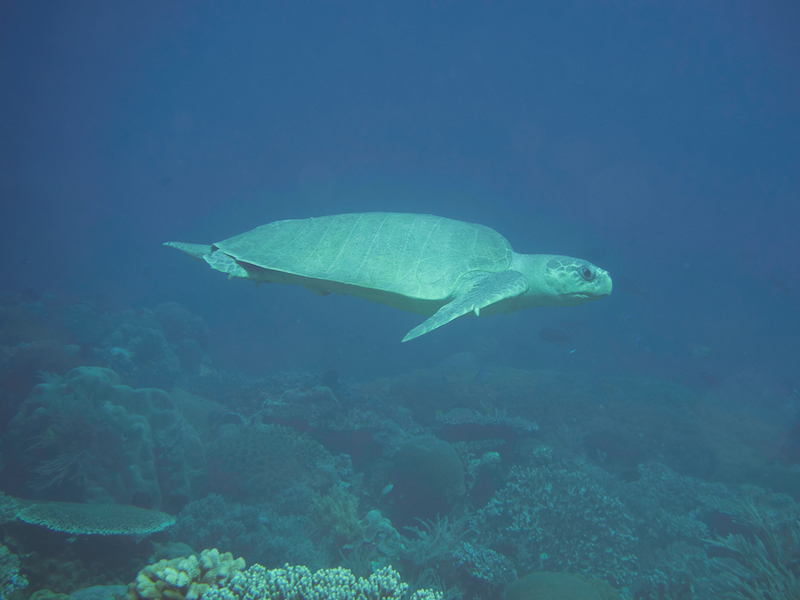
The carapace is quite flat, except at the front where the nuchal and costal regions are. It is gray, grayish-green to ochre-brown, with scutes sometimes surrounded by yellow. Older individuals become a very dark olive-brown, dark gray, and almost black, with sutures finely bordered in light color.
The plastron has a more stable scute pattern, although the intergular can be single, double, or absent.
It has two very pronounced longitudinal keels.
The head of the olive ridley turtle is medium-sized, quite broad and triangular, with a short nose but well-developed, robust jaws.
How big is the olive ridley turtle?
Its size is relatively small compared to other sea turtle species, reaching a length of about 75 centimeters and a maximum weight of 45 kilograms.
What do olive ridley turtles eat?
The olive ridley turtle is omnivorous, feeding mainly on crustaceans, sea urchins, mollusks, jellyfish, or algae and aquatic vegetation. It can also eat small fish and other marine invertebrates. Its varied diet allows it to easily adapt to different environments and food availability, with differences depending on its location.
Generally, it feeds in shallow waters along the coasts and in lagoons. It forms small groups and warms itself in the sun on the water's surface. It can dive deep to find prey and has been accidentally caught at a depth of 110 meters in nets.
Reproduction
Sexual maturity in this turtle appears to be early and occurs around 7-9 years of age.
Mating, which takes place offshore in front of nesting beaches, can last from one to three hours. During mating, the male grabs the edge of the female's carapace with his curved claws. Females often show characteristic wear on the marginals. The egg-laying itself does not last more than an hour. After laying, the species displays a particular behavior, rocking from side to side to flatten the sand.
Olive ridley turtle nesting
These turtles nest on many beaches individually, but can also arrive en masse over several days in what is known as arribadas. Females may nest three to four times per season, with intervals of 17 to 29 days.
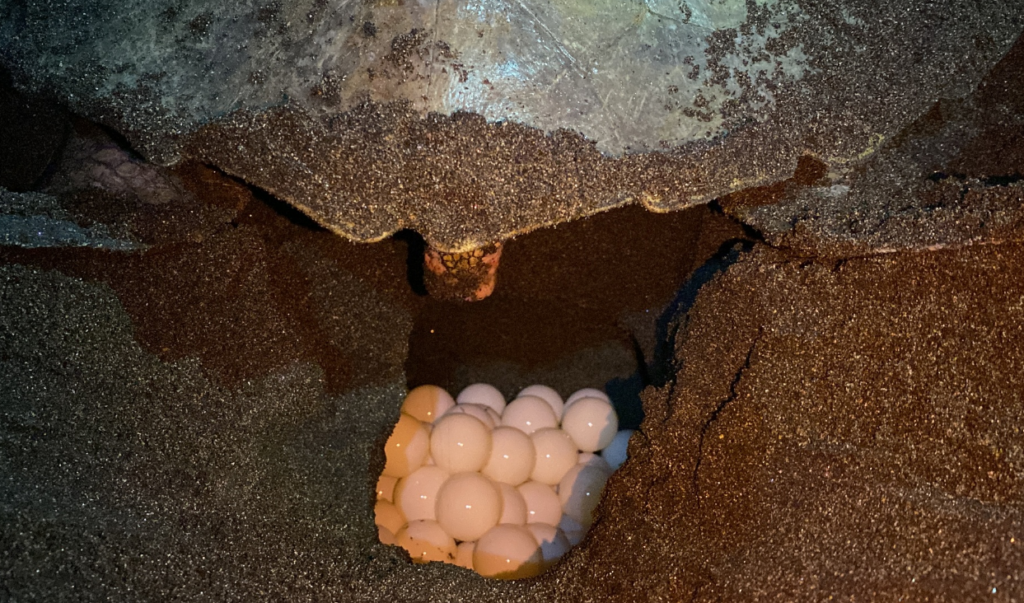
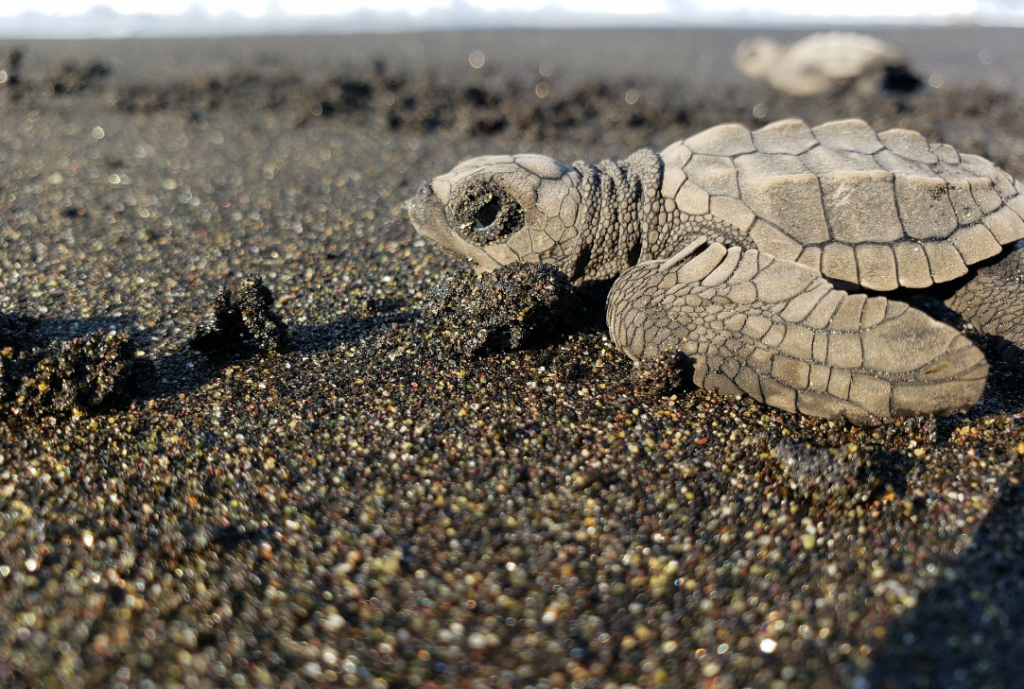
Nests contain 30 to 170 white, spherical eggs, with a soft, parchment-like membrane and a diameter of 3 to 4 cm. Incubation can last from 45 to 62 days.
Conservation status
Olive ridley turtles face numerous challenges and threats in their natural environment. Juveniles are particularly vulnerable and are easy prey for predators. Even adults are sometimes victims of sharks, while on land, females are attacked by jaguars or crocodiles. In addition to these natural challenges, olive ridley turtles are also affected by pollution, and some individuals suffer from fibropapillomas, a disease that also affects other sea turtle species.
Apart from all the above, the greatest threat to olive ridley turtles is human exploitation. The meat, skin, and especially the eggs of these turtles have been subject to centuries-old exploitation that has drastically affected their breeding populations in recent decades. On some beaches where arribadas occur, such as in Suriname, a dramatic decline in their populations has been recorded.
Among the main human threats are:
- Hunting and collection of eggs for human consumption.
- Incidental capture in fishing nets.
- Marine pollution, especially plastic.
- Degradation and loss of nesting habitat due to coastal development and climate change.
Despite these concerns, Costa Rica has tried to implement more responsible egg collection practices. Locals only collect eggs during the first day, and then park rangers prevent any collection until the arribada ends. However, in other places, olive ridley turtles continue to be exploited for their leather. In countries like Mexico, Ecuador, and Pakistan, olive ridley turtle leather is exported to countries such as Japan or Italy, where it is used in the manufacture of artisanal products.
Olive ridley turtles are an endangered species and are listed in CITES Appendix I, which means they are protected by international laws on the trade of endangered species. Despite these efforts, it is important to continue working to protect these sea turtles and ensure their survival in their natural environment.
How to contribute to the conservation of the olive ridley turtle
There are several ways to contribute to the conservation of the olive ridley turtle:
- Support local and international conservation organizations and projects.
- Participate in volunteer activities and beach cleanups.
- Adopt sustainable practices when consuming seafood products, avoiding those whose harvesting may affect sea turtles.
- Reduce plastic use and promote recycling to decrease ocean pollution.
- Share information and raise community awareness about the importance of protecting olive ridley turtles and their habitats.
Other types of sea turtles
Sea turtles are fascinating creatures that inhabit our oceans and face a series of threats that endanger their survival. In other articles, we have analyzed other species of sea turtles.