
Meso-American Slider
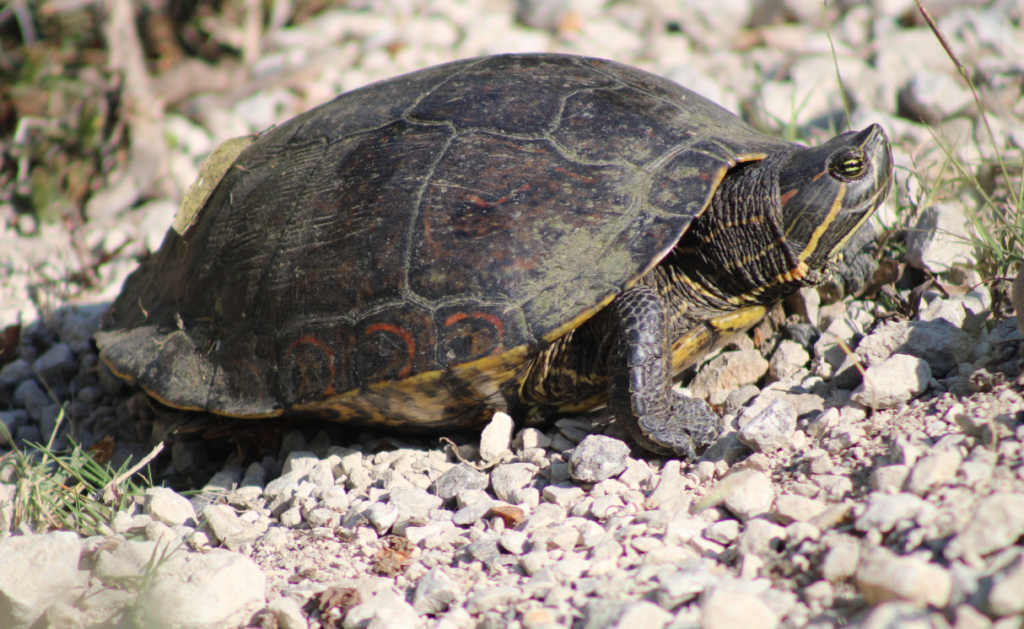
The peacock turtle (Trachemys venusta) is a species of aquatic turtle with an impressive shell featuring an ornate pattern (markings similar to those of the peacock bird) and vibrant colors. It is one of the most colorful and popular aquatic turtle species. This species is native to Central America and some areas of South America. It can be found in rivers, lakes, and other freshwater bodies throughout its range. It belongs to the Emydidae family, like the painted turtle. It is also called the Guadalupe turtle.
This turtle species is the most common among turtle enthusiasts in South America.
| Peacock Turtle Technical Sheet | |
|---|---|
| Scientific Name | Trachemys venusta |
| Common Names | Peacock Turtle, Guadalupe Turtle, Hicotea Turtle |
| Family | Emydidae |
| Origin | Mexico, Central America, and northwest Colombia |
| Lifespan | 25 - 30+ years in captivity |
| Size (Adult) | Up to 38 cm |
| Diet | Omnivorous |
| Water Temperature | 25 - 28 °C |
| Dry Zone Temperature | 30 - 32 °C (for basking) |
| Conservation Status | Under special protection (overexploited) |
Distribution
The Trachemys venusta is distributed from Veracruz, Mexico, to Panama, along the Atlantic coast. It can also be found from Tehuantepec to northwest Colombia.
Characteristics
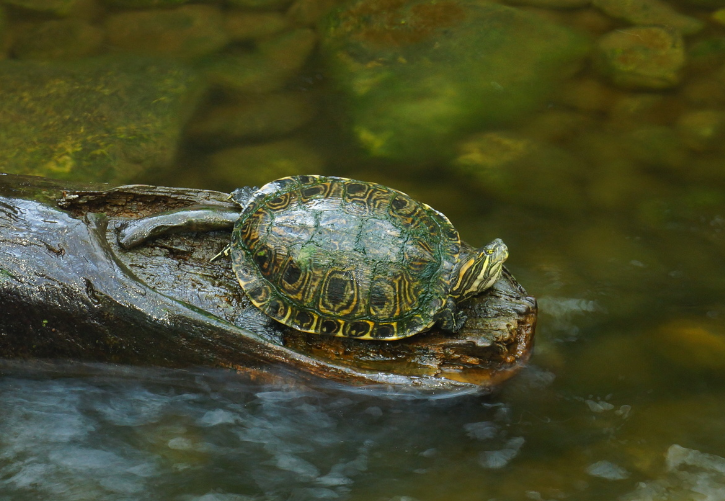
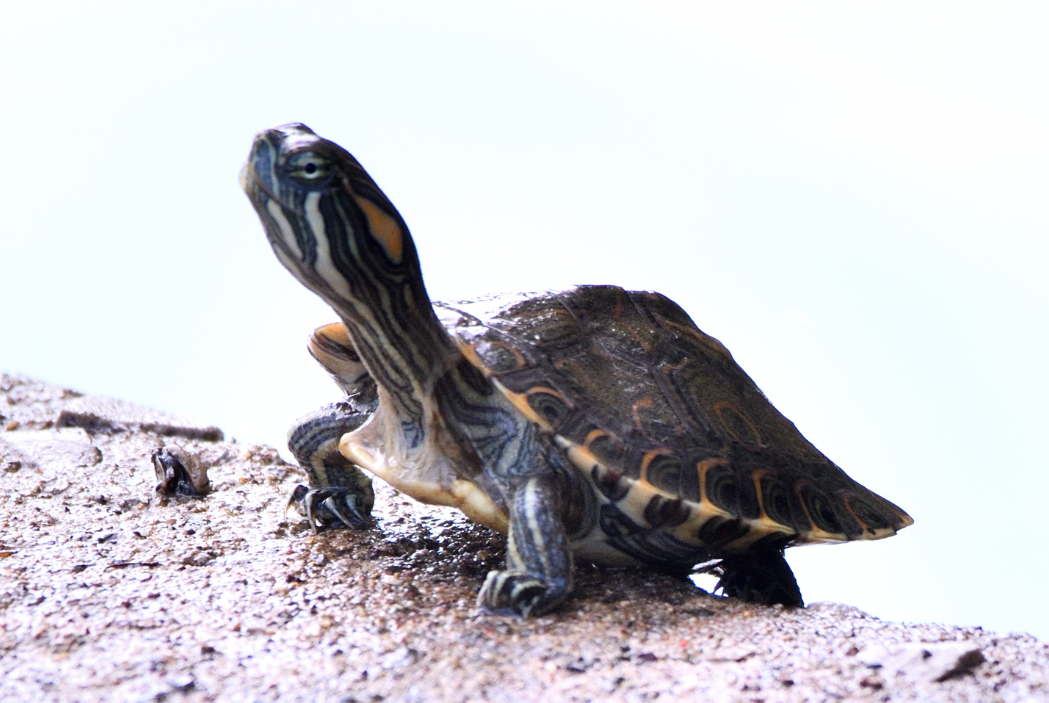
The shell of this species is dark olive with irregular lines in yellow, orange, or black tones. Both the shell and the plastron are adorned with ocelli. The turtle's head is dark brown with yellow lines extending from the front to the back of the body.
Habits
In Costa Rica, these turtles are large and usually nest on sandy beaches reached by the sea. Males generally inhabit more inland areas and live in freshwater, while females are carried by currents and often find suitable places to lay their eggs at the edge of the sea.
How big does a peacock turtle get?
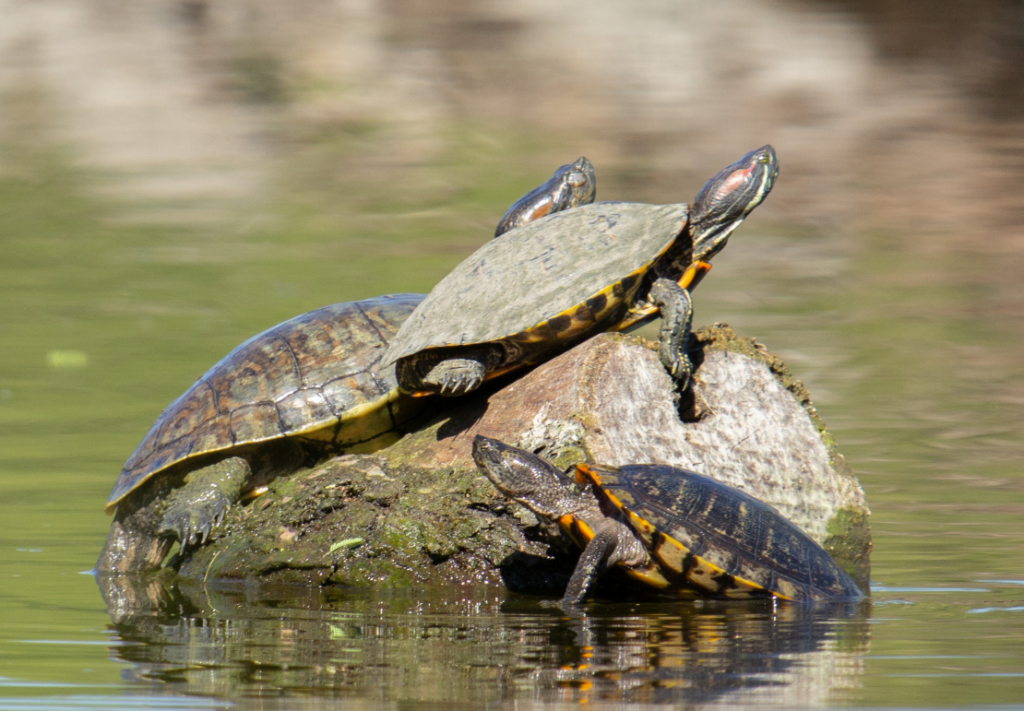
It is one of the largest aquatic turtles, with the adult peacock turtle reaching up to 38 cm shell length and a weight of 3 kilos. Generally, female peacock turtles are larger than males.
How to care for a peacock turtle?
The care of the peacock turtle (Trachemys venusta) is semi-aquatic, which means it needs both water and land to live. These turtles spend most of their time in the water, but they also need to come out onto land to walk, rest, and bask in the sun. Here are the requirements we must meet to keep this turtle healthy.
Aquaterrarium or Turtle Tank
Regarding their habitat, aquatic turtles require a large amount of water, as they are excellent swimmers. The more water their habitat has, the better their development, and they will grow quickly. If possible, try to provide the largest space with the most water possible.
For a juvenile specimen, a minimum of 100-150 liters is recommended, but for an adult, you will need a much larger aquaterrarium, ideally 300-400 liters or more. They are excellent swimmers, so a good water depth (at least 1.5 to 2 times the length of their shell) is crucial for their well-being and development. The more space and water volume, the better.

Filtration
Having a good filtration system in the aquatic turtle habitat is essential to keep the water in excellent quality and prevent diseases. Filters remove waste and bacteria from the water, helping to keep it clear and clean for the turtles.
To prevent diseases, using a filter in the turtle habitat can also help save water in the long run. By maintaining good water quality, you can extend the time between water changes, which means less water is used overall.

- Proporciona un ambiente óptimo para los peces que prefieren un movimiento regular del agua
- Su diseño optimiza su eficiencia
- Promueve la recirculación del agua
- Sistema de filtrado controla el flujo promedio sin afectar la eficiencia del proceso de filtración
Water Temperature
The turtle's water should be kept at a temperature between 25°C and 28°C, especially during the early stages of development. When you have a baby peacock turtle, you should maintain the temperature so that during its first 2 years of life it does not hibernate and its growth is not stunted. Later, the turtle will be stronger and able to withstand other temperatures.

- Temperatura Ajustable: la perilla de control de temperatura es fácil de controlar la temperatura, y rango de control de temperatura es de 18 ° C a 34 ° C, siempre se mantiene la temperatura ideal para la vida acuática
- Material a prueba de explosiones: hecho de tubo de vidrio de cuarzo, seguridad a prueba de explosiones y duradero
- Indicador LED: según el color del LED, le permite saber el estado de calefacción rápidamente
- Resistente al agua y estable: diseño completamente sumergido (excepto controlador), puede instalar el calentador horizontal o verticalmente con 2 potentes ventosas
- Adecuado para acuarios de agua dulce o marina de 40L a 80L
Dry Zone
Providing a dry area in its habitat is necessary so that peacock turtles can bask in the sun or under their UV lamp. However, this dry area should be located where there are no strong drafts, as aquatic turtles commonly get pneumonia if exposed to cold drafts.

Essential UVB Lighting
Sunlight is essential for a turtle's health, as it needs UV rays to synthesize the calcium it consumes in its diet and to maintain the health and appearance of its shell. The options are to place the turtle tank in a spot where it receives natural sunlight directly on the turtle. If this is not possible, you should provide a UVB lamp in the aquaterrarium. A quality UVB bulb (index 5.0 or 10.0, depending on distance) is recommended, placed above the dry area at the distance indicated by the manufacturer, and turned on for 10-12 hours a day (using a timer is helpful). Place it above the dry area so the turtle can bask. If the turtle is outdoors, provide shaded areas to prevent overheating.

- Ideal para todo reptil habitante de desierto
- Alta producción de UVB
- Elevada conversión de D3
- Efectiva hasta 50 cm (20")
- Suministra los rayos UVB necesarios para el metabolismo óptimo del calcio

Substrate
Substrate for turtles serves a decorative purpose in the habitat. It is not necessary but can make the bottom of the turtle tank more attractive if you have an aquarium. It can be dangerous for turtles if not chosen correctly. The stones should be larger than the head of your peacock turtle.
- Guijarros redondos
- Crea una apariencia natural de lecho de río
- Fácil de limpiar
What do peacock turtles eat?
Peacock turtles (Trachemys venusta) are omnivorous and eat a wide variety of foods, including plants, insects, crustaceans, and fish in the wild.
Their diet in captivity is crucial for the development of the peacock turtle. It can include meat, fish, vegetables, and plants. You can give them turtle pellets or kibbles, but ideally, their diet should be balanced and varied to ensure they receive all necessary nutrients and vitamins.

- Contiene más de un 55 % de kril y de camarones por lo que es rico en ácidos grasos insaturados (omega 3)
- Las grasas naturales como proveedores de energía de alta calidad favorecen el metabolismo y refuerzan el sistema inmunitario de las tortugas
- La relación óptima entre calcio y fósforo favorece un caparazón sano y unos huesos fuertes
- La fórmula está elaborada con ingredientes naturales, por eso no contiene colorantes / Volumen de suministro: 1x Tetra ReptoMin Energy 250 ml
Animal protein for peacock turtles
As they grow, the proportion of plant matter increases. Offer them dark leafy greens such as dandelion, turnip greens, watercress, escarole. Romaine lettuce can be given in moderation (it is mostly water). Include aquatic plants like water hyacinth, water lettuce, or duckweed (be careful they don't take over!). Vegetables like grated carrot, pumpkin, or zucchini can be given occasionally. Fruits (apple, pear, strawberry) should be a very occasional treat and in very small amounts due to their high sugar content.
Vegetables, fruits, and plants for peacock turtles
You can give your turtles carrot, lettuce, pumpkin, broccoli, or cauliflower. For fruits, apple, banana, and strawberry. For plants, water lettuce and duckweed—remember
Important: All food should be the right size so they can swallow it easily (no bigger than their head). Make sure live foods come from safe sources (breeders free of parasites or pesticides). Never give them pork, processed meats, human processed foods, excessive spinach (interferes with calcium), or citrus fruits. Feed juveniles daily or every other day, and adults 2-3 times a week. Remove uneaten food after 15-20 minutes to keep the water clean.
How long does a peacock turtle live?
With proper care in captivity, both male and female peacock turtles can have a considerable lifespan, living around 25 years, and even exceeding 30 years in optimal conditions.
How long can a peacock turtle stay out of water?
These turtles can and should spend several hours a day out of the water in their dry area to bask and dry off completely. This is vital for the health of their shell and skin. However, they should not remain out of an environment with water access for extended periods (many hours in a row or days), as they need to hydrate and thermoregulate in the water. If you take them out of their aquaterrarium temporarily (for example, for cleaning), watch them and make sure they do not overheat or dehydrate.
Reproduction
Sexual maturity in Trachemys venusta depends more on size than age, usually occurring when females reach a considerable size (often over 20 cm shell length). After courtship and mating (which occurs in the water), the female will instinctively seek a suitable place on land (she will need an area with deep, moist substrate like sand and soil) to dig a nest and lay her eggs. Each clutch from an adult peacock turtle can contain an average of 20 eggs, although the number can range from 12 to 32. Incubation lasts between 60 and 90 days, depending on temperature (higher temperatures usually speed up the process and can influence the sex of the hatchlings).
Compatible species
There are many compatible species among aquatic turtles. You must have a habitat with plenty of water and space if you want to keep more than one aquatic turtle, as they grow much larger as adults compared to when they are hatchlings.
If you want to keep another turtle alongside Trachemys venusta, make sure it has similar care requirements.
Species: Red-eared slider, yellow-eared slider, yellow-bellied slider, map turtle, red-bellied slider, diamondback terrapin, or painted turtle.
Conservation status
According to official Mexican regulations, the species has been overexploited and is therefore considered in need of special protection. Although its meat, eggs, and shell have been used to make handicrafts, the species has also been kept as an ornamental animal or pet.
The peacock turtle, also known as the hicotea turtle, has been exposed to excessive sale as a pet, habitat destruction, and hunting for human consumption.
Pollution and habitat loss are the main causes of death in the wild.
In some states of Mexico, such as Tabasco and Veracruz, peacock turtles are hunted for human consumption and for making decorative items. The popularity of the peacock turtle as a pet also encourages the illegal capture and sale of these animals, which negatively impacts the ecosystem and the role they play as pest controllers. The peacock turtle helps control the overpopulation of fish, insects, mollusks, and plants, so its disappearance could affect the lives of many other species.
Contenido relacionado