
Red-Bellied Cooter
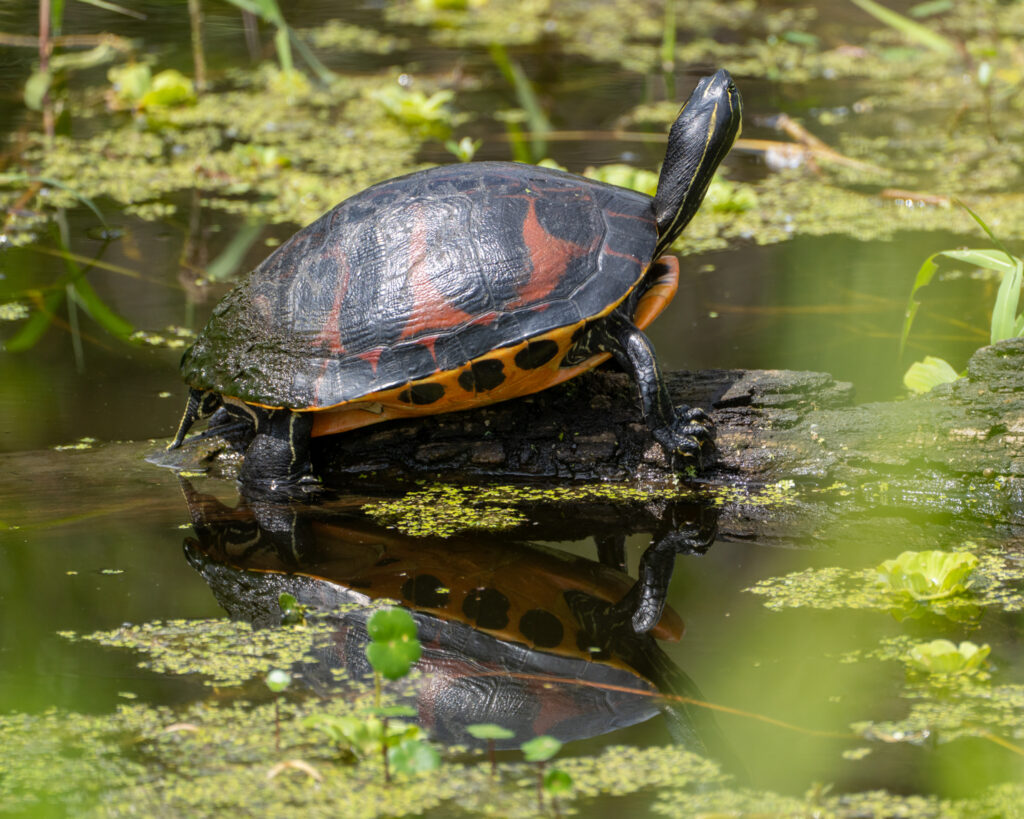
The red-bellied turtle (Pseudemys nelsoni) is a species of aquatic turtle found in the freshwater habitats of North America. The red-bellied turtle is a common choice among turtle enthusiasts, as this species is frequently sold in pet stores. It may also be referred to as the red belly turtle. We will explore more about this fascinating species, its care, habitat, and some of its most notable traits.
This turtle species can show some similarities with specimens of Pseudemys rubriventris.
Distribution
The red-bellied turtle is found predominantly in Florida, although it does not inhabit the southernmost areas. It also lives in the lakes and swamps of Okefenokee, located in southern Georgia.
The turtle Pseudemys nelsoni prefers a habitat that provides a wide variety of elements, such as vegetation, branches, and objects, allowing them to explore, climb, dig, and rest. A food-rich environment and a safe place to hide are essential for their survival and well-being.
Characteristics
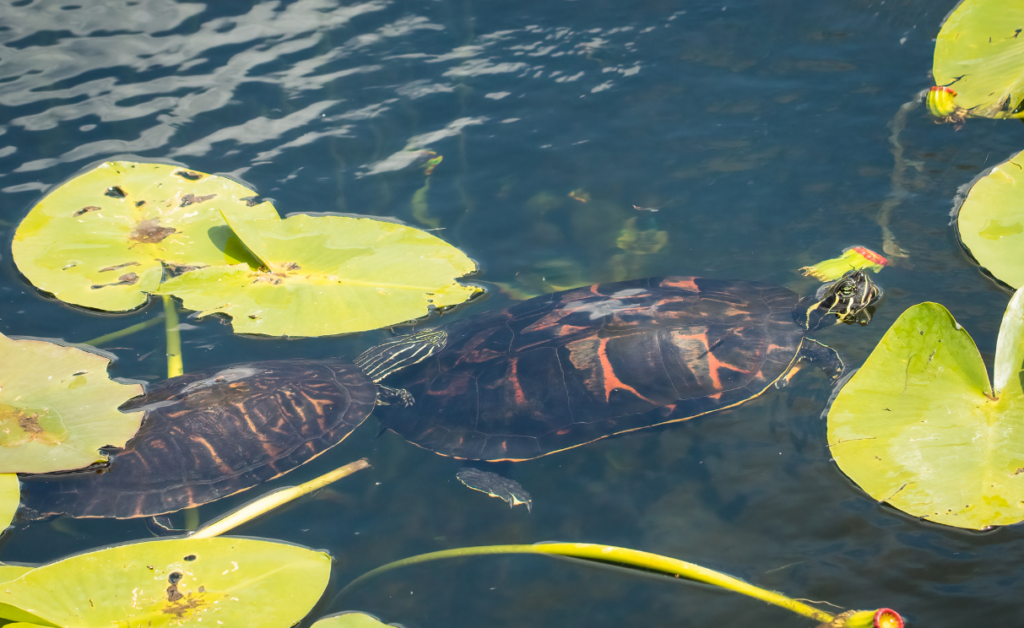
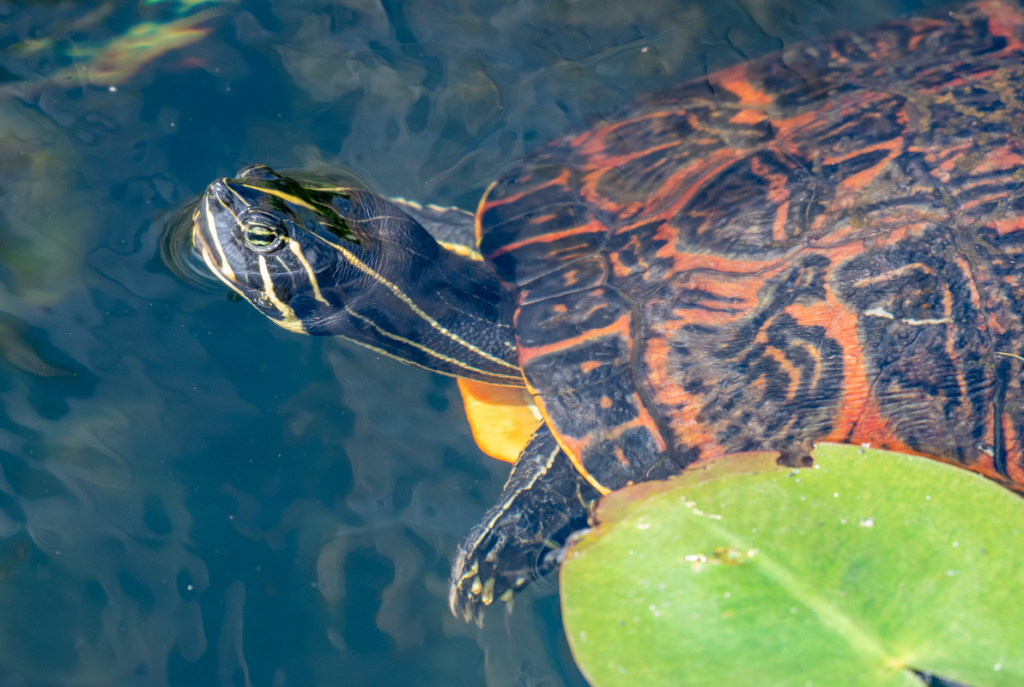
Its carapace is domed at the front, without serrated rear margins. The carapace is black with red or yellow markings on the costal and marginal scutes, which fade with age. The second costal scute has a central light stripe shaped like an inverted "Y" divided in the middle of the scale. All marginals have a reddish central bar on the upper side, and the underside shows dark spots over the sutures. Older individuals are usually uniformly black.
The bridges are uniformly yellow and the plastron can be orange-red with a central pattern that fades over time. Some individuals have a very light plastron, almost uniformly white.
The head is medium-sized with a fairly flat nose, a prominent notch at the tip of the upper jaw, and teeth on the sides. The head is black with multiple yellow stripes and an arrow shape at the front of the forehead.
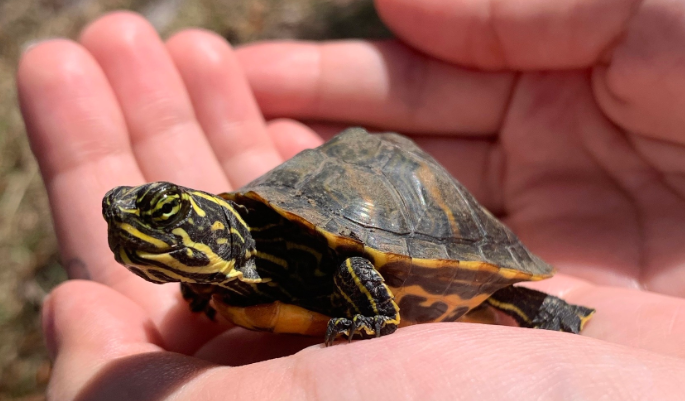
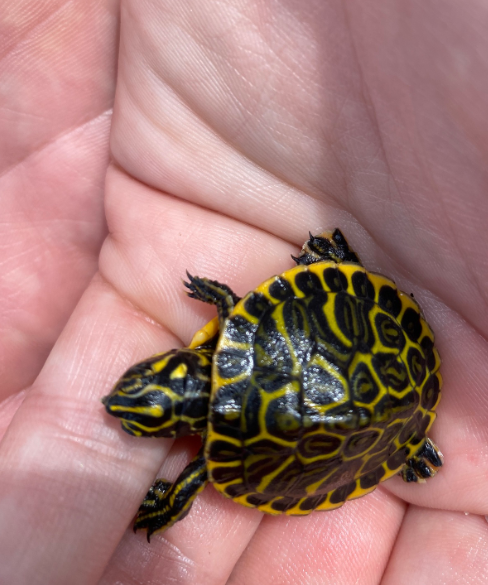
Juveniles have a lighter coloration than adults, with a very round carapace and a plastron ranging from orange to bright red.
Habits
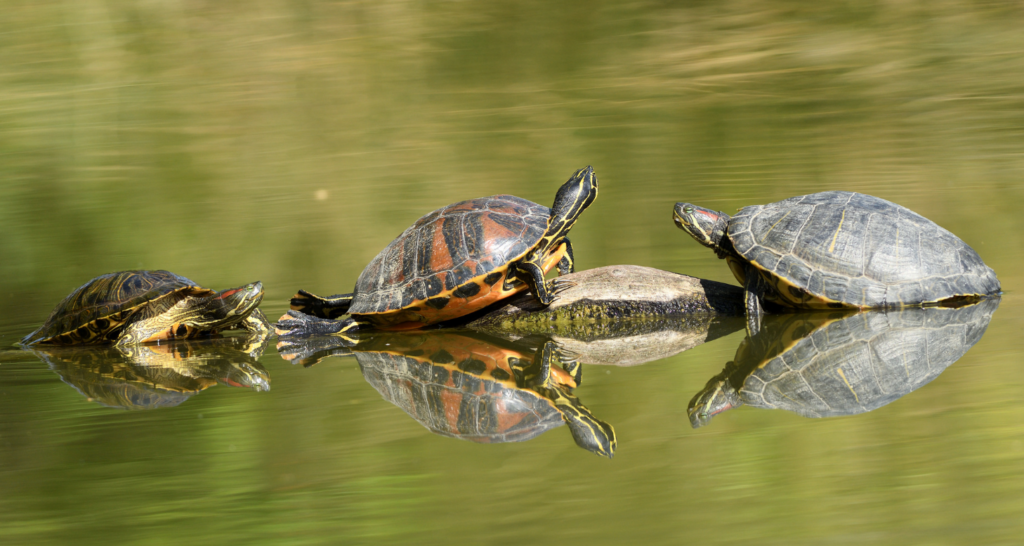
These turtles usually inhabit lakes, marshes, flooded ditches, mangroves, and slow-flowing rivers, as long as there is abundant aquatic vegetation in their environment. They are diurnal animals that remain active throughout the year, especially in the southern part of their range. During the day, they spend time basking on tree trunks or piles of vegetation, often near other species, although they do not hybridize with them. When looking for a basking spot, they can be aggressive toward other turtles.
How long does the red-bellied turtle live?
The Pseudemys nelsoni can live up to 30 years depending on the quality of care provided in captivity.
How big does the red-bellied turtle get?
An adult Pseudemys nelsoni can reach up to 38 cm in carapace length, and females are usually larger than males. Males typically do not exceed 30 cm.
Red-bellied turtle care
Caring for this species is similar to that of other aquatic turtles. Providing a balanced diet, an environment with sufficient sunlight, and adequate space are essential for their rapid growth and well-being, which reduces the risk of disease.
Ideally, it is recommended that the turtle lives outdoors in a pond since this species can hibernate.
If you need to keep this turtle indoors, you should provide it with an aquarium or aquaterrarium with the following features:
Filter
The filter is essential to keep the water clean for long periods, prevent diseases, and save water. Make sure the filter is always running.

- Material de calidad
- Ofrece un resultado óptimo y adecuado
- Sencillo de usar
UVB Light
For good digestion and proper nutrient absorption that allows for a strong shell, exposure to UVB light provided by the sun or a UVB lamp is necessary. If outdoor sunlight exposure is not possible, it is important to use a special reptile lamp with UVB light and ensure the turtle receives between 4 and 8 hours of daily exposure.

- Ideal para todos los reptiles tropicales y subtropicales
- Niveles óptimos de UVB
- Efectivo de hasta 40 cm (15")
- Suministra los necesarios rayos UVB para el metabolismo óptimo del calcio
- Los rayos UVA estimulan el apetito, actividad y comportamiento reproductivo

Substrate
A substrate recommended for aquatic turtles should be used, with appropriate dimensions to prevent accidental ingestion. For more information on suitable substrates, you can consult a specific post on the topic.
- Guijarros redondos
- Crea una apariencia natural de lecho de río
- Fácil de limpiar
Heater
During the first two years of life of red-bellied turtles, it is recommended to keep the water temperature at 28 degrees Celsius to encourage activity, development, and appetite, allowing them to grow healthily. As they grow, the temperature can be lowered to a range between 25 and 28 degrees Celsius using a regulable thermostat.

Avoid letting baby turtles hibernate.
Dry area
To ensure the well-being of these turtles, it is important to provide them with a dry area in their habitat for resting and basking, especially since they grow quickly. It is essential that this area is easily accessible and that there are no drafts nearby, as they are susceptible to pneumonia.

Water changes
It is recommended to perform weekly water changes of 20% of the water in the aquaterrarium to keep nitrate levels low.
A dechlorinator should be added to tap water if it is used for the red-bellied turtle's tank. This is because chlorine can irritate the turtle's skin and eyes, which can be harmful to their health. Dechlorinators can be purchased at pet stores and help neutralize chlorine and other chemicals present in tap water.

- Para peces y plantas
- Para acuarios de agua dulce y tortugas
- Neutralización del cobre, el plomo y el zinc
- Protección de la membrana mucosa
How to feed a red-bellied turtle?
are omnivorous and eat a variety of plants, insects, and aquatic animals. Juveniles may also feed on aquatic insects and small freshwater invertebrates.
These turtles have a diet similar to Trachemys and need a balanced diet for healthy growth. It is not recommended to feed only gammarus or dried shrimp, as this can cause vitamin deficiencies and illness.
The diet should include turtle pellets, animal-based foods such as insects, snails, fish, and lean meats, as well as some fruits and vegetables. Aquatic plants can be provided for additional plant matter.

- Fabricado en Alemania.
- Contiene minerales importantes.
- Tapa con cierre hermético.
- Comida especial para tus peces.
For proper development, a calcium supplement should be provided.
Reproduction
Males reach sexual maturity at 3-4 years, while females do so at 6 years.
During courtship, males swim above the females and then move to the rear to smell the female's cloacal region. If the female keeps swimming, the male follows her with his neck extended to touch her head with his nose. In this species, it is also common to see the male grasp the sides of the female's head with his front legs and perform a series of rapid strokes and vibrations with his front legs.
Egg laying takes place between May and June, with an average of three to four clutches per season. They may lay their eggs in alligator nests, and female alligators have been observed guarding eggs laid by the red-bellied turtle. In these nests, where temperatures can reach 50°C, incubation lasts about 50 days. Each clutch contains between 8 and 30 eggs.
Compatible species
Although these turtles can coexist with species such as yellow-eared turtles, red-eared turtles, Cumberland turtles, peacock turtles, Pseudemys, painted turtles, and the Graptemys group such as the false map turtle without problems, it is necessary to provide enough space so that each has its own territory and fights over habitat dominance are avoided.
It is advisable to keep individuals of similar size together, as larger ones can be aggressive toward smaller ones.
Conservation status
The has several natural predators, including humans, raccoons, otters, opossums, some bird species, and large Chelydra serpentina. However, it appears that alligators are the main predators of red-bellied turtle (Pseudemys nelsoni) hatchlings. Some authors suggest that the shape and thickness of this species' shell are directly related to the need to defend against this predation.
The red-bellied turtle (Pseudemys nelsoni) has been imported as an alternative to red-eared turtles and is now an environmental problem because some people release them into the wild. This species adapts well and can eliminate nearby animals and plants. They compete with native turtles, such as Mauremys leprosa and Emys orbicularis.
It can be legally acquired in many specialized pet stores and from breeders, but keep in mind that owning a pet is a great responsibility and requires time, care, and resources to ensure its well-being.
Contenido relacionado