
Sulcata Tortoise
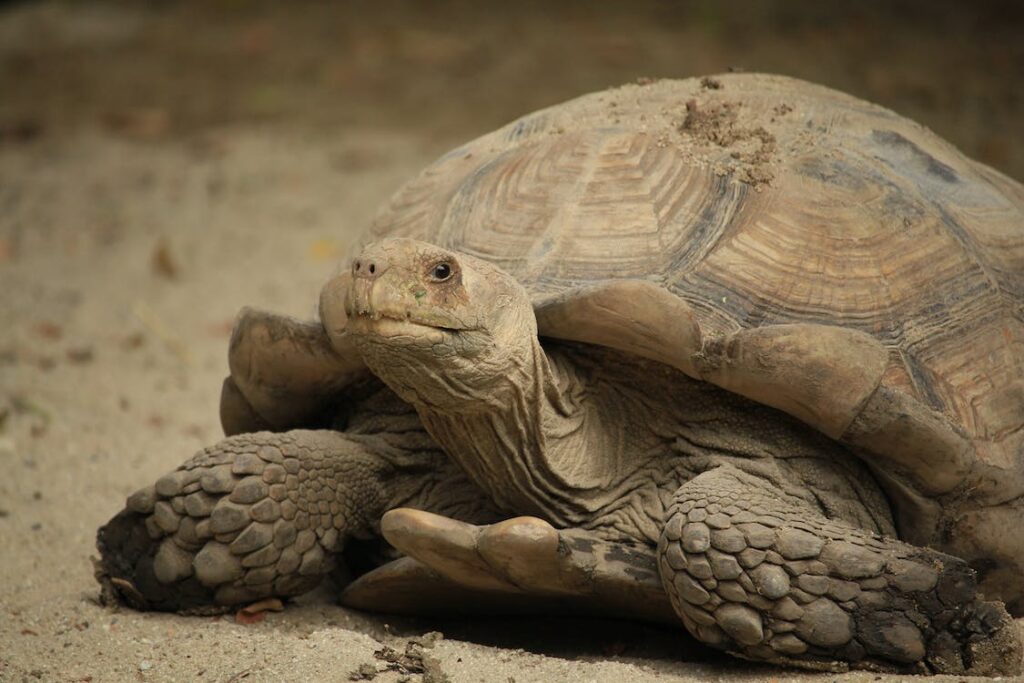
The sulcata tortoise, also known as the African spurred tortoise (Centrochelys sulcata), is an exotic species of land tortoise that is popular worldwide. Native to sub-Saharan Africa, this tortoise is known for its large size, longevity, and friendly personality. They are long-lived animals and can live up to 100 years in captivity. The Sulcata tortoise is a popular pet species, but due to its size and specific care needs, it is not suitable for all pet owners. The Sulcata tortoise faces threats such as the loss of its natural habitat and poaching, so conservation efforts are needed to protect this endangered species.
Distribution of the sulcata tortoise
The sulcata tortoise used to live in the central region of Africa, specifically between Mauritania and Ethiopia. There are records of isolated populations in southern Mauritania, northwestern Senegal, southern Mali, Chad, Eritrea, and Ethiopia.
Habits of the sulcata tortoise
The activity of the sulcata tortoise is influenced by the climate, with a rainy season in July-August, a warm and humid season until November, and a very hot and dry season until June. To protect itself from heat and dryness, this tortoise digs very long burrows, where it spends much of the hot hours and the dry season. These are tunnels that are exactly the shape of its body, with several wider chambers for parking or turning, and where it finds some humidity during the dry season and even dead animals to feed on.
It can live for many weeks without eating or drinking. Young tortoises share burrows with adults. The young begin to dig their own burrow at 5 years of age.
How long does a sulcata tortoise live?
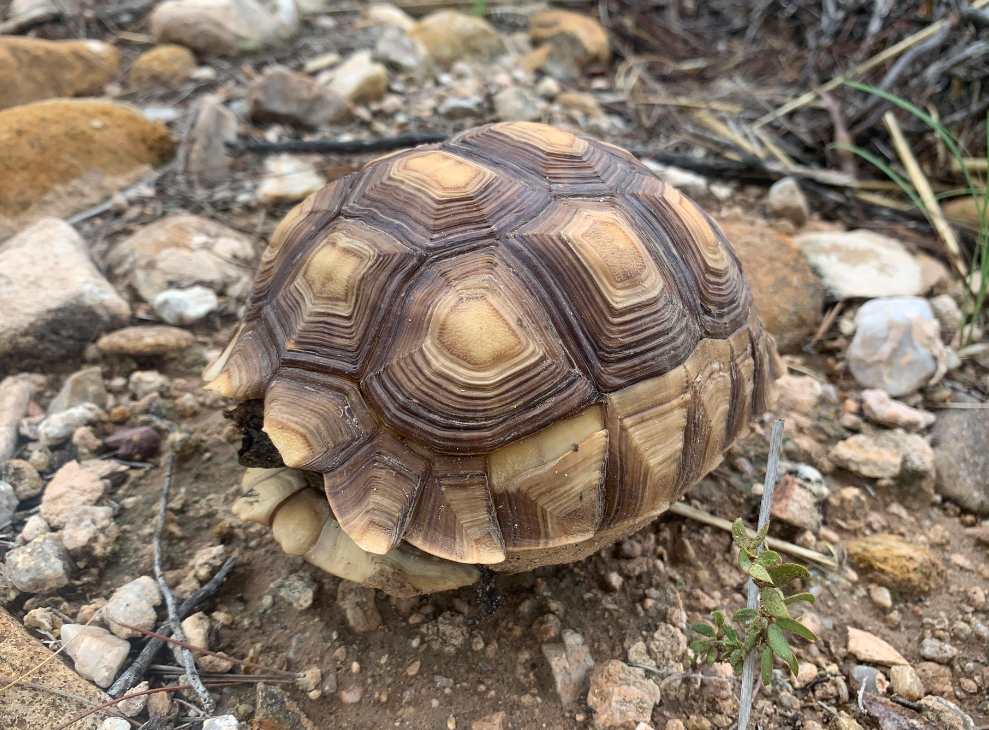
Unlike other tortoise species, sulcatas have a lifespan of up to 80 years, which means they are a pet that can accompany you throughout your life. Although in captivity they can live over 100 years.
How big is a sulcata tortoise?
Sulcata tortoises can grow up to 80 centimeters long and weigh more than 98 kilograms for males and females reach 60 kg in adulthood. As a species of land tortoise, they do not need a body of water to swim in, but they do need a large terrestrial space to move and explore. It is the largest tortoise on the African continent.
What can a sulcata tortoise eat?
A diet rich in fiber, such as hay and grass, is ideal for sulcata tortoises, but they also need a source of protein in the form of insects and fresh vegetables. In their habitat, which is nutrient-poor, they are mostly herbivorous. In captivity, they eat peanut plants but also really like mangoes and watermelons, although they can consume dead animals, thorny plants, tree bark, algae, and aquatic plants. They drink rarely, but after the dry period, they can ingest up to 15% of their body weight in water.
Sulcata tortoise care
Sulcata tortoises require a warm and dry habitat with an ambient temperature of at least 21°C. They need a shelter to hide from direct sun and protect themselves from extreme temperatures, and they also need access to a clean water source for drinking and soaking.
Sulcata tortoises outdoors
The life of sulcata tortoises outdoors offers numerous advantages over indoors, especially during warm seasons, and should be considered as an option. Sulcatas, in particular, due to their large size and grazing habits, should be kept outdoors whenever weather conditions allow.
Sulcata tortoises indoors
The most common way to keep these tortoises indoors is in a tortoise table or terrarium. For a baby tortoise, a reasonable habitat should be about 60 x 60 cm, but its size should be increased as the tortoise grows, since they are a fast-growing species and by 3 years old can exceed 30 cm. At the bottom of the table, holes can be made for draining food and water, and eventually nesting containers (nests) with easy access for the animals. However, for an adult tortoise, the indoor habitat should be at least 240 x 240 cm. It is not practical to keep this species indoors.
The water area of the habitat should be large enough for the tortoise to submerge itself completely, but not so deep that it could drown. As a substrate in the dry portion of the habitat, a mix of soil and sand or cypress mulch works very well, but for this and other arid species, the preferred substrate is grass (hay), as it is very easy to maintain and provides nutrients to the tortoises if they eat it. This area should be kept dry, as Sulcatas do not tolerate humidity. If sand is used as a substrate, it is recommended not to place food on the sand area, as it can be retained in the digestive tract, which could possibly cause the tortoise's death.
The habitat should also be equipped with a UVB lamp.

- Ideal para todo reptil habitante de desierto
- Alta producción de UVB
- Elevada conversión de D3
- Efectiva hasta 50 cm (20")
- Suministra los rayos UVB necesarios para el metabolismo óptimo del calcio

Sulcata tortoise reproduction
Sexual dimorphism is very pronounced; males have concavities under the plastron that exceed 12 cm in depth. Males are larger than females.
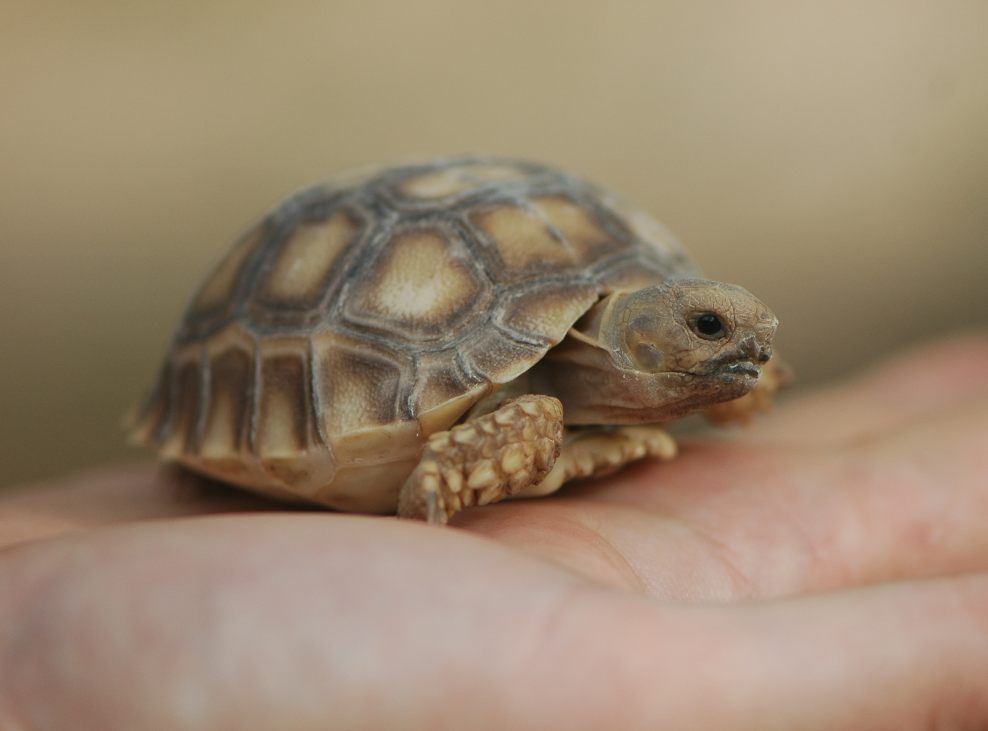
Their nests are deep (sometimes up to 40 cm) and there are an average of two clutches, with a maximum of 4 per female. Each clutch contains 13 to 31 eggs (an average of 19 per clutch), which weigh between 45 g and 60 g. The egg is almost round. Incubation lasts about 120 days. About 90% of the eggs hatch viable young. The baby sulcata tortoise weighs approximately 50 g. Growth is rapid, 1 kg at two years, and 5 to 6 kg at four years.
Mating is a spectacular moment because they are large tortoises. The male supports himself with his front legs on the female and emits a deep sound.
Conservation status of the sulcata tortoise
In the past, it was considered a common type of tortoise and was consumed by many peoples and exported to Western countries. Until the mid-20th century, there was a large population of sulcata tortoises, but they declined due to export to zoos, private gardens, and collections for food. The constant increase in livestock led to overgrazing and subsequent desertification, and the sulcata tortoise could not adapt. Currently, it is forbidden to collect this species in the wild.
Currently, there are many sulcata tortoises in zoos, so in the West they can be bred for exchange with other zoos. There is a French association called SOS sulcata that takes in confiscated, repatriated, or injured tortoises at customs in Senegal.
Other types of land tortoises
There are several species of land tortoises around the world, each with distinctive characteristics:
Argentine Tortoise
Indian Star Tortoise
Red-Footed Tortoise
Leopard Tortoise
Greek Tortoise
Galápagos Tortoise
Accessories for land tortoises
Sulcata Tortoise Video
