
Sea Turtles
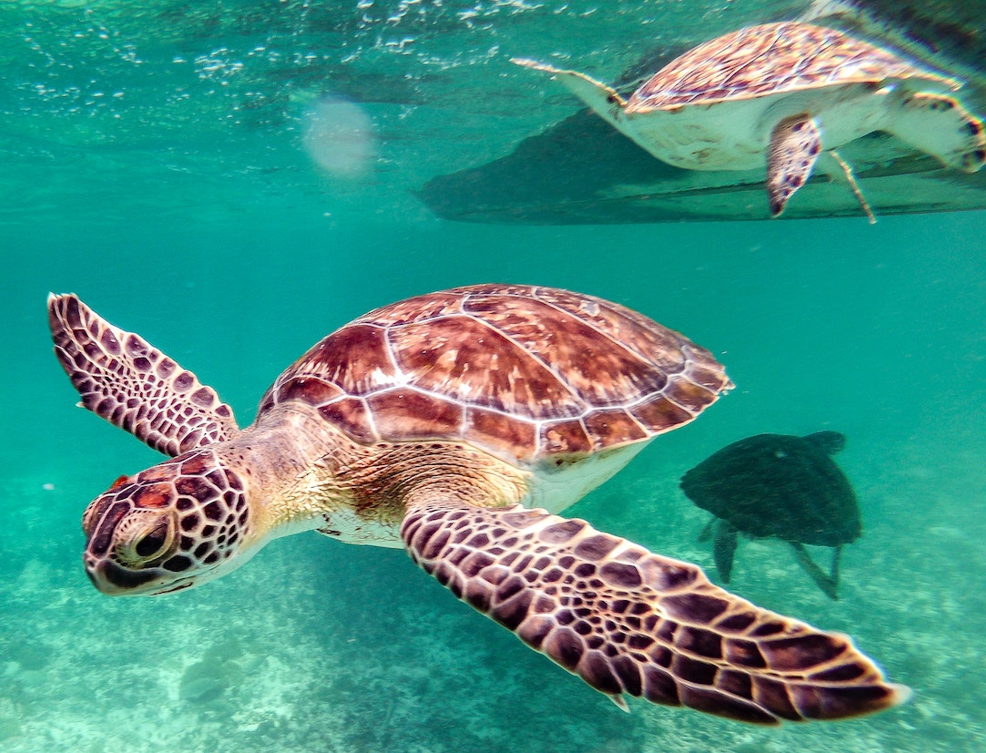
Sea turtles are fascinating creatures that have existed on our planet for millions of years. Over time, these animals have captured the attention and curiosity of scientists, biologists, and nature lovers alike. Although they are magnificent animals, these species face many challenges in their natural environment and their existence is endangered due to human activity and climate change.
Turtles are reptiles distinguished by their skin covered in scales. They reproduce by laying eggs on land and have a bony or cartilaginous structure developed from the rib cage, which serves as protection and is composed of the carapace or shell on the dorsal side and the plastron or belly plate on the ventral side.
How many species of sea turtles are there?
There are seven species of sea turtles worldwide: the hawksbill turtle, the green turtle, the loggerhead turtle or caguama turtle, the leatherback turtle, the flatback turtle, the Kemp's ridley turtle or lora turtle, and the olive ridley turtle. All these species are endangered due to habitat loss, poaching, and pollution.
| Species | Scientific Name | Main Characteristic | Main Diet |
|---|---|---|---|
| Leatherback Turtle | Dermochelys coriacea | The largest, leathery shell | Jellyfish |
| Green Turtle | Chelonia mydas | Smooth, heart-shaped shell | Herbivore (seagrasses, algae) |
| Loggerhead Turtle (Caguama) | Caretta caretta | Very large and robust head | Carnivore (crabs, mollusks) |
| Hawksbill Turtle | Eretmochelys imbricata | Sharp beak, serrated shell | Sea sponges |
| Flatback Turtle | Natator depressus | Very flat and smooth shell | Carnivore (sea cucumbers, corals) |
| Kemp's Ridley Turtle (Lora) | Lepidochelys kempii | The smallest and most endangered | Carnivore (crabs) |
| Olive Ridley Turtle | Lepidochelys olivacea | Known for massive "arribadas" | Omnivore |
In this article, we will explore the life of sea turtles, their role in marine ecosystems, and the threats they face. We will also discuss what we can do to help protect these endangered creatures.
Types of sea turtles
We have developed a series of articles on the different species of sea turtles:
Flatback Sea Turtle
Olive Ridley Sea Turtle
Kemp's Ridley Sea Turtle
Hawksbill Sea Turtle
Leatherback Sea Turtle
Loggerhead Sea Turtle
Green Sea Turtle
Sea turtle life cycle
The life cycle of a sea turtle is a fascinating process that consists of three main phases: feeding, migration, and reproduction. These phases repeat periodically throughout their lives and are closely related to the different habitats they frequent.
Feeding
Sea turtles have a varied diet that depends on the species, and their diets change as they develop. Hatchlings feed mainly as omnivores at the surface during their first oceanic phase, while juveniles and sub-adults move to shallow areas near the coast in search of food, where food is more abundant. These areas are usually continental shelf zones or neritic habitats.
Migration
The migration phase is another stage in the life of sea turtles. During this phase, turtles can travel long distances to find new feeding habitats or to reproduce on nesting beaches. During these migrations, turtles may face dangers such as accidental capture in fishing gear or collisions with boats.
Reproduction
Finally, the reproduction phase is a crucial stage in the life of sea turtles. During this phase, females head to nesting beaches where they lay their eggs. They choose beaches where the sand conditions are suitable for egg incubation. The hatchlings are born on the beach and must make their own journey to the sea to begin their life cycle.
Where do sea turtles live?
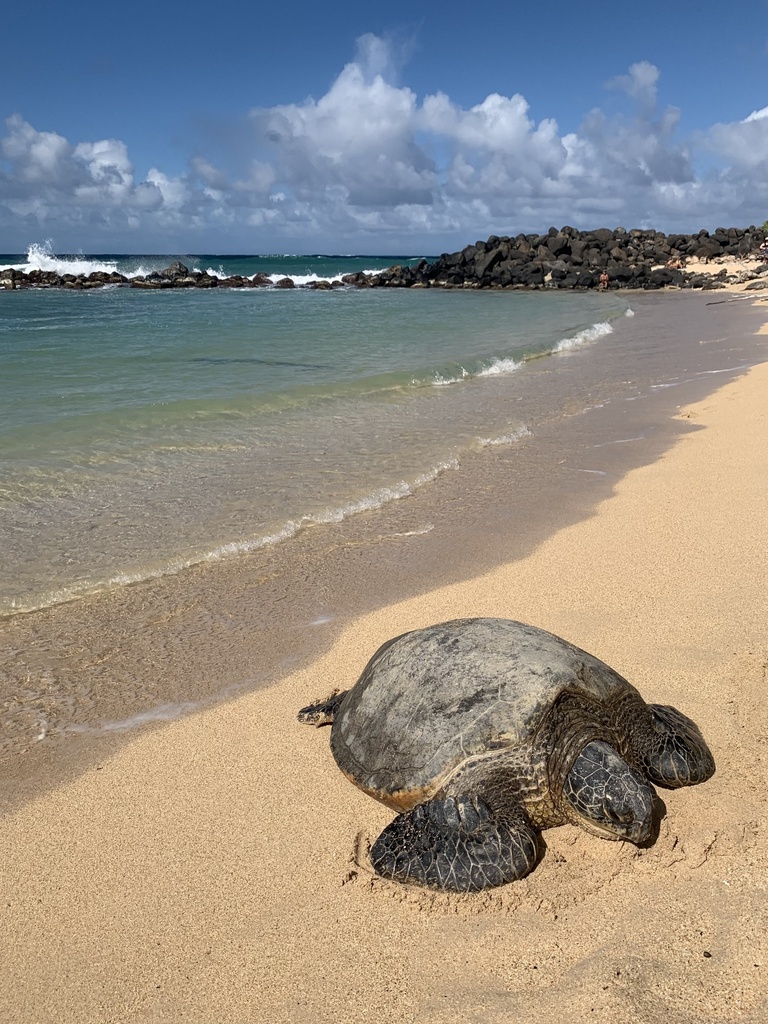
They live in all the world's oceans, from the warm tropical waters to the cold waters of the Arctic. They spend most of their lives in the water but come ashore to lay their eggs.
They spend most of their lives in the ocean, but also have a special bond with the beaches where they were born. It is on these beaches that sea turtles return each year to nest and lay their eggs.
Sometimes sea turtles can live in various marine habitats, from coral reefs to bays and estuaries. However, it is during the nesting season that sea turtles visit the specific beaches where they were born. These beaches are extremely important for the survival of these species, as they provide a suitable environment for egg incubation and hatchling development.
Why are sea turtles important?
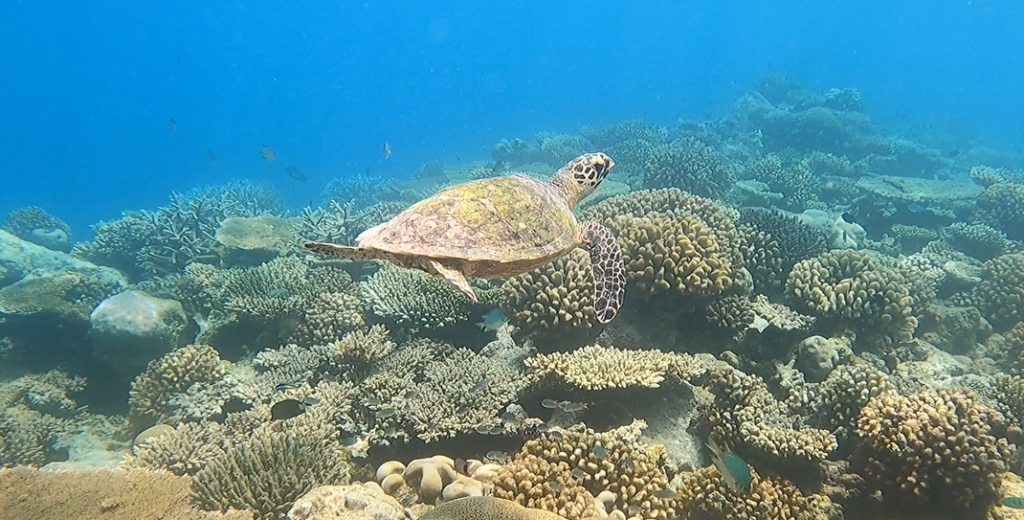
They are a necessary species in the marine ecosystem. Through their feeding, they help maintain balance in the ocean by consuming jellyfish and other marine animals. They play an important role in the health of coral reefs, as their grazing activity keeps algae growth that competes with corals in check.
How are sea turtles born?
Sea turtles lay their eggs on the beach in nests they dig with their hind flippers. After an incubation period of about 60 days, the hatchlings emerge from the eggs and make their way to the sea. Only a small fraction of the hatchlings survive to adulthood.
How long can sea turtles live?
Sea turtles can live a long time. They can even live up to 80 years in the wild, but their life expectancy has been compromised by human activity. Sea turtle care organizations take measures to preserve their habitat and minimize the threats they face to ensure the survival of this species.
What do sea turtles eat?
They are carnivorous animals that feed mainly on algae, jellyfish, crustaceans, crabs, sponges, mollusks, and other marine invertebrates.
Some species of sea turtles, such as the green turtle (Chelonia mydas), have a mainly herbivorous diet and feed on algae and seagrasses. Other species, like the leatherback turtle (Dermochelys coriacea), are predators that feed mainly on jellyfish.
The diet can also vary depending on their age and size. For example, baby sea turtles usually feed on small invertebrates, while adult turtles can feed on larger prey.
What can we do to help sea turtles?
There are many things we can do to help the sea turtle.
First of all, minimize our carbon footprint and reduce our dependence on fossil fuels. Ocean pollution is a threat, so we must ensure we dispose of waste properly and avoid throwing trash into the water.
Supporting organizations that work in the conservation of sea turtles and their habitat. These organizations work to protect nesting beaches, implement sustainable fishing practices, and remove marine debris. Donating time, money, or resources can be an effective way to help these organizations and support their work.
Another way we can help is by educating others and young people about the importance of sea turtles and the need for their conservation. Sharing information and resources on social media, getting involved in environmental education projects, and encouraging the use of sustainable practices can help raise awareness about the importance of preserving this species.
What threats do sea turtles face?
In addition to the specific ways we can help sea turtles that we have seen in the previous section, it is important to understand some of the factors that threaten them and put turtles at risk of extinction. Habitat loss is one of the biggest threats, as many species depend on specific beaches for nesting and specific feeding areas to survive.
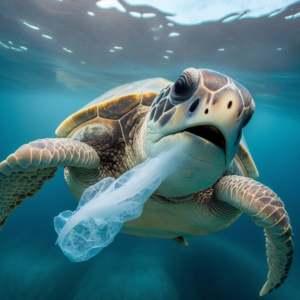
Pollution is another significant threat to sea turtles. Marine debris, such as plastics and fishing waste, can harm or kill them when ingested accidentally or when they become entangled. It is sad to see turtles with plastic or other debris. Chemicals and pollutants can affect their health and development, making them more vulnerable to diseases and other threats.
Overhunting and overfishing are also threats, especially in some parts of the world where they are considered a food source or a commercial product. They can also become entangled in fishing nets and other traps, which can cause serious injuries or death.
Sea turtles migrate long distances
Sea turtles migrate long distances to nest and feed. Some species migrate up to 2,000 km between their feeding area and nesting site.
Sea turtle body temperature regulation
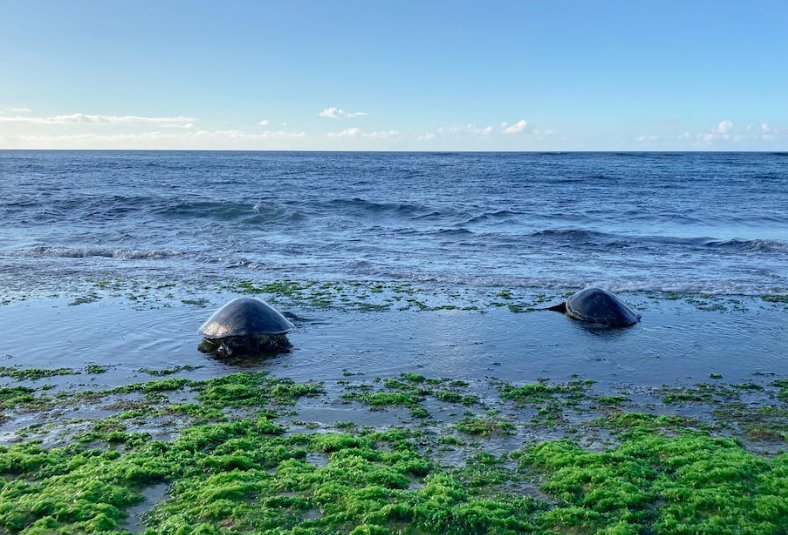
Sea turtles are poikilotherms or ectotherms, which means their body temperature varies with the temperature of the environment. To keep their bodies functioning, they need to warm themselves in the sun or by contact with warmer elements. Because of this, their geographic distribution is mainly limited to tropical and subtropical waters, and in cooler waters, they need to bask at the surface more often to absorb solar heat. The exception to this is the leatherback turtle, which can be found in circumpolar waters thanks to a thick layer of fat that insulates it from the cold temperatures of the environment.
Sea turtles are protected by law
Sea turtles are protected by law in many countries. It is illegal to hunt, capture, kill, or harm their habitats in most areas.
It depends on the species and activity. At rest, they can remain submerged for hours. The loggerhead turtle, for example, can hold its breath for up to 10 hours. However, when they are active and searching for food, they usually surface to breathe every few minutes.
No, sea turtles do not have teeth. Instead, they have a very sharp and powerful horny beak, adapted to their specific diet. The hawksbill turtle uses it to cut sponges and the leatherback turtle to catch slippery jellyfish.
It is not crying from sadness. Sea turtles have special salt glands near their eyes that allow them to excrete the excess salt they consume from seawater. When they are on land, these salty "tears" are much more visible.
The sex of sea turtles is determined by the temperature of the sand during incubation. Warmer temperatures (generally above 29-30°C) produce females, while cooler temperatures produce males. This phenomenon is a major concern for scientists due to global warming.
Leave a Reply
Contenido relacionado