
False Map Turtle
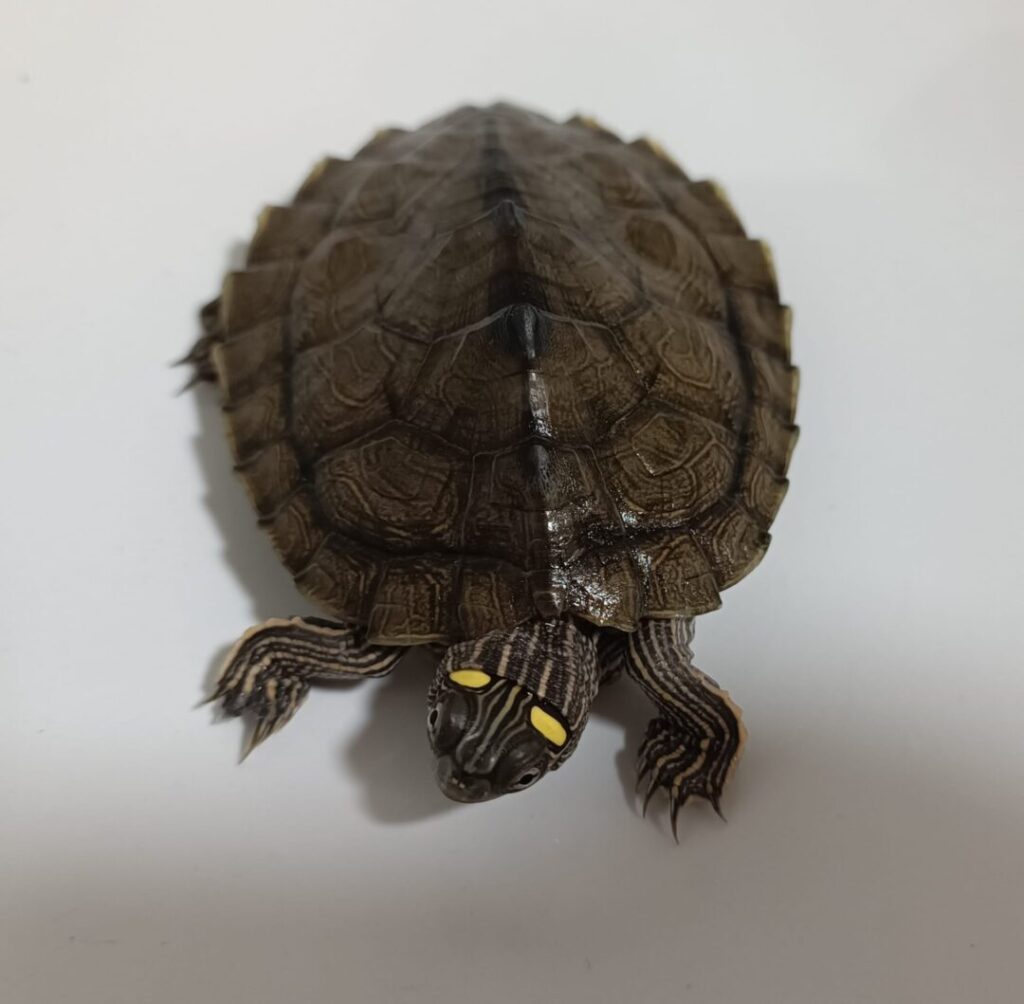
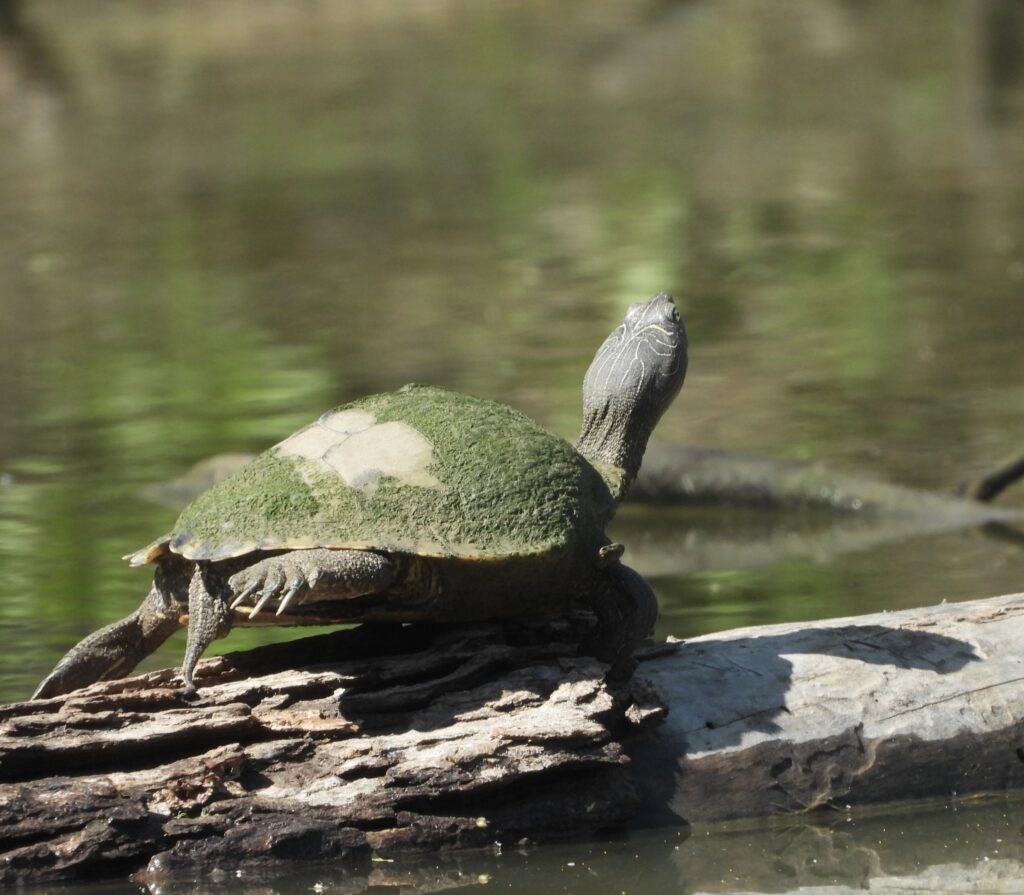
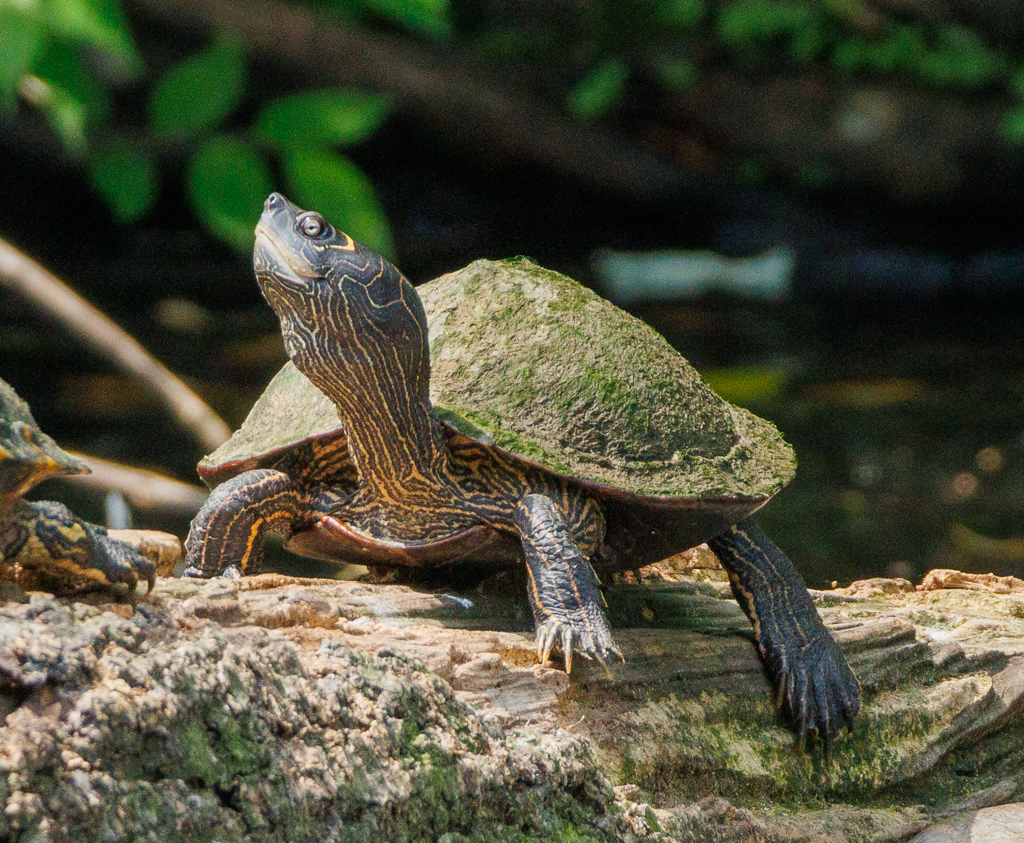
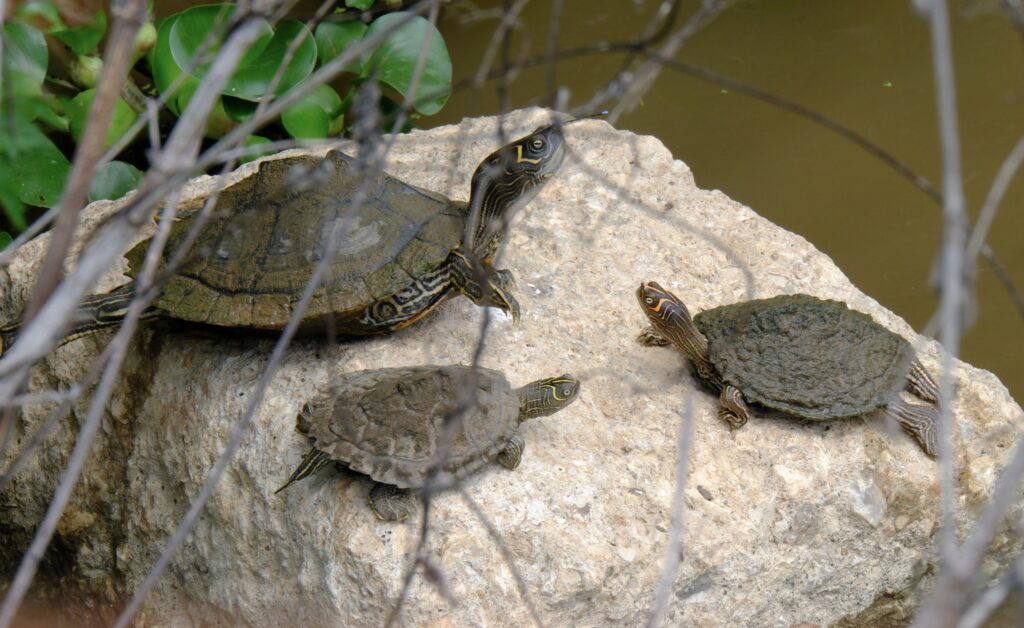
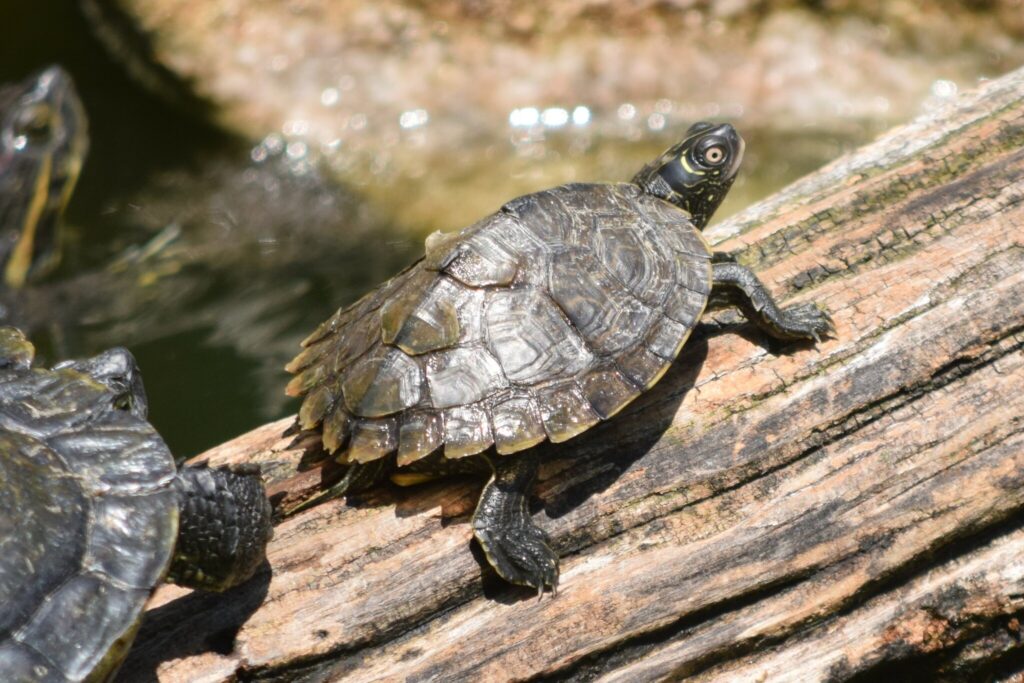
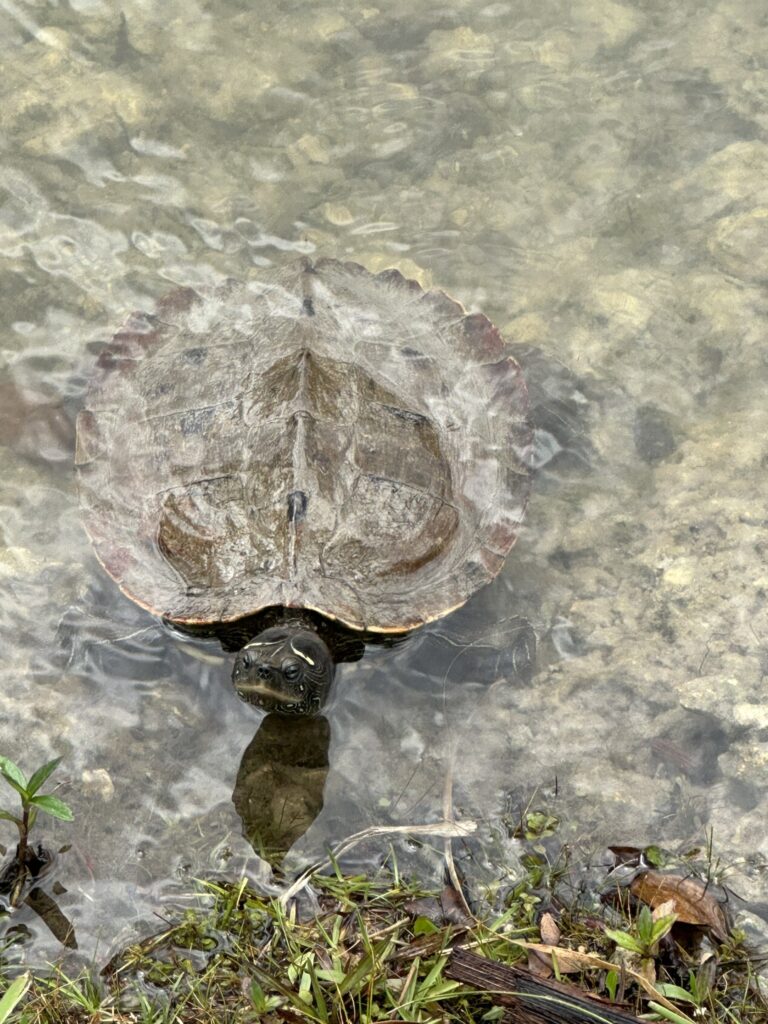
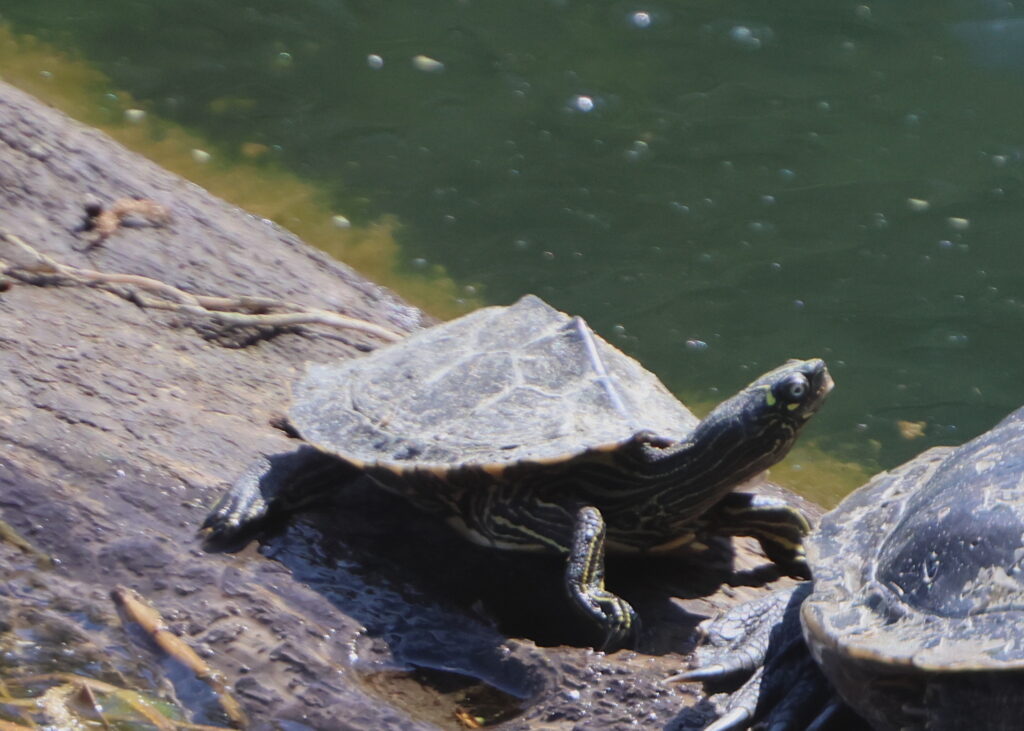
The false map turtle or Graptemys pseudogeographica is a type of aquatic turtle originally from the rivers of North America, also known as the Texas river turtle. It can be confused with the map turtle or koni turtle, as both are very similar even in size, with the false map turtle being slightly smaller. They can be distinguished from the native Graptemys geographica or map turtle by a yellow semicircular mark behind each eye. The carapace is olive, brown, or black with dark spots surrounded by yellow lines. It has a very peculiar feature: the color of the carapace over the vertebral scutes is black. The plastron is cream or yellow, but juveniles tend to be darker.
| Technical Sheet of the Map Turtle | |
|---|---|
| Scientific Name | Graptemys geographica |
| Family | Emydidae |
| Origin | North America (Eastern and central USA and southeastern Canada) |
| Lifespan | 15 - 25 years in captivity |
| Size (Adult) | Males: 10-16 cm | Females: 18-27 cm |
| Diet | Omnivorous (insects, snails, fish, aquatic plants) |
| Water Temperature | 23 - 26 °C |
| Dry Area Temperature | 30 - 32 °C |
| Temperament | Shy and skittish, prefers not to be handled |
This turtle is popular among reptile enthusiasts as a pet due to its unique appearance and interesting behavior. They are social animals and can be found in groups in feeding and resting areas, making them a good domestic aquatic turtle.
They are freshwater turtles that usually live in rivers with clear water and little pollution. They are excellent swimmers, as can be seen in the fin-like shape of their limbs. These turtles have a preference for carnivorous diets, preying on mussels, clams, or snails among others.
When in captivity, we can observe that this turtle may have a timid character, often jumping into the water from its dry area whenever another living being is present, out of fear of being attacked.
Distribution
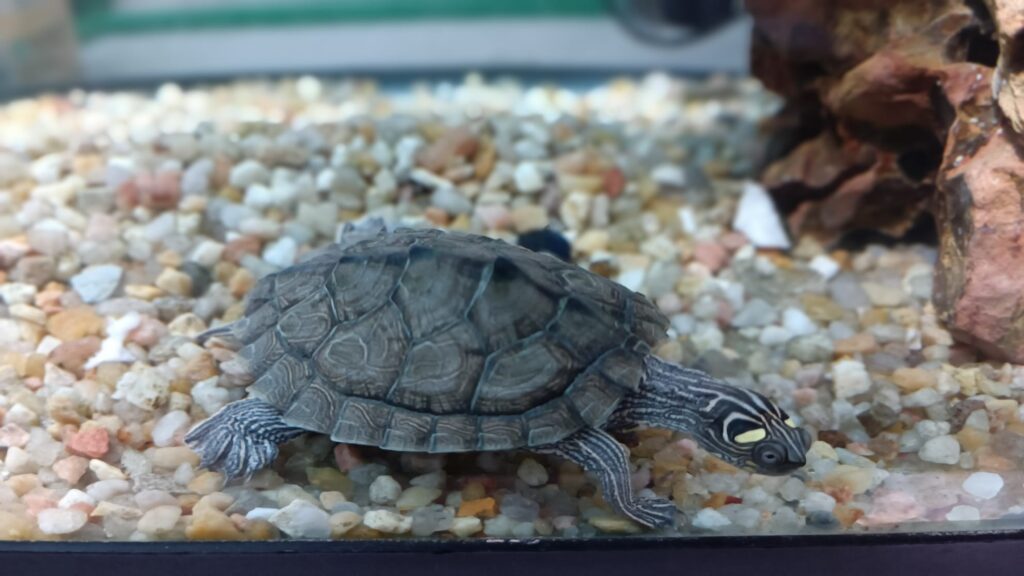
This turtle is found in fast-flowing rivers and streams in the southern United States, from Texas to Tennessee and Arkansas, and also in some areas of northern Mexico. It is a semi-aquatic species and can spend long periods in the water, although it can also be found on land.
How long does a false map turtle live?
The estimated lifespan is usually 30 years if kept in ideal conditions in captivity.
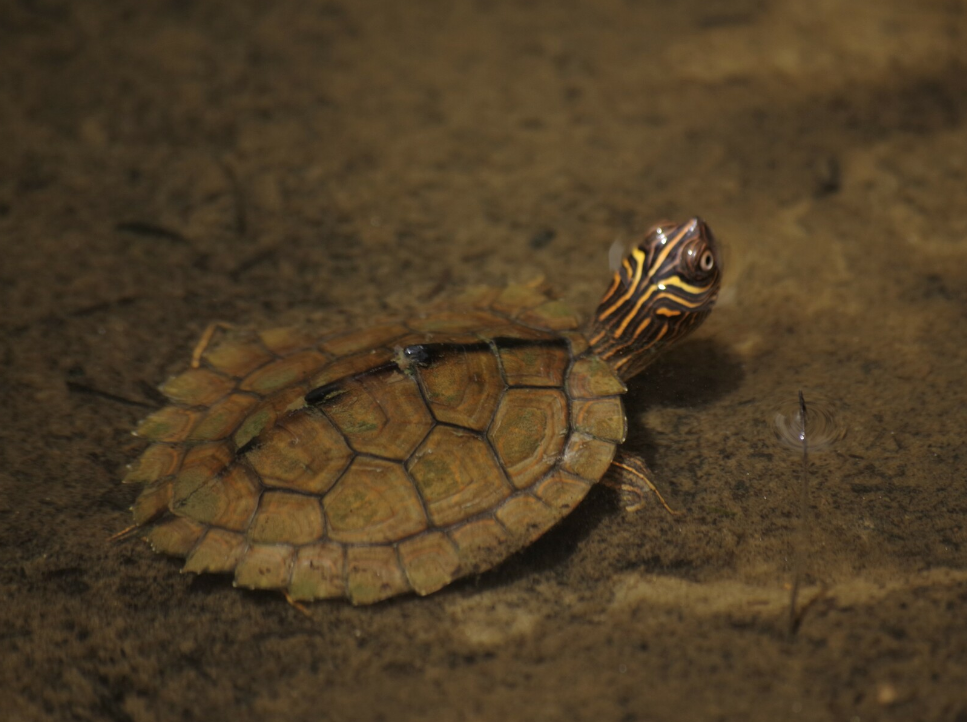
It is important to maintain good water filtration, lighting, and adequate habitat capacity.
What size is a false map turtle?
They are a type of small aquatic turtles that are excellent for keeping at home. Males measure from 9 cm to 15 cm in length and females from 12 cm to 27 cm in length. Adult weight can range from 1.1 kg to 1.8 kg. Adult females are on average 1.5 times larger than adult males and have a wider head. Adult males have elongated front claws and a longer tail.
How long does it take for the turtle to grow?
Most turtles reach their maximum size between 5 and 8 years. Turtle growth is not necessarily linear. The greatest growth occurs in the first 4 years of life. This is affected by the conditions the turtle has, such as diet, pond size, UVB light, among other factors.

- Ideal para todo reptil habitante de desierto
- Alta producción de UVB
- Elevada conversión de D3
- Efectiva hasta 50 cm (20")
- Suministra los rayos UVB necesarios para el metabolismo óptimo del calcio

A rule of thumb is to have a tank or pond that holds 10 liters for every centimeter of the turtle's carapace. One of the biggest mistakes turtle owners make is buying a tank that is too small. Since turtles can keep growing until they are 8 years old, we must ensure we have a tank that gives the turtle enough space.
What can it eat?
False map turtles are omnivorous. The size difference between males and females leads to differences in feeding habits. Females eat mollusks, mayfly larvae, and other larvae. Males eat the same insects as females, as well as beetles, flies, other insect larvae, mollusks, fish carrion, and small amounts of vegetation.
In captivity, we should provide them with sticks to promote proper growth, raw chicken, or salmon. The diet should always include sticks, turtle pellets, alternating with chicken breast and salmon. Salmon is a fattier food, so it should be given less frequently.

- Contiene más de un 55 % de kril y de camarones por lo que es rico en ácidos grasos insaturados (omega 3)
- Las grasas naturales como proveedores de energía de alta calidad favorecen el metabolismo y refuerzan el sistema inmunitario de las tortugas
- La relación óptima entre calcio y fósforo favorece un caparazón sano y unos huesos fuertes
- La fórmula está elaborada con ingredientes naturales, por eso no contiene colorantes / Volumen de suministro: 1x Tetra ReptoMin Energy 250 ml
If you want to know more about how to feed your aquatic turtle, you can read the post on food for aquatic turtles.
The false map turtle is omnivorous and in its habitat feeds on a variety of foods, including aquatic plants, aquatic insects, crustaceans, and other small animals.
Hibernation
The false map turtles emerge from hibernation sites when the water temperature is 4 to 7 °C. It is recommended that during the first 3 years of life, a heater be installed to prevent hibernation and ensure good development.
Reproduction
Male turtles identify a potential mate using visual and olfactory cues. The olfactory signals come from the female's cloaca. Once a female is found, there is a male courtship display in which the male first caresses the head and neck of his potential mate with his front claws. Then, the male touches the female's eyes with his front claws. If she remains still, the male will attempt to mate with her. Copulation lasts from 15 seconds to over 4 hours and is facilitated by the male hooking his tail around the female's tail.
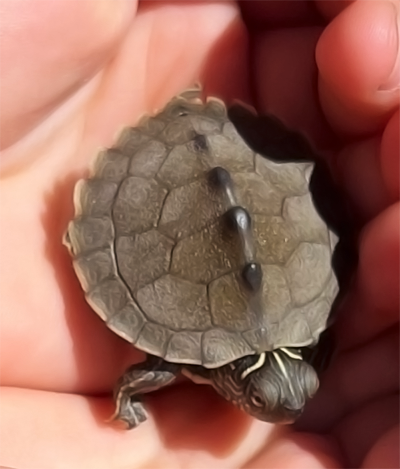
Females can lay 2 to 3 clutches per year with clutch sizes of 8 to 22 eggs.
Graptemys pseudogeographica mates twice a year, in April and again in October and November. The nesting season lasts from mid-May to late July, with the first clutch from mid-May to mid-June. Nests are dug during the day and most clutches are laid in the morning.
The sexual maturity of Graptemys pseudogeographica is reached by males between 4 and 6 years old. For females, it is between 8 and 14 years old.
How to care for false map turtles?
We should follow the pattern (aquatic turtle houses, filters, heaters, UVB) of the recommendations indicated in the article on aquatic turtles. They are compatible with species such as yellow-eared turtle, red-eared turtle, Cumberland turtle, peacock turtle, Pseudemys, painted turtle, and the Graptemys group.
How do aquatic turtles sleep?
Aquatic turtles usually rest and sleep in quiet places in the aquarium where they can support themselves. Their biological clock should be regulated by maintaining appropriate hours of light and darkness.
Conservation status
False map turtles are currently not considered threatened. Turtle populations are affected by collection for the pet trade, destruction of freshwater habitats, and water pollution.
This turtle species is sold in specialized pet stores. Acquiring a turtle comes with the responsibility of providing a good quality of life for many years.
Images of the false map turtle
Below we show the gallery of photos of the koni turtle:
Accessories for aquatic turtles
Best Aquarium Algae Control
Turtle Substrate
Best Turtle Brands
Automatic Turtle Feeder
Turtle Aquarium
Turtle Lamp
Video of the false map turtle

Other types of Aquatic Turtles
Below we show you more breeds of aquatic turtles.