
Big-Headed Turtle
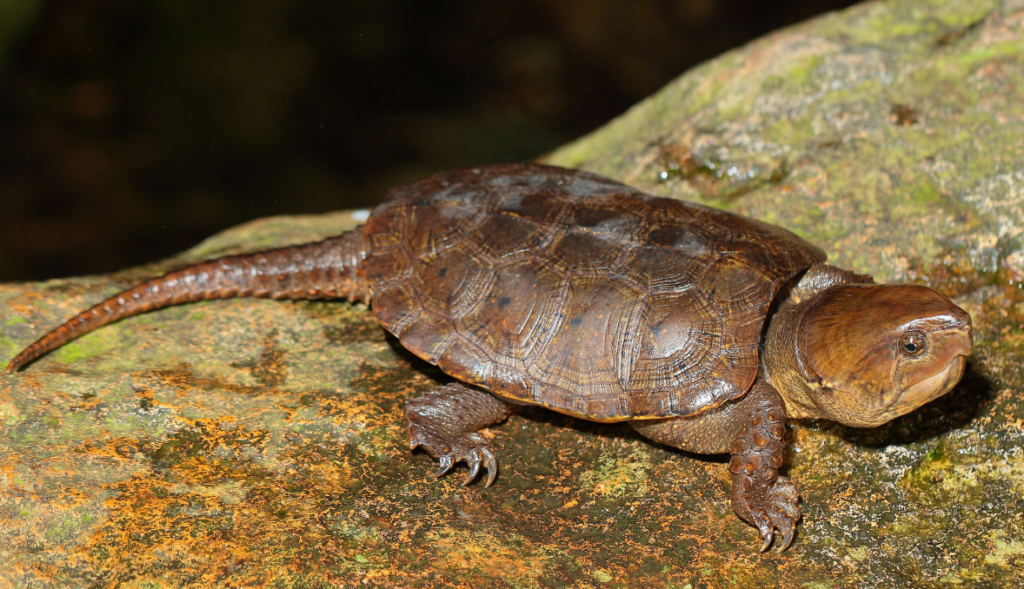
The big-headed turtle (Platysternon megacephalum) is a unique and fascinating aquatic species found in the mountainous regions of Southeast Asia. Also known as the megacephalic terrapin, its distinctive head appearance and unusual behavior make it an interesting animal for turtle enthusiasts. The Asian species of big-headed turtles are the only ones in the Platysternon family, distinguished by a notably flat back, a considerably large head with powerful non-retractable jaws, a wide and robust skull, and a very long tail.
Distribution
This species has a wide presence in Southeast Asia, ranging from central China, including Hong Kong, to northern Vietnam, Laos, and northern Thailand.
Characteristics
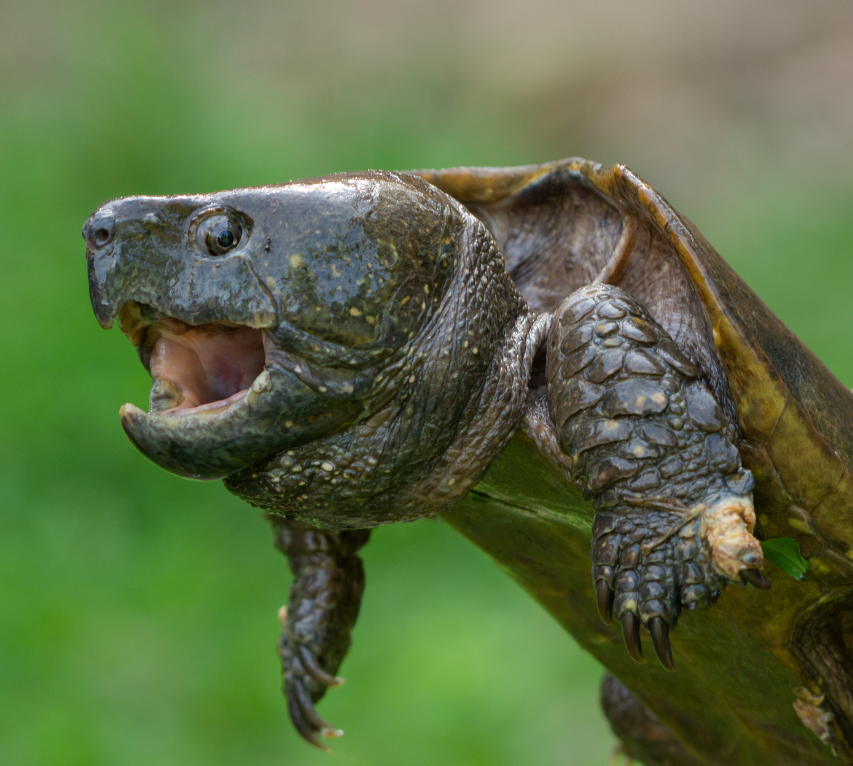
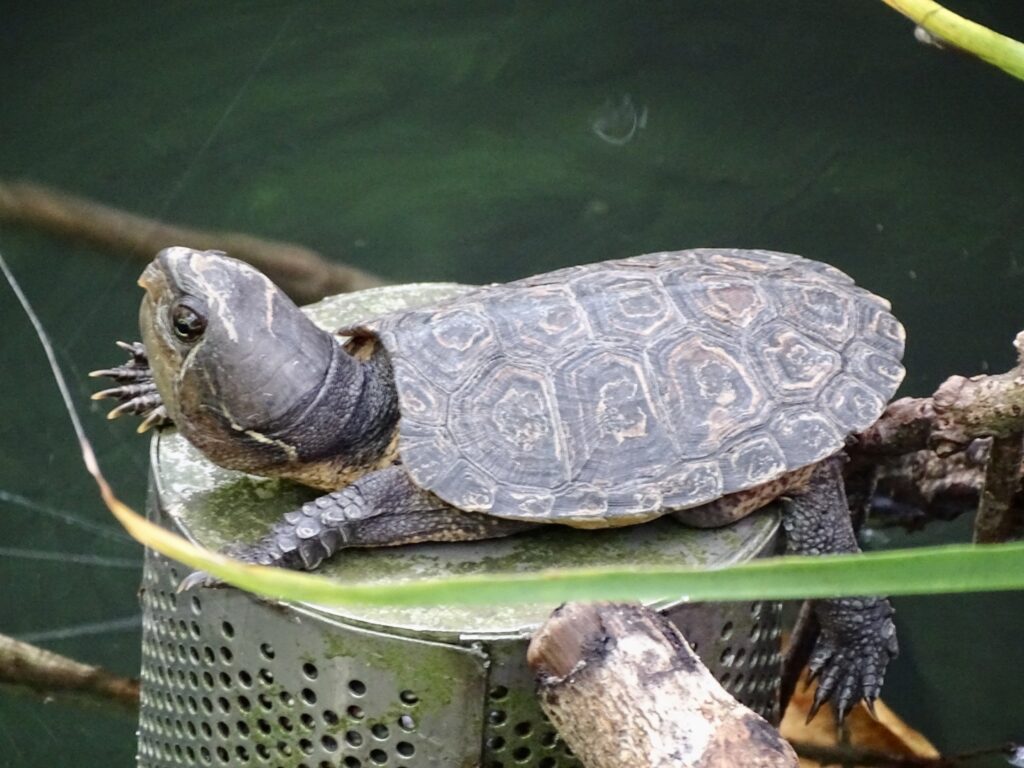
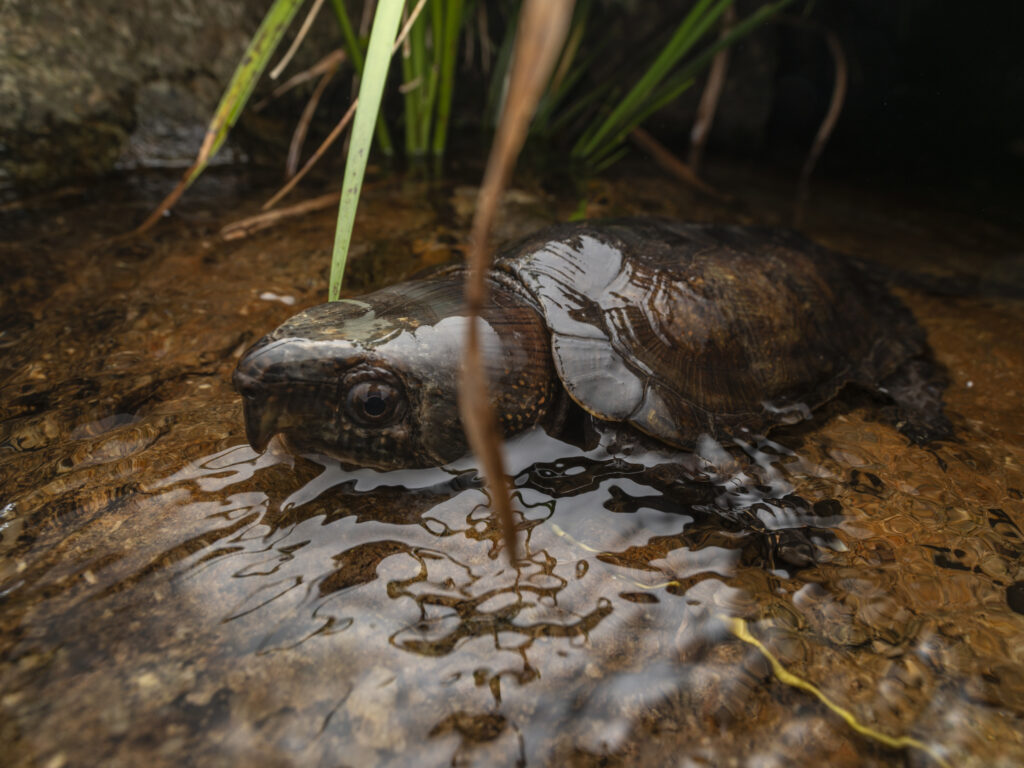
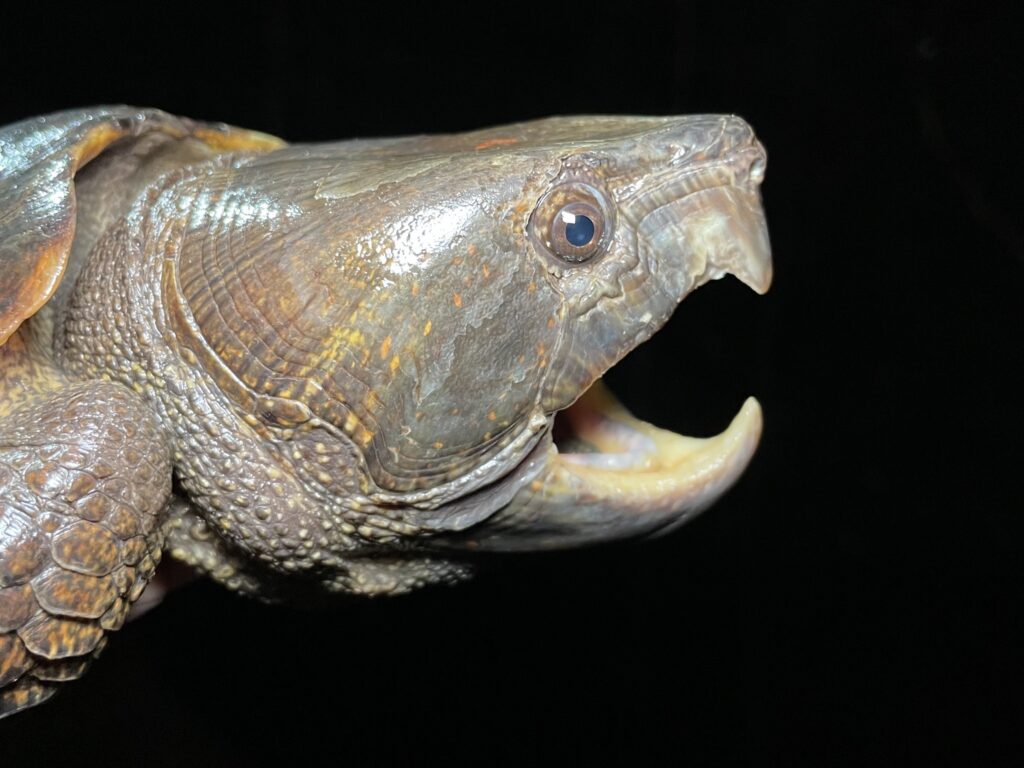
This turtle is easily identifiable thanks to its enormous flat head, which is impossible to hide under its shell.
The head is half as wide as the carapace and is covered by significant horny plates that form a helmet descending along the sides, in front of the ear area. It has powerful jaws and an upper beak that forms a large hook. The carapace is quite flat and sometimes has a slight keel.
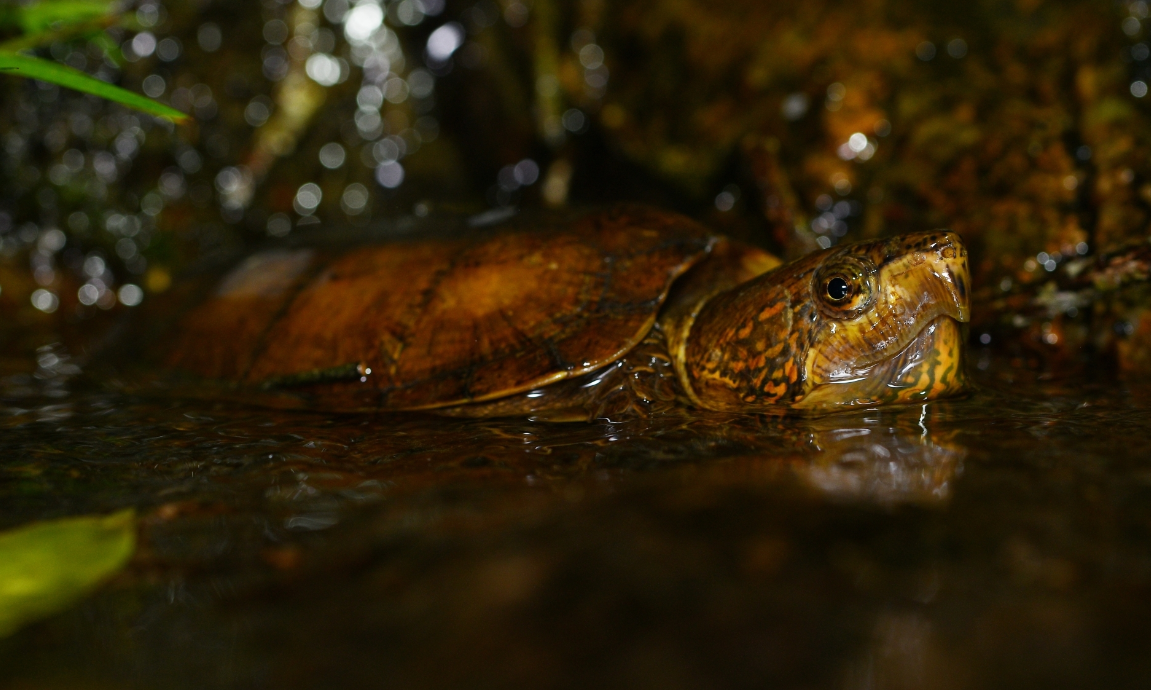
Its color ranges from yellowish to olive brown, with dark spots, and all the scales show very visible growth rings.
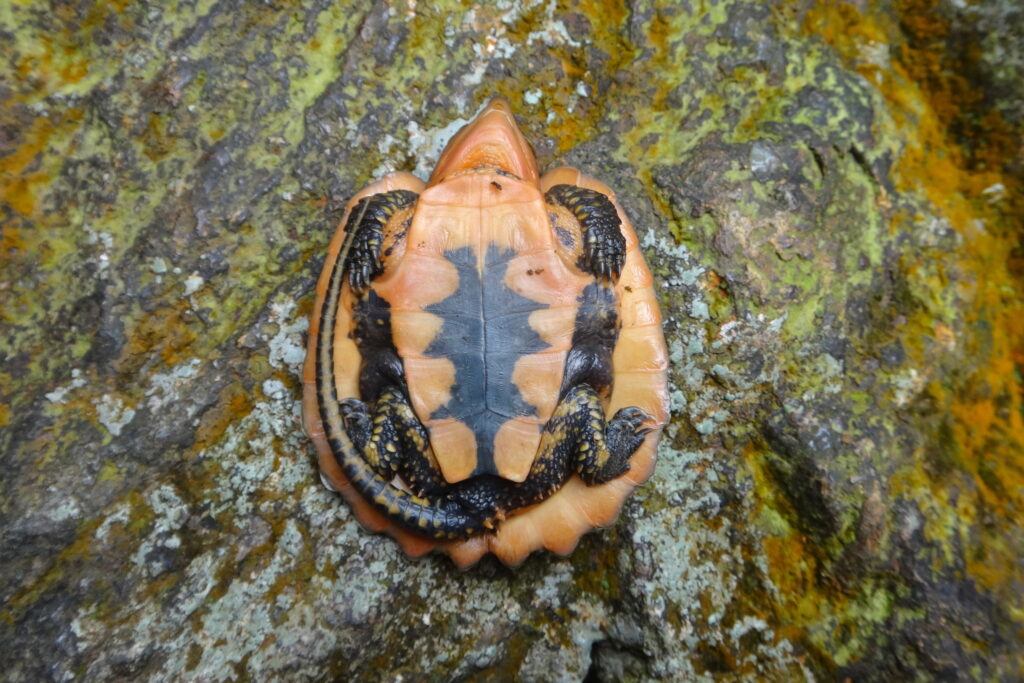
The plastron is not articulated and is well developed. It has a wide anal notch and its color ranges from yellow to light brown, adorned with darker spots. The head is brown to olive, marked with yellow-orange, red, or pink patterns in some subspecies. Its legs are strong, more characteristic of a walking species than a good swimmer. The tail is as long as the carapace, thick at the base and becomes very pointed.
Subspecies
The Platysternon megacephalum is subdivided into five subspecies.
Platysternon megacephalum megacephalum
Also known as the Chinese megacephalic terrapin, which is found in southern China and is characterized by having an unadorned plastron, a carapace with subtle keels, and slightly notched marginals.
Platysternon megacephalum peguense
Burmese megacephalic terrapin, which inhabits western Vietnam to southern Myanmar and has a plastron with dark spots along the sutures, a slightly pronounced dorsal keel, and readable growth rings on the scales.
Platysternon megacephalum shivi
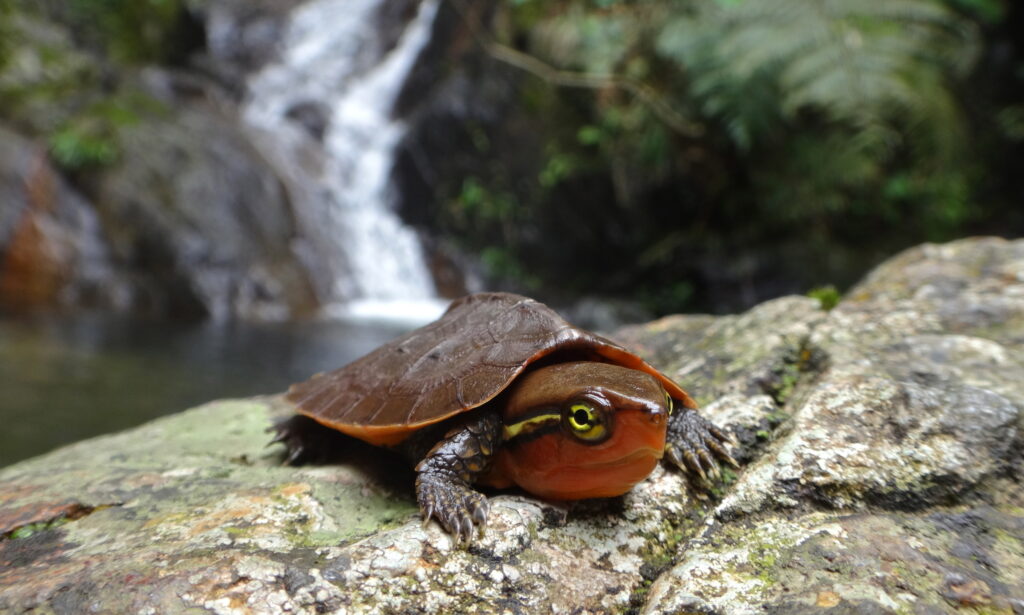
Called the Vietnamese megacephalic terrapin, which is found in northern Vietnam and is characterized by having a head, neck, shell, legs, and tail completely marked with yellow, orange, or pink, a smooth carapace, and unnotched marginals.
Platysternon megacephalum tristemalis
Yunnanese megacephalic terrapin, which is only found in Yunnan province, China, and has three supernumerary scales.
Platysternon megacephalum vogeli
The Thai megacephalic terrapin, which is only found in northwest Thailand and is characterized by having a plastron similar to that of the Burmese megacephalic terrapin, but with a smaller upper jaw and a less developed beak, and a smooth carapace with unnotched marginals.
Habits
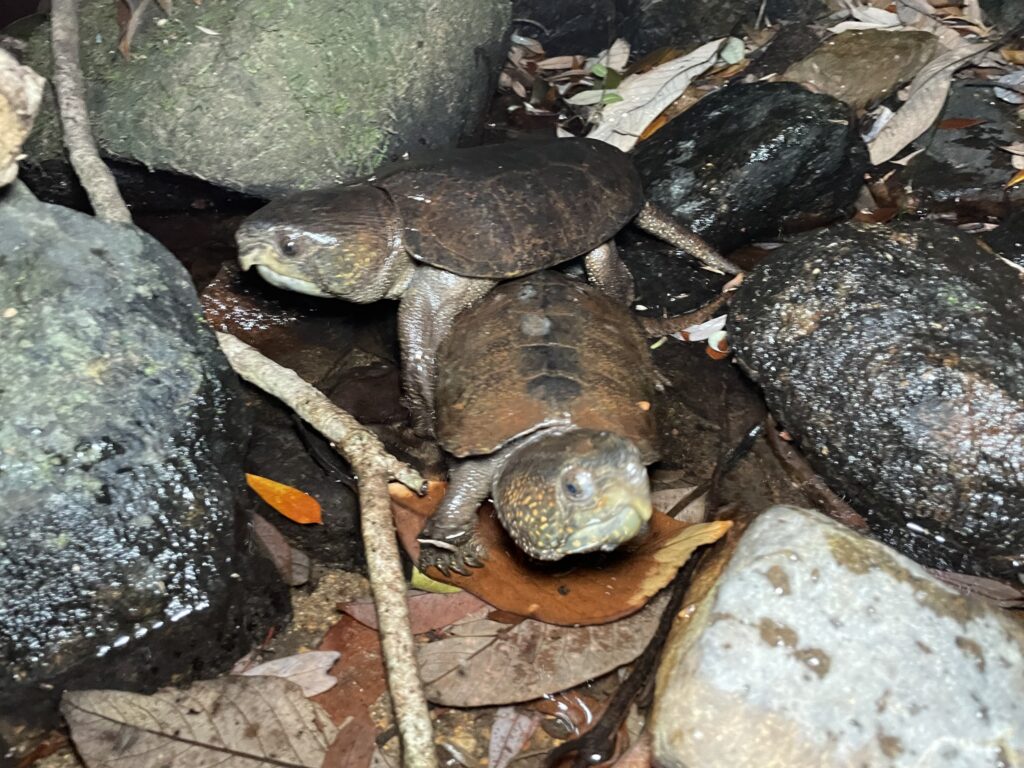
The described turtle prefers river habitats and mountain streams with fast currents and rocky bottoms. It camouflages itself among the stones at the bottom for much of the day and adapts to cold waters between 12 and 17 °C.
It is mainly nocturnal and hunts mollusks, crustaceans, and fish using its powerful jaws.
It is not an exceptional swimmer; its unique morphology allows it to climb rocks and ascend waterfalls with the help of its long tail.
It is unknown whether its behavior has influenced the growth of its head or if its large head has allowed it to develop this climbing technique. This turtle is aggressive and should be handled with caution, as we have already discussed with other dangerous turtles such as the snapping turtle or alligator snapping turtle.
What size is this species?
The shell does not exceed 19 cm. It has a long tail and large head. It is a medium-sized turtle.
What does the big-headed turtle eat?
This species feeds mainly on fish, but also accepts mollusks, insects, worms, amphibians, small birds, and mammals.
Reproduction
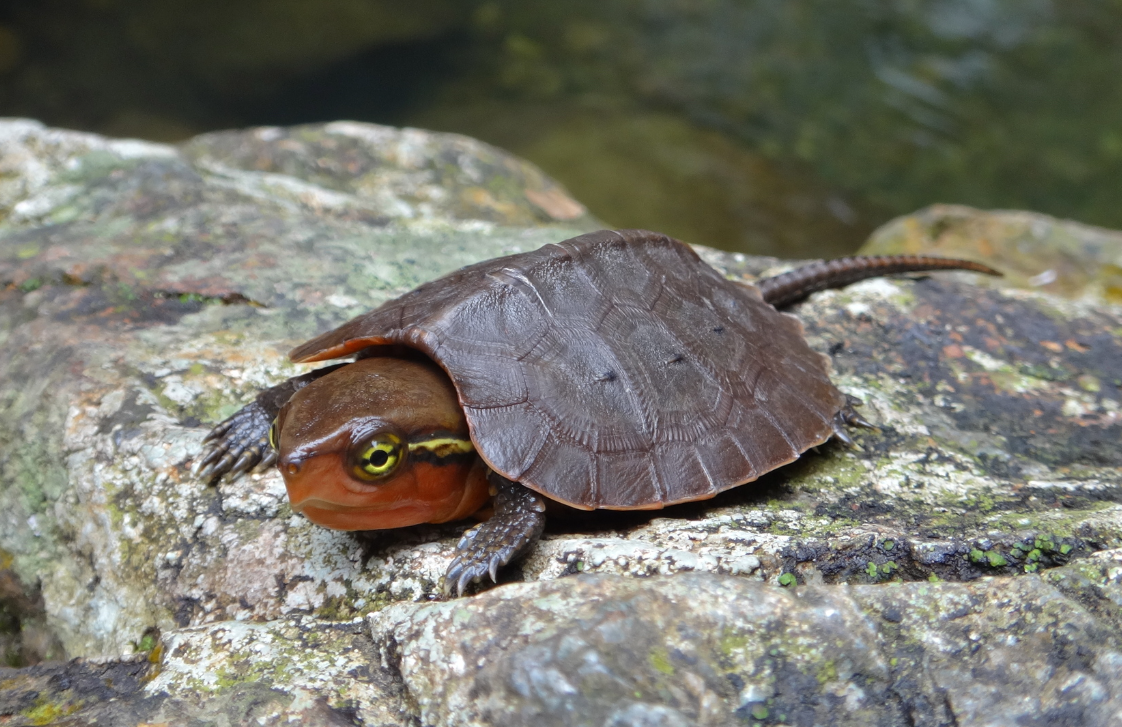
It lays one or two white eggs measuring 2 x 4 cm. The hatchlings have brighter colors than adults and their shell is often keeled.
Conservation status
The species is in critical danger of extinction throughout its range due to hunting for human consumption, especially in China, where it is rapidly disappearing.
It is threatened by the construction of hydroelectric dams and deforestation. Although it was once common in some regions, it is now rare and endangered. Vietnam also collects it for export, and it is listed among the 48 most threatened turtle species worldwide. Collectors also capture and export it. It is essential to take protective measures to prevent its extinction.
This turtle is included in CITES Appendix II.
Big-headed Turtle Video

Big-headed Turtle Photos
Below we show the images of Platysternon megacephalum:
Other aquatic turtles
If you want more information about other aquatic turtles, we show you other articles that discuss other species of aquatic turtles: