
South American Snake-Necked Turtle
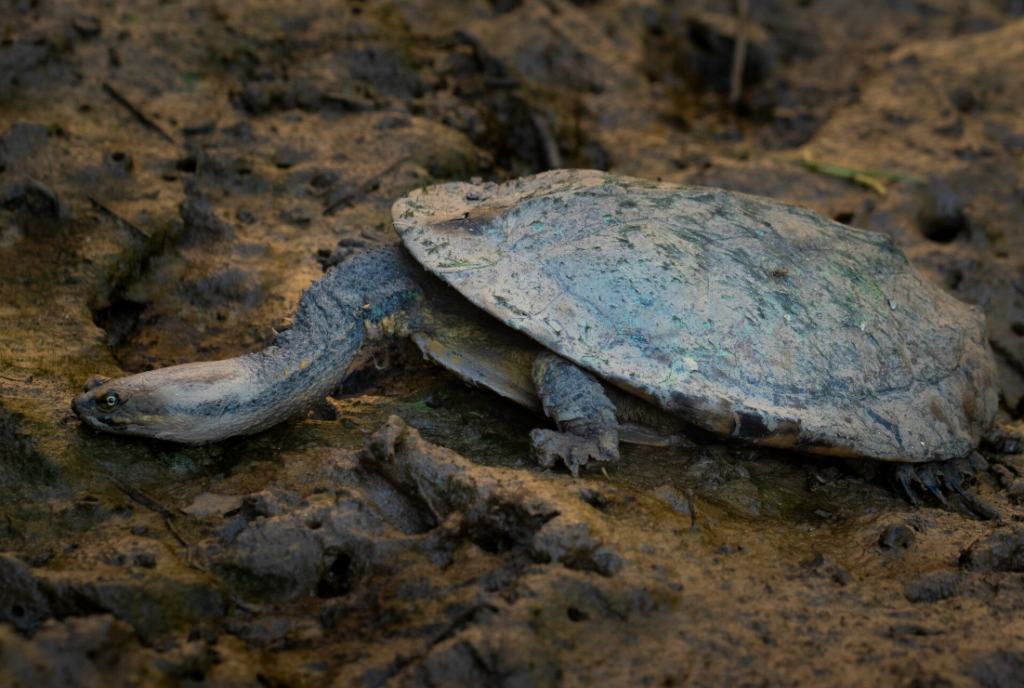
The long-necked turtle or snake-necked turtle (Hydromedusa tectifera) is a water turtle of the genus hydromedusa. The long-necked turtle species is found in South America. This turtle is known for its long and slender neck, which allows it to extend its head out of the shell to breathe while remaining submerged in water. Its shell has a hydrodynamic design that allows it to swim easily and quickly.
There are 2 species within the genus Hydromedusa, the Hydromedusa maximiliani and the Hydromedusa tectifera (South American snake-necked turtle).
Where does the snake-necked turtle live?
The snake-necked turtle (Hydromedusa tectifera) lives in South America. Its distribution range extends from southeastern Brazil, in regions such as São Paulo, Rio Grande do Sul, and Paraná, to Uruguay and northeastern Argentina, specifically in the Río de la Plata area. It has occasionally been reported in Paraguay, but further confirmation is needed to affirm its presence in this territory.
Characteristics
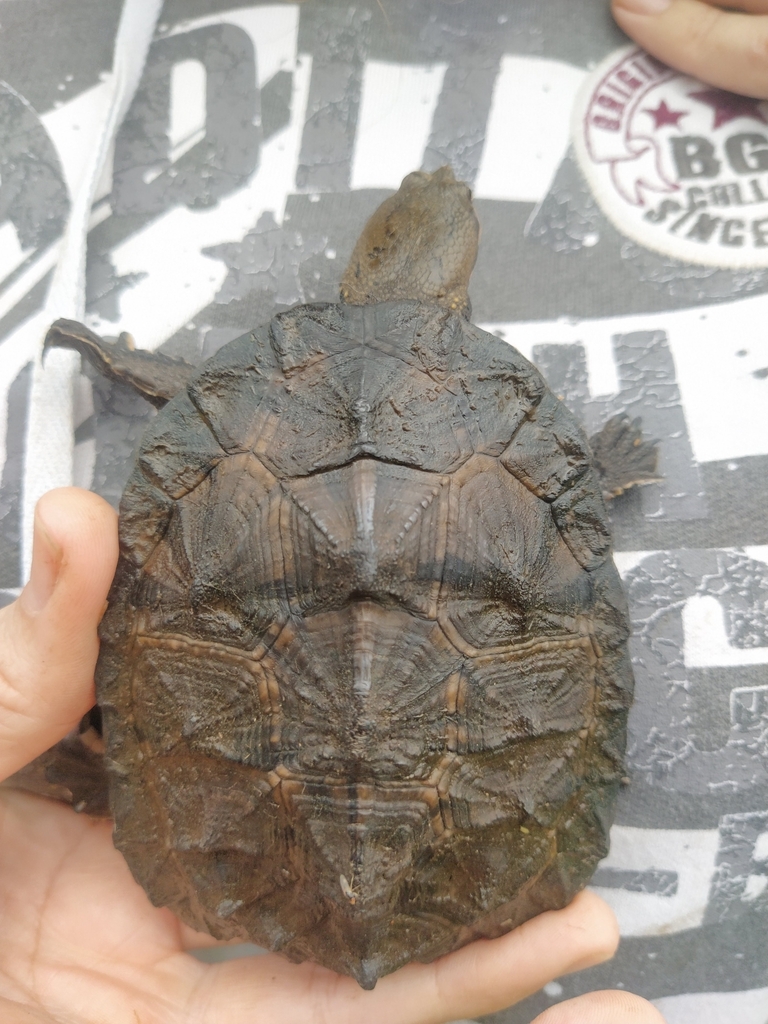
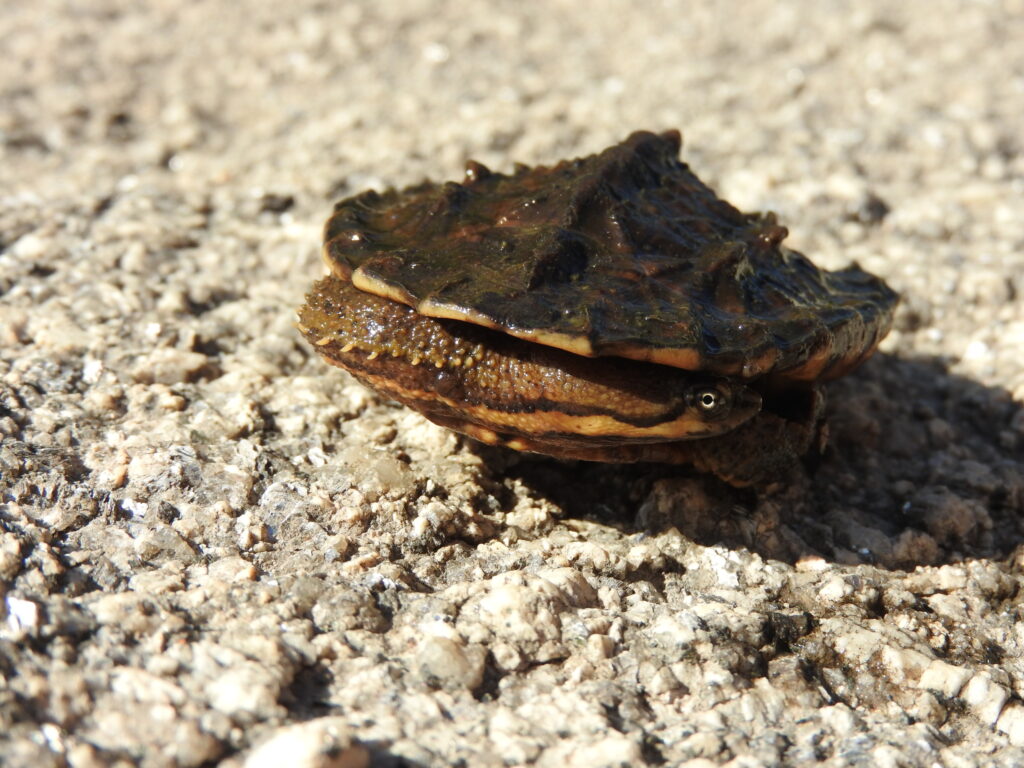
Its shell is oval-shaped and wider at the back. The distinctive feature of its scutes are the conical protrusions that stick out backwards, giving it a rough appearance, especially in juveniles. This texture, along with the presence of algae embedded in the scutes, increases its camouflage with the environment. With age, the shell becomes smoother and in some individuals only a central keel remains from the back of the first vertebral to the beginning of the fifth.
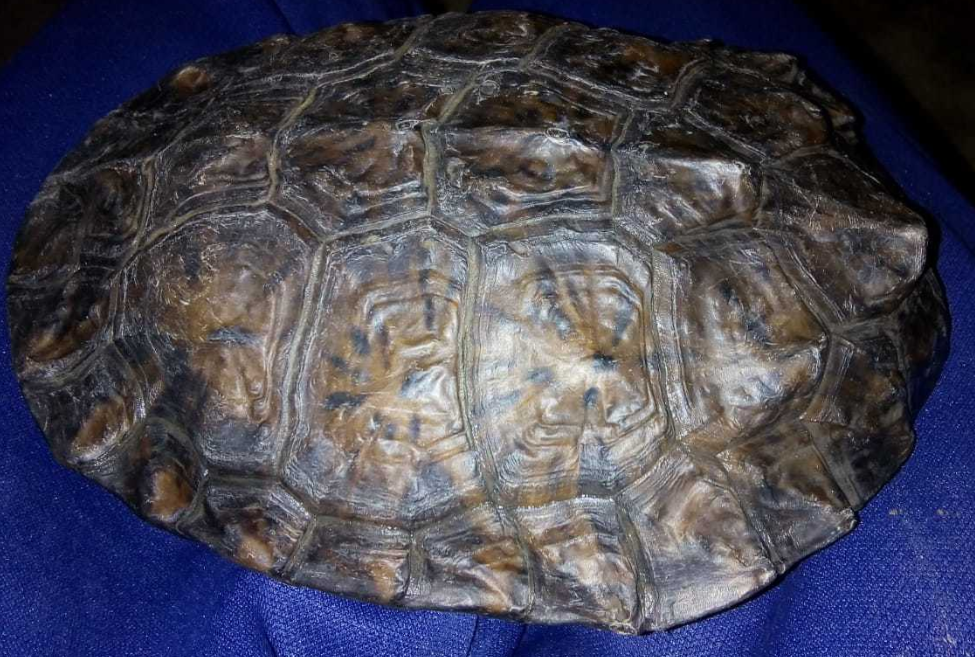
The carapace is dark chocolate to brown, with each scute showing short lines and black dots.
The plastron is often light, in yellowish to gray tones, with irregular dark brown spots and, in males, a significant concavity. Some individuals have dark sutures on a lightly spotted plastron, while others have light sutures outlining the scutes. The underside of the marginals can be light, with dark spots or have a black triangle in the center of the scute.
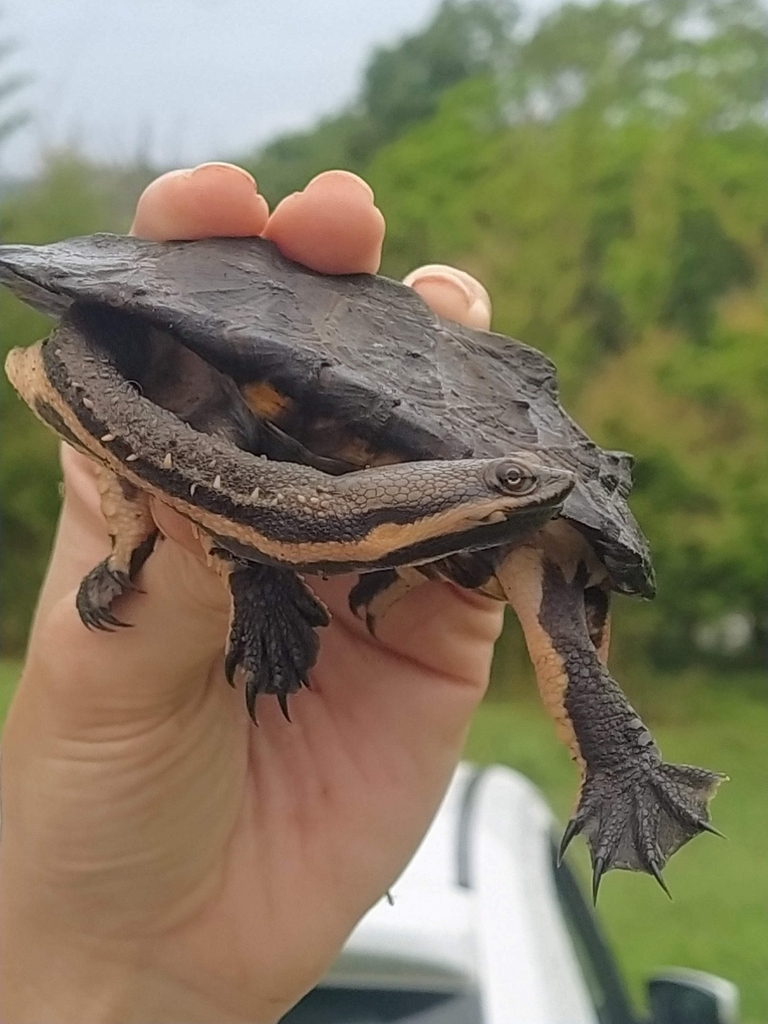
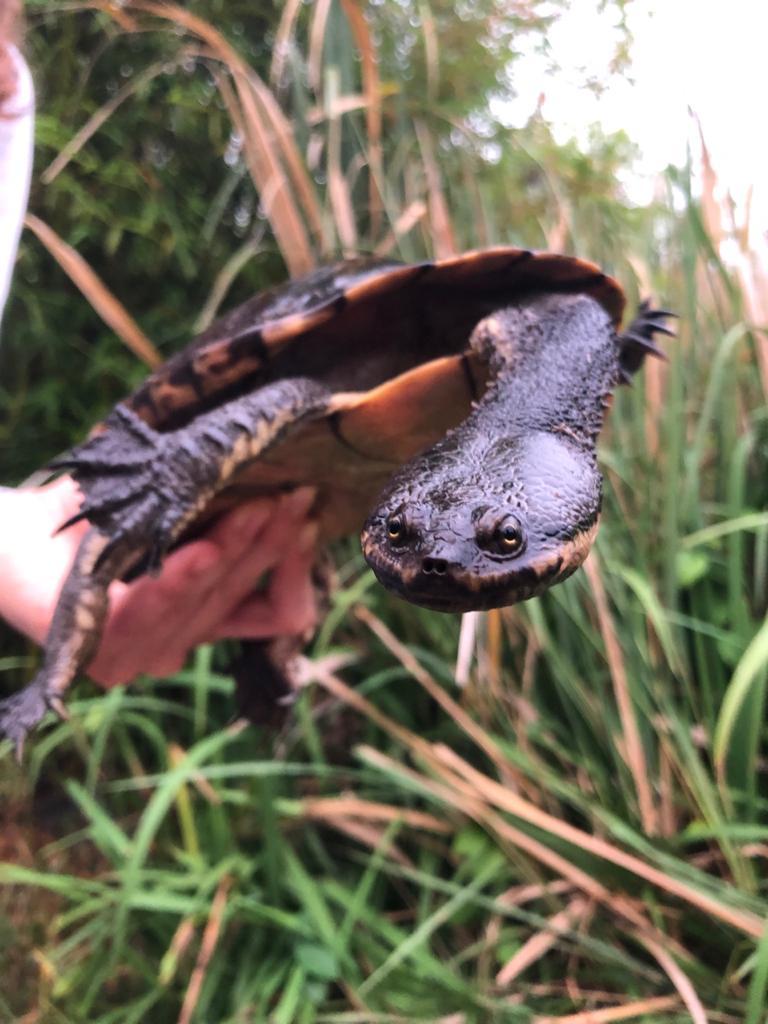
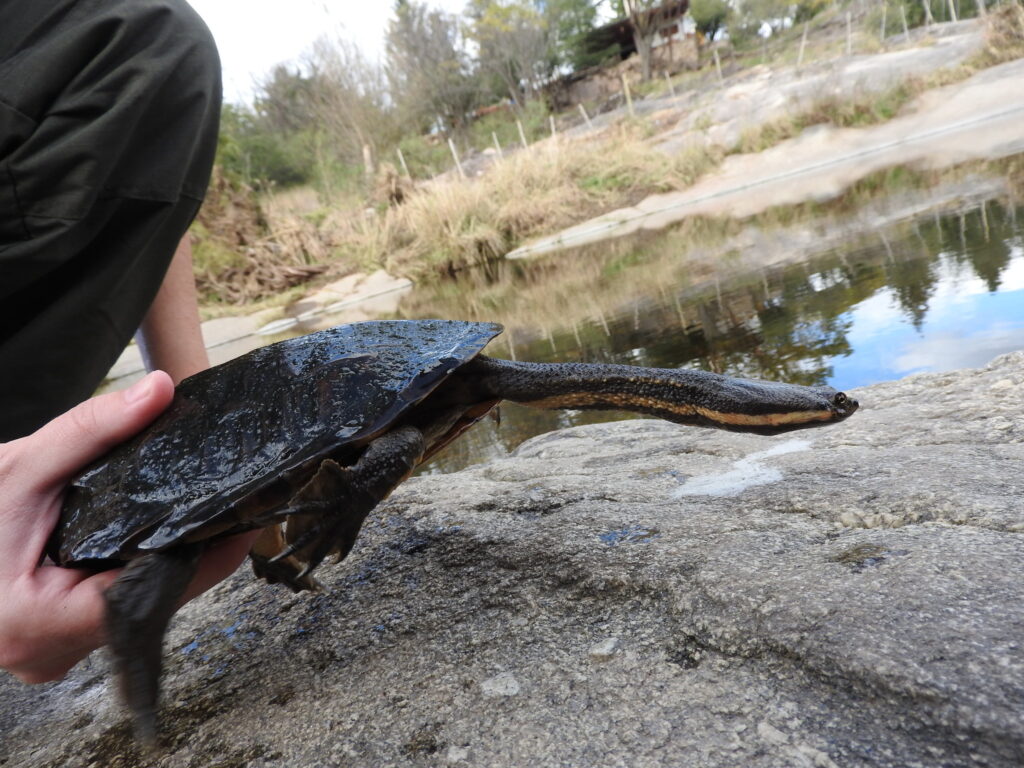
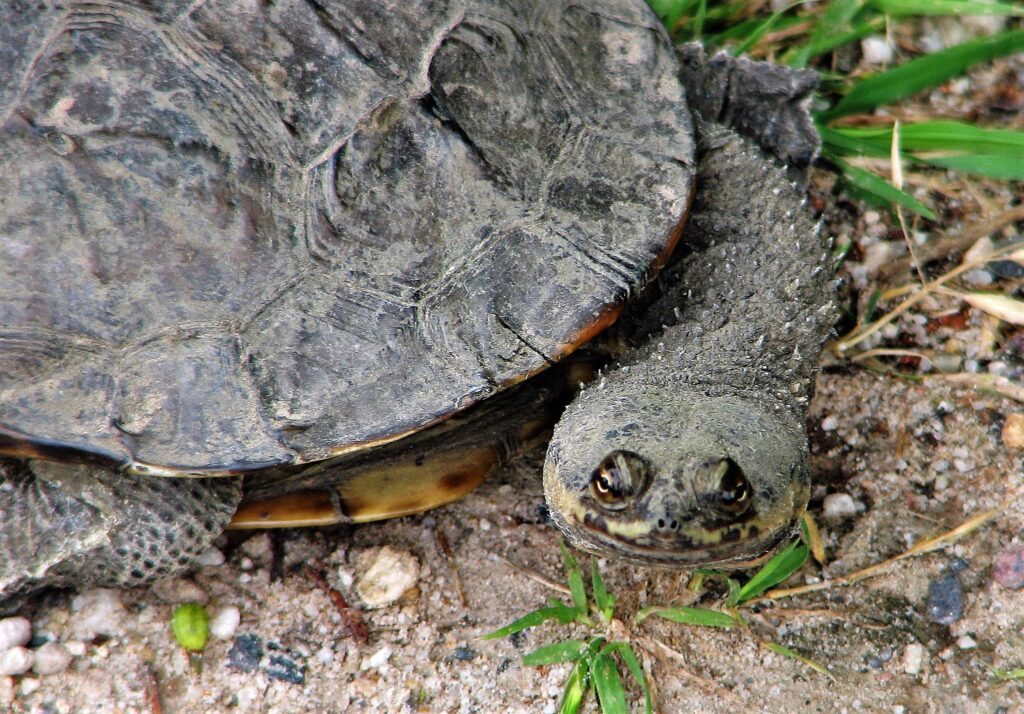
The head is medium-sized and covered with small, regular scales, with a short, pointed nose. Unlike the previous species, the jaw does not have a notch or hooked beak. The head is dark gray to brownish, with a large, thick light band running from the upper lip to the base of the neck, crossing the tympanum and surrounded by black. The neck has broken light lines underneath and the jaws stand out. The neck is very long, sometimes longer than the shell, hence its name snake-necked turtle or long-necked turtle.
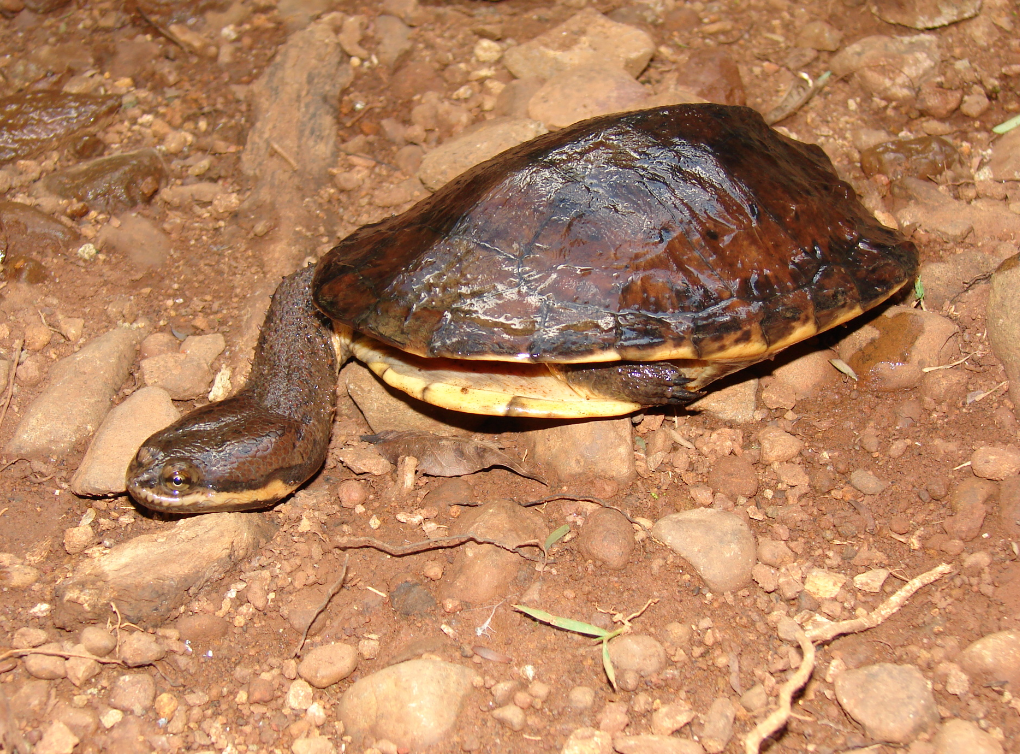
The legs are olive gray on top, with light areas underneath and are strongly webbed, with four claws. In some males, the carapace may be lower at the rear.
Habits
The long-necked turtle is shy and prefers habitats such as marshes, lakes, lagoons, irrigation channels, and muddy watercourses, and is rarely seen basking on the shore. It remains motionless at the bottom of the water, often among algae, and seems to depend on aquatic vegetation.
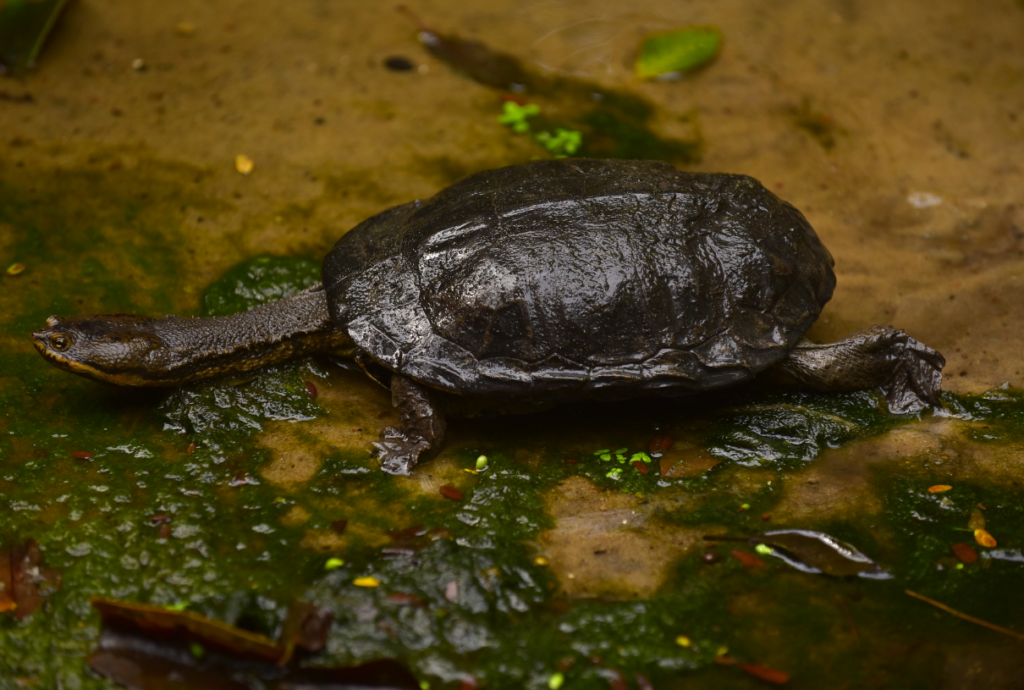
At nightfall, the turtle leaves the water but soon returns to the aquatic environment. In the southern part of its range, it hibernates during the months of June, July, and August in the muddy bottom or in a hole dug in the bank.
How long does the long-necked turtle live?
The snake-necked turtle has an average lifespan, with a life expectancy ranging from 20 to 30 years, depending on whether it is in the wild or in captivity.
How big is the long-necked turtle?
The long-necked turtle can reach a length of up to 30 cm.
What does the long-necked turtle eat?
This species has a carnivorous preference and feeds mainly on snails, but also eats freshwater mussels, insects, crabs, amphibians, tadpoles, and small fish. To catch its prey, it can abruptly inhale water or extract snails from their shells with its jaws.
In captivity, it is recommended to use a diet similar to what it eats in the wild, providing river fish such as guppies or mollies. For any captive diet, it is recommended to provide sticks or pellets for turtles. We recommend SERA Carnivor as it naturally feeds on high-protein foods.

- Alimentación Carnívora reptiles como lo hacen los profesionales
- Para Tortugas y terrapins.
- equilibrada mezcla.
Snake-necked turtle care
The snake-necked turtle is a species that requires specific care if you want to keep it in captivity.
Aquaterrarium
To create a suitable environment, it is necessary to have a spacious aquaterrarium with an aquatic area that takes up most of the available space. The water depth should be at least 30 cm and there should be a dry area with a ramp to exit to the outside.
Water
The water pH is a critical factor for the maintenance of this species, as they inhabit slightly acidic waters in the wild. It is necessary to maintain a pH between 5 and 5.5 and use a good filter to keep the water clean. It is advisable to use osmosis water to regulate the pH.

- NUEVA Bomba rediseñada y fabricada con precisión y estabilizadores de goma que amortiguan la vibración hacen estos filtros un 25% más silencioso que la generación anterior.
- NUEVA Filtración multietapa, con cestas independientes con agarres para sacar fácilmente los materiales filtrantes.
- NUEVO Cebado rápido reforzado con fibra es muy fácil de usar solo con 2 dedos.
- NUEVAS Válvulas AquaStop ergonómicas con borde levantado para un mantenimiento sencillo, ahora son 2 veces más fuertes.
- NUEVAS Asas de bloqueo reforzadas con fibra se sacan fácilmente.

Terrestrial area
In the dry area, it is necessary to maintain high humidity and provide enough plants and hiding places. Moss is an excellent element to maintain humidity and provide a resting place for the turtles. The ideal temperature for their habitat should be around 25º C, although during the warmer months they can be kept outdoors.

- aumenta y mantiene la humedad en el terrario
- sin químicos añadidos
- biodegradable
For their controlled hibernation, it is recommended to provide them with an environment with a temperature of 10-15º C for at least 60 days. To achieve this, containers with moss, coconut, and bark with high humidity can be used.
The snake-necked turtle can thrive in captivity and be a fascinating pet, but it requires moderate care.
Reproduction
Mating involves the male biting the female's hind legs and neck before mounting her. The incubation of the eggs takes about 70 days on average. The eggs are white and hard. Juveniles are very rough and dark, measuring around 3 cm.
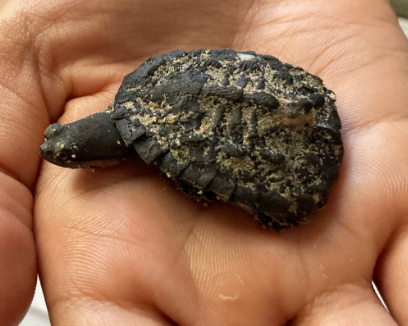
Images of the Long-Necked Turtle
Below we show photos of long-necked turtles:
Conservation status
The long-necked turtles are a little-studied species. In some wetland areas in their habitat they may be at risk due to intensive agriculture, but overall this species is not endangered and is not protected. It may be vulnerable in areas near large cities. It is not very sensitive to pollution. It is suggested that isolated populations be studied in more detail, as subspecies may exist.
Contenido relacionado