
Turtle Lamp
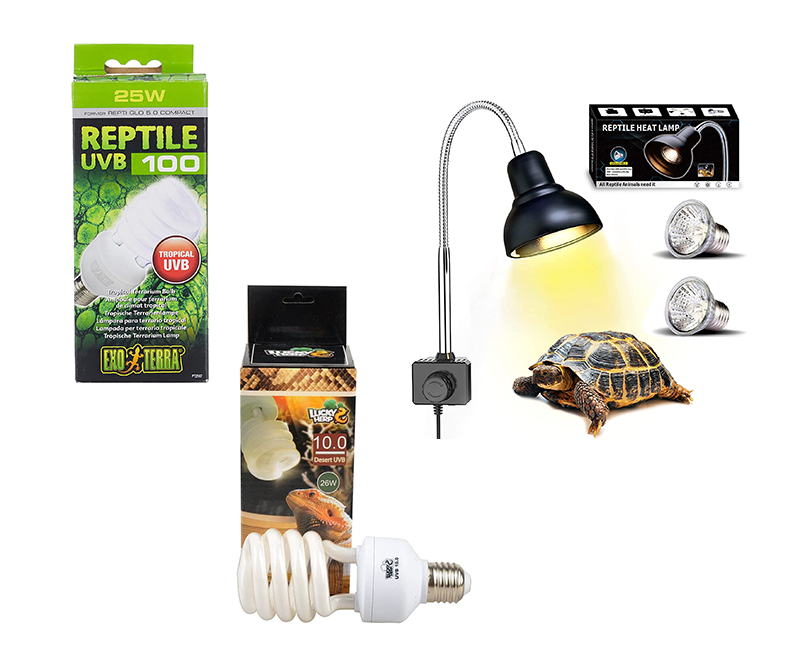
The UVB lamp for turtles is an important accessory. Turtles need light to regulate their circadian rhythm, to properly metabolize vitamin D, and to maintain an appropriate body temperature. If you have a turtle as a pet, it is important to provide it with adequate lighting for its well-being. In this article, we show the types of lights for aquatic turtles and land turtles.
Comparison of lamps for turtles
Below are the best options to buy a lamp for turtles:


Here are some tips for lighting your turtle's space:
Types of lamps for turtles
Lamps for turtles are an important element to ensure the well-being and health of these animals. Below are some types of lamps that can be useful to optimize the environment where your turtle lives:
Heat lamps
These lamps provide a heat source to maintain the proper temperature in the turtle's terrarium. You should make sure that the temperature stays within the appropriate range for your turtle's species.
UVB lamps
UVB lamps emit ultraviolet radiation, which is essential for the synthesis of vitamin D3 in the turtle's skin. Vitamin D3 helps maintain bone health and prevent metabolic diseases.
UVB light lamps for turtles
In addition to warm light, turtles also need a source of UVB light to produce vitamin D. Vitamin D is essential for calcium metabolism and for keeping bones strong. For this, turtle lamps are fundamental. UVB light also helps regulate the turtle's circadian rhythm. Fluorescent bulbs specifically for reptiles or UVB tube lights are good options to provide UVB light. It is important to make sure that the UVB light source is close enough to the turtle so it can receive enough light, but not so close that it gets burned.
Exo Terra Low Consumption UVB 100 Bulb
Exo Terra is a brand that produces a wide variety of products for terrariums, including UVB bulbs. The Exo Terra UVB 25 w 5.0 Bulbs are a high-quality product that can help maintain the health and well-being of reptiles in captivity.
It is important to make sure you choose the right bulb and place it at the correct distance from the dry area to ensure proper exposure to UVB light.

Features
- Ideal for all tropical and subtropical reptiles
- Optimal levels of UVB
- Effective up to 40 cm (15")
- Provides the necessary UVB rays for optimal calcium metabolism
- UVA rays stimulate appetite, activity, and reproductive behavior
- Voltage: 220-240
- Power: 25W
EXO TERRA Low Consumption UVB 150 Bulb

Features
- Ideal for all desert-dwelling reptiles
- High UVB output
- High D3 conversion
- Effective up to 50 cm (20")
- Provides the necessary UVB rays for optimal calcium metabolism
- Power: 25 W
10.0 Compact UVA and UVB Fluorescent Bulb for Reptiles
Lucky Reptile UVB bulbs are a good option to provide turtles with the UVB light they need for their well-being.

- Ideal for desert-dwelling reptiles.
- Optimal UVB and UVA output.
- Stimulates appetite, activity, and reproductive behavior.
- Provides the necessary UVB rays for optimal calcium metabolism.
- Combine with natural light or reptile vision bulbs for optimal visual light output.
- 23 W.
Zoo Med Reptisun Lamp For Terrarium
This product is designed to provide a source of light and essential UVB radiation for reptiles living in terrariums. This lamp is high quality and specifically designed to mimic the natural sunlight that reptiles need to survive and stay healthy.
The lamp uses high-efficiency fluorescent tube technology to produce a bright, natural light that is beneficial for the growth and health of turtles.
No se han encontrado productos.
Heat lamps for turtles
Turtles require a source of warm light to maintain their proper body temperature, and for this, we have heat lamps. For this, heat bulbs are the accessory that in certain cases we must have in terrariums. Without an adequate heat source, turtles can get cold and develop health problems.
There are two main types of heat lamps for turtles: incandescent warm light bulbs and ceramic lamps. Incandescent warm light bulbs are cheap and easy to find, but they have a shorter lifespan than ceramic lamps. Ceramic lamps provide a brighter light and are more durable, but they are a bit more expensive.
PewinGo Lamp for Turtle
Reptiles and amphibians need UVB rays and also heat to metabolize calcium, promote bone growth, increase appetite, and kill bacteria essential for bone growth and the prevention of metabolic diseases. This pack includes a lamp holder and heat lamp for turtles. It is not a UVB bulb.
Features
- With 2 Bulbs. The lamp holder also fits other E27 bulbs, such as fluorescent, incandescent, ceramic, UV, halogen, LED, etc. As long as it is a heating lamp, the lifespan is not stable. If the bulb stops working, contact us to send you a new one.
- The 360-degree rotating clip can be easily installed on the side of your fish tank or aquarium. The bulb is simple and easy to install. Just screw them into a standard E27 screw base.
- It is used for a wide variety of reptiles and amphibians, including turtles, lizards, bearded dragons, snakes, frogs, iguanas, turtles, chuckwallas, etc. Please contact us for more information.
See Offers
EXO TERRA Focal Sun Glo Lamp, 50 W
The EXO TERRA Focal lamp is a type of spotlight lamp designed to provide focused heat and light in a specific area in a terrarium for reptiles and other animals. The lamp is designed to be used with a reflector to increase its efficiency and ensure that heat and light are concentrated in a specific area.
No se han encontrado productos.
Features
- 50-watt broad-spectrum daylight lamp for terrariums
- Neodymium gives animals and plants in the terrarium a more natural appearance
- Stimulates reproductive behavior through UVA rays
- R20 bulb; can be combined with night-glow or heat bulbs for a 24-hour cycle.
- NOTE: Power surges can cause premature failure of incandescent filament bulbs. For this reason, we recommend using a good quality surge protector.
Placement of heat lamps
The heat lamp should be placed above the turtle's enclosure, preferably at a point where the turtle can freely move between the warm and cool areas. It is important to monitor the temperature in the warm area to ensure it is not too hot or too cold for the turtle.
Lamp holders for turtles
The lamp holder for turtles is a necessary element in a turtle's terrarium, as it is the support where the lamp is placed that provides the appropriate lighting and heat for its well-being and health.

- Reflector con cúpula profunda de aluminio que aumenta la luz, los rayos UVA y UVB significativamente.
- Ideal para su uso con lámparas fluorescentes compactas y con bombillas incandescentes (PT248: máx. 75 W / PT2349 máx. 160 W)
- Con interruptor de encendido y apagado en el cable de corriente
- Casquillo de la bombilla de cerámica resistente al calor

- Tamaño compacto
- Extra profunda, cúpula con reflector pulido
- Aumenta la producción de UVB hasta en un 100%
- Interruptor de encendido/apagado y cable de 180 cm
- Zócalo de cerámica
Lighting time
The lighting time that aquatic turtles should receive varies depending on the species and the time of year. In general, aquatic turtles need an artificial light source from a turtle lamp to mimic the natural light conditions they would experience in the wild.
During spring and summer, when there are more hours of natural light available, aquatic turtles may need less artificial light. During autumn and winter, when there are fewer hours of natural light, they may need more artificial light.
In addition, some species of aquatic turtles may require more or less light depending on their natural habitat. For example, tropical aquatic turtles may need more light than temperate aquatic turtles.
In general, it is recommended to provide aquatic turtles with an artificial light source for a period of 8 to 12 hours a day. It is also important to provide an adequate heat source, as aquatic turtles need an appropriate temperature to maintain a healthy metabolism.
The lighting time that aquatic turtles should receive depends on the species and the time of year, but in general it is recommended to provide an artificial light source for a period of 8 to 12 hours a day.
How should I place the lamp for turtles?
If you are a turtle owner, you must provide the proper lighting for its well-being and health. Placing a lamp for turtles is a simple task but must be done correctly to avoid burning your turtles or causing injuries, or the lamp falling into the water and creating dangerous situations.
- Choose the right lamp: choose a lamp that provides the appropriate lighting and heat for your turtle's species. UVB lamps are essential for vitamin D3 synthesis, while heat lamps are necessary to maintain the proper temperature in the terrarium as described above.
- Place the lamp in the right spot: make sure to place the lamp in the appropriate location inside the terrarium. The heat lamp should be placed at one end of the terrarium to create a thermal gradient, and the UVB lamp should be near the area where the turtle spends most of its time. Be careful that the lamp does not come into contact with the water under any circumstances.
- Adjust the lamp distance: it is important to adjust the proper distance between the lamp and the turtle to avoid burns or dehydration. Be sure to follow the manufacturer's recommendations regarding the appropriate distance.
- Use timers: the lamps should be on for a specific period to mimic the natural light cycle. Use timers to ensure the turtle receives the right amount of light and heat.

- Programador analógico de uso interior
- Programación 24 horas: Conmutación cada 15 minutos
- Enchufe programable que cuenta con protección infantil
- Diseño compacto
- Con un diseño explanado y sencillo
By following these simple steps, you can place a lamp for turtles effectively and safely. Remember to regularly check the lamps to ensure they are working properly and providing the right lighting and heat for your turtle.
At what distance should I place the lamp for turtles?
Each UVB bulb or heat lamp has its own characteristics, but generally, we should place them between 20 and 40 cm (depending on the manufacturer's recommendations) from the dry area where the turtle comes out to dry and bask. For correct placement, consult the instructions for each product.
How often should I change the UVB bulb for turtles?
Even if the bulb is not burnt out, we should change UVB bulbs every 6 to 12 months to ensure that the amount of light radiation is adequate.
We must keep in mind that each turtle species has slightly different lighting requirements. Therefore, it is a good idea to talk to a veterinarian or reptile specialist to get personalized recommendations for your turtle.
What type of lamp does my turtle need?
Knowing what type of lamp your turtle needs is essential to ensure its well-being and health. Below are some tips that can help you determine what type of lamp your turtle needs:
Specific needs of your turtle species:
Each turtle species has different needs regarding lighting and heat. Research the specific needs of your turtle species to determine what type of lamp it needs. For this, you can visit the characteristics of the types of turtles. All turtles should receive UVB rays.
Temperature:
- If you have an aquatic turtle with an aquaterrarium inside a house and a water heater, you may only need to provide a UVB lamp, since the water temperature is regulated by the heater.
- If you have a land turtle, it is advisable to provide a heat lamp in the terrarium to maintain the ideal temperature for the species.
Age of your turtle:
Young and adult turtles may need different types of lamps. When a turtle is young, it is recommended that it does not hibernate so it can develop strongly. If the terrarium or dry area is below 20 degrees, we should provide a heat lamp.
All turtles need to receive UVB rays as it is essential for vitamin D3 synthesis in their skin. Therefore, if the turtle is indoors, we must have a UVB lamp.
Other accessories for turtles
To ensure the well-being and health of a turtle, we must provide suitable accessories in its terrarium. These include lighting and heat lamps, lamp holders, thermometers to measure temperature and humidity, aquarium filters to keep the water clean, ramps and platforms so the turtle can get out of the water, feeders and drinkers to provide fresh water and food, and hides and caves so the turtle feels safe and comfortable. It is essential to choose high-quality accessories that are suitable for your turtle's species and meet its specific needs.