Wood Turtle
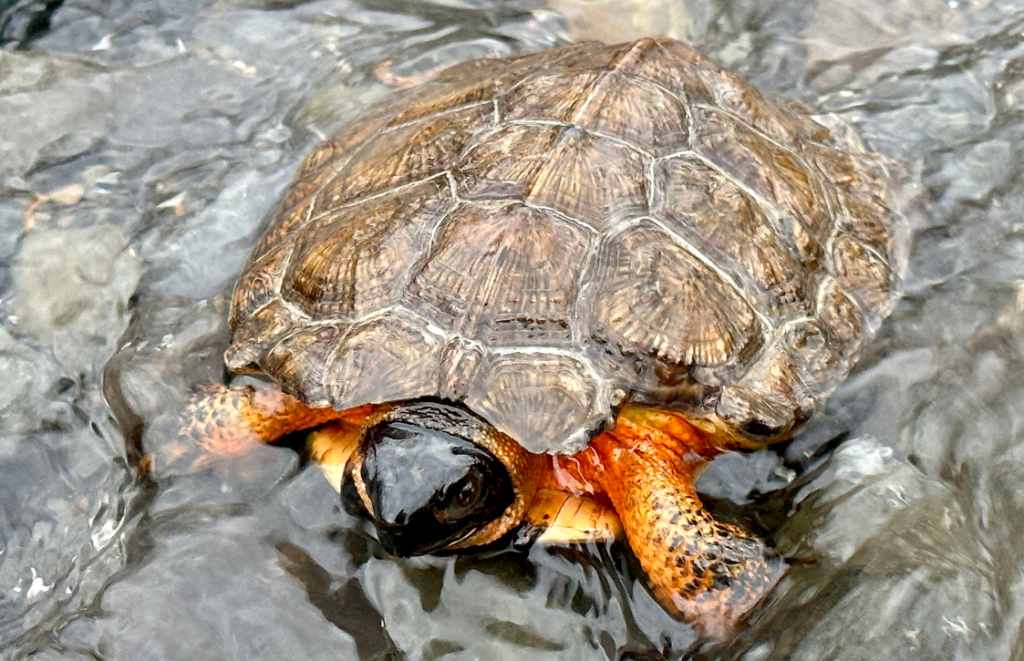
The wood turtle (Glyptemys insculpta) is a species of aquatic turtle native to North America. It is known as the wood turtle or carved terrapin, and is a species of turtle native to North America. Decades ago, this turtle was quite common, but today it is endangered, mainly due to the loss of its natural habitat and the decline in its population. In this article, we highlight the most notable features of the wood turtle, its habits, reproduction, and its current conservation status.
Distribution
Characteristics
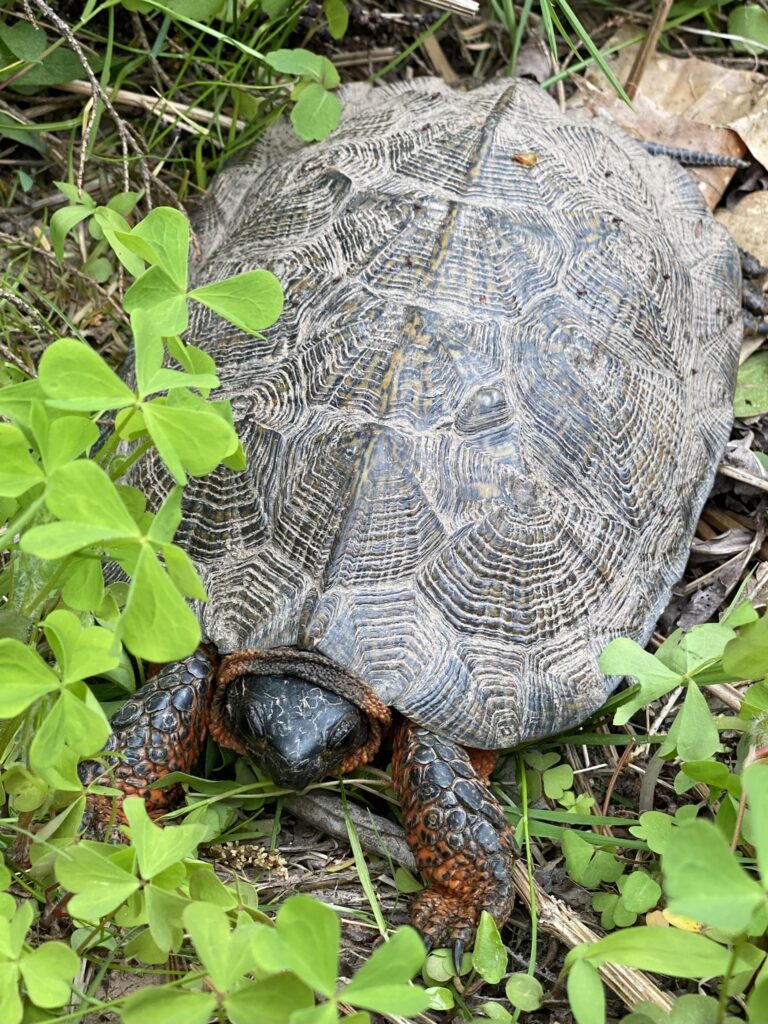
It has a carapace with a thick, sculpted surface, with very pronounced grooves and radiating lines.
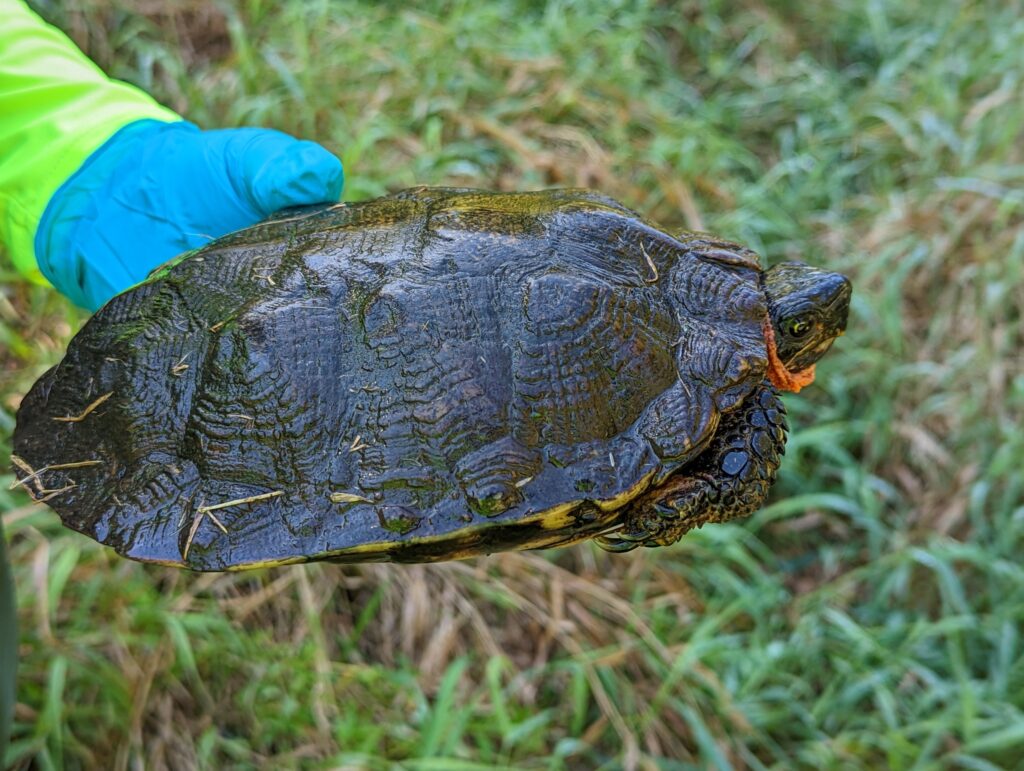
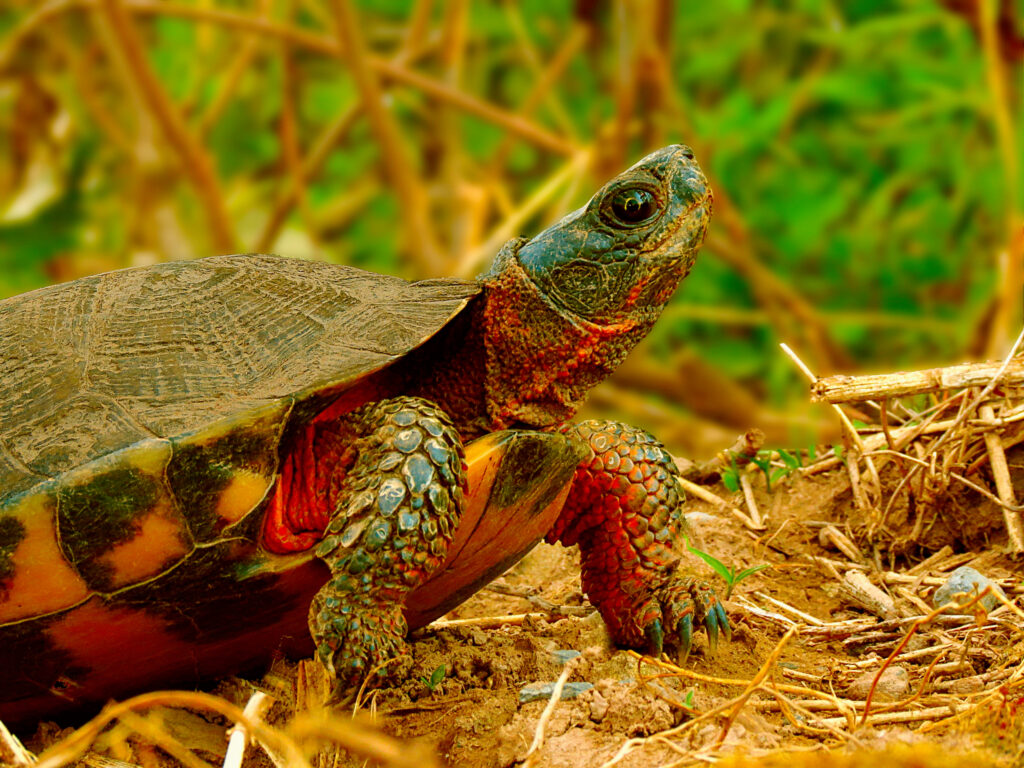
The carapace is fairly flat, with a slight keel and is wider at the front than at the back. The vertebral and costal scutes are large and form a slight pyramid marked by growth lines and deep grooves. The overall color is brown to grayish with black to yellowish lines on the costals, radiating from the areola.
Juvenile wood turtles have more contrasting colors, while older individuals tend to be more uniformly brown.
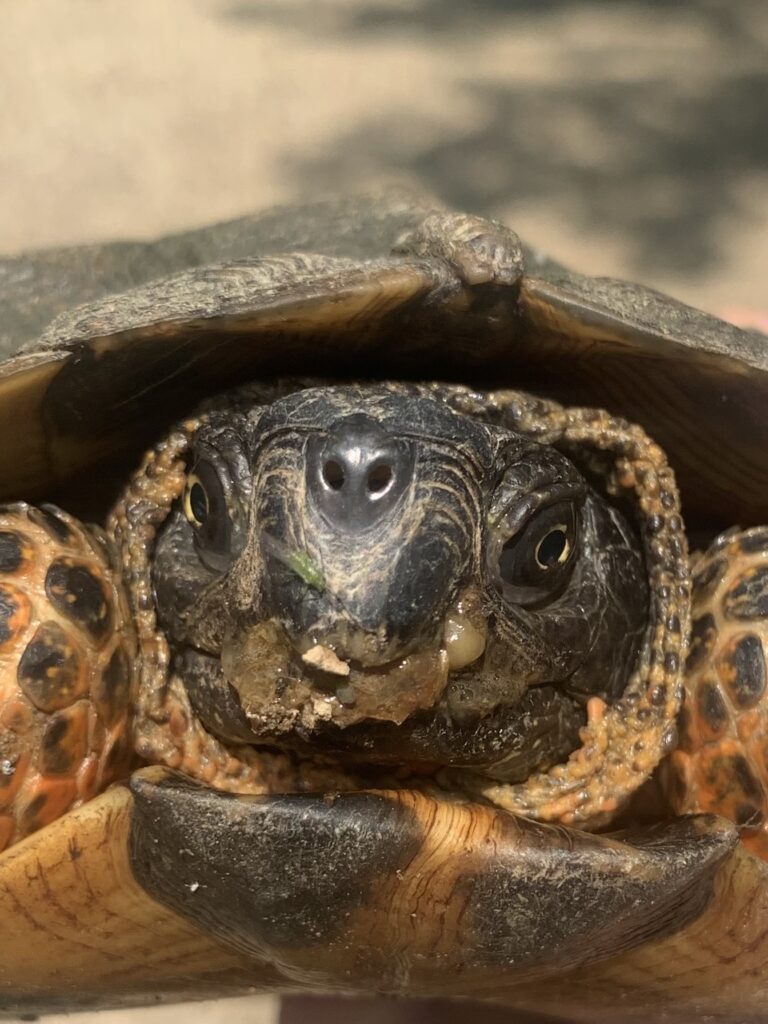
The head is medium-sized, with a beak that has a prominent notch, and the eyes are yellow and black.
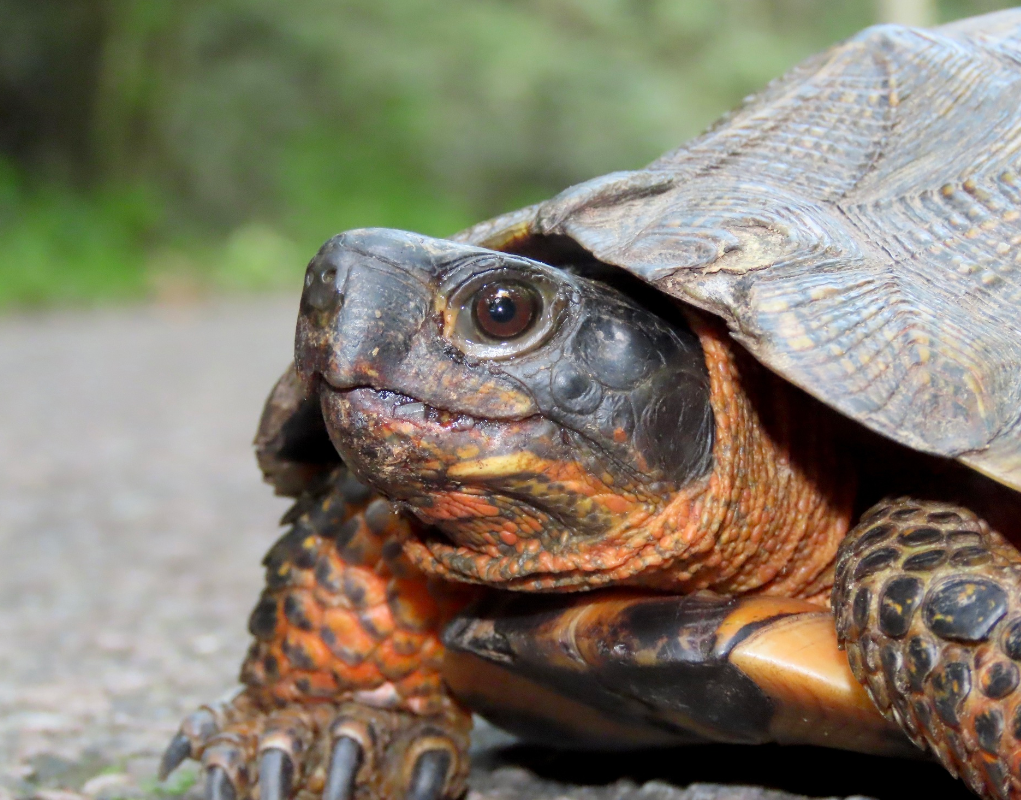
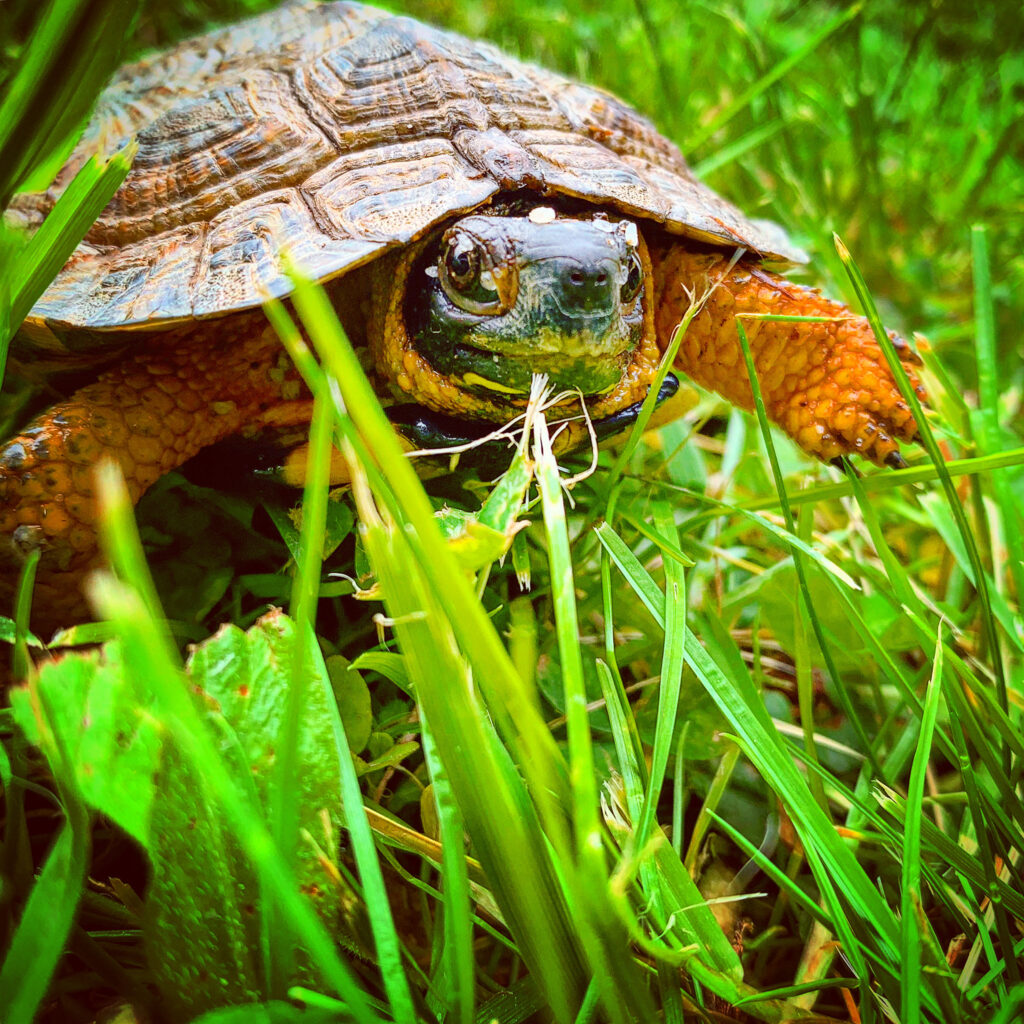
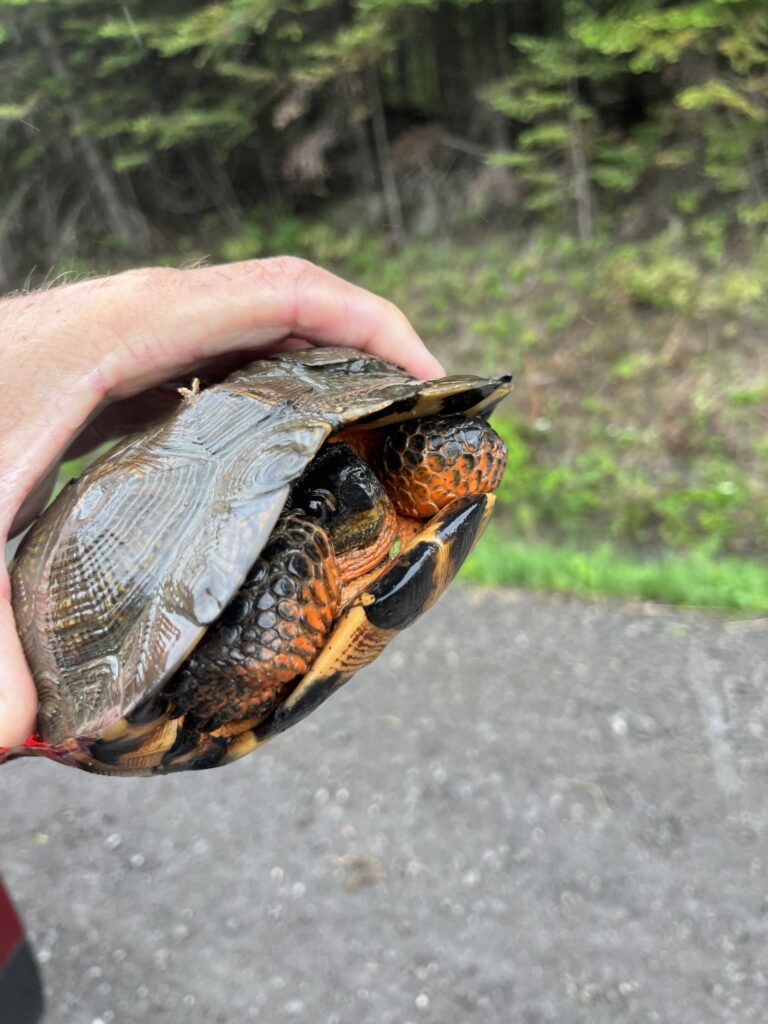
The plastron is yellow with regular dark spots on all the scutes, and the soft parts are orange to beige. The limbs are brown and have large flattened scales, with five large claws on the front legs and four on the hind legs.
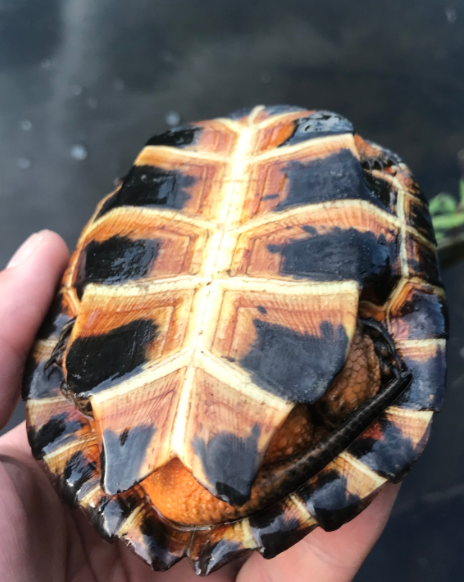
In males, the front legs have prominent scales on the front, the plastron is concave, and the anal notch is very pronounced. The hatchlings resemble adults in appearance, but are brown to grayish, without the orange coloration on the neck and limbs. They lack a keel and their carapace is as wide as it is long (3 cm).
Habits
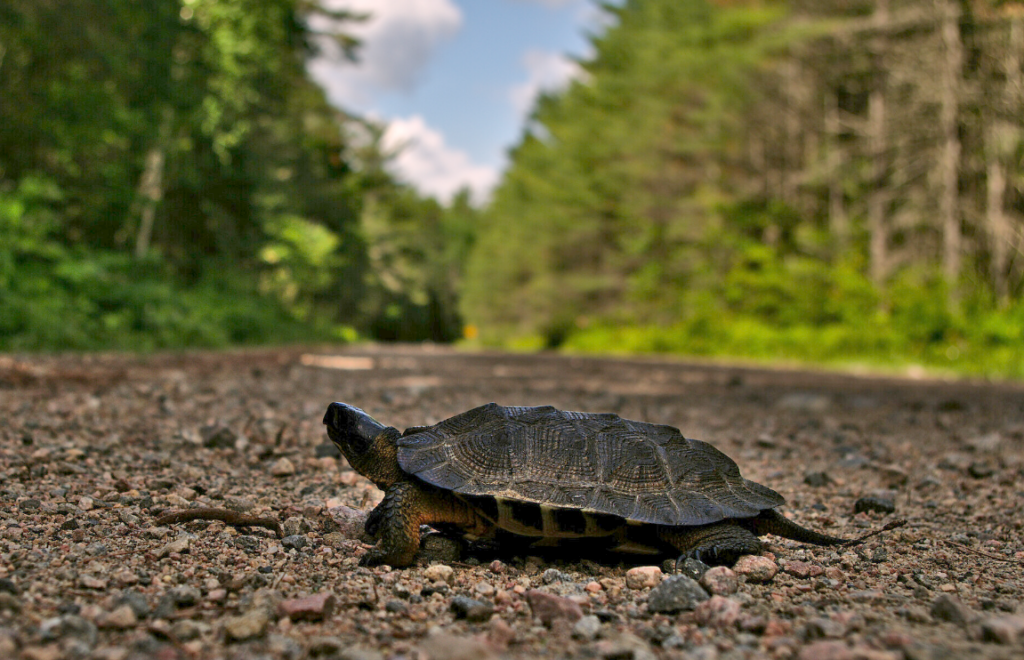
This turtle is known as the forest turtle due to its semi-aquatic habitat in forests. They like to bask in the morning in the woods, but in hot, dry summers they hide in mud puddles and hibernate in winter.
The wood turtle can travel about 100 meters daily through the forests. During the summer months, adult wood turtles move along river corridors while feeding in fields and open woods. In New Jersey, monitored wood turtles have been observed roaming areas just over 1.5 kilometers from their wintering grounds. Some turtles have even traveled distances of nearly 1 kilometer over a two-month period.
How long does a wood turtle live?
In its natural habitat, the wood turtle lives around 40 years, but in captivity they can live up to 60 years comfortably if well cared for. Semi-aquatic turtles require specific care and accessories for their stay in captivity.
How big is the wood turtle?
What do wood turtles eat?
They are omnivorous although they mainly eat plants, fallen fruits such as blueberries and strawberries, willow leaves, sorrel, and filamentous algae. Sometimes they also eat dead insects, worms, gastropods, and carcasses of birds or small mammals.
Reproduction
Conservation status
Threats
The wood turtle faces several threats that endanger its survival, including:
- Habitat loss: Human development has eliminated much of the wood turtle's natural habitat. The construction of dams, deforestation, and urbanization are some of the human activities that have caused the loss of its habitat.
- Pet trade: The wood turtle is a popular species in the exotic pet market. The illegal capture of these turtles to sell them as pets has reduced their population.
- Road mortality: Wood turtles can be run over by vehicles while crossing roads to reach their nesting habitat.
- Predation: Snakes, raccoons, and foxes are some of the natural predators of the wood turtle.
Images of the wood turtle
In this article, we show the following photos of the wood turtle: