
Green Sea Turtle
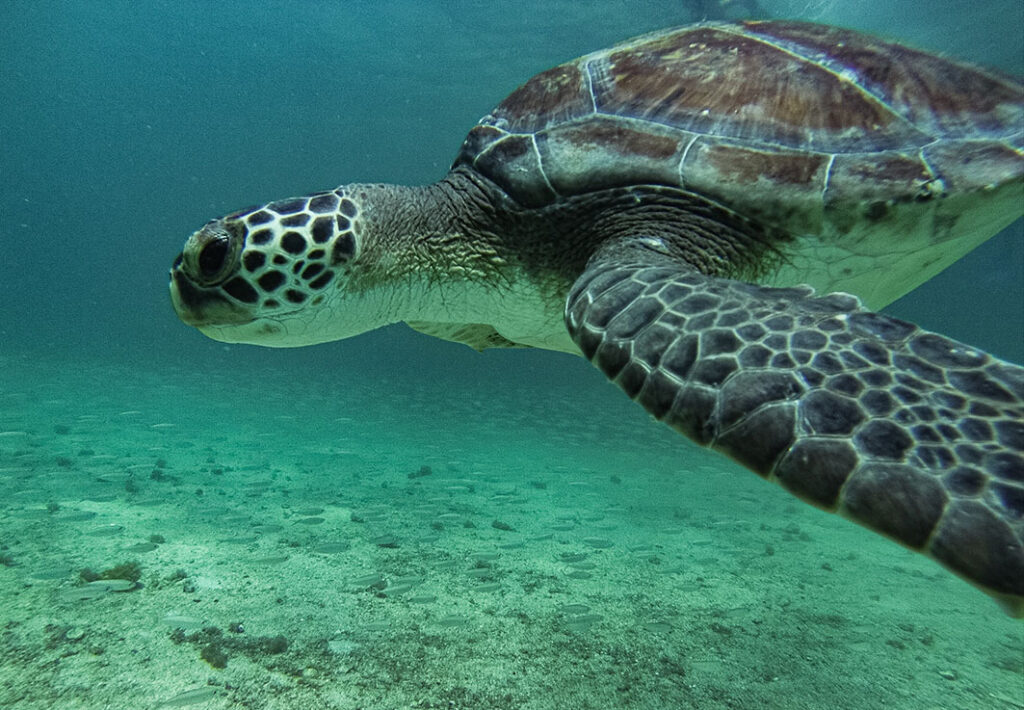
The green turtle (Chelonia mydas), also known as the Pacific green turtle, is a type of sea turtle that inhabits the world's oceans where the water temperature exceeds 20 degrees Celsius. This turtle is endangered due to poaching and habitat degradation.
The green turtle is one of the largest sea turtles, with a shell length that can reach up to one meter. Its shell is dark green, which gives it its name, and its skin is shades of brown and yellow. These turtles are known for their migration across the Atlantic, Indian, and Pacific Oceans, and can travel great distances in search of food and nesting sites.
Despite their size and strength, green turtles are vulnerable to poaching. The meat and eggs of these turtles are considered delicacies in some parts of the world, which has led to a significant decline in the green turtle population. In addition, habitat degradation has also affected this species, as green turtles nest on sandy beaches and their natural habitat is being destroyed by urbanization and tourism.
Green turtle habitat
The green turtle lives widely throughout the world's oceans where the water exceeds 20 degrees. It can be found in Canada, northern Ireland, southern Japan, Argentina, and northern New Zealand. However, it is absent from parts of the Pacific Ocean.
Characteristics of the green turtle
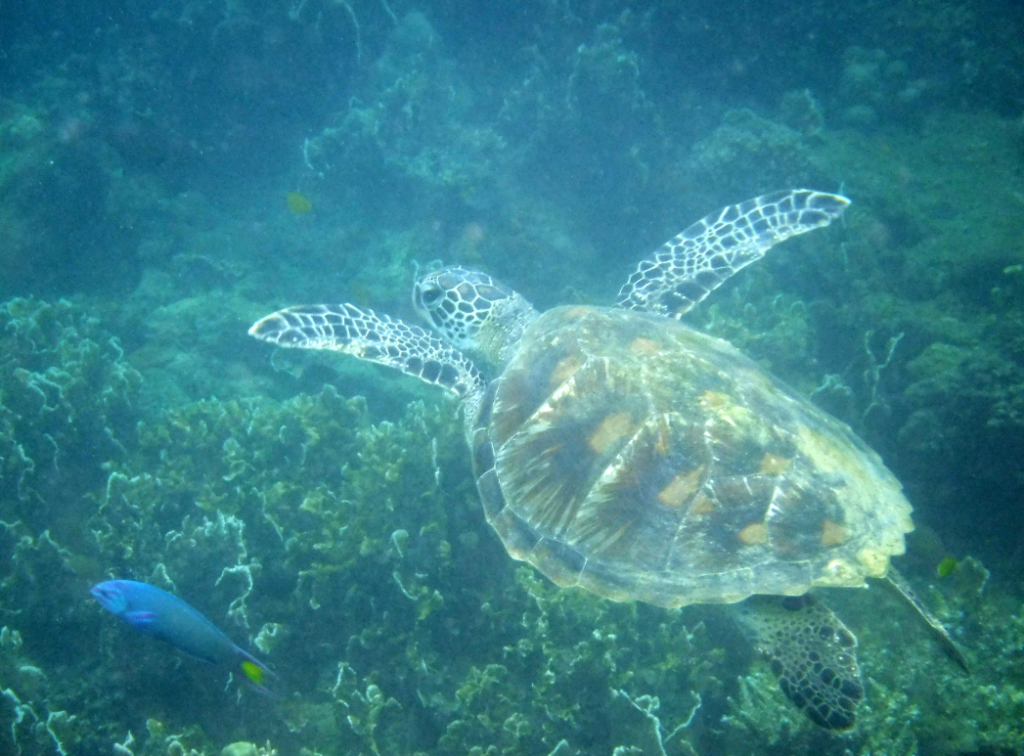
The shell is brownish, decorated with irregular spots or streaks. The name "green turtle" does not come from its color (rarely greenish), but from the color of its fat. Young turtles have a light mahogany shell, with yellow streaked scutes, as do the scales on the head and legs. The plastron is white tending to yellow, quite wide and with rigid bridges. The head is relatively small, with a round, short snout, and a very developed beak. The horny edges of the jaw are strongly serrated. The eyes are large and almond-shaped. The skull has two prefrontal scales, separated from the large frontoparietal scale by a small frontal. The legs and head are grayish tending to green in adults. This is a summary of the body of the green turtle.
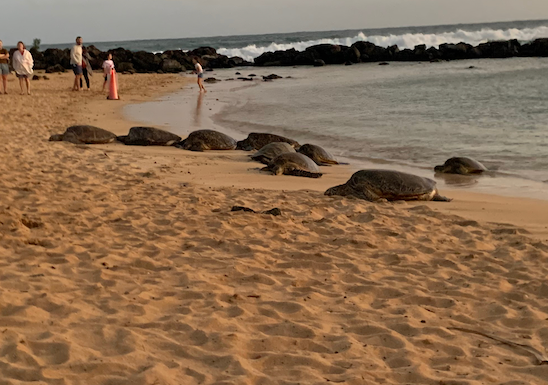
The green turtle (Chelonia mydas) is the only sea turtle that basks on beaches, undoubtedly to take advantage of the UV rays essential for the synthesis of vitamin D that it needs. Even males of the species have been observed basking. As their carapace is often covered with algae and parasites, some turtles allow themselves to be cleaned by schools of small cleaner fish.
Habits of the green turtle
This turtle frequents very different environments throughout its life. It is unknown where juveniles live during their first years. During the juvenile period, the species may occupy Europa Island in the Mozambique Channel. Then it moves to nest in distant places, sometimes thousands of kilometers from feeding areas.
How long does the green turtle live?
The green turtle reaches 80 years of age in the wild.
How big is the green turtle?
It is the largest sea turtle of the Cheloniidae, with a shell of 80 x 130 centimeters and a weight of 140 to 160 kilograms. Some individuals can exceed 230 kg.
What does the green turtle eat?
Its diet also varies with age. First carnivorous (jellyfish, zooplankton, and other invertebrates) and then it becomes mainly herbivorous. Adults graze in underwater meadows where they gather, for example, in southern Mayotte (Comoros Islands). The digestion of cellulose from aquatic plants is comparable to that of ruminant mammals. The low nutritional value of algae explains the slow growth of these animals, as well as their late maturity.
Although it is considered herbivorous, the species also eats jellyfish, crustaceans, mollusks, and other small animals that it catches among aquatic plants.
Reproduction of the green turtle
Courtship takes place not far from the nesting areas. Females only seem to accept mating at certain times; outside of these, they refuse, protecting their cloaca with their hind legs. Penetration, when it occurs, can last up to 6 hours.
They can lay up to 6 clutches at intervals of 15 days, which take place at high tide and at night. The female digs the nest at the edge of the vegetation. In each clutch, it is estimated that she lays around 100 eggs, although this number can sometimes double. The whole process takes about an hour and a half. The eggs measure about 5 cm in diameter. Incubation lasts between 48 and 74 days with a sex differentiation temperature of 28 degrees. The hatchlings remain buried for a while after hatching. They are very vulnerable to predators. Within a few days, they begin to swim.
Conservation status of the green turtle
It is the most exploited turtle in the world, and has been nicknamed the "sea pig."
It is a species in danger of extinction that needs to be protected. There are many hatcheries around the world. There are conservation and research programs aimed at returning juvenile turtles to the wild. The best way to save the green turtle is to protect nesting sites, reduce marine pollution, and offer alternatives to local consumers. People should also refuse to consume products related to sea turtles so that their capture becomes less attractive.
Through conservation efforts and education, we can ensure that this magnificent marine species continues to exist in our world.
Types of sea turtles
Here you can see the different types of sea turtles: