
Flatback Sea Turtle
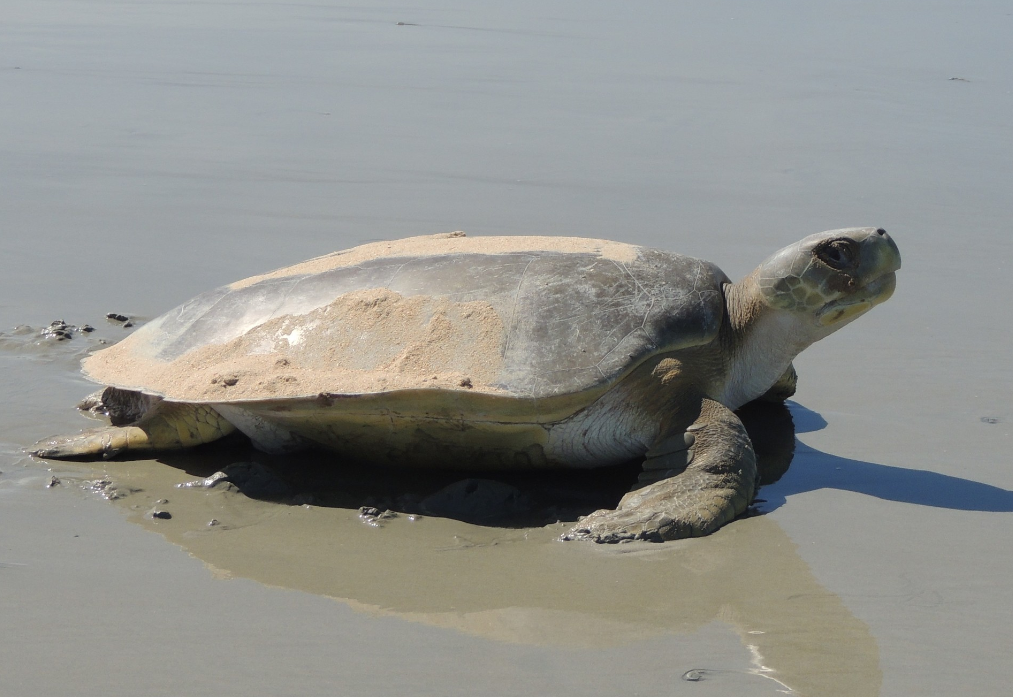
The flatback turtle (Natator depressus), also known as the Australian flatback sea turtle or flat turtle, is a species of sea turtle found in the coastal waters of Australia. Unlike other sea turtles, the flatback turtle has a flat and wide body, perfectly adapted to its habitat in the shallow coastal waters of the Australian region. The genus Natator is monotypic within the family Cheloniidae, which includes the species Natator depressus.
Distribution
The flatback turtle is a species endemic to the coastal waters of Australia. It can be found in the north of the country, from the Great Barrier Reef in the east to the Torres Strait, in the state of Papua New Guinea and Indonesia. Another area where it is found is the Gulf of Carpentaria, the Arafura Sea, the Timor Sea, and in the Indian Ocean up to the north of Perth in the west.
Characteristics
We should not confuse the flatback turtle (Natator depressus) with the green turtle (Chelonia mydas) due to their similar appearance.
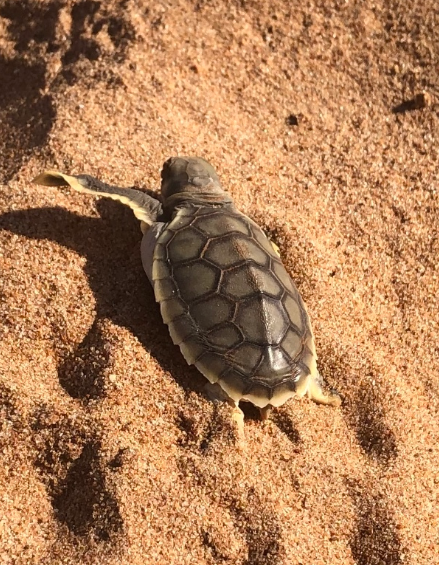
The most distinctive feature of its shell is its great flatness, which is most pronounced in the third and fourth vertebrae. This is where the name flatback turtle comes from.
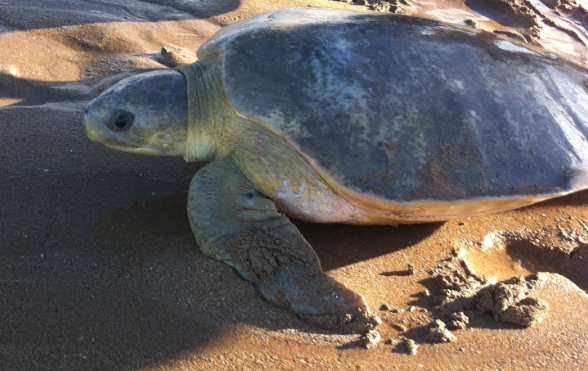
The skin covering the shell is thin and keratinized, making it sensitive and easy to damage. It is slightly sticky to the touch and its color is generally grayish or pale greenish.
The plastron is narrower at the front and rear, cream or yellow in color, just like the underside of the legs and tail.
The head is medium-sized with a slightly prominent beak. The lower jaws have serrated edges on the sides. It has a pair of elongated prefrontal scales and three large postocular scales, as well as many small scales below the eye.
The front flippers are medium-sized and have a set of very fine scales, surrounded by a row of larger scales on the front of the limb, but especially on the back. The tip of the flipper is particularly rounded and has only one visible claw. The legs are gray to olive on the upper side, as are the neck and head, and lighten to cream or yellow on the sides and underside.
Habits
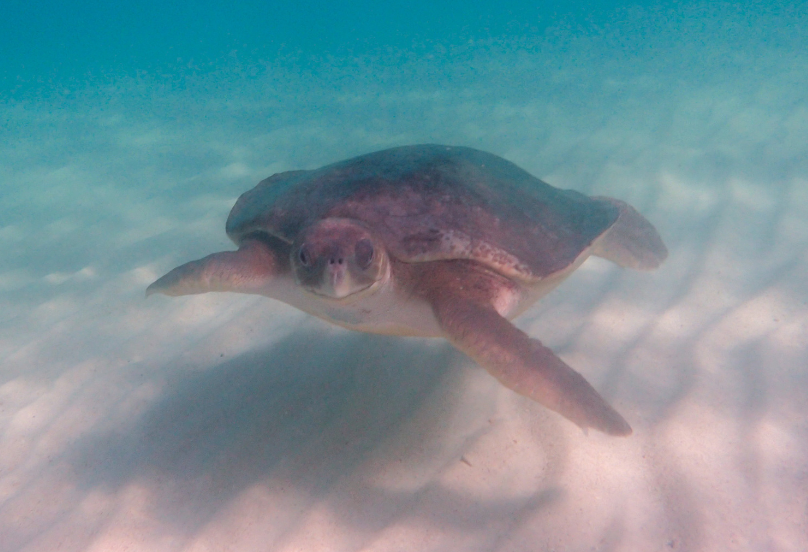
The flatback turtle prefers shallow and slightly turbid waters rather than the waters of the Great Barrier Reef lagoons. It usually frequents bays near the coast, where it feeds on a variety of invertebrates such as sea cucumbers, jellyfish, and bivalve mollusks. It rarely ventures into deep waters, such as in the Torres Strait, and is often accidentally caught by shrimp trawlers in Papua New Guinea.
How big is the flatback turtle?
Typically, individuals of this species measure around 1 m and weigh 70 kg. However, in the case of females, there are flatback turtles that reach up to 135 cm in length and 150 kg in weight.
What does a flatback turtle eat?
This species of sea turtle feeds mainly on algae and small invertebrates found in coastal waters. Unlike other sea turtles that feed mainly on live prey, Natator depressus is an opportunistic feeder and consumes fish scraps and other debris. Other foods it eats include seaweed, shrimp, and crabs.
Reproduction
The nesting period occurs mainly in November and December, although it can happen throughout the year. Females dig their nests in the sand early in the morning or at dusk, at the base of the dunes.
Several clutches occur per season, with a maximum of four, and an interval of about 15 days between each clutch. Each clutch contains between 50 and 65 eggs, although sometimes up to 70 can be found.
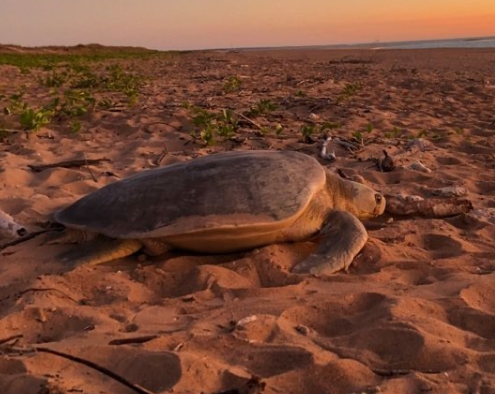
The eggs are large (5 cm in diameter), with a parchment-like shell and white in color. The incubation period is relatively short, from 42 to 50 days. The hatchlings emerge from the sand after a significant drop in temperature and when night falls.
The strategy of this species is to produce fewer but larger eggs, in order to increase the survival chances of juveniles against predators such as ghost crabs.
The juveniles are larger than those of Chelonia mydas and seem to be less vulnerable to predators when both species emerge on the beaches.
Conservation status
Juveniles of this species face predators such as ospreys, monitor lizards, seagulls, octopuses, and some carnivorous fish.
It is considered the least exploited sea turtle by humans, as its meat is less appreciated in taste than that of green turtles.
Currently, flatback turtles are protected by law (except for aboriginal populations who have the right to catch and consume them). In some areas of Australia, this species has been studied and protected for many years. Due to its coastal habitat, it is especially vulnerable to pollution and human activities, and cases of diseases such as fibropapillomas have been recorded in some individuals, indicating an imbalance in water quality in certain areas. The species is listed in Appendix I of CITES.
Other species of sea turtles
Apart from the Australian flatback turtle (Natator depressus), there are six other species of sea turtles: the green turtle (Chelonia mydas), the hawksbill turtle (Eretmochelys imbricata), the loggerhead turtle (Caretta caretta), the leatherback turtle (Dermochelys coriacea), the Kemp's ridley turtle (Lepidochelys kempii), and the olive ridley turtle (Lepidochelys olivacea). Each of them has unique physical and behavioral characteristics and different distribution areas in the world's oceans. All sea turtle species are endangered due to bycatch, ocean pollution, and habitat loss.
Olive Ridley Sea Turtle
Kemp's Ridley Sea Turtle
Hawksbill Sea Turtle
Leatherback Sea Turtle
Loggerhead Sea Turtle
Green Sea Turtle
The flatback turtle (Natator depressus) is a unique species in the turtle world that plays an important role in the ecosystem of Australia's coastal waters. Despite the challenges it faces, conservation efforts and public awareness of its importance are yielding positive results to protect this endangered species. With continued help and cooperation from everyone, we can ensure that Natator depressus and other sea turtle species remain an integral part of the Australian marine ecosystem in the future.