
Alligator Snapping Turtle
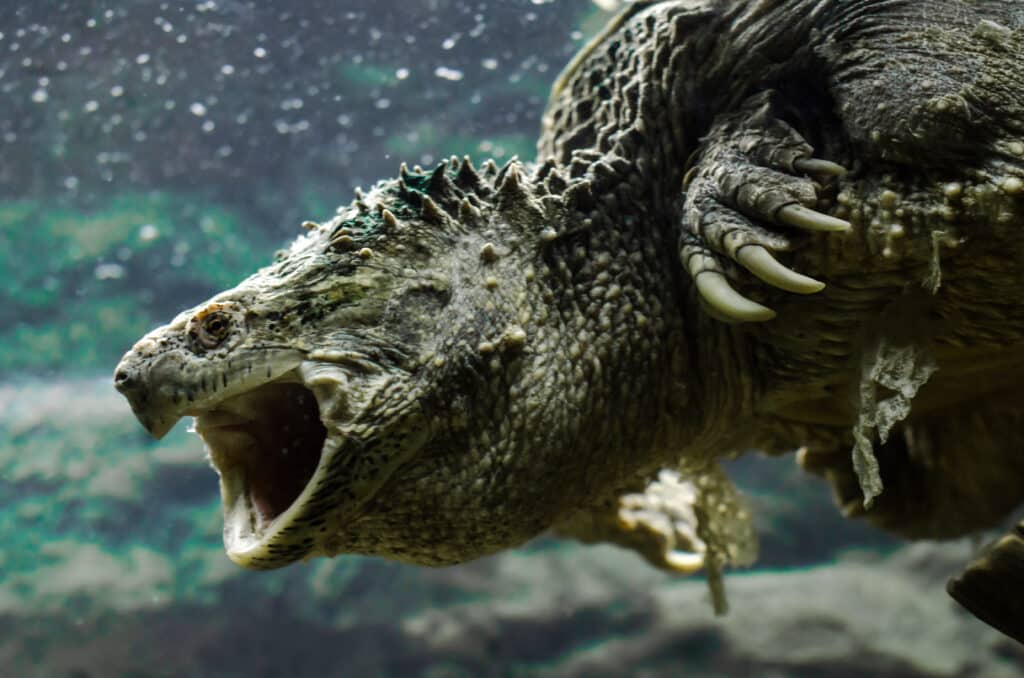
The alligator snapping turtle (Macrochelys temminckii) or alligator turtle is a species of turtle found in South and Central America. These turtles are known for their large heads and strong jaws, which have earned them the name "alligator" due to their crocodile-like appearance. Below, you will find an article about alligator snapping turtles, their characteristics, habitat, and conservation.
Distribution
The geographic distribution of this species extends throughout all the river systems that flow into the Gulf of Mexico in the United States. Its habitat covers the Mississippi Valley, starting in Kansas, Iowa, and Illinois, as well as southeastern Georgia, northern Florida, Alabama, Louisiana, and eastern Texas.
Characteristics
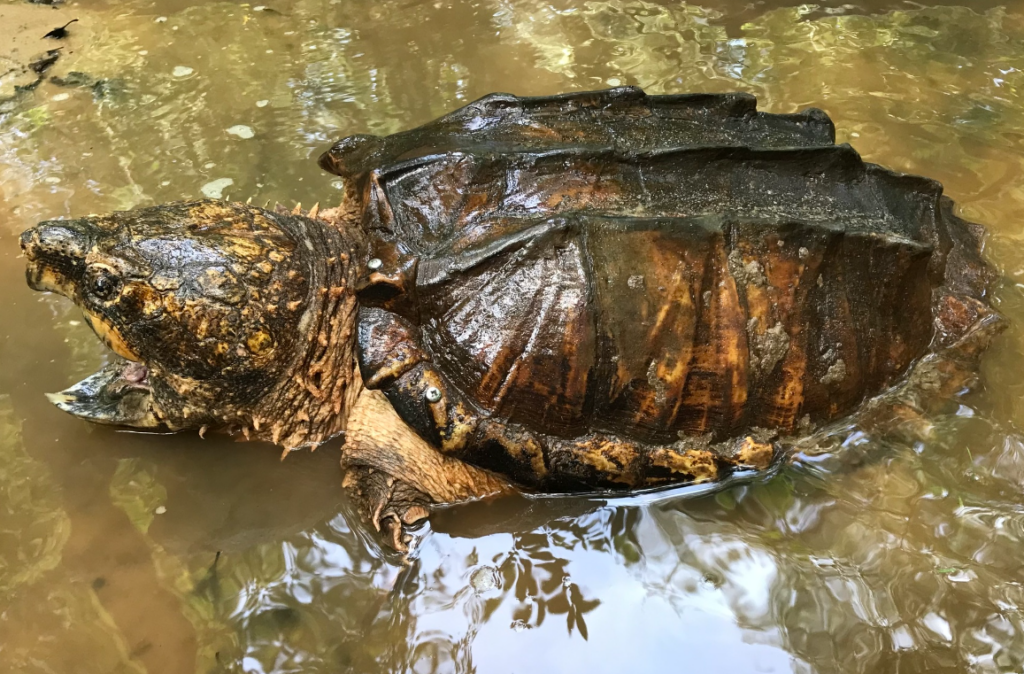
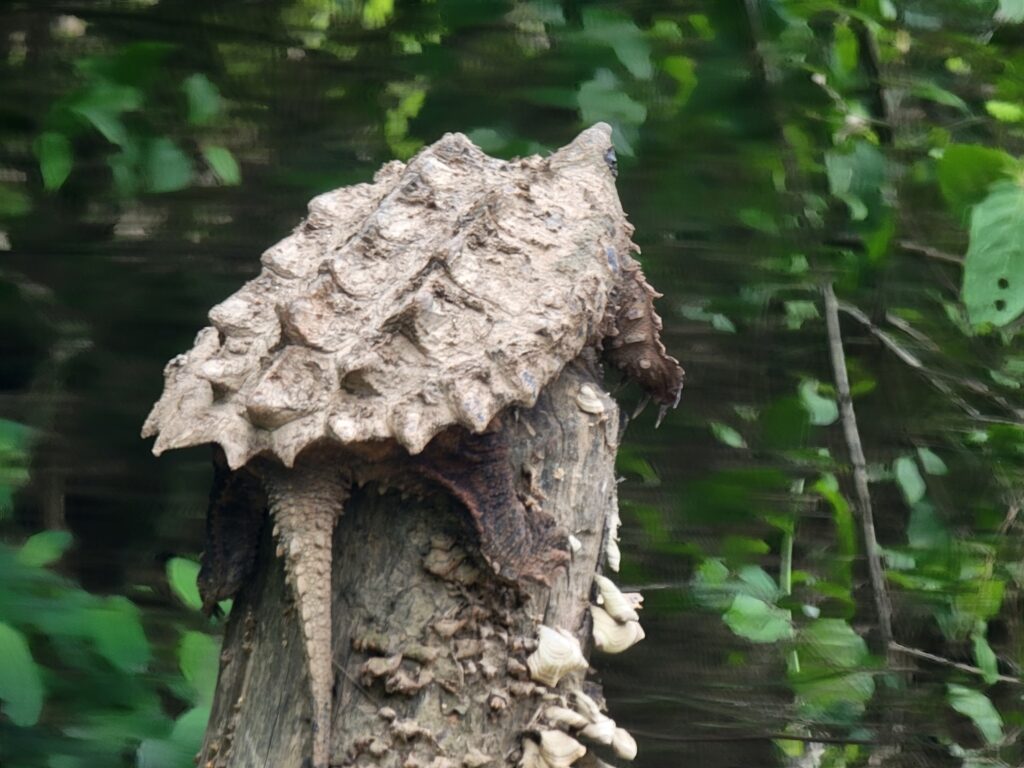
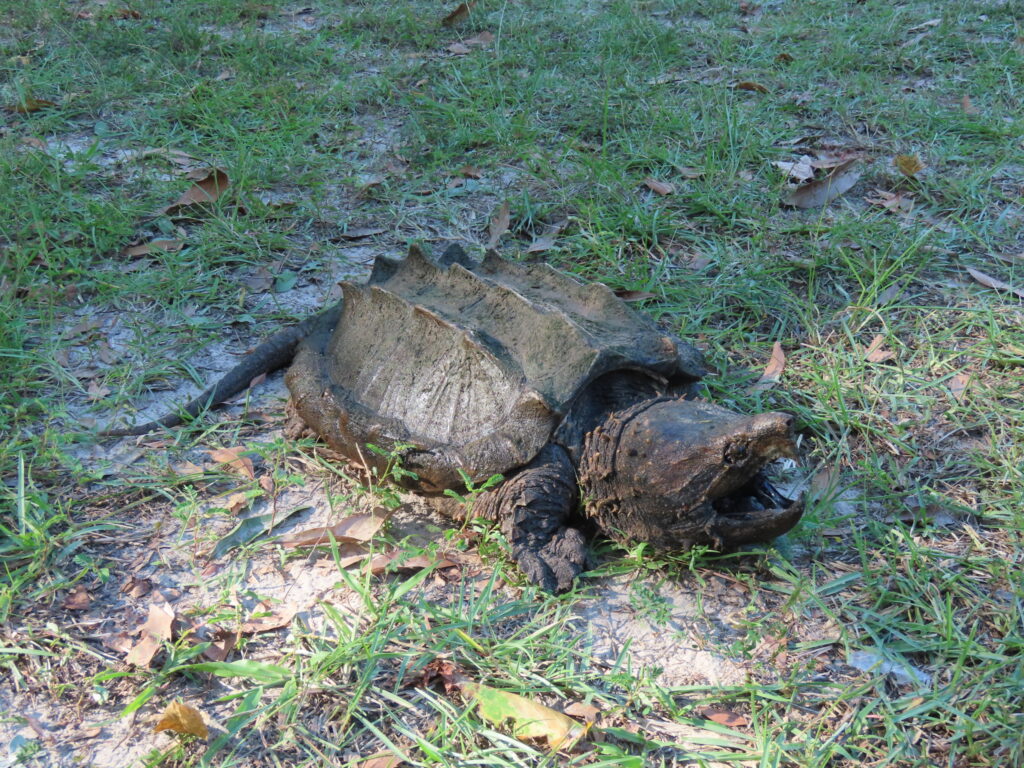
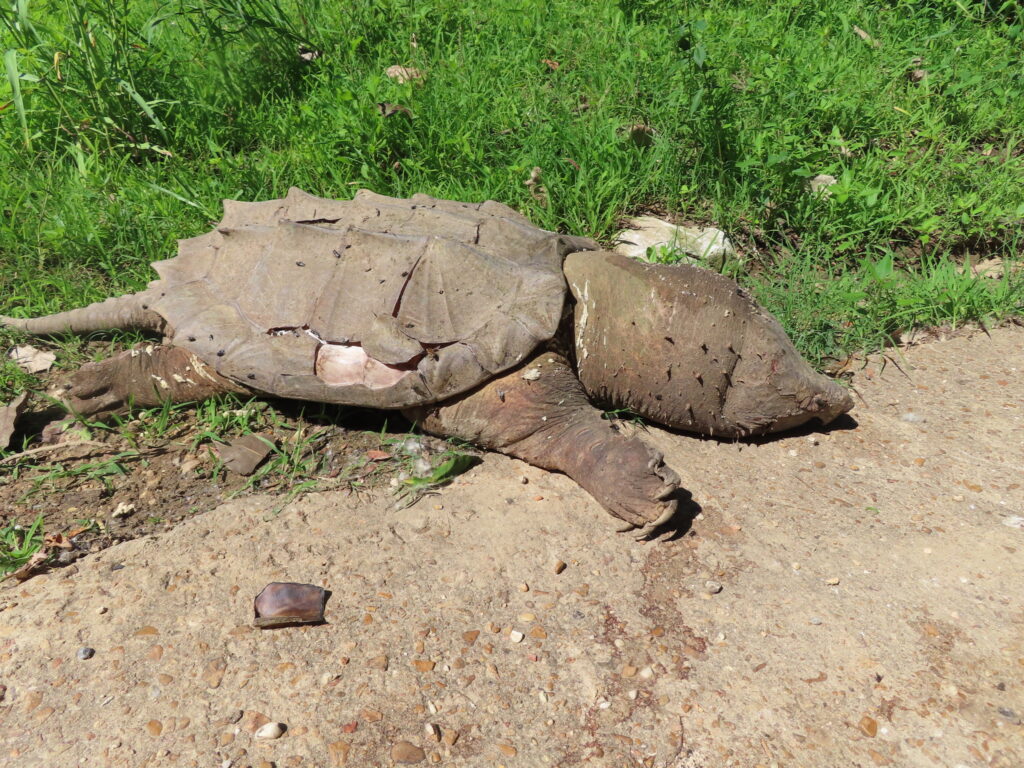
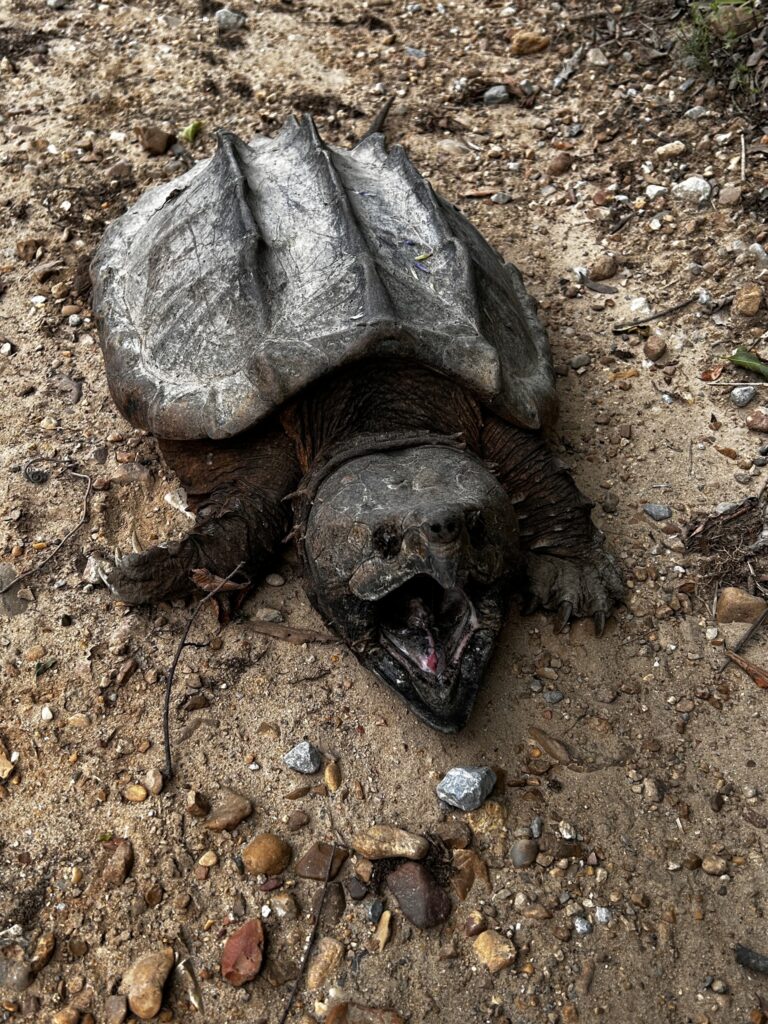
The dorsal surface of this turtle is rough, with very pronounced dentition, especially on the posterior marginal scutes. Three keels or ridges formed by the raised edges of each carapace scute are clearly visible, which persist even in older animals. Between the costal and marginal scutes, there are 3 to 8 supplementary supramarginal scutes. In total, this species has 23 marginal scutes on its carapace, which can be dark brown, dark gray, or black.
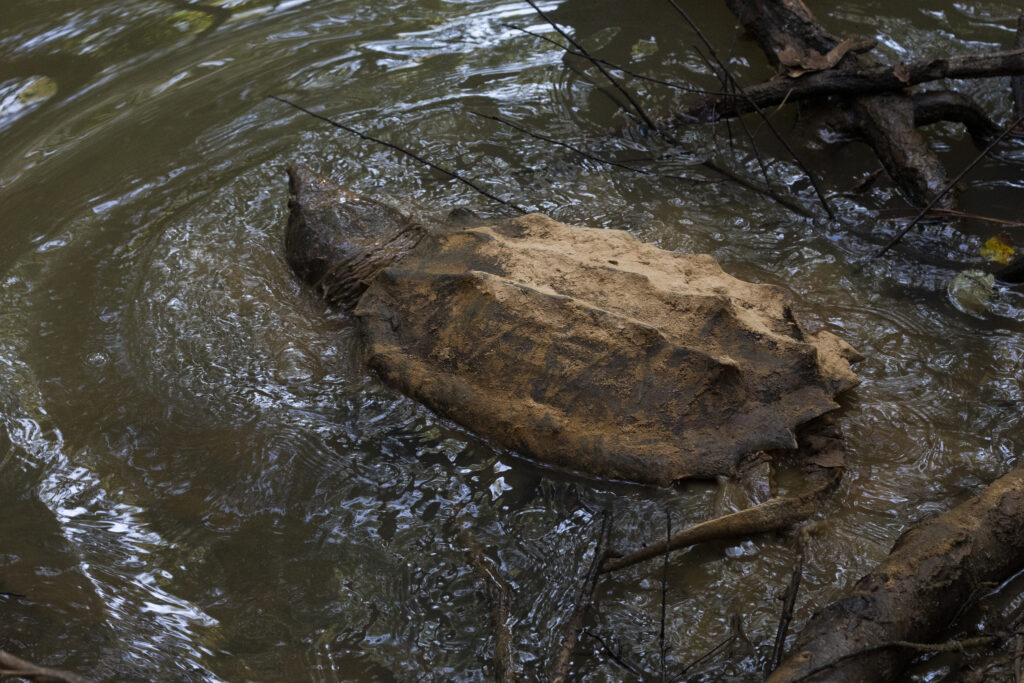
It is common to find these turtles covered in algae, which gives them a prehistoric appearance and allows them to camouflage in aquatic vegetation to ambush their prey.
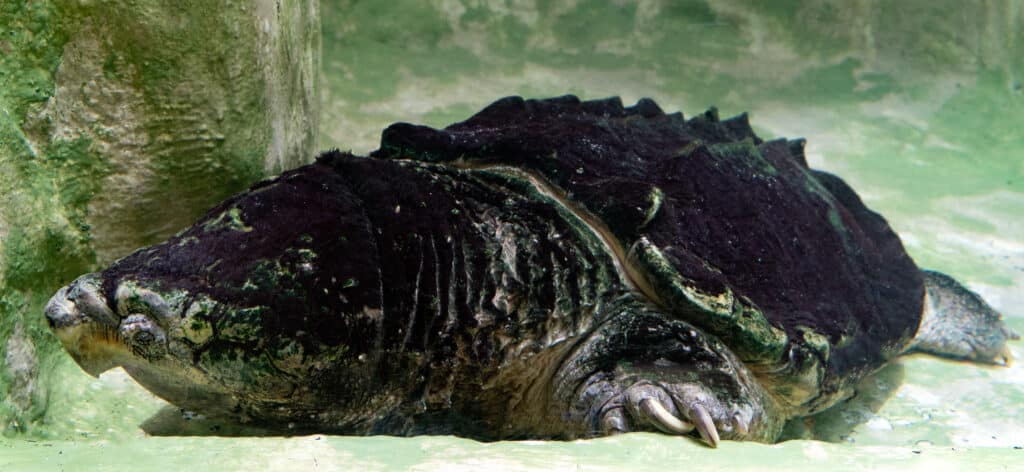
The plastron is reduced and cross-shaped, with poorly developed bridges. Its color is grayish and marbled with dark.
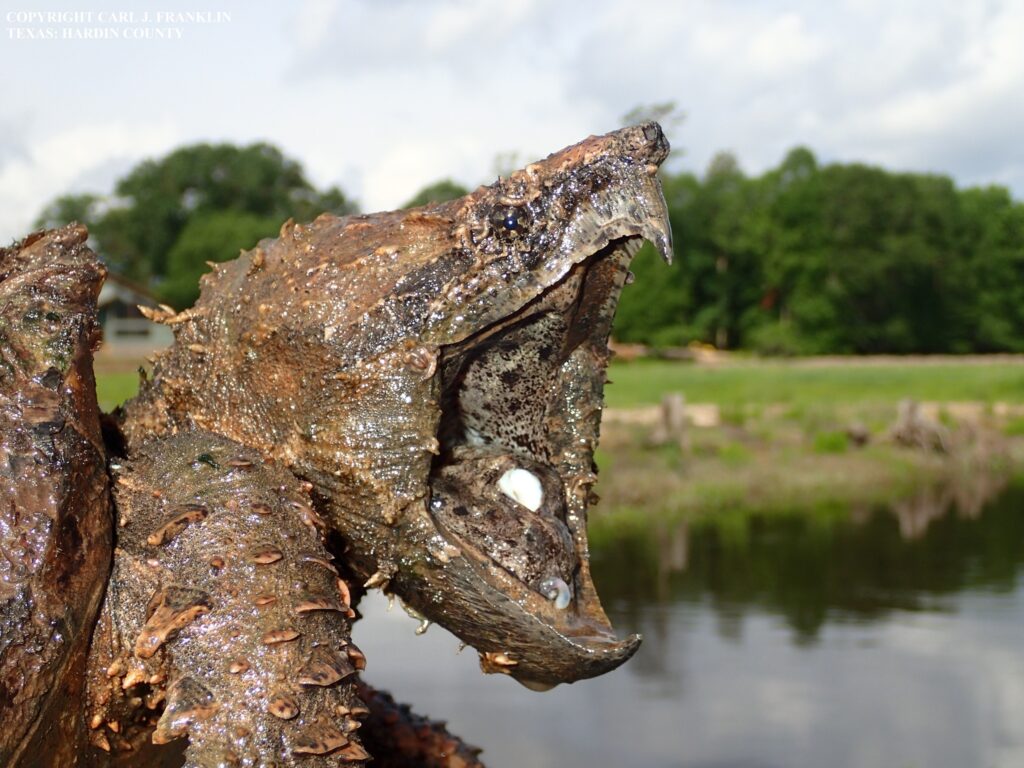
The head is broad, with a pointed nose and an impressive hooked upper jaw. At the back of the mouth, they have a worm-shaped mobile tongue that is red and wiggles to attract prey, a unique feature among chelonians. The head also has large scales above and to the sides, while the neck and chin have conical tubercles that likely help the animal camouflage. It is important to note that this turtle cannot retract its head under the shell.
The limbs of this turtle are muscular and equipped with long, strong claws. The tail is extremely long, similar to that of a crocodile, and has three rows of tubercles on the upper side, while the underside is covered with small, abundant scales. Its appearance is similar to that of a prehistoric animal and it should be handled with caution, as it can quickly extend its neck and turn it backward in a surprising way.
Habits
This species of turtle is fully aquatic and never leaves the water except to lay eggs. They can be found in deep rivers, canals, and lakes connected to flowing waters, as well as places with muddy bottoms. They can tolerate brackish water, as evidenced by the barnacles (crustaceans cirripede) that often attach to their shells. They like to hide and remain motionless, with their mouths open and wiggling their worm-like lure while waiting for prey to pass by.
How long does the alligator snapping turtle live?
Alligator snapping turtles can live up to 45 years in their natural habitat, although the average age is around 23 years.
How big is the alligator snapping turtle?
Alligator snapping turtles can grow to an impressive size, the largest freshwater turtle, with a shell measuring about 50 centimeters in length. Females are slightly smaller than males.
Some specimens reach a weight of 113 kg and measure 80 cm.
They grow very quickly, doubling in size each year during their early years of life.
What does the alligator snapping turtle eat?
They are omnivores and feed on a wide variety of foods, including fish, crustaceans, mollusks, snakes, small alligators, amphibians, small mammals, turtles, as well as aquatic plants, seeds, and fruits that fall into the water. A significant amount of acorns has also been found in their stomach contents.
Due to their size and strength, these turtles are formidable predators and do not have many natural enemies. In numerous videos, we can see how they are capable of breaking a watermelon.
Reproduction
Mating occurs between February and April, and copulation is quick, with the male brutally biting the head and neck of the smaller female. Usually, there is only one clutch per year, with the eggs buried in widened nests at the bottom of the water. The clutches always occur during the day with about 40 eggs.
Sexual maturity in alligator snapping turtles is reached in both males and females at 11 to 13 years of age.
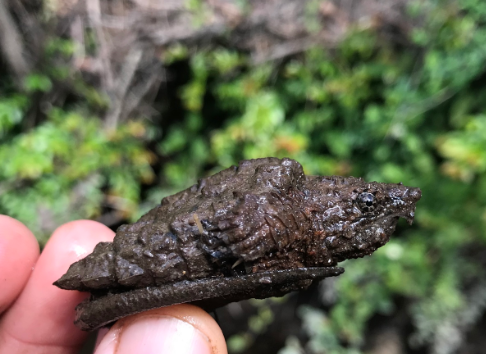
The baby alligator snapping turtle specimens of this species are born between September and October. Despite their young age, they already have a rough shell with three ridges and their heads are covered with masses of superficial tissue. As in adults, their eye sockets are surrounded by conical tubercles and their jaws are effective, giving them an aggressive character from an early age.
What is the largest alligator snapping turtle in the world?
The famous alligator snapping turtle nicknamed "Busco beast" was captured in 1948 and weighed 227 kg.
Conservation status
Alligator snapping turtles have few natural predators and only their eggs are destroyed by raccoons. This species has been heavily exploited by humans, especially for its meat and soup. In the 1980s, a single trader from Louisiana obtained many tons of alligator turtles. To reduce the collection of these turtles, federal protection measures should be implemented, such as banning their possession, sale, purchase, or export in some states, like Florida.
Although these turtles have the image of a fearsome predator, local populations still appreciate their meat and in Louisiana they are consumed in large quantities.
Sometimes they are sold in European pet stores, which is dangerous, as they can inflict deep wounds with their powerful jaws on their owners, along with the snapping turtle. Some specimens kept in captivity are released into the wild when they grow large. This has led to their presence in lakes, ponds, and even the sea in places like Germany and France, causing deterioration of local fauna.
Currently, they can be legally traded in Spain. The reason is that they are not considered an invasive species, because the climate would eventually kill them. When you acquire an alligator snapping turtle, its documentation is registered to certify that you are the owner of the pet, so it remains recorded. The price of an alligator snapping turtle in a reptile store starts at €150 and up, depending on its age and size.
Alligator Snapping Turtle Images
Below we show a gallery of images of the Alligator Snapping Turtle in its pure state in the wild:
Accessories for aquatic turtles
Best Aquarium Algae Control
Turtle Substrate
Best Turtle Brands
Automatic Turtle Feeder
Turtle Aquarium
Turtle Lamp