
Cumberland Slider
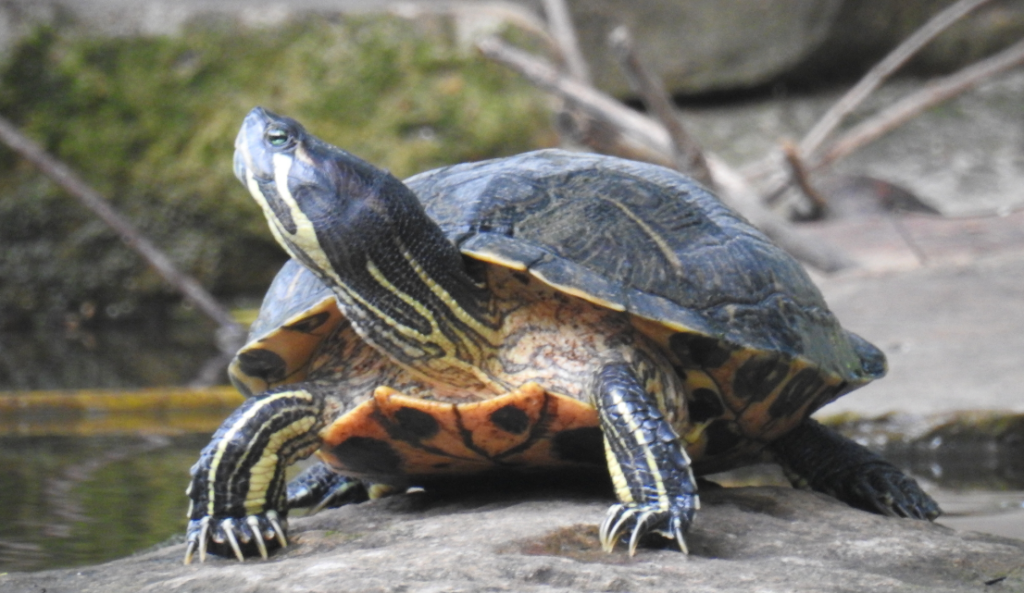
The Cumberland turtle, scientifically known as Trachemys scripta troostii, is a fascinating subspecies of semi-aquatic turtle belonging to the Emydidae family. It is native to the states of Tennessee and Kentucky in the United States.
Years ago, this subspecies was classified in the genus Pseudemys, but was later reclassified into the genus Trachemys scripta. This turtle shares many similarities with the red-eared slider and the yellow-bellied slider. It is believed that this taxonomic reorganization was due to its genetic similarity with other turtle species in the Emydidae family.
Distribution
The range of the Cumberland turtle covers a wide geographic area in the United States. This species inhabits from southeastern Kentucky to northeastern Alabama, although it can also be found in some adjacent areas of Tennessee and Georgia.
They live in regions crossed by the Cumberland and Tennessee rivers. These rivers are important sources of fresh water in the United States and provide a suitable habitat for this subspecies of semi-aquatic turtle.
In its natural habitat, the Cumberland turtle prefers to live in freshwater environments such as lakes, rivers, and swamps, although they can also be found on land near these water sources. They are not found in rivers with strong currents. They are able to survive in temperate climates and can adapt to different types of aquatic and terrestrial habitats.
Characteristics
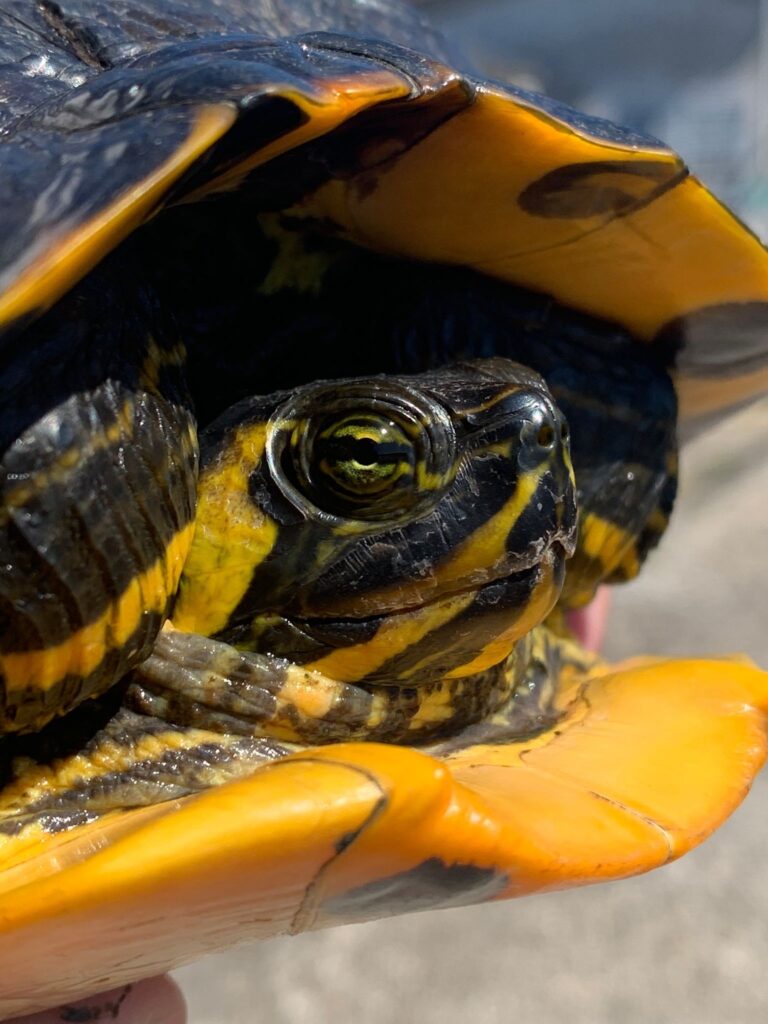
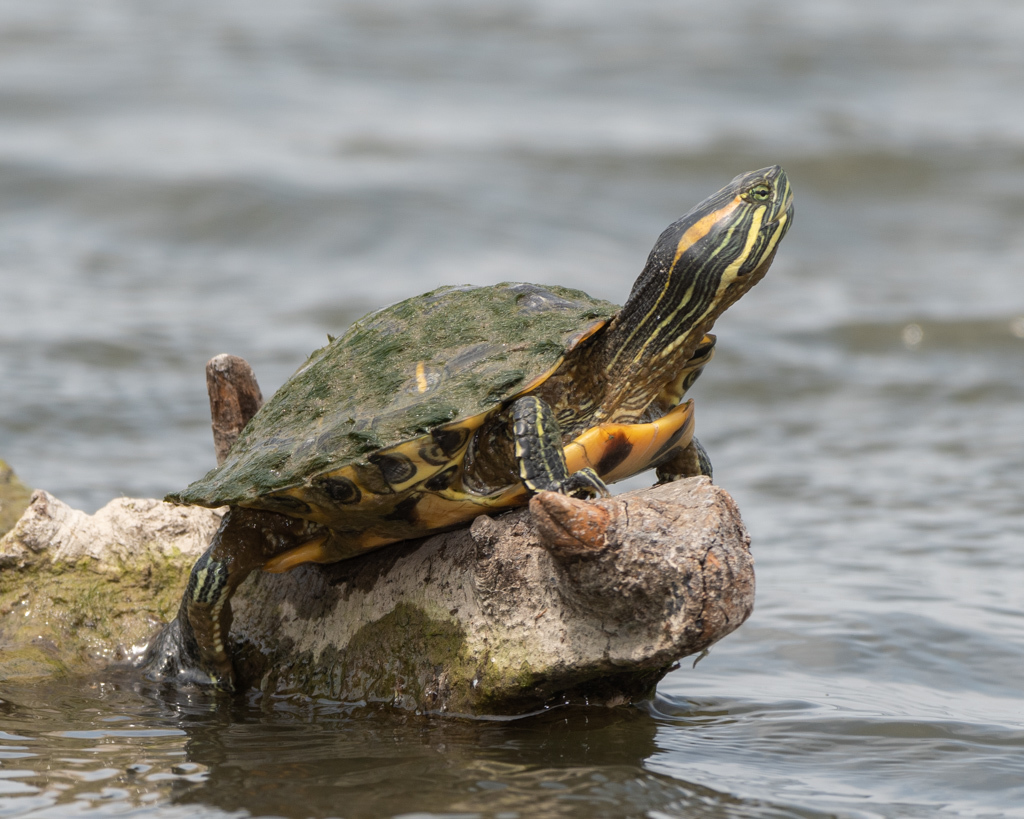
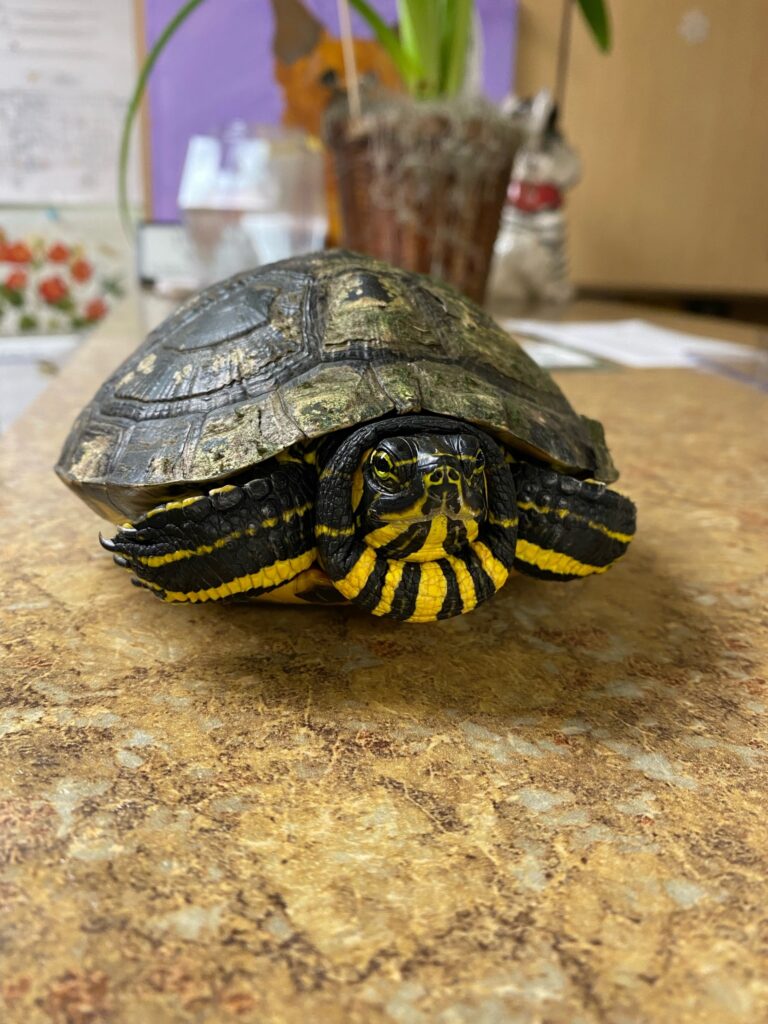
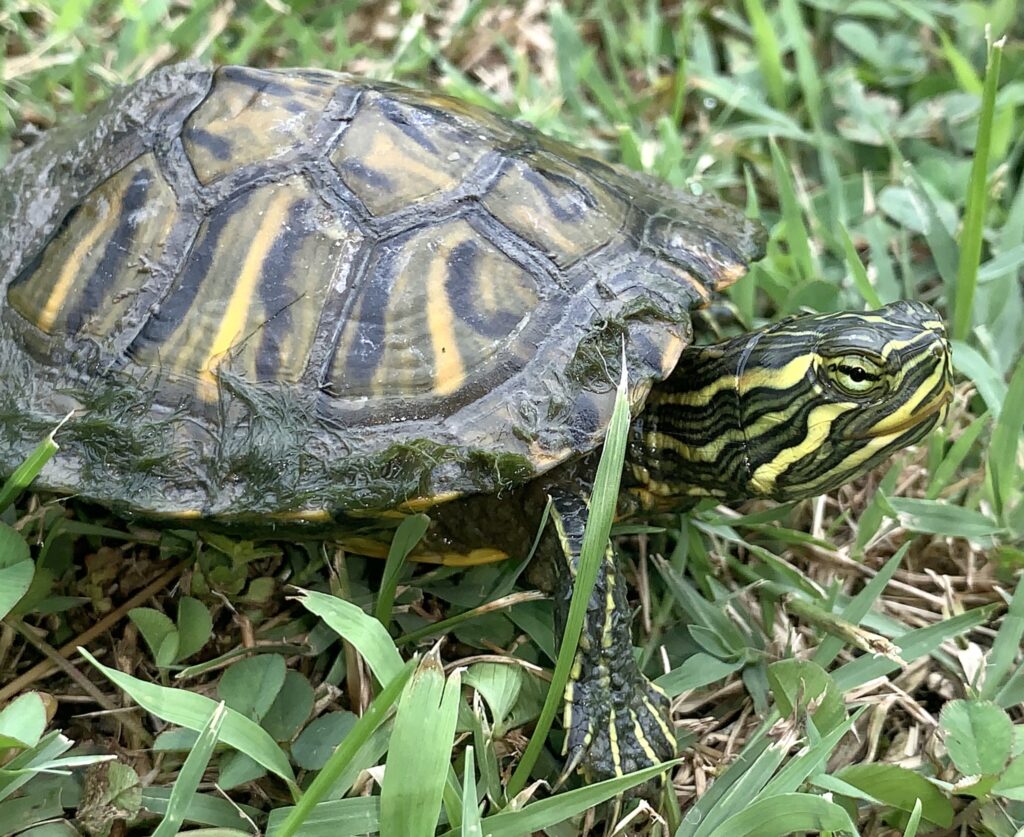
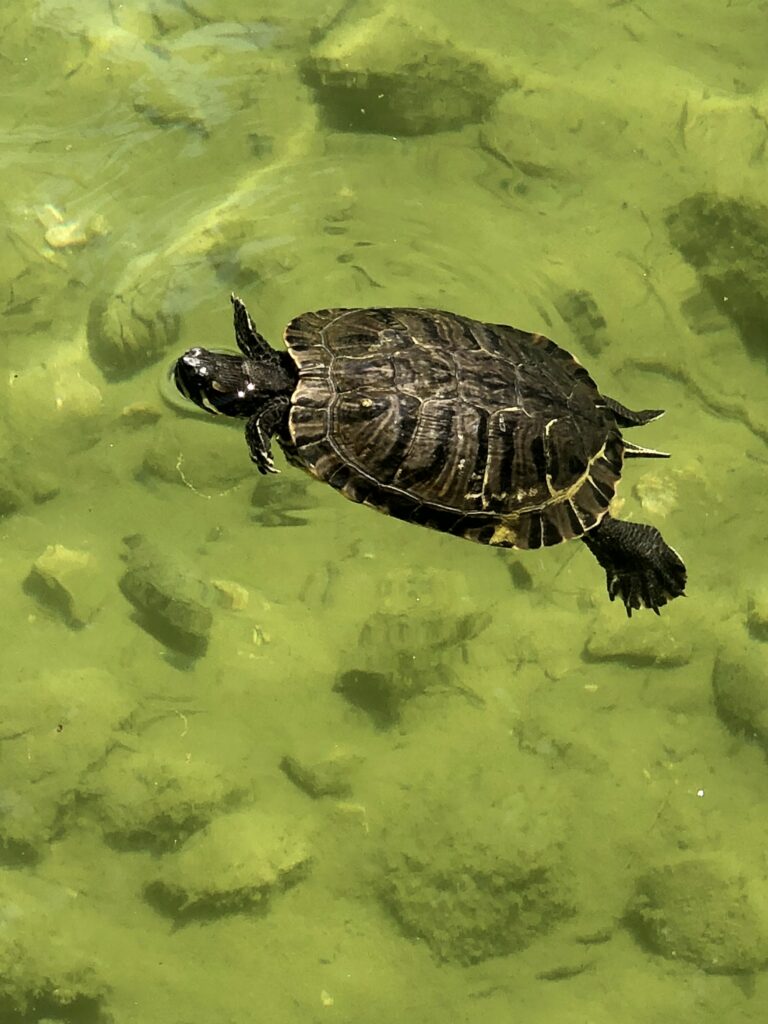
The Cumberland turtle has physical features that distinguish it from other subspecies. For example, it has a yellow to orange postocular stripe and the chin stripes are wider than in the previous subspecies. On each costal scute of its shell, you can see a yellow transverse band.
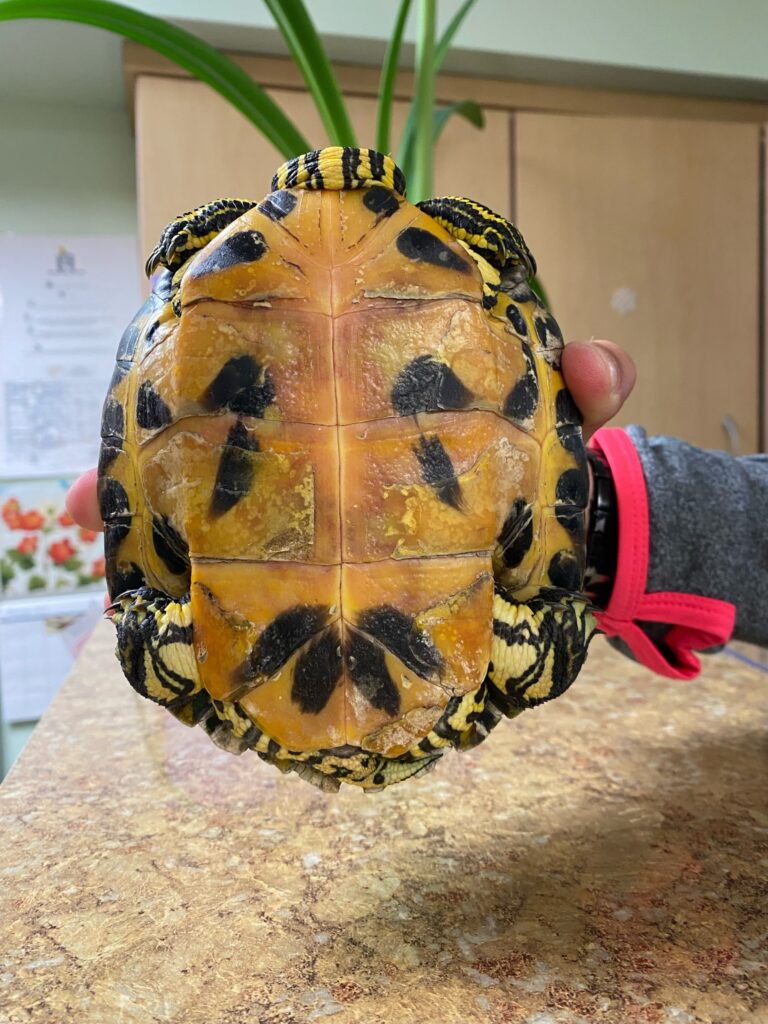
Another distinctive feature of the Cumberland turtle is the scutes on its plastron, which display a nearly circular dark pattern with a light center. This combination of color patterns on its shell and plastron makes this turtle subspecies easily recognizable.
Cumberland Turtle Care
Below we show the care requirements for the Cumberland turtle and basic needs to keep this turtle in good condition. It requires a habitat with a dry area, good water quality, and an appropriate temperature. To stay healthy, it needs to bask in the sun for extended periods to regulate its body temperature, which is necessary for proper digestion and nutrient absorption. An appropriate substrate is recommended, and gravel should not be used at the bottom to avoid choking and bad odors. Calcium supplements should be provided and tap water chlorine should be removed with a dechlorinator.
UVB Lamp
The UVB lamp is essential for these turtles to bask in the sun for extended periods to regulate their body temperature, which helps with proper digestion and nutrient absorption for a strong shell. If it is not possible to provide outdoor sunlight, a special UVB bulb for reptiles should be used and make sure they receive between 4 and 8 hours of daily exposure.
No se han encontrado productos.
Substrate
If the turtle is in a tank, tub, or turtle aquarium, it is not recommended to use gravel at the bottom because they can swallow it and choke, and it can also trap dirt and bad odors. Instead, substrates like pebbles can be used, as they are the right size so the turtles cannot eat them.
- Guijarros redondos
- Crea una apariencia natural de lecho de río
- Fácil de limpiar
Aquaterrarium
These turtles require a lot of water, so their habitat needs to have a sufficient amount of water so they can swim freely and develop properly.

- Diseño limpio y sin marcos: Estructura de cristal con silicona translúcida para una visibilidad total del interior del hábitat.
- Incluye isla-solarium con rampa: Perfecta para que las tortugas descansen fuera del agua de forma cómoda y segura.
- Tapa de cristal incluida: Evita escapes y mantiene un entorno controlado sin sacrificar la estética.
- Base protegida: Alfombrilla de goma antideslizante que mejora la estabilidad y cuida el fondo de cristal.
- Dimensiones del modelo: 60 cm largo x 30 cm ancho x 20 cm alto
Dry Area
Cumberland turtles need a dry area in their habitat where they can rest and bask. The dry area should be easily accessible and free from nearby drafts, as these turtles are prone to pneumonia. An artificial grass ramp can be used so they can easily access the dry area.

- Se integra fácilmente en cualquier configuración de terrario acuático
- Se ajusta automáticamente a todos los niveles de agua
- Se mantiene en posición mediante magnetos
- Rampa sumergible para fácil acceso dentro y fuera del agua
- Área terrestre o asoleamiento ideal para animales semi-acuáticos
Filter
It is important to choose a good filter to ensure good water quality for the turtles and prevent diseases. We must check that the filter is always active and working properly.

- Cristal Profi "E" 902
- Los mejores productos para la decoración y el cuidado de tus peces
- La comodidad de tus peces está al alcance de ti gracias a nuestros productos
- Dimensiones: 18x20x40 cm
- NOTA: No olvides limpiar periódicamente todas las mangueras y tuberías con un cepillo adecuado. (p. ej. JBL Cleany), ya que los depósitos bacterianos en el interior de la bomba reducen drásticamente la capacidad de bombeo del filtro

Heater
It is recommended to keep the water temperature at 28 degrees Celsius during the first two years of the turtle's life so they remain active and have an appetite to grow healthily. As they grow, the temperature can be lowered to between 25 and 28 degrees with an adjustable thermostat. Calcium supplements should be provided, which can be done with turtle-shaped tablets for aquariums or with cuttlebone.

Dechlorinator
If tap water is used, it is essential to add a dechlorinator to remove chlorine from the tap water and prevent irritation to the turtles' eyes and skin. Not using a dechlorinator can cause the biological death of the beneficial bacteria in the filter.

- Para peces y plantas
- Para acuarios de agua dulce y tortugas
- Neutralización del cobre, el plomo y el zinc
- Protección de la membrana mucosa
If you want to see the different accessory options for the Cumberland turtle, browse the accessories post.
How long does the Cumberland turtle live?
The Cumberland turtle has a lifespan that can exceed 30 years in the wild, although in captivity they can live even longer, sometimes over 40 years. This will depend on various factors, such as the quality of their diet, the size of their habitat, and their overall living conditions. Therefore, if the right conditions are provided, the Cumberland turtle can be a long-term pet and a faithful companion for several decades.
How big does the Cumberland turtle get?
This turtle can reach a size of about 30 cm.
What does the Cumberland turtle eat?
It is an omnivorous species that consumes a wide range of foods to meet its nutritional needs. Among its preferred foods are snails, crayfish, insect larvae, tadpoles, small fish, and a variety of vegetables. It is worth noting that while juveniles are more carnivorous, adults feed mainly on plants.
In captivity, it is essential to provide them with a balanced diet that includes fresh and varied foods such as vegetables, fruits, and animal proteins. The water turtle food guide can be very useful to ensure all the nutritional needs of these turtles are met. To ensure the Cumberland turtle receives proper nutrition, it is essential to keep the water temperature above 18°C.
Reproduction
The reproduction process of the Cumberland turtle takes place during the spring, autumn, and winter months. During this ritual, the male grabs the female with his stiff front legs and she allows him to mount her.
Females of this turtle subspecies have the particularity of moving quite far from the water to nest, which often puts them at risk when crossing busy roads and being run over. Once they find a suitable spot, they usually build a nest at night, in different types of soil.
The average clutch is 6 to 15 eggs, and it has been observed that 70% of Cumberland turtle females produce two clutches per year. This reproductive process is essential for the survival of the subspecies, as Cumberland turtle hatchlings are particularly vulnerable and need a good amount of time and care before they can fend for themselves.
Compatible Species
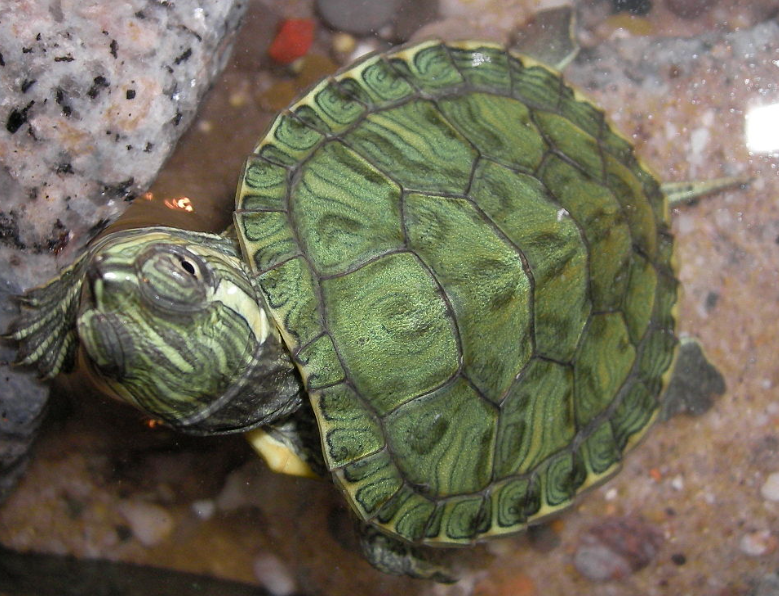
If you are considering adding another animal to the aquaterrarium where your Cumberland turtle lives, you need to be sure to choose a species that is compatible with it. Among the species that could be compatible are the Florida turtle (red-eared slider or yellow-bellied slider), the painted turtle, the peacock turtle, the picta dorsalis turtle, the yellow-bellied turtle, the red-bellied turtle, the cooter turtle, the map turtle, the false map turtle, the diamondback turtle, or the picta belli turtle.
Although these species may be compatible with the Cumberland turtle, it is necessary to ensure that all of them have similar needs in terms of temperature, lighting, and diet to avoid health or behavioral problems. Before adding any other species to the aquaterrarium, you should research the characteristics of the species in question and make sure they can live healthily with the Cumberland turtle. Remember that turtles are territorial animals and enough space and hiding places should be provided to avoid conflicts between them. With a little planning and care, it is possible to create an aquaterrarium that is a happy and healthy home for several turtle species.
Conservation Status
Although the Cumberland turtle is not currently endangered due to its abundance in its natural habitat, this species faces several challenges. Urbanization and traffic accidents are some of the threats affecting this turtle in its natural environment.
Around specialized breeding centers, the collection of breeding animals has led to the eradication of the species in large areas. Although it is not endangered at the moment, the population of the Cumberland turtle should continue to be monitored and measures should be taken to protect its habitat and prevent excessive collection of the species in breeding centers.
The main problem caused by this species is that it is highly adaptable to its environment, which is causing serious damage to our rivers and lakes. Those who wish to acquire animals of this species should be aware that they eat large amounts, produce a lot of waste, and grow quickly. Foreign animals should never be released into our bodies of water, as this can have harmful consequences for the local ecosystem.
According to current legislation, established by Royal Decree 630/2013, the possession, transport, and trade of this subspecies is prohibited for all Cumberland turtles.
Images of the Cumberland Turtle
Below we show a gallery of photos of the Cumberland Turtle to help you distinguish it from other turtle species:
Contenido relacionado