
Kemp's Ridley Sea Turtle
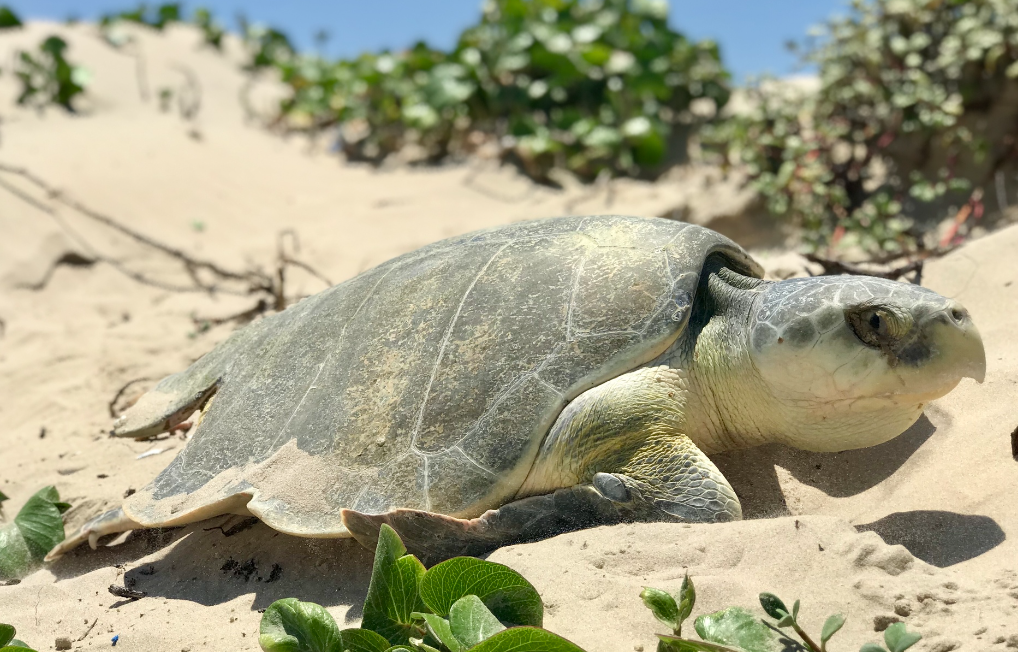
The Kemp's ridley turtle (Lepidochelys kempii) is a species of sea turtle, also known as the bastard turtle or Kemp's turtle. It is the smallest and rarest sea turtle, found mainly along the east coast of North America, in the Gulf of Mexico, the Caribbean Sea, and the Atlantic Ocean. It is critically endangered due to habitat loss, pollution, accidental fishing, and the collection of eggs and adult turtles. Conservation efforts are underway to help protect and increase the populations of this endangered species.
Distribution
This species only inhabits warm waters of the Atlantic Ocean, from Louisiana and the Texas coast in the west, to the Gulf of Mexico, Yucatán, and western Europe and North Africa. Although individuals have been sighted in more distant places, such as Ireland, the Netherlands, and along the French coasts, as well as in the Iberian Peninsula, the Canary Islands, Madeira, and the Azores. In the Mediterranean, a few specimens can be found sporadically.
Characteristics
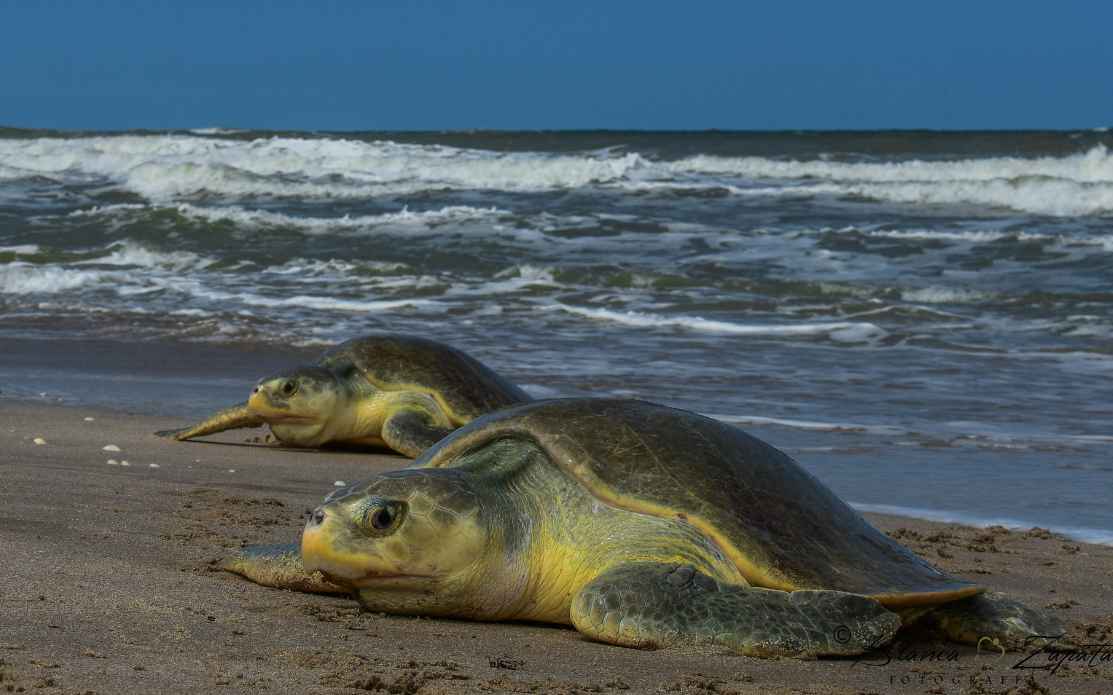
Its shell is wider than it is long, with a particularly high front. The first costal scutes are in contact with the nuchal, and the costals, which can be five or six, are very large compared to the vertebrals, which are small. In baby Kemp's ridley turtles, you can notice small bumps on the vertebrals, which become less prominent over time. The marginals, which can be 12 to 14.
The general color of its skin is gray to olive, with the edge of the marginals highlighted in yellow. The plastron is adorned with two lines of tubercles that form two keels and outline a slight central depression.
The head is wide and slightly pointed at the nostrils, and has a slightly hooked upper beak. The legs are relatively modest and do not exceed half the length of the shell, each with two claws, the second being very reduced.
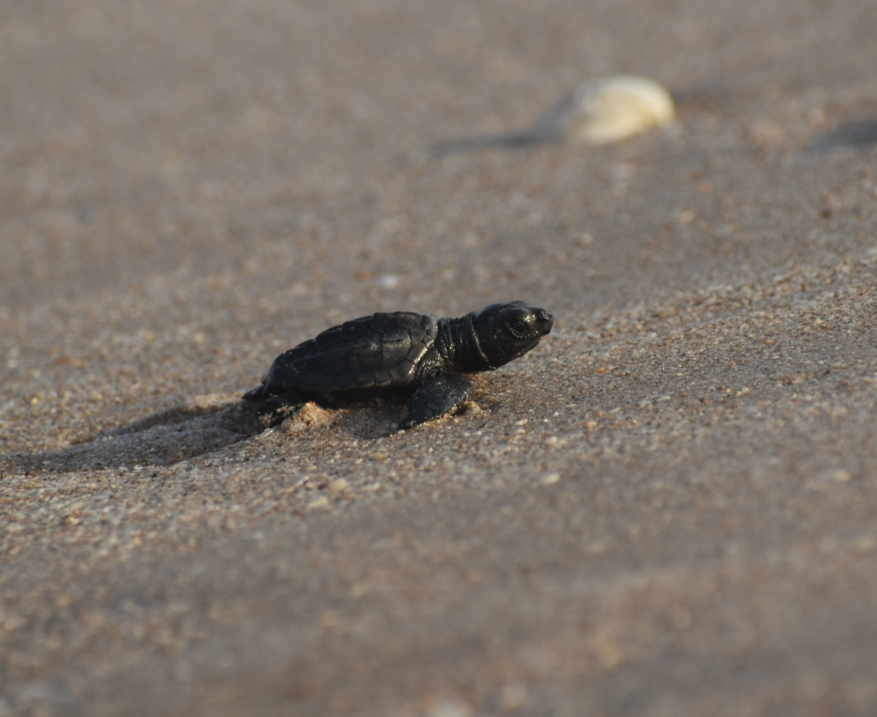
The front flippers are bordered on the inner side by a series of wide plates, and the rest is covered with larger scales than in other sea turtles. The hatchlings are dark gray to black, with fine white markings on the legs and the edge of the shell, which is elongated, oval, and has three vertebral keels.
The plastron is whitish and has four lines.
Habits
The turtle lives near mangroves and in lagoons. This species does not tolerate cold water below 10°C, and below 8°C, it risks dying and must seek warmer waters. Unlike other sea turtles, it rarely carries barnacles, possibly because it stays closer to the surface and is more exposed to sunlight. If captured or disturbed, it can bite.
How long does the Kemp’s ridley turtle live?
It is estimated that they can live more than 80 years, even reaching 100 years of age.
How big is the Kemp’s ridley turtle?
The most discreet and smallest sea turtle, reaching a size of 60 cm to 75 cm and an average weight of 45 kg.
What does the Kemp’s ridley turtle eat?
The species lepidochelys kempii feeds almost exclusively on meat, including crustaceans, mollusks, sea urchins, cephalopods, jellyfish, and occasionally fish, while also eating aquatic plants. It feeds near the coasts.
Reproduction
Around six years of age, the turtle reaches sexual maturity and mates at nesting sites. Mating is usually violent, with the male biting the female on the neck and front legs before grabbing her back with the claws of his front legs.
It can happen that a male follows a female coming ashore to lay eggs and tries to mate with her out of the water. Nesting takes place during the day and occurs between mid-April and mid-July. The main nesting sites are on the Gulf of Mexico coast. The species' behavior remains a mystery, but it is considered a strategy for successful reproduction.
The eggs are about 4 cm in diameter, white and round, and are laid in two or three clutches with 15-day intervals. Each clutch can contain 50 to 150 eggs and incubation lasts between 45 and 60 days. Juveniles weigh about 20 g and grow quickly.
Conservation status
This turtle species is considered the most threatened, especially where it is most common, in the Gulf of Mexico, where its population has drastically declined in recent years. This turtle is especially vulnerable to fishing nets, as it swims at the surface near the coast. In the 1980s, it was estimated that nets killed 20,000 individuals per year, but thanks to the use of TEDs, these numbers have dropped slightly. In the Gulf of Mexico, it is being polluted by Mississippi effluents and motorboats kill many animals. Since the 1980s, a successful reintroduction program has been carried out, in which eggs are moved from Mexico to Texas beaches. After seven years, some females return to the places where they were born to nest. The species is listed in CITES Appendix I and it is essential to implement effective conservation measures to prevent its extinction.

Other species of sea turtles
There are seven different species of sea turtles worldwide, each with its own characteristics and geographic distribution. Now that we've covered the Kemp's ridley turtle, let's take a look at some others: