
Leatherback Turtles Nesting in the Dominican Republic
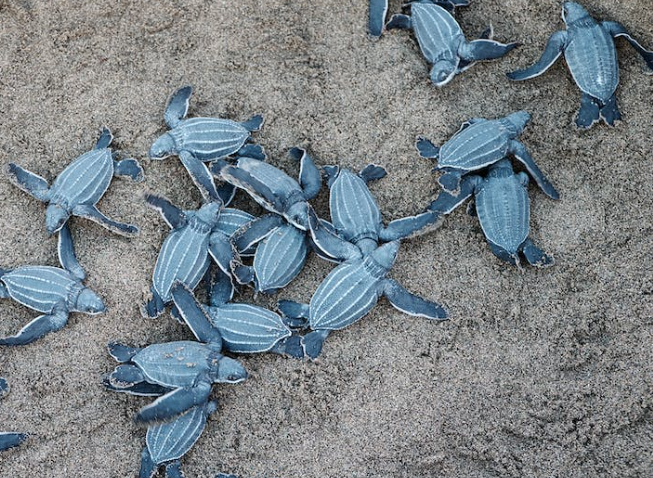
We are pleased to share with you some exciting news about the nesting season of leatherback turtles (Dermochelys coriacea) in the Dominican Republic. This is a special time of year when these beautiful creatures arrive on the island's beaches to lay their eggs. This event has been happening for centuries and is an integral part of the region's biodiversity. As we know, this turtle is endangered and the nesting process is very important for new hatchlings to be born and for the species to be repopulated. This species of sea turtle is one of the most impressive due to its large size, being the largest turtle in the world.
The leatherback turtle nesting season begins at the end of February and extends until July. During this time, the Bahía de las Águilas beach in Pedernales, on the southwest coast of the country, becomes a sanctuary for these marine creatures. This is the place where most leatherback turtles lay their eggs each year.
It is an exciting and activity-filled process. After arriving at the beach, the turtles crawl to the shore, where they find a safe place to make their nest. Then, the female turtles begin to lay their eggs, which can be as many as 100 to 150 per nest, as we show in the information sheet about this sea turtle. Once they are done, the turtles cover their eggs with sand and return to the sea. This process is repeated several times during the season.
It presents many challenges and threats. Habitat loss, pollution, and poaching are just some of the factors that threaten the survival of these creatures. That is why the Dominican Republic has taken measures to protect these turtles and their habitat.
Measures by the government of the Dominican Republic
In recent years, the government of the Dominican Republic has made significant progress in protecting leatherback turtles, an endangered species. To achieve this goal, protected areas have been established on the beaches where the turtles nest, and conservation programs have been implemented to protect both the turtles and their eggs. Volunteers and local groups have played a fundamental role in protecting these marine creatures, helping to patrol the beaches and protect the nests from natural and human predators.
Thanks to these efforts, an increase in the leatherback turtle population has been observed in the Dominican Republic. However, despite these advances, the species remains endangered. Monitoring turtle nests and raising public awareness are key factors to ensure the long-term survival of these marine creatures.
As we have witnessed, it is an exciting event in the Dominican Republic. It is a unique opportunity to see these beautiful creatures in their natural habitat and learn more about the importance of biodiversity conservation. We hope this nesting season is safe and successful, and that leatherback turtles can continue to thrive on the beaches of the Dominican Republic.
Contenido relacionado