
Turtles: The Ultimate Encyclopedia of Armored Reptiles
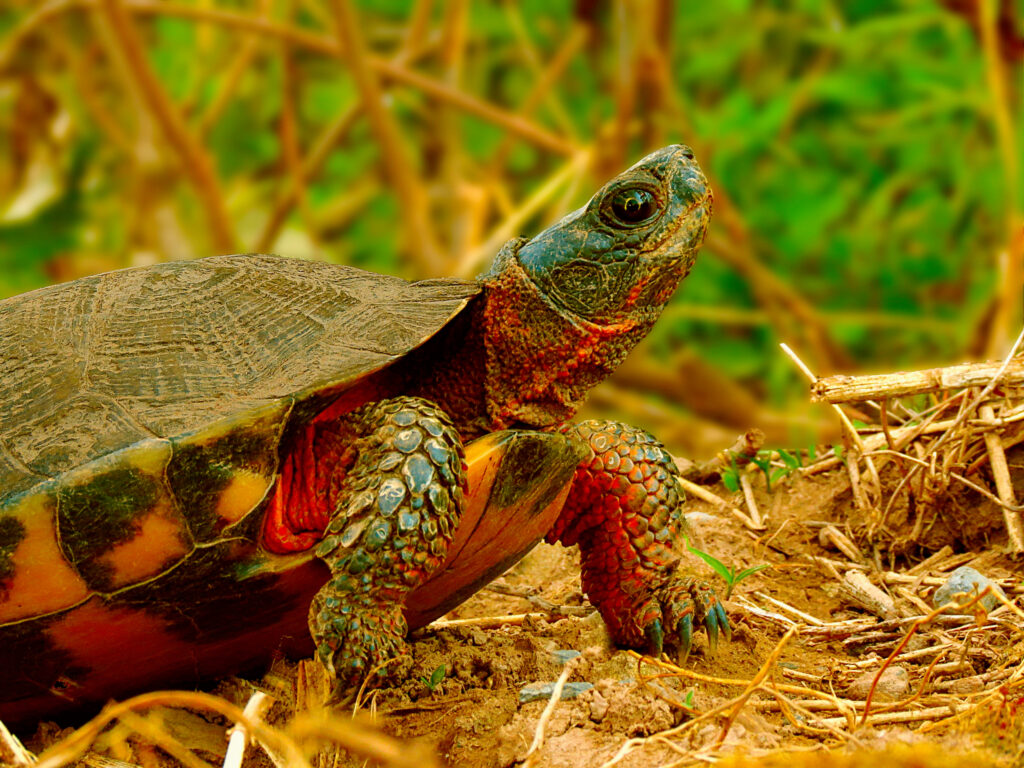
Welcome to the most comprehensive guide on turtles (order Testudines or Chelonia) you will find at infotortuga.es. These armored reptiles, survivors of geological eras, fascinate us with their incredible longevity, diversity, and unique adaptations. They shared the planet with dinosaurs and have endured to this day, but many now face an uncertain future. Join us on this deep journey to unravel all the secrets of turtles, from their distant evolution to the crucial efforts for their conservation.
1. Origins and Evolution: An Ancestral Lineage
Turtles are an evolutionary enigma. Their lineage dates back more than 220 million years, to the Triassic period.
- Early Ancestors: Fossils such as Eunotosaurus africanus (Middle Permian, ~260 Ma) showed broadened ribs, a possible precursor to the shell. Pappochelys rosinae (~240 Ma) already had T-shaped ribs and broadened gastralia (ventral bones).
- The Emergence of the Shell: Odontochelys semitestacea (~220 Ma, China) is key: it had a fully formed plastron but only a partial carapace and—teeth! This suggests the plastron may have evolved first, perhaps to protect against attacks from below in aquatic environments. Proganochelys quenstedti (~210 Ma, Germany/Thailand) already had a complete shell very similar to the modern one, although it still could not fully retract its head.
- Phylogenetic Position: Traditionally considered Anapsids (without temporal fenestrae in the skull), molecular studies and some morphological analyses now place them within the Diapsids, possibly as a sister group to the Archosaurs (crocodiles, dinosaurs, birds) or the Lepidosaurs (lizards, snakes).
- Diversification: The two current suborders, Cryptodira and Pleurodira, probably diverged in the Jurassic. Their ability to adapt to various environments (marine, freshwater, terrestrial) has been key to their evolutionary success.
2. Anatomy and Physiology: The Engineering of Survival
The anatomy of the turtle is a masterpiece of adaptation, centered on its shell but with many other remarkable features.
2.1. The Shell: More Than Just a Simple Shell
- Bone Structure: The carapace (dorsal) is formed by the fusion of ribs, vertebrae, and dermal bone plates. The plastron (ventral) derives from the clavicle, interclavicle, and gastralia. Both are joined laterally by bony bridges.
- Keratinous Scutes: Most turtles have a bony shell covered by scutes (plates) of keratin (like our nails). These scutes do not coincide with the underlying bone plates, which provides greater strength. Their pattern and number are important for identifying species. Some, like softshell turtles (Trionychidae) and the leatherback turtle (Dermochelys coriacea), replace the scutes with a leathery skin.
- Growth: The shell grows with the turtle. In many species, the scutes develop growth rings, but using them to determine exact age is often unreliable due to environmental and nutritional factors.
2.2. Unique Internal Skeleton
- The vertebral column and ribs are mostly fused to the carapace.
- A unique trait among vertebrates: the pectoral (shoulder) and pelvic (hip) girdles are located inside the rib cage, an adaptation necessary to allow retraction of the head and limbs.
2.3. Breathing Without Thoracic Expansion
- Because they have a rigid rib cage, turtles cannot expand their chest to breathe like mammals.
- They use abdominal and pectoral muscles that act as an improvised diaphragm, pumping air in and out of the lungs.
- Accessory Respiration: Many aquatic species supplement lung breathing with:
- Pharyngeal Respiration: Absorption of oxygen through the membranes of the throat.
- Cloacal Respiration: Some freshwater turtles have highly vascularized cloacal bursae that allow them to extract oxygen from the water, enabling long periods of submersion or underwater hibernation.
2.4. Adapted Circulatory System
- They have a three-chambered heart: two atria and a partially divided ventricle.
- This partial division allows for intracardiac shunt, the ability to divert blood between the pulmonary and systemic circuits. This is useful during submersion (apnea), where blood flow to the inactive lungs is reduced and supply to other organs is prioritized.
2.5. Senses and Perception
- Vision: Generally good, with the ability to perceive colors. The position of the eyes varies (lateral in terrestrial species, more dorsal in aquatic ones).
- Smell: Highly developed and crucial for finding food, mates, and detecting predators. They use it both in air and underwater.
- Hearing: They do not have external ears, but they do have a middle and inner ear. They mainly perceive ground vibrations and low-frequency sounds.
- Touch: They are sensitive to touch all over their body, including the shell!, which has nerve endings.
- Orientation: Sea turtles are famous for their incredible magnetic and olfactory navigation abilities to return to their nesting beaches.
2.6. Thermoregulation
- They are ectotherms ("cold-blooded"), relying on external heat sources to regulate their body temperature.
- They use thermoregulatory behaviors:
- Basking: To warm up and aid digestion, vitamin D3 synthesis, and parasite removal.
- Seeking shade or water: To cool down.
- Burrowing: To escape extreme temperatures (heat or cold).
- Maintaining an adequate thermal gradient is vital for their health, especially in captivity.
3. Global Diversity: A Mosaic of Species
With more than 350 recognized species, turtles inhabit almost every continent (except Antarctica) and ocean. They are classified into two suborders:
3.1. Cryptodira (“Hidden Neck”)
They retract their head vertically into the shell, forming an "S" with the neck. Includes most known species:
- Sea Turtles (Families Cheloniidae and Dermochelyidae): Fully adapted to the sea (flippers, salt glands). E.g.: Green Turtle, Leatherback, Hawksbill, Loggerhead (Caretta caretta).
- Land Turtles (Family Testudinidae): Domed shells, columnar legs. E.g.: Mediterranean Tortoise, Russian Tortoise, Sulcata (Centrochelys sulcata), Galápagos and Aldabra Giants (Aldabrachelys gigantea).
- Freshwater Turtles (Various families):
- Emydidae: Very diverse in North America and Europe. E.g.: Painted Turtles, Red-eared Sliders, European Pond Turtle, Box Turtles (Terrapene).
- Geoemydidae: The largest group, mainly in Asia. E.g.: Asian Leaf Turtle.
- Trionychidae: Softshell turtles, aquatic and with powerful jaws. E.g.: Apalone spinifera.
- Chelydridae: Large snapping turtles. E.g.: Common Snapping Turtle (Chelydra serpentina), Alligator Snapping Turtle (Macrochelys temminckii).
- Kinosternidae: Small mud and musk turtles.
3.2. Pleurodira (“Side-necked”)
They retract their head by bending the neck horizontally under the edge of the shell. Found exclusively in the Southern Hemisphere (South America, Africa, Australia). Includes families such as:
- Chelidae: "Snake-necked" turtles and Matamata (Chelus fimbriata), with extremely long necks adapted for ambushing prey.
- Pelomedusidae and Podocnemididae: African and South American river and swamp turtles. E.g.: Arrau Turtle (Podocnemis expansa).
4. Ecology and Behavior: Their Role in Nature
Turtles interact in complex ways with their ecosystems and display fascinating behaviors.
- Ecological Roles:
- Ecosystem Engineers: The Gopher Tortoise (Gopherus polyphemus) digs burrows that serve as shelter for hundreds of other species.
- Seed Dispersers: Herbivorous land turtles help disperse plants by eating fruits.
- Population Controllers: Carnivorous and omnivorous species regulate populations of invertebrates, fish, or jellyfish.
- Food Source: They are prey for various predators (especially eggs and hatchlings).
- Social Behavior: Generally solitary animals, although they may gather in feeding or basking areas. Interactions are usually limited to reproduction (sometimes aggressive) or disputes over resources.
- Communication: Limited. Includes visual signals (head movements, postures), tactile (bites, nudges during courtship), and possibly chemical (pheromones). Some low-frequency vocalizations have been recorded.
- Hibernation and Estivation: Many species from temperate climates hibernate (brumation in reptiles) during winter to survive the cold and lack of food. In hot and dry climates, some estivate to avoid extreme heat and dehydration.
- Migration: Sea turtles undertake epic migrations of thousands of kilometers between their feeding and nesting areas, using magnetic fields, currents, and possibly smell to orient themselves.
5. Diet: Diets for Every Niche
Turtle diets are as varied as their species:
- Strict Herbivores: Most land turtles (Testudinidae). They eat grasses, leaves, flowers, fruits, cacti. Adaptations such as serrated jaws to cut fibrous vegetation.
- Omnivores: Many freshwater turtles (Emydidae, Geoemydidae) and some land turtles (Box Turtles). They eat insects, worms, snails, small fish, carrion, as well as plant matter (fruits, aquatic leaves).
- Carnivores: Some specialized aquatic species.
- Snapping Turtles (Chelydridae): Fish, amphibians, birds, small mammals.
- Softshell Turtles (Trionychidae): Fish, crustaceans, mollusks.
- Matamata: Fish, aquatic invertebrates, which it sucks in with a rapid head movement.
- Marine Specialists:
- Green Turtle: Mainly herbivorous as adults (seagrasses, algae). Juveniles are more omnivorous.
- Leatherback Turtle: Specialist in jellyfish and other gelatinous organisms.
- Hawksbill Turtle: Feeds on sea sponges, thanks to its pointed beak.
- Loggerhead Turtle: Benthic invertebrates (crabs, mollusks), thanks to its strong jaws.
6. Reproduction: Perpetuating the Lineage
The reproductive cycle of turtles is a fascinating and often arduous process.
- Courtship: May include complex rituals: following, gentle biting of the neck and flippers (sometimes aggressive), head movements, bubbling, or even vocalizations by the male.
- Mating: Can occur in water (most aquatic species) or on land (terrestrial species).
- Nesting: All turtles, including sea turtles, lay eggs on land. The female digs a nest with her hind legs, lays the eggs (the number varies greatly, from a few to more than 100), carefully covers them, and leaves. There is no parental care.
- Incubation: Lasts from weeks to several months. Temperature-Dependent Sex Determination (TSD) is common:
- Pattern Ia: Higher temperatures produce females, lower temperatures produce males (most species).
- Pattern Ib: Higher temperatures produce males, lower temperatures produce females (rare).
- Pattern II: Extreme temperatures (high and low) produce females, intermediate temperatures produce males.
- Hatching: Hatchlings use a temporary egg tooth (caruncle) to break the shell. They often emerge from the nest synchronously (in groups), usually at night to avoid predators.
- Survival: Hatchlings (neonates) are extremely vulnerable. They face a dangerous journey to the water (if aquatic) or to safe areas, with very high mortality rates (predation, dehydration, disorientation).
7. Health and Common Diseases
Understanding possible conditions is vital, especially for those keeping turtles in captivity.
- Metabolic Bone Disease (MBD): Caused by an imbalance of calcium, phosphorus, and vitamin D3 (lack of calcium in the diet, lack of UVB light). Causes softening and deformation of the shell and bones.
- Respiratory Infections (RI): Common due to stress, drafts, inadequate temperatures, or poor hygiene. Symptoms: nasal discharge, bubbling, open mouth, lethargy. [Guide on Respiratory Infections]
- Shell Rot: Bacterial or fungal infections affecting the shell, often due to injuries, poor water quality, or an environment that is too humid/dirty.
- Hypovitaminosis A: Vitamin A deficiency, common with poor diets (e.g., only iceberg lettuce or dried shrimp). Causes swollen eyelids, respiratory and kidney problems.
- Parasites: Internal (worms) and external (ticks, mites, leeches).
- Fibropapillomatosis (FP): Tumor disease (probably viral) that severely affects sea turtles.
Prevention through proper nutrition, suitable habitat (temperature, humidity, UVB light), hygiene, and stress reduction is essential. [Consulta nuestras Guías Generales de Cuidados]
8. Conservation: A Future at Stake
Turtles are one of the most threatened groups of vertebrates in the world. More than half of the species are at risk of extinction according to the IUCN.
8.1. Main Threats
- Habitat Loss and Fragmentation: Coastal development, deforestation, agricultural conversion, wetland drainage, dam construction.
- Pollution:
- Plastics: Ingestion (mistaken for jellyfish) and entanglement.
- Chemical: Pesticides, herbicides, heavy metals, oil spills.
- Light: Disorients nesting females and, especially, hatchling sea turtles on their way to the sea.
- Climate Change: Rising sea levels (flooding of nesting beaches), changes in ocean currents, ocean acidification, and alteration of sex ratios due to TSD from increased temperatures.
- Accidental Capture (Bycatch): Death in trawl nets, longlines, gillnets used in commercial fishing.
- Direct Exploitation and Illegal Trade:
- Consumption of meat and eggs (traditional and poaching).
- Use of shells for crafts (hawksbill).
- Illegal trafficking for the exotic pet market.
- Diseases and Invasive Species: Spread of pathogens (such as FP) and competition or predation by introduced species (rats, pigs, dogs on nesting beaches; released exotic turtles).
8.2. Conservation Strategies
- Protection of Critical Habitats: Creation of National Parks, Marine Protected Areas (MPAs), protection of nesting beaches.
- Bycatch Reduction: Implementation of Turtle Excluder Devices (TEDs) in trawl nets, use of circle hooks in longlines, fishing regulations.
- Nest Management Programs: Relocation of at-risk nests, protection from predators, artificial incubation with temperature control (to balance sex ratios).
- Combating Illegal Trade: Enforcement of laws (CITES), awareness campaigns, customs control.
- Research and Monitoring: Satellite tracking to understand migrations, genetic studies, population censuses, health monitoring.
- Rescue and Rehabilitation Centers: Care for injured or sick turtles.
- Education and Public Awareness: Informing about threats and promoting individual and collective actions.
- Captive Breeding Programs (Head-starting): Raising hatchlings until they reach a less vulnerable size before release (with debate about its long-term effectiveness).
9. Turtles and Humans: A Long Coexistence
Our relationship with turtles is ancient and complex.
- Cultural Significance: Present in mythologies and folklore around the world, often as symbols of wisdom, longevity, stability, and creation (e.g., the turtle that carries the world).
- Source of Resources: Historically hunted for meat, eggs, and shells. This exploitation brought several species to the brink of extinction.
- Scientific Research: They are important models for studies on aging, navigation, diving physiology, and conservation biology.
- Pets: Many species are popular in the pet trade. This comes with ethical responsibilities: thoroughly research the species' needs, acquire them legally (preferably from responsible breeders, never from wild capture), and be prepared for their longevity and long-term care. The abandonment of exotic pets is a major cause of problems with invasive species (e.g., the red-eared slider).
- Ecotourism: Turtle watching (especially sea turtle nesting) can be a conservation tool if done responsibly, generating income for local communities and raising awareness.
A Living Legacy We Must Protect
Turtles are living witnesses to the deep history of life on Earth. Their diversity, unique adaptations, and incredible resilience are awe-inspiring. However, their survival today depends largely on our actions.
From infotortuga.es, we hope this encyclopedic guide has given you a deep understanding and renewed appreciation for these extraordinary reptiles. We invite you to keep exploring our site to find even more detailed information about specific species, expert care guides, the latest conservation news, and practical ways you can help protect turtles.
The future of turtles is intertwined with our own. Let's act now to ensure these ancient creatures remain part of our planet for generations to come!
Contenido relacionado