
Fun Facts About Turtles
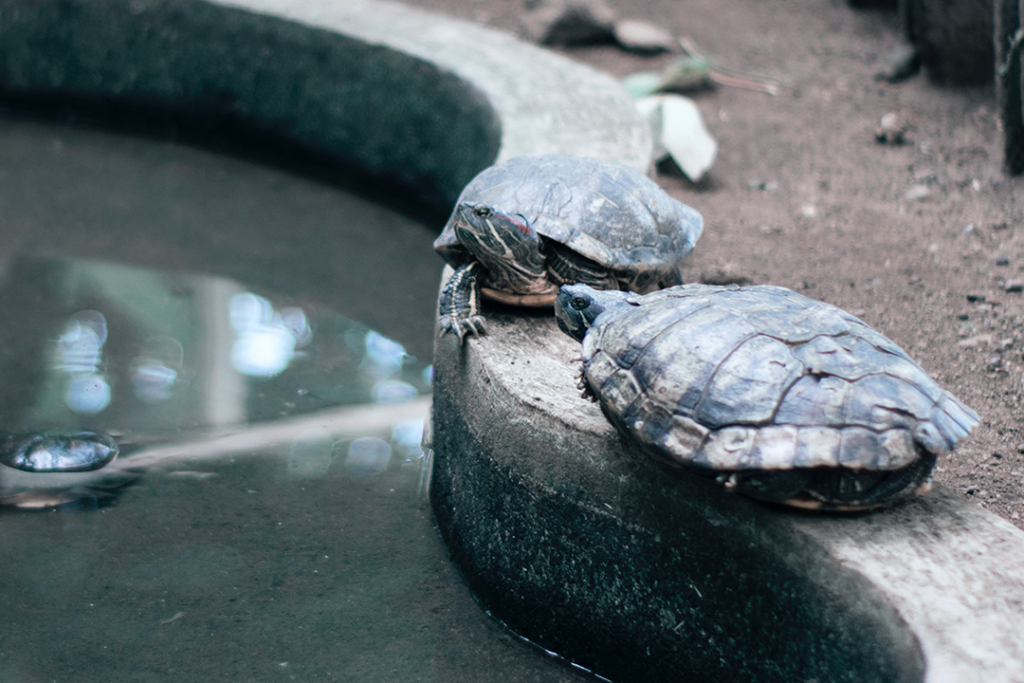
Turtles are fascinating and enigmatic creatures that have captivated humanity for centuries. With their hard shells and their legs slowly crawling along the ground, these aquatic and terrestrial creatures have developed unique features and amazing adaptations that have allowed them to survive in a wide variety of environments around the world.
From the largest turtle in the world, the leatherback turtle, to the smallest turtle, the Galápagos land tortoise, these creatures have developed remarkable skills and behaviors that make us question their existence. Did you know that some turtles can survive without food or water for several months? Or that female sea turtles return to the same beach where they were born to lay their eggs? There’s so much more to learn about turtles!
Below, we present some curiosities about turtles that you probably didn’t know.
Longevity
They can live for a very long time. Turtles are famous for their longevity. Some species, like the Galápagos giant tortoise, can live up to 100 years or more. In fact, it is known that the oldest turtle lived up to 188 years.
Shell composition
The shell of turtles is made of bone and is an integral part of their anatomy. It serves to protect them from predators and also helps regulate their body temperature.
They don’t breathe through their nose
They can breathe through their rear end. Aquatic turtles have the ability to absorb oxygen through their cloaca, which allows them to stay submerged for long periods of time.
Life in the water
There are sea turtles, unlike land turtles, that spend most of their lives in the water and only come to the surface to breathe. There are seven species of sea turtles, all of which are endangered.
Good memory
They have an excellent memory. Although turtles do not have a highly developed brain, they are able to remember the location of their home and the routes they take to reach their destinations.
Great swimmers
They are very good swimmers. Aquatic turtles are excellent swimmers. Their webbed feet allow them to move easily in the water, and some species, like the loggerhead turtle, can swim at speeds of up to 30 kilometers per hour.
Protection
They can protect themselves from predators thanks to their shell. When they feel threatened, they can close their shells by pulling in their legs and head to create a barrier that is difficult to penetrate.
Socializing
They can be very social animals. Despite their reputation as solitary animals, many turtles are social creatures and enjoy the company of others of their species. Some species can even be trained to respond to their owners’ calls.
Excellent sense of smell
Do turtles have a sense of smell? Yes, they have an excellent sense of smell, although their eyesight is not very sharp, turtles have a very well-developed sense of smell. They can detect the scent of food and companions from a great distance.
Hibernation
Land turtles hibernate. In winter, land turtles retreat into their burrows and enter a state of hibernation known as brumation. During this time, their metabolism slows down and they remain inactive until spring arrives.
Ectothermic
Turtles are ectothermic animals, which means they cannot regulate their own body temperature and depend on the environment to stay warm. That’s why turtles can often be found basking in the sun to warm up.
There are many different species
More than 350 species of turtles are known worldwide, from small land turtles to giant sea turtles. Each species has its own unique appearance and behavior.
Farewell to a Centenarian Legend: Gramma, the Galápagos Tortoise Who Made History at 141
Turtles: The Ultimate Encyclopedia of Armored Reptiles
CRAM Foundation Releases 28 Sea Turtles in the Ebro Delta
Pets
Many people keep turtles as pets. However, it’s important to remember that turtles require special care, such as a suitable habitat, a balanced diet, and regular veterinary attention.
They can be dangerous
Although turtles may seem harmless, some species have strong jaws (beak-like snouts) and can cause serious injuries if they feel threatened or are handled incorrectly.
Important for the ecosystem
Turtles play an important role in the ecosystem, as they help control the population of insects and other small species. They are also a food source for other animals, such as birds and mammals.
Endemic
Some turtles are endemic to specific regions. Many turtle species are found only in specific regions of the world. For example, the softshell turtle is found only in North America, while the giant Galápagos tortoise is found only on the Galápagos Islands.
They travel long distances
Despite their clumsy appearance, some turtle species are capable of traveling long distances. The sea turtle, for example, can travel thousands of miles in the ocean during its lifetime.
Turtles have an important role in culture
Turtles have been a recurring theme in many cultures, from the ancient Egyptians to Native Americans. In some cultures, turtles are believed to symbolize longevity and wisdom.
Communication between them
Although they cannot speak, turtles can communicate with each other through vocalizations, gestures, and behaviors. Some species even have different calls for different situations.
Endangered
Many turtle species are endangered due to poaching, habitat loss, and climate change. It is important to take measures to protect these species and preserve their natural habitat.
A unique anatomy
The anatomy of turtles is unique among animals. They have a rigid shell that protects their internal organs and gives them their characteristic shape.
Different feeding habits
Turtles have different feeding habits depending on their species. Some species are herbivores, eating plants and leaves, while others are carnivores, eating insects and small animals. Others are omnivores.
Very resilient
Turtles are very resilient animals and can survive in extreme environments. Some species can live in very cold or very hot climates, and can survive for long periods without food or water. But if we keep them in captivity, we must provide them with good conditions, for which we need some turtle accessories.
Interesting life cycle
The life cycle of turtles includes hatching from eggs, the juvenile stage, and adulthood. Some species have a larval stage, while others have a juvenile stage before becoming adults.
They don’t have teeth
Do turtles have teeth? Turtles are animals that do not have teeth in their jaws. Instead of teeth, they have a horny beak that they use to chew and crush their food. Depending on the turtle species, their diet can range from plants and algae to meat and other invertebrates.
Instead of chewing their food, turtles use a method called "crushing mastication" where they press their food with their jaws and use head and neck movements to crush and break the food into small pieces they can swallow.
This adaptation has allowed turtles to adapt to different types of food and environments. By not relying on teeth for feeding, turtles have managed to survive for millions of years and evolve into some of the most fascinating and adaptive creatures in the animal kingdom.
To conclude these turtle curiosities, turtles are fascinating creatures that have captured people’s attention for centuries. With their unique anatomy, longevity, and ability to survive in extreme environments, they are an example of the diversity and beauty of animal life on our planet.
Contenido relacionado